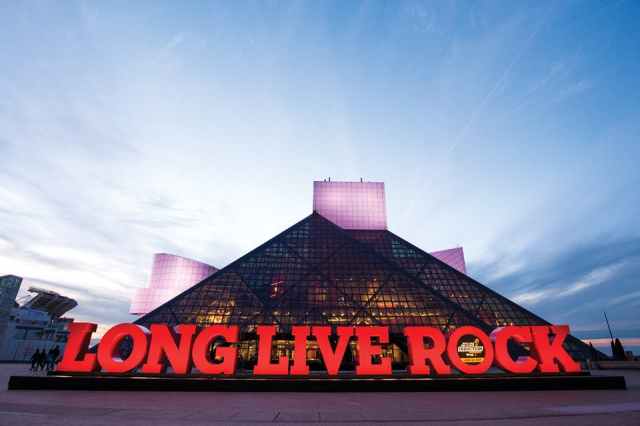
The Rock & Roll Hall of Fame has been around for almost 40 years now. It was established in 1983 by 2020 Rock Hall inductee Ahmet Ertegun and the first class was inducted in 1986. There was not an actual physical Rock Hall until it was built and opened in Cleveland back in 1995. It has served to be the pantheon of rock history, honoring the artists that have contributed to rock (and other) forms of music – truly the crème de la crème of music history.
There are something along the lines of 235 artists, groups and assorted industry insiders that have been inducted by the Rock Hall over the years, so you would justly be correct in that the truly immortal have been inducted into the hallowed shrine already. Still, there are those that have complained that “(insert your personal favorite artist here) hasn’t been inducted into the Rock Hall!” While there is some credence to some of these arguments, overall the Rock Hall, its Nominating Committee and the Voting Committee (a roughly 1000-strong contingent that is made up of the living members of the Rock Hall and select industry executives, music historians, DJs, music journalists and others) have gotten it right.

One thing that could be done better – and would put an end to some of the complaints – is a way to handle those from the past that some think should be in. The Baseball Hall of Fame has (or used to have) a Veteran’s Committee – a group whose sole raison d’etre is to look at the distant past and see if there are any credible entries for the Hall that have been overlooked. The Rock Hall would be well served in looking at creating such an entity like this, but there would have to be some significant parameters set on what this Veteran’s Committee would look like and how they would come to their decisions.
With that said, here are the initial parameters that should be set.
1) The Veteran’s Committee will consist of a 100-member panel, of which 10 members will nominate 15 artists, groups, early influences, industry executives or “insiders” (DJs, normally, or producers/managers) for induction. This Veteran’s Committee would be much like the Voting Committee that chooses the inductees for the Rock Hall – a group of artists from more than 50 years ago (more on this in a minute), DJs, industry executives, music historians and the like.
The nominations will have had to have made their first actions in the industry – a record release, entry into the business, something like that – no more recently than 50 years prior to the current calendar year. For example, if the Veteran’s Committee were to come to life this year, eligible artists for the first ballot cannot have had their first impact after 1970 – anyone who had their first interactions in the business prior to 1970 would be eligible for consideration.
Under the current rules for consideration, a candidate must have made their first release more than 25 years ago. That gives current candidates a 25-year period for consideration by the Nomination Committee of the Rock Hall and, if they are nominated, by the Voting Committee. It doesn’t infringe on their work and can truly be said to be reexamining what the two Committees might have missed. Thus, the 50-year guideline is an important one.

2) The Veteran’s Committee is allowed ONE (1) inductee per year. That inductee will have had to have earned 80% of the 100-member Committee’s votes (80). If no candidate gets 80% of the vote, then the Veteran’s Committee does not get an induction slot that year. If there are more than one candidate that gets the 80% voting margin, then the one who gets the most votes will be inducted – the runner up is going to have to wait until next year.
This is done to ensure that there is an overwhelming consensus of quality of the inductee. It would not be right for someone to simply get a majority of the vote from the 100-member Veteran’s Committee – that isn’t a hugely significant number (51). There has to be a slam dunk majority to signify that there is nearly a unanimous agreement to bypass both the Nomination Committee and the Voting Committee to induct someone they passed over.
3) If an artist, group, early influence or industry executive or “insider” is on the nominee list and receives under 10% of the vote from the Committee (10), that person is removed from consideration for the Rock Hall forever.
This is arguably the biggest criteria and the one that would put an end to some discussions of “they should be in the Hall.” Once again using the Baseball Hall of Fame as an example, if you can’t get a certain percentage of the vote once you become eligible (in baseball it is five years after your retirement), then you are stricken from future ballots. The same criteria should be used by the Rock Hall…if you cannot get 10 people to vouch for you in a 100-member group, you are not a viable candidate and should be removed from overall consideration.
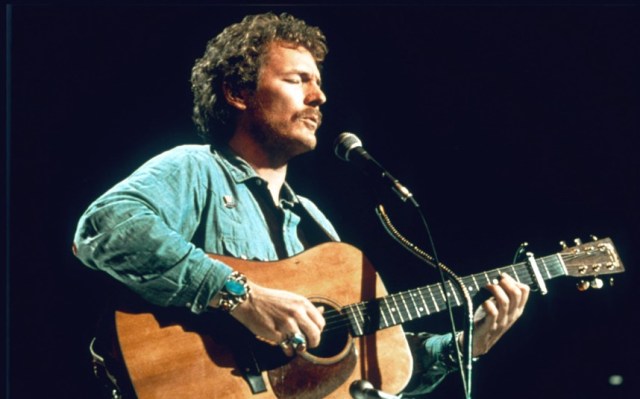
This part of the criteria will upset some who back fringe artists (not saying that Gordon Lightfoot, pictured above, is a “fringe artist,” – in fact, he should already be in the Rock Hall…wait, that’s why this essay exists!) that they believe should be inducted. Those who are this vehement on a particular artist, group or other person are the true definition of “fan,” which is a shortened version of “fanatic,” or someone who has an unnatural support for a cause or person. “Fanatics” should not be allowed to overwhelm the vote of any organization that looks to honor those that were truly immortals.
There are probably some other rules that could be put into place, but these would be the baseline that a Rock Hall Veteran’s Committee should be founded under. The above rules will maintain the integrity of the Rock Hall vote because the threshold of induction is high, would allow for consideration of artists from the past that some might believe have been overlooked and will eliminate those who aren’t able to garner support to warrant induction. If the Veteran’s Committee were something along these lines, I could support it. Anything less would be an insult to the Rock Hall and its inductees who actually earned the honor the first time around.


 Earl Burton