LaVar Ball’s Mouth Writing Checks His Sons’ Bodies Can’t Cash

LeBronSteph

The National Basketball Association Playoffs are currently ongoing and, to be honest, to say that they have been a bit dull would be the understatement of the year. The two best teams in each conference – the defending champion Cleveland Cavaliers with “next evolution in human existence” LeBron James and the 2015 champion Golden State Warriors with smooth-as-silk shooter Steph Curry (among others) – have literally steamrolled past their opposition, with both sides only losing one game so far (did anyone see that decimation the Cavaliers laid on the Boston Celtics in Game 2? On their home floor? That the Celts came back for a squeaker win on Sunday in Cleveland was shocking). Sometime next week, these two teams will meet for the third year in a row (never done previously) to determine the NBA Finals championship.

But the collision course these teams are on hasn’t been the big story in the Association…not by a long shot.

The NBA Draft, like its cousin with the National Football League, has become almost as big a deal as its pro football brethren. Players from around the world and the best “one-and-doners (players who went to college to meet the NBA requirement that they be one year removed from high school)” vie for one of the 60 slots (the draft is two rounds, with the first-round picks guaranteed to be on an NBA roster) in the draft. With these stakes, players are trying to make their best impressions…except for one.

Lonzo Ball is, giving the player his due, one of the better prospects in this year’s NBA draft. If it weren’t for the idiotic “one year” rule that the NBA has implemented to prevent kids from going straight from high school, it is thought that Ball would have been one of the success stories to come straight from the high school ranks. After winning several high school Player of the Year awards across the country, Ball enrolled at UCLA, looking to improve his resume with the one year he plainly told everyone he would be there for.

In his one season with the Bruins, Ball’s statistics were nice but not mind blowing. He averaged 14.6 points per game, shot 55% from the field (and 41% from three-point territory), averaged six rebounds a game and almost eight assists as a guard/forward with UCLA. The 6’ 6” Ball was duly awarded many post-season honors, including the Wayman Tisdale Award for best college freshman and was first-team All-American (the team made the Sweet Sixteen in the NCAA Tournament), as he held to his promise to only stick for one year on the campus of Westwood by declaring for the draft almost as soon as his Bruins team heard the final buzzer and was defeated in the NCAA Tournament.

LonzoLaVarBall

With such accolades and achievements, you would figure that Ball would be the talk of the draft. Unfortunately (for him), he has been overshadowed by his father, LaVar, who will tell anyone that will listen that his son(s) (that’s right, there’s two more following Lonzo) are going to change the basketball world. What the senior doesn’t realize is that he is writing checks that none of the Ball brothers will be able to cash.

Who is LaVar Ball? A quick look at his college life shows that he was a basketball player of no renown (averaged 2.2 points per game at Washington State over two seasons in the late 1980s) and found even less success when attempts were made to turn him into a football player. Ball would play in the World League of American Football (appropriate acronym of WLAF) as a tight end. In one season, he played with the London Monarchs and found time on the practice squads of both the New York Jets and the Carolina Panthers. Other than this, there was absolutely nothing that would mark him as a “game changing” athlete, although even having the proverbial cup of coffee with a professional sports franchise is quite an achievement.

Apparently, this is about the time when Ball had his epiphany, even to the point of picking his wife for the express breeding purposes of creating basketball players. Don’t believe me? Ball himself said, “I see this tall girl, very attractive, walking down a hallway and I go, ‘I don’t know what we’re going to do, but we’re gonna be doing something!’ Once that was in her head, I had her. I picked a big girl who was beautiful. A big stallion.”

When’s the last time you called your significant other a “big stallion” – and you were SERIOUS about it?

This wasn’t the end of it for Ball. He’s has said that Lonzo is better than Curry, who was only the Most Valuable Player in the NBA for the past two seasons. Ball has trashed Cavaliers’ point guard Kyrie Irving for coming from a single parent home, ignoring the fact that Irving’s mother passed away when he was four. Ball has said that, in his heyday, he could beat Michael Jordan one-on-one. Ball criticized Lonzo’s UCLA teammates, saying they were “too white” to win the championship (and, forgetting the fact that his wife is white, there’s a mixed heritage to Lonzo). He’s also created the family company “Big Baller Brand” and is currently marketing Lonzo’s signature shoe to the tune of $459 (you want them autographed by Lonzo? Make it $759…) – only after the three major shoe brands Nike, Under Armour, and Adidas, turned down his BILLION dollar demands for shoe deals with all three of his sons.

Having overbearing parents in sports is nothing new. You can see it pretty much every weekend when you go to a Little League baseball game or watch Friday Night Tykes (about PeeWee football) on television. It’s when those overbearing parents actually think they are doing their child(ren) a favor by pushing them hard does it usually blow up in their faces. One only should look at the career of former quarterback Todd Marinovich – basically engineered by his father to be an NFL quarterback, to the point that the senior Marinovich said that Todd had never eaten at a McDonald’s – or the up-and-down career of tennis player Jennifer Capriati (pushed by her mother) to see the down side of these types of actions.

Britain Wimbledon Tennis

There has been at least one success story. The Williams sisters, Serena and Venus, were driven by their father Richard to excel at tennis, while at the same time inciting similar vitriol from the public for comments that he made regarding taking his girls from South Central Los Angeles to the pinnacle of tennis greatness. It is arguable, however, that the Williams sisters didn’t really reach their peak form until after they removed themselves from Richard’s tutelage and began to think and act for themselves.

The elder Ball may think that he’s helping his children achieve their goals and wants to take the family along for the ride. And that is something that all mothers and fathers want to ensure for their kids. At a certain point, however, that assistance becomes an overbearing, maniacal obsession and needs to be ended. That is where the elder Ball finds himself right now.

While Lonzo may be a high draft pick in this year’s NBA draft (the Celtics have the first pick and the Los Angeles Lakers – whom LaVar Ball has said he wants all three of his kids to play for – have the second), there is still a very close-knit professional community of athletes that will not take kindly to LaVar’s statements. Lonzo, through no fault of his own, is going to be targeted by these professionals for retribution. You don’t think that LeBron James won’t light him up for some of the things that LaVar has said about him? You don’t think that Curry or his teammates, Klay Thompson, Draymond Green, and Kevin Durant, won’t smoke Lonzo at every opportunity? The utter failure of Lonzo Ball – and the “Big Baller Brand” – is a very realistic possibility and it would be a warning to others coming down the road that they aren’t bigger than the game, something that LaVar seems to think his family is.

Elijah Stewart,Lonzo Ball

Where Lonzo Ball goes in the draft – publicly NBA general managers and scouts are saying that Ball’s father isn’t going to affect his draft status – is still up in the air, but even he recognizes that his father rubs people the wrong way. “My dad’s a funny guy,” Lonzo said to Bleacher Report in an interview. “People were coming up to me and saying, ‘Are you embarrassed? Your dad said you’re going to win the championship.’ No, I’m not embarrassed. I know how he’s going to act. I just go out there and play. Let him be him.” There will come a point, however, where the junior Ball – and, if not him, one of his two brothers (who haven’t done jack shit yet) – will have to tell the senior Ball when enough is enough and cut ties with him if they are to reach their true success in professional basketball, just like Serena and Venus did in their pursuit of greatness.
Leicester City – The Greatest Sports Achievement Ever?

LeicesterCity

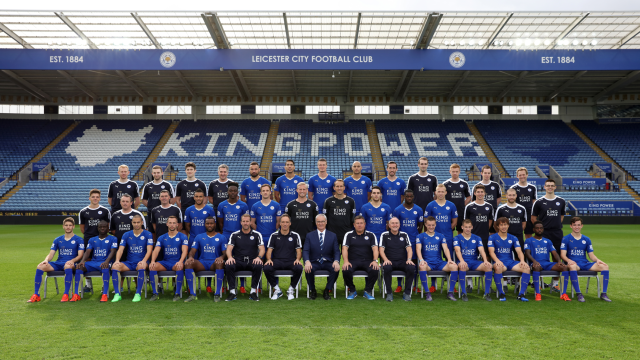
It may not have gotten much attention here in the United States, but I certainly was keeping an eye on it over the weekend. For those that don’t know anything about football – soccer to the U. S. fan – the English Premier League’s championship was decided over the weekend. In a shocking occurrence, Leicester City – who was on the verge of relegation (re:  being sent down to a lower division of professional football in England because they finished in the bottom three of the Premier League) with seven games to go last season – completed one of the most remarkable turnarounds in sports history in winning the Premiership this season.

How big of a turnaround was this? Here’s some stats to give you an idea. The British bookmaker William Hill had Leicester City as a 5000 to 1 shot to win the Premiership at the beginning of the season last fall (and was still around 100-1 in January when Leicester City was leading the league) and many felt that relegation was more likely for the team in 2016 than anything else. They had to make a late run last year to finish in 14th place and started this year with a new manager, Claudio Ranieri, who wasn’t exactly loved by the Foxes fandom. Additionally, in the 30-plus years of the Premier League (and in going back to 1888 with English football), Leicester City had NEVER won the top-tier football league championship; in fact, in the Premier League, no team not named Arsenal, Chelsea, Manchester City or Manchester United had won the title since 1995 (Blackburn Rovers).

The stunning turnaround by the Foxes has brought up the question by many if it is the greatest sporting achievement of all-time. While the achievements of Leicester City are up there on the ladder, there’s a whole world of instances like this to choose from.

There are plenty of individual acts that you can put up as the greatest sports achievement ever. If you look at the sport of baseball, we can go back to the legendary Cy Young’s record for most wins by a pitcher of 511. The next closest pitcher to that mark is another member of the Baseball Hall of Fame, Walter Johnson, who is nearly 100 wins behind Young with his 417 victories. To get to someone from the “modern era” (let’s be kind and call that 1950), you have to go down to Warren Spahn in sixth place with his 363 wins; even Greg Maddux (355) and Roger Clemens (354), legends from my lifetime, aren’t even close (the active pitcher with the most wins? I didn’t believe it myself…Bartolo Colon with 220!).

Then there are the hitting achievements. Nobody thought that Ty Cobb’s 4191 all-time hit record would ever be touched, but then Pete Rose came along and stroked 4256 hits (best active player? Alex Rodriguez, 3082). The home run record is a bit tainted with the Steroid Era of baseball (I personally still consider Hank Aaron’s 755 the record), but thoughts of anyone touching Barry Bonds’ 762 is a fantasy (even A-Rod – or A-Roid – can’t reach it at 692). The ONE record that might stand the test of time is Joe DiMaggio’s 56-game hitting streak; nobody’s come close to that since 1978, when Rose went for 44 games (most recently, Jimmy Rollins went for 38 between two seasons in 2005-06).

NBA: Toronto Raptors at Golden State Warriors

Basketball has its share of great sports achievements and, this time, there are some team acts that come into the mix. This season in the National Basketball Association, the defending champion Golden State Warriors broke the record for most wins in a season (73) that had been held by Michael Jordan’s Chicago Bulls. The Boston Celtics’ string of eight consecutive NBA championships will never be equaled (neither will their nine titles in twelve years) and the dominance of John Wooden’s UCLA teams in the NCAA Men’s Collegiate Basketball Tournament (champions for seven consecutive seasons, ten in twelve years) is unmistakable.

Still, arguably the biggest achievements in basketball were done by individuals. Back in 1962, the legendary Wilt Chamberlain went off in an NBA game against the New York Knicks, scoring 100 points in a game that was played not in the (then) Philadelphia Warriors’ home in the “City of Brotherly Love” but in Hershey, PA. If that wasn’t good enough, that 1962 season Chamberlain AVERAGED 50.4 points per game and a stunning 25.7 rebounds per contest. It makes the recently retired Kobe Bryant’s 81-point game against the Toronto Raptors in 2006 dim a little in recollection.

ap620302055

There are potentially only two things that could approach what Leicester City did this season. Once comes from the National Football League and the other comes from the Olympics.

Back in 1969, the New York Jets were a huge underdog to the Baltimore Colts in Super Bowl III. An 18-point underdog (the second largest point spread in the history of the Super Bowl, second only to Super Bowl XXIX, where San Francisco was favored by 18.5 points over San Diego), quarterback Joe Namath not only guaranteed that his Jets were going to win the game but then went out and dominated the event, with a late touchdown by the Colts saving them from a shutout. But were the Jets even close to a 5000-1 shot to win Super Bowl III at the start of the season? Even with a similar number of teams in the NFL/AFL at that time as the Premier League has (18 for the NFL/AFL, 20 for the EPL), probably not.

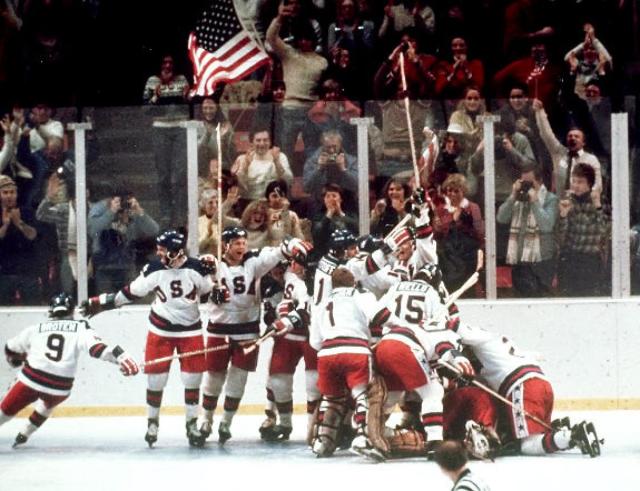
The ONLY thing that might be comparable to the achievement of Leicester City is the Team USA “Miracle on Ice,” the defeat of the Soviet Union’s Red Army team in the 1980 Winter Olympics. It isn’t that the 4-3 match in the semifinals of the Olympic hockey tournament that stands out so much – albeit it was a stunning occurrence – but in looking back at the history between the teams and the overwhelming dominance of the Soviet hockey machine, there are parallels that can be drawn with Leicester City.

The Red Machine stormed through an exhibition tour against National Hockey League teams in 1980, going 5-3-1 before crushing an NHL All-Star team 6-0 to win the Challenge Cup. Team USA, on the other hand, had a 61-game exhibition schedule against European and U. S. teams not nearly as talented as NHL squads before meeting the Red Machine on February 9, 1980. To call that match competitive would be a joke; the Soviets crushed Team USA, 10-3, and went to the Olympics as the overwhelming favorite, while Team USA was thought to have no chance of even reaching the medal round (the semifinals).

Of course, we know now how history played out. Team USA and the Soviet Union would reach the semifinals and be paired together, with the college boys from the lakes and ice rinks of northern U. S. cities and towns giving the vaunted Red Machine – technically soldiers in the Soviet Red Army but professional hockey players all – the toughest game they would receive during the Olympics. After Mike Eruzione gave Team USA the lead with 10 minutes remaining, no one in the crowd of 8500 could believe what they were seeing (believe it or not, the game was not being shown live in the U. S.). As the partisan crowd counted down the seconds – and as announcer Al Michaels would say over the tape-delayed commentary later, “Do you believe in miracles? YES!!” – Team USA would defeat the Soviet Union and, two days later, defeated Finland to win the gold medal.

MiracleOnIce

When you have to go back more than 30 years – and back to something that was geopolitically charged as well as nationalistically inspired – to find something that is even CLOSE to what you’ve done, then it is pretty special. Let’s not start worrying about how Leicester City will do in defending their championship in the Premiership next season, nor worrying about how the Foxes will do in the 2016-17 UEFA Champions League that they have qualified for. Bask in the warming glow of what is arguably the greatest sporting achievement in the history of team sports, whether it is English, European or internationally.

The Insanity of the College Football Bowl Season

CollegeFootball

If we’re stuck in the middle between Thanksgiving and Christmas, it must be time for the college football bowl season to begin. Every college football conference has completed their championship games and, for those that are at the upper echelons of the college football world, they can prepare to play for the National Championship. Beyond those three games – this year consisting of the Orange Bowl and the Cotton Bowl (both on December 31) and the National Championship Game (January 11) – there is an overabundance of games to be played.

In 2014, the college bowl season consisted of 35 games, meaning that 70 teams went to a bowl game from the 128 schools that make up the Football Bowl Subdivision (or FBS, which is different from the Football Championship Subdivision (FCS), the playoff system that the remainder of the collegiate football world plays under). There was plenty of fear in 2014 that there wouldn’t be enough qualified teams to play in the bowl games – to be “bowl eligible,” a team had to win six games from their 12-game schedule – but the final week of the season provided enough teams with a qualifying victory to fill out the schedule. Having faced the potential of not getting qualifying teams, you might have thought that the National Collegiate Athletic Association (NCAA), the governing body of collegiate athletics, would want to keep down the number of bowl games moving into the future. If you had that thought, you would be wrong.

For 2015, a grand total of 41 bowl games (including the National Championship Game) will fill the television screens of virtually every channel on the cable dial, more than double what existed only 20 years ago. Instead of barely finding 70 qualified teams to play in these games, now there was the necessity to add 10 more to the list. With new regulations instituted in the offseason – including the fact that FBS teams could not count victories against FCS teams towards their six-win qualification level – the NCAA did come up short in having enough teams qualify for bowl eligibility. Rather than admit that there were too many bowls, you know what the NCAA did? Granted “waivers” to teams to allow them to count wins against FCS teams to reach the six win mark or use “academic performance criteria” to allow for five win teams to play in a bowl. This is why you’ll see a 6-5 California team in the Armed Forces Bowl (despite one of their wins coming against Grambling) and a 5-7 Nebraska team in the Foster Farms Bowl against UCLA.

So if there aren’t enough teams to qualify to play in these bowl games, why are there more being created as we speak (it is reported that a new bowl game in Austin, TX, will join the ranks in 2016)? While the schools don’t make any money out of the trips to a bowl game, the bowls themselves and the NCAA are stripping every dollar they can out of the system.

SongGirls

Although you might be surprised by this, the colleges and universities that go to these bowl games many times do not even turn a profit for playing in their respective bowl. It may be an honor to be invited to the Raycom Media Camellia Bowl (yes, that actually exists), but the schools have to get their personnel to the game. It costs major moolah for a university to load up planes with the team, cheerleaders, band, coaching staffs, athletic department personnel and college leadership – and this doesn’t even count in the appropriate equipment for the team – and get them to the stadium. In many cases there are media requirements, meaning the teams have to get there days before the game starts. This adds in hotel expenditures for everyone you just flew out to the Big Game.

If that wasn’t bad enough, here’s where we get into perhaps the biggest crime that the bowl games perpetrate on the colleges and universities. Besides having to round up the troops and get them to the game, the schools are then handed a block of tickets and told to sell every single stub to their fans. These ticket blocks sometimes are as large as 20,000 tickets and, if a school fails to sell every ticket, then the school has to buy whatever remaining tickets are left. This can total, in some cases, up to $500,000 per school by itself.

CollegeBand

If the schools aren’t making any money out of these bowl games, then who is?

The answer is virtually everyone else that isn’t involved with playing the game. The businesses that are the “sponsors” of the particular bowls can receive a market value (in advertising) several times larger than what the sponsorship fee cost. Even Bitcoin sponsored a bowl game last year (the Bitcoin Bowl used to be the St. Petersburg Bowl in 2014; Bitcoin didn’t come back in 2015 for a sponsorship of any bowl game), reaping some benefit from the deal because they are associated with the teams involved and the pageantry of the college bowl season.

Then there are the bowls themselves. Considered “non-profit organizations” because they are supposedly set up for a charitable cause, the bowls are a virtual gold mine of revenues. According to Yahoo! Sports, the Sugar Bowl in 2014 held $12.5 million in cash reserves, $20.8 million in publicly traded securities and actually doled out to their Chief Executive Officer a $600,000 a year salary. That’s a pretty big chunk of change to have sitting around for simply throwing a football game on New Year’s Day.

The conferences themselves are raking in the money. The major conferences – the Big 10, the Big 12, the PAC-12, the ACC and the SEC – reap $50 million; smaller conferences who are a part of the college bowl parade get upwards of $15 million (depending of the number of teams they have in the mix). The College Football Playoff adds in another $40 million for the conferences, meaning that #1 Clemson, #2 Alabama, #3 Michigan State and #4 Oklahoma earned another block of cash for the ACC, the SEC, the Big 10 and the Big 12.

Finally, there are the television networks. For broadcasting the College Football Playoff, the monolithic sports channel ESPN paid $7.3 BILLION in 2013 for the broadcasting rights until 2025. Before you feel too bad for ESPN (they have been laying off people of late to trim spending to be able to pay sports licensing fees), they are expected to have revenues of $10 BILLION over that timeframe. This isn’t even counting the other 38 games that make up the college bowl schedule nor the networks (Fox Sports, CBS Sports and NBC Sports and their affiliated cable outlets), which could run into the billions in their own right.

This is the insanity of the college bowl season. Despite the claims that a playoff system like the one that is operated in FCS would “impact the academic pursuits of the athletes” (a bullshit statement because it seems to work fine for the FCS schools), the NCAA is looking to maintain as much control over the schools – and control over the money – as possible. The bowl system is not there to reward the schools and the players for having a successful season, it is a blatant money grab by a system that maximizes every dollar by not having to share it with those who are the product on display.

It isn’t like these games are actually any good, either. In some cases, the teams are playing as much as a month following the last serious game speed contact they participated in and the rust shows in the teams’ performance on the field. The players – some with potential dreams of NFL glory, some just looking to finish their collegiate careers and move on into normal life – play with little to no passion for the game. Thus, you see final scores in the neighborhood of 52-49 or 56-53…there is absolutely ZERO defense played because no one, whether a blue-chip NFL prospect or a grinder on the line looking to complete their degree, wants to be injured in a game that means little to their own personal bottom line.

Much like years past, I will probably watch the College Football Playoff games, but I won’t be watching the Lysol Tidy Bowl live from Savannah, GA. There will be plenty of college basketball to watch (and there’s another money grab by the NCAA, but I digress) that will be much more entertaining than a 70-66 college football game. It just a further example of the insanity that has become college athletics as a whole and, in particular, college football.