Are the University of Missouri’s Issues Indicative of a Bigger Problem?

I have been watching the recent spate of news out of the University of Missouri with a great deal of interest but not much conclusion. This is something that bothers me because, usually after I study an issue for a period of time, I can normally come down on one side or the other in the discussion (this doesn’t mean, however, that it is set in concrete). With the current situation at Missouri the more I read, the more confusion sets in on my thoughts.

For those that have come a bit late to the story, the situation at the University of Missouri that many think exploded over the last two weeks has actually been simmering for some time. Earlier this semester on the Columbia, MO, campus, the school’s student government president stated that he was targeted with a racial slur by someone on campus. A campus group, the Legion of Black Collegians, followed up the student government president’s accusation in adding that they, too, had been targeted by people (assumedly white) who used racial slurs against their group. Then there was a swastika, drawn in fecal matter, found in a dorm bathroom.

Now, those situations are all serious incidences and require a good deal of investigation. Unfortunately, it doesn’t seem that there was much sympathy for the Mizzou administration to taking the time to examine the issues. During the school’s homecoming back on October 10, a group of protesters actually surrounded the vehicle of school president Tim Wolfe to the point of interrupting the parade, questioning him about the investigation. According to local television reports, Wolfe’s vehicle actually bumped into one of the protestors and he didn’t interact with them during the parade or at any time following the altercation.

As to be expected, it pretty much went to Hell after that. A graduate student, Jonathan Butler, started a hunger strike with the intent to force Wolfe out of his position at the school. This didn’t have an effect on the school’s administration but, once the Tigers football team stated they would not practice nor play until Wolfe was removed from his position (with a game scheduled for this Saturday against Brigham Young University at Arrowhead Stadium in Kansas City set to pull in $3 million), the writing was on the wall. Earlier this week, Wolfe resigned his position and the school’s chancellor also said he would step down within the next few months.

The resulting turmoil has spread across the United States to other college campuses and isn’t showing any signs of slowing down. Early this morning, the Dean of Students at Claremont McKenna College in California, Mary Spellman, resigned after standing and being photographed with students dressed as Mexicans to celebrate Halloween. At Yale University, two weeks of protests regarding a “white girls only” party at a fraternity on the campus culminated in a massive march against racism on the campus. Ithaca College in New York, Smith College in Massachusetts and Guilford College in North Carolina have also felt the rumblings of racial unrest and protests.

Now it isn’t like there aren’t some issues with relations between young people that are of different cultures. Black students have discussed how their white classmates – or even their roommates – have made racially insensitive statements around them. Those black students have also discussed how they feel they are viewed on the campus. It even goes into the Hispanic community, as the situation in California demonstrates. There is also something problematic in that the group at the University of Missouri, Concerned Students 1950, draws part of their name from the year the first person of color was admitted to the university. The question is, however, is it blatant racism or just something that is inherent from upbringing?

The University of Missouri is estimated to be 80% white, with blacks making up approximately 8% of the student population (no breakdown as to the remainder of the student body). With a few exceptions, this is a breakdown that you would probably find at many public colleges and universities and, to be honest, it may be worse at private institutions. When I went to college long ago, I went to Butler University, a private school in Indianapolis that was predominantly white and, as far as I know, is still that way today. There wasn’t, however, a base of racism that ran through the school (at least to my knowledge).

Some of the incidences brought up by black students at colleges and universities across the country do have some serious racial overtones and/or problems. Being asked about how a black person styles their hair, asking a black person to teach them the latest dance moves or even state that black people’s skin is greasy because slavery made their ancestors “sweat a lot”…these are all examples of some of the idiotic questions or statements posed to black students. What these statements demonstrate isn’t inherently racism as much as it is pure stupidity.

This isn’t an uncommon occurrence, though. For the most part, when 17-18 year olds get together at a college or university, they aren’t well-versed in the ways of the world. They aren’t educated as to the diversity of the world and how to actually treat people who aren’t just like you (here’s a thought, how about the Golden Rule?). Finally, they are pretty stupid to begin with; this is the reason for college is to further educate yourself about the world that is around you.

While some of these instances may be racial in nature, there are some problems on the other side also. Reportedly journalists looking to report on the protests at the University of Missouri were harassed, kicked out and generally not allowed to either videotape the proceedings or what some of the protest leaders were saying. In one particular instance, a student with the Missouri school newspaper has filed a complaint against one of the professors who was leading the Concerned Student 1950 protest, who is allegedly videotaped calling for “muscle” to eject the student reporter and his videographer from the protest.

Furthermore, there are questions as to the validity of some of the alleged situations. Part of the reason that there was so much time taken in the University of Missouri situation (that investigation – and its length – was a major complaint by Concerned Student 1950) is that there is little evidence to investigate. A student who is the victim of a racial slur thrown from a moving vehicle is going to be difficult to investigate, unless the student has a photographic memory and/or has their cellphone video running (although racism is problematic, the knee-jerk reaction completely to the other side isn’t logical either). The “poop swastika” situation, short of taking DNA samples from the entirety of the Mizzou campus (something that would violate pretty much every privacy law on the books), isn’t going to be solved quickly.

One of the problems overall is that there is still racism in the United States today. Despite what many might want to think, there is still an ugly part of the citizenry that believes people of a different ilk are beneath them and should be treated as less than human. There is still the problem of de facto racism, where it isn’t blatant but is ingrained in the psyche and practices of a particular segment of society. Does it make it right? No, but you have to recall that, even up until the mid-1970s, there was blatant racism going on in both the North and the South (busing in Boston comes to mind). Just because a black man was elected President of the United States twice doesn’t mean that “racism is over.”

On the other side, there are some things that are going to take time if they are to be rectified. Those people that “clutch a purse tighter when I come by?” Those people who ask inappropriate questions regarding your ethnicity? Those people who may shy away from you because they grew up in a 99.9% white country town? Those things aren’t going to change overnight…hell, it may not change until late in this century at the earliest. Change doesn’t happen immediately; for it to firmly take hold it has to be, like a science experiment, performed over and over again with the same outcome occurring.

There is also a problem on college campuses in the fact that they aren’t a bastion of open thought anymore. The ability to be racist isn’t something that should be protected, don’t get me wrong, but the examination of issues regarding race, religion and other areas is something that has traditionally been a discussion point at colleges and universities. The oversensitivity of one or several parties on a college campus – and their overwrought demands to “make it stop” – is something that seriously inhibits free thought, something we should strive for as humans.

Furthermore, I have problems with protesters getting no response from administrators but, as soon as an athletic team threatens to boycott a game, then the change comes rapidly. A sports team shouldn’t have an undue influence on who is in the leadership of the school. What does it say about that leadership if, recognizing that they’ll lose millions of dollars if that team doesn’t play their game, they knuckle under?

The turmoil regarding these situations – wherever they are either in the United States or in the world – are continuing to roil and it doesn’t appear that it will stop anytime soon. I am still on the sidelines, however, as there are way too many moving parts – and changing stories – to be able to draw a firm conclusion as of yet. Perhaps will some more time and the completion of some of these investigations (which SHOULD be given time to come to fruition rather than complaints about their slow pace), those of us on the outside looking in might be able to determine who is right.
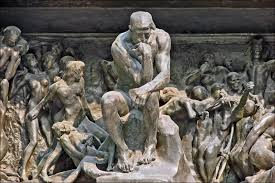
If You Could Change Everything, Would You Do It?

TheThinker

One of the greatest traits of humans is their never-ceasing ability to question its surroundings, its science and even itself. The ability to innovate – Johannes Gutenberg’s printing press, Nikola Tesla and Thomas Edison’s work in radio and electricity, Albert Einstein’s work with theoretical physics…all have expanded our knowledge of the world and, at the same time, expanded the knowledge of ourselves. But at what point does that innovation go beyond the expansion of human knowledge and enter into realms that shouldn’t be explored?

A recent article at BusinessInsider.com discussed the issue of what the next great innovation will be in technology. It won’t come in any grand leap in computer technology or even in some areas that would be truly fascinating, such as virtual reality. According to those who were surveyed, the next great “leap” will come in the arena of genetics.

This research, as related by BusinessInsider.com’s Kevin Loria, would be the ability to look at the human genome – the basic building block for the traits that make everyone individualistic – and be able to manipulate particular segments of the DNA code. Through the analysis, it is predicted that debilitating diseases could be found and cut out, potential errors in the DNA sequence could be reversed to prevent mental illness and even the creation of the “superhuman” resilient to all diseases could potentially be created.

This process, called gene-editing (also known as CRISPR), is something that has scientists in a frenzy as to the possibilities. “We’re basically able to have a molecular scalpel for genomes,” Jennifer Doudna, a biologist credited as one of the co-discoverers of CRISPR who has used the technology, is quoted by Loria. “All the technologies in the past were sort of like sledgehammers…This just gives scientists the capability do something that is incredibly powerful.”

The ever-inquisitive nature of humans reaches into every aspect of life, even (believe it or not) the 2016 Presidential campaign. A question in New York Times Magazine that was blasted over the internet – “Could you kill Baby Hitler?” – has become an intriguing experiment with the human psyche (according to the Times statisticians, 42% of people responded “yes,” 30% responded “no” and 28% “not sure”). The question, when posed to GOP Presidential candidate Jeb Bush, brought no hesitation in his reply.

Asked if he had the opportunity to kill an infant Hitler – if he knew what that baby would become but not what effect his death in infancy would have on the overall world – Bush responded to The Huffington Post, “Hell, yeah, I would! You gotta step up, man!” After some contemplation on the potential ramifications of such an act, Bush doesn’t change his mind, instead doubling down by repeating, “It could have a dangerous effect on everything else, but I’d do it – I mean, Hitler,” Bush concluded.

In essence, the question has become “If you could change everything, would you do it?”

People may hear the word “existential” in their lives but not really have an idea as to what it actually means. Many may hear the term “existential threat” and conjure up something that is a threat to their very existence. This is the literal definition of “existential”; for example, if a politician says “Vladimir Putin is an existential threat to the United States,” it literally means that Putin is a threat to the U. S. and its citizens.

When people use the term “existential questions,” they are actually pondering the meaning and thought behind the practice of living, the very essence of being. There is actually a branch of philosophy dedicated to existentialism, with the founders being the philosophers Soren Kierkegaard, Friedrich Nietzsche, Jean-Paul Sartre and Fyodor Dostoyevsky (among others). There are different branches on the Tree of Existentialism, but basically they all come back to the individual being the starting point for pretty much everything.

Finally, an “existential crisis” sounds like something that might come out of deep introspection through Existentialism, but is actually a tool used to joke about someone who is thinking too deeply (normally about themselves). If you’ve heard the term “navel gazing,” then this is what they were talking about.

In looking at these two circumstances, there is plenty to think about in these two “existential questions.” With the first subject, mankind would have the ability to pretty much eradicate any issues that may face humanity. Conditions such as cancer, diabetes, heart disease, neuromuscular diseases (amyotrophic lateral sclerosis (ALS), multiple sclerosis (MS) and others) could be an afterthought in the future if doctors could identify in a single strand of DNA those “trigger points” and remove them from the sequence rather than let them reach actual life.

Then there would be the “other side” of the equation, however. With the ability to manipulate the genome to take away disease, people could also ensure that they have a blonde-haired, blue-eyed child (boy or girl), cause mutations in musculature or height, even perhaps remove the ability to feel pain or maybe even block emotional feelings. While the ability to edit the genome may be a breakthrough that leads us into a bold new future, it could also lead us down a dark path to manipulation.

In the case of Governor Bush, the question has been the subject of plenty of alternate history and science fiction tomes. The killing of Hitler – whether as a child (the preferred theory as he would supposedly be defenseless) or before he reached the apex of his power in Nazi Germany (the theory here is during his service in World War I) – would have theoretically prevented the horror that was World War II and additionally the ghastly philosophy that Hitler inflicted on the Jewish race, the Final Solution (or the Holocaust). If this were to be done from OUR future, however, what would be the ramifications?

The theory on this part is the “Butterfly Effect” which basically says even the smallest action has bigger ramifications (the “butterfly” flapping its wings causes a hurricane thousands of miles away). With the death of Hitler, would WWII have been avoided? At what point would you kill Hitler, in his youth or as an adult? If you waited until he was an adult, would that be too late?

The existential questions continue…if Hitler hadn’t come along at that particular point in history, could someone else who lived in that time simply taken his place? What if one of the people who died during WWII actually went on to discover a cure for cancer or significant breakthroughs in another scientific field? Add into this the fact that, no matter how many times people may use the term “I could kill you,” the ability for one human to kill another isn’t as easy as it sounds, there is plenty to think about.

For myself, the first question is surprisingly easy. As a general rule, I would be against any manipulation of the human genetic code, but as a way of eradicating disease it would be a viable idea. If the debilitating diseases that plague mankind (yes, even the Plague) could be controlled and/or eliminated, think of the improvements in people’s lives (and the ability to bring down medical costs and spending on disease control)! We would be tremendously advanced as a species if we could improve on our basic genetic code and its inherent imperfections to the point of eliminating them completely.

Where I would have a problem, though, is when it is done for simply cosmetic or aesthetic purposes. Don’t like your eye color? Changing your genetic code (or doing it to an in utero child) just so you can satisfy your own vanity is about the most narcissistic thing imaginable. In my mind, we don’t come up with tremendous breakthroughs in our existence to simply use them to change what we see in the mirror, we come up with them to improve mankind and its world.

The second question is a much thornier one. Besides being one of the pivotal moments in human history, not just the 20th century, World War II and its players had a seminal impact on how the world is shaped today. By eliminating Hitler from the equation – and, in theory, eliminating the catalyst for the start of WWII – what effect would that have on the world today? You may not think that is a big deal, but (using the “Butterfly Effect”) what if the lack of WWII caused your grandfather to not enter the military, where he would meet your grandmother at a base dance that led to their marriage and the birth of your father/mother? The resulting theory would be that YOU do not exist.

I would have to use one of science fiction’s greatest creations in musing over killing Hitler or not. In the Star Trek universe, the Prime Directive is the governing philosophy of the United Federation of Planets. In that codified theory, representatives of the Federation aren’t to have an impact on developing societies or their historical direction. With this in mind – and the potential ramifications, both good and bad, in the historical sense – I would have to say that I wouldn’t kill Hitler if given the chance. There is simply too much that could occur otherwise – and in some cases, could be even worse – than even the genocide, hatred and pain that Hitler’s short existence brought about.

Where would you land on these subjects? And what does it say about you? If you could change everything, would you do it?

What’s the Problem with Gambling? The U. S. Was Built On It!

(Author’s note:  With the uproar over daily fantasy sports – or DFS – in the news right now, there are folks discussing the issue of gambling. This is something that I wrote slightly more than a year ago that is as true now as it was then.)

One of the best ways to learn about whatever country you live in is to take a lengthy drive. Last month, as part of a move from the Midwest to the East Coast, I sat behind the wheel of the family’s Mercedes-Benz and did just that, covering about 1000 miles along the way. When the only conversation that you can have in a sports car is the cat that is riding along with you (after the first ten minutes of meowing, they tend to go to sleep and, even if they are listening, aren’t exactly someone to bounce ideas off of), you have time to notice some of the oddities of the United States.

As I went by such strange things as the Creation Museum (would have loved a stop there for just the simple comedy), roadside vegetable sales and various Appalachian curios, one of the things that I noticed as the miles began to pile up was the roadside billboards that popped up as I drove. Easing out of Illinois into Indiana, I was hit with those billboards from many of the popular gaming destinations in the Hoosier State. A quick hit into Ohio saw those billboards change over to the new destinations that have been opened in Cincinnati. In Kentucky, the billboards changed over from casino gaming to racetracks and horse farms that promoted the Bluegrass State’s main industry. Even in Tennessee (where there isn’t a casino scene), the billboards promoting North Carolina’s Harrah’s Cherokee casino disturbed the natural beauty that the Great Smoky Mountains provided.

Mind you, it wasn’t just one billboard. There were more than a hundred of them, ticking down the miles until you reached the exit of said casino/racetrack/etc. It got my mind thinking (as my cat companion slumbered quietly in the passenger seat)…what’s the problem with gambling? The United States was (and is) built on it!

All you have to do to reach this conclusion is have a basic understanding of U. S. history. The very first gamble was performed from the European continent as several explorers including Leif Erickson in the 11th century and Christopher Columbus in the 15th century, decided that there was “something” where the sun was setting and (in Columbus’ case) that the earth just didn’t drop off into the Great Unknown. Erickson’s gamble was a bit bolder in that he bankrolled himself for the trip; Columbus, on the other hand, was able to get Spanish Queen Isabella and King Ferdinand II to pay for his trip (potentially the first act of “backing” in a gambling setting).

As the “New World” began to garner attention, even the bastions of religious piety showed they weren’t above taking a chance. England was the location for this as first the “Lost Colony” of Roanoke (the ultimate gamble as the residents “disappeared” in 1590) was settled. Following that, the Puritans – who were so religious they were considered more restrictive than the Church of England and whose very name means ‘against pleasure’ – rolled the dice and settled at Plymouth Colony in 1620.

By the end of the 17th century, the Colonies were thriving and so was gambling. Lotteries were the prevalent form of gambling (and were used to fund several prominent colleges such as Yale, Harvard and Princeton), but dice, cards and horse racing were also popular (even the more unpalatable gambling escapades as cockfighting and dogfighting had their audience). As the rumblings of revolution came to a head in the mid-18th century, our country’s Founding Fathers – most notably George Washington and Benjamin Franklin – enjoyed a good card game. Playing cards was so popular that the Stamp Act (one of the catapults for the American Revolution) included a clause that taxed every deck of cards.

After the Revolution, however, some of the old “puritanical” ideas began to set in. Gambling was banned in some of the fledgling states, but legal (and illegal) lotteries still flourished. The lotteries even came under attack, however, so that by the time of the Civil War, only three states permitted them. The “War Between The States” would prove to be the next catalyst for gambling in the United States.

Locked in a battle for the soul of the country, both Union and Confederate soldiers would pass the time playing poker (a recent immigrant to the United States through the port city of New Orleans) with their brothers in arms as they waited for the next wager for their lives. After the conclusion of the Civil War, that gambling mentality continues as citizens pushed westward and poker came along for the ride. Nearly every Western town could be found to have a casino (legal or otherwise), where a game of faro or poker would be ongoing, and the Mississippi River bustled with commerce and the “riverboat gamblers” that plied their trade on the paddleboats.

Although it was attempted many times, gambling still found a way around banishment. The actions of Prohibition in the early 20th century saw gambling and alcohol usage pushed underground and into the hands of organized crime. Laws to make gambling illegal in the Eastern part of the U. S. saw those organized crime figures move westward to Nevada and California, with the first casinos opened in 1931 as the Boulder Dam was being built near Las Vegas. Today, only two states (Hawaii and Utah) don’t have some sort of casino or card room in their jurisdictions.

Presidents of the United States have actively taken up the game of poker and, for some of them, been advocates for the game. Harry Truman’s “The Buck Stops Here” is directly related to his love of a game of poker. Richard Nixon allegedly financed his first political campaign with money won from playing Seven Card Stud. Even Barack Obama is thought to have an affinity for the game, playing in a weekly Senate poker game prior to entering the White House.

This is only looking at gambling as it relates to cards, dice, table games, etc. U. S. citizens have taken a gamble throughout the country’s history, dating from the Puritans to the signers of the Declaration of Independence (a bold gamble, you might say) to the westward expansion of the country into areas once thought to be foreboding and unsuitable for human habitat. Americans start businesses, sometimes failing but, most of the time, successful (Henry Ford, the Wright Brothers, the Rockefellers and Bill Gates (to name a few) ring any bells?). Americans gamble on innovations that have improved the world through industry, scientific discovery and even traveling to space. Even war, the most unfortunate invention of human society, has been impacted by American gambles.

Gambling is as inherent to the American persona as the flag, our National Anthem and our basic premise of “life, liberty and the pursuit of happiness.” Without that inner drive to take a risk, to take a chance on an unknown outcome, much of what the country has become today would have not been achieved, let alone even attempted. The United States – and much of the world, to be honest – always has to have those “dreamers,” “schemers” and gamblers to move society forward, otherwise we stagnate and, eventually, devolve.

So, as my drive ended by pulling up to our family’s new house, once again I’ll ask…why do we, not only as U. S. citizens but as an evolving species, have a problem with gambling?

Is The “American” Too Stupid To Handle The Responsibility of Guns?

HeyCongress

The United States, in its creation and its development, is one of the most brilliant experiments that has occurred in human history. Instead of a homogenous society such as many Asian nations or one of tribal dominance such as those that are found in Africa, the United States of America was a true attempt at something that many would feel is impossible:  incorporating different people, different ideologies and different cultures into a “melting pot” where the end goal is an amalgam of the world’s best into a new creature…an “American” (I must say at this point I’ve never liked the term “American” – when that term is used, I immediately wonder “North, South or Central?” How about “citizen of the United States?”). While the list of success stories from the 200-plus years of the existence of the United States of America – and another 150 years or so of settlement into this earthen laboratory – are some of the greatest in mankind’s history, there are some areas where the nation has fallen short.

One of those areas has become painfully evident as details have come out over the past few days. Last Thursday a white male walked into a community college in Oregon and, with no provocation or apparent motive, gunned down nine classmates and instructors and wounded another seven people. In the more than 72 hours since the last echo of gunshots filtered across the Oregon landscape, we’ve dredged up the old tapes of the previous arguments over past mass shooting situations rather than advancing any significant solutions for changing the climate.

The “Usual Suspects” have divided along their prescribed lines, with one side stating that further laws on guns are a necessity to prevent this from happening again. The other side states that it is their “God given right” to have weapons, as many as they want, and any move to take them away is roughly akin to an attack against the very fabric of life itself. The potential reality, however, is that this new creature we’ve created – the “American” – is too fucking stupid to handle the responsibility of guns.

In looking at it from the “law of the land” – the U. S. Constitution – there would appear to be nothing that could be done, but that would be inaccurate. The Second Amendment – “A well-regulated Militia, being necessary to the security of a free State, the right of the people to keep and bear Arms, shall not be infringed.” – was put into the Bill of Rights for the essential purpose of having each state providing its own Army – its “Militia” – for the defense of the individual State and for the purpose of providing a standing Army for the federal government. The people who would make up that “Militia” would be the citizens of the state, who would need weaponry to be able to fight in battle (not to mention that they already had these weapons for providing food for their families).

Fast forward to the 21st century and the theory of the state-run “Militia” has run its course. The federal government has the responsibility for the national defense, accepting volunteers from its citizenry, thus the theory that a person may have to join a “Militia” to defend their state or country is an antiquated one (no more so than blacks and women don’t have the right to vote, for example…that was also in the Constitution at one time). Since hunting has now also become a leisure activity for virtually everybody rather than a survival one, sane people would naturally examine the point of weapons in today’s society.

Secondly, let’s look at the situation from the evolution of weapons. In the 18th century, the weapon of choice for many in the Colonies was a musket, which took anywhere from two to five minutes to load up with a single shot. The weapon’s effective range was about 50 meters (roughly 164 feet), meaning you had to virtually be right beside your target before you squeezed the trigger (in those days, ammunition was expensive and not to be wasted). It was also fairly easy to see when you had your musket with you; at 60 inches (five feet), there wasn’t anywhere on your body to conceal the weapon.

Once again, let’s rocket through history to today. Weapons such as the AR-15 – which was the predecessor to the military usage M-16 – have become popular for ownership by civilians for their ease of use as well as their power. That weapon can be converted to be able to fire fully automatic, meaning it can spew rounds out at the rate of hundreds per minute (remember the musket was a shot every two to five minutes) and has an effective target range of 500 meters or more (in the hands of a military person or someone well trained on the weapon). Even a .45 automatic handgun can pop out rounds at around one per second (60) and has an effective range of about 100 meters, if the shooter is quick with the trigger and reloading the weapon. And this isn’t even introducing a weapon such as the M-60, a weapon with the range of 1200 meters and up to 2000 meters in a trained sniper’s hands. When comparing the two situations, any logically minded person might entertain the option, at the minimum, that the Second Amendment WASN’T written with today’s sophisticated weaponry in mind.

US Stupidity

Finally, let’s take a look at the general stupidity of those that own weapons today. In September the state of Georgia, who for some unexplainable reason allow for weapons to be carried in bars, was greeted with a shootout in a bar when several people whipped out their weapons just before 3AM in the morning. Three people were found shot there and seven others, looking to avoid police, took themselves to the hospital. Only the stupidity of not being able to aim a weapon properly prevented a significant loss of life in this instance.

Typing the search phrase “child finds gun and shoots” into Google returns over five MILLION results on the subject. Looking up “person cleaning gun shoots” returns over EIGHT MILLION hits, including a North Carolina father who shot his 10-year old son to death while wiping down his shotgun in 2013. Last year a Las Vegas gun instructor handed an Uzi to a nine-year old girl on a gun range. The girl, unable to properly control the weapon, killed the instructor immediately as she struggled with its power. These and other stories continually demonstrate the stupidity of the “American” to simply maintain their weapons safely, keep them out of the hands of those who might not know what to do with them or even momentarily pause to think if something this dangerous should be done at all.

The gun fanatics can be shot down quickly. “The only counter for a bad guy…” yeah…yeah…yeah. How many times has that “good guy” taken down the baddie? On the grounds of that community college in Oregon were several people with concealed/carry permits and at least one person who was actively carrying. What did they do to stop the situation? In such a situation, the objective is to head for cover, not open up like it’s the fucking Wild West and escalate a situation beyond what it is. The Virginia Tech shooting was done on campus in the midst of plenty of University police and security…the shooter stopped his rampage when he committed suicide. I don’t see these “good guys” civilians jumping up and, even if they could, their own personal logic and training would probably prevent them from taking action and making a situation worse.

“It’s a right…”yeah…yeah…yeah. It was previously a “right” for women not to vote, that slaves were 3/5 of a person (so much for that “all created equal” stuff), that you couldn’t drink, etc. Rights are critical to keeping society free, sure. Rights aren’t set in stone, however; recognize the end of slavery, women’s suffrage, civil rights and the end of Prohibition. Besides, if Donald Trump can debate the legality of the 14th Amendment, maybe it’s time we started to take a look at all of them in our current society.

“I’m protecting against the tyrant Obama and the New World Order…” yeah…yeah…yeah. You’re part of the problem, bub, and shouldn’t be holding a weapon if you believe in a conspiracy theory like that (the “New World Order” or Illuminati is pretty lame if it has been in existence for well over 600-700 years and hasn’t TAKEN OVER ANYTHING). Put down the weapon, step away from it slowly and pick up your tinfoil hat and binky to suck to help keep you calm. (Funny how we never heard about these armed “Militias” wanting to take down President Bush, isn’t it? Perhaps that’s a question for another time…)

The stupidity of “Americans” regarding weapons will continue until there is some change to the mentality. There are fewer restrictions on guns than there are on an automobiles; while admittedly not a right, driving an auto requires an age requirement, insurance, licensing, training on the vehicle (we just don’t allow anyone to jump into a gasoline tanker truck without the proper training) and, if they don’t abide by the rules, then people are punished both financially and with their very freedom. Why can’t the same thing be done regarding our love affair with guns? If your too stupid to be able to handle them responsibly, then you don’t need to have them at all.

I won’t go through the litany of civilized nations that have come up with the answer to the questions we United States citizens face regarding the gun issue. If we continue to let the stupid rule the issue, however, we are doomed to continual tragedy. If we cannot get this system under control, then we will continue to see (to paraphrase a Jimmy Buffett song about ignoring problems around you) “a river of blood pouring out from a wound that will not heal.”

Why Does Pope Francis Have Such a Positive Effect on People?

If you’ve been here any length of time, you know by this point that I have, at best, an arm’s length relationship with religion. From the start, I have yet to find a religion that has a basis in fact. When I say fact, it has to have a scientific base to it. I refuse to have my intelligence insulted into thinking that the Earth is 10,000 years old, that man walked with the dinosaurs and has ruled the planet over the last 6000 years. There’s also that dichotomy between a Supreme Being that is supposed to “love you” but, if you don’t follow His laws to the letter, will cast into a fiery pit to roast for all eternity, but that’s a minor point. Let’s just leave it that religion and I have several areas we would need to work on if there was to be any contemplations.

This isn’t meant to imply that I don’t know my share about many of the major religions around the world and even some of the minor ones. Catholicism was one of those that has always interested me because there is so little effort made to change it from the pagan days of Roman mythology. Whereas Christianity brought about the birth of Jesus on December 25 to coincide with the pagan celebrations of the Winter Solstice (Bible scholars believe that Jesus Christ was either born in the spring or the fall, with fall much more likely – September 25 is a more accurate date to some), Catholicism doesn’t even try to hide their “patron saints,” basing them on the Roman gods and goddesses that populated the polytheistic religion that preceded them. As to the “God of gods,” ancient Romans looked to the deity Jupiter; to watch over the “patron saints,” there was, well…God.

Catholicism, with its roughly 1.13 billion followers (that’s the number the Vatican, the base for the Church of Rome and Catholicism, offers), is the second largest religious base in the world behind only Islam (I am separating Catholicism from Christianity because there are major differences between the two in my opinion; for the sake of argument, if you combine Catholicism and Christianity they are larger than Islam by number of followers). In the United States, 69.4 million citizens recognize themselves as Catholic, making them the largest denomination in the country. The Catholic faith has permeated U. S. society and government, with our current Vice President Joe Biden, the Speaker of the House John Boehner, six of the nine Supreme Court justices (including Chief Justice John Roberts) and a majority of the members of Congress and the state’s Governors worshipping as Catholics.

Therefore, it isn’t that surprising the attention that the papal visit of the current Bishop of Rome, Pope Francis, to the United States has captured. Every major news network covered Pope Francis’ arrival in the U. S. on Wednesday (from Cuba, interestingly enough…a country that the U. S. just recently reestablished diplomatic ties with that was aided by this current Pope) with a fervor that is usually reserved for the British monarchy (that one I can’t even figure out). On Thursday, his address to Congress was “must see” television, as was his departure for New York City and more meetings. But what has been especially interesting – and I can honestly say that I am counted in this area – is the effect that Pope Francis’ visit has had on those of us with a skewed view of religion.

To say that Pope Francis isn’t a change from the past…oh, 2000 years?…of papal history would be the understatement of several millennia. Pope Francis, born Jorge Mario Bergoglio in Buenos Aires, Argentina, is the first Pope from the Western Hemisphere in the over 2000-year history of the Catholic Church, the first non-European pope since 741 A.D. and the first Jesuit pope in history…that’s quite a few firsts on the docket already. Where Pope Francis has been able to further separate himself, however, is in his words and actions, which are probably the things that make him appealing to non-religious people.

Because of his Jesuit background that has an emphasis on social justice, Pope Francis – perhaps the least gaudily clad Pope in my lifetime, eschewing any gold jewelry or other finery unlike past Popes – has put an emphasis on working with the poor and bringing their standard of living out of the sewer from where it exists in many parts of the world. Sometimes this has caused Pope Francis to rail against “greed” and the pursuit of money over anything else in life. The Pope wasn’t the one who came up with this…it is part of the teachings of the Bible, the book that many claim to follow but when asked to put into practice decide to forget the sections they don’t agree with.

Pope Francis also recently released an encyclical (a papal comment on Catholic doctrine) that discussed global warming. Saying that humans and their lifestyles are causing increased problems with the situation, Pope Francis directed people to take an appreciation of their planet as they are “stewards of the Earth.” Once again, this isn’t anything radical (unlike what some might say), this is something that is in the Bible and a challenge to humanity to not fuck up the only place that they can live.

For myself, the biggest thing that Pope Francis did was today. In Washington, D. C., following his speech to the U. S. Congress, the schedule had Pope Francis having a high powered lunch with the leaders of both parties of the House and Senate, Senate Majority Leader Mitch McConnell, Senate Minority Leader Harry Reid, Speaker Boehner and Minority Leader Nancy Pelosi, as well as other Congressional staffers. Instead of noshing with these “power brokers,” Pope Francis did what a man of God would do:  turned them down and headed to lunch with 200 people at Catholic Charities of the Archdiocese of Washington, including some who were homeless or in need of the services of the organization.

The ability of Pope Francis to not only take the examples put into the Bible – love thy neighbor, reach out to those less fortunate, be a good caretaker of life and your surroundings (I could go on, but you get the idea) – but also to buck the trends of some in his own Church to politicize many of the beliefs of Catholicism (if there was ever a day to bring back the Papal food tester to make sure Pope Francis’ food wasn’t tainted, these days would be it). When some religious conservatives even have issues with what Pope Francis says, then he must be on the right track somewhere.

In my lifetime, this is only the second time that a religious figure has been able to impress me on any level. The first person was Billy Graham, who was able to look past religious beliefs and speak directly to whoever was listening about the word of God. Sure, Graham was a Christian but his sermons could be heard by, respected and learned from by anyone from any denomination or from no denomination at all (his son Franklin, on the other hand, has almost blasphemed the Graham name). Until Pope Francis came along (this Pope seems to have the same ability to get people to listen to what he’s saying), Graham was the only religious person whose viewpoint I actually respected.

This doesn’t give pass to the Catholic Church on some of their other subjects, however. The Vatican Bank is one of the largest in the world, with assets conservatively estimated at $5 billion, along with art treasures that the world has never seen. Property owned by the Catholic Church is worth well into the billions. The Vatican Library has documents that potentially could change history that few have ever seen. There is the denial of several atrocities that have occurred over the course of history, including the Crusades, the Spanish Inquisition, the war against science in the Middle Ages (and the continued struggle between science and religion as a whole today), allowing the Nazi persecution of the Jews during World War II, the past and continued cover-up of child molestation by priests and several other issues. These are areas that have been woefully addressed by the Catholic Church and its leadership in the 20th and 21st centuries.

Even with Pope Francis at the helm, there are still issues that the Catholic Church is behind the times on (let’s not even get started there). But Pope Francis has shown that there is potentially a light that is leading the Catholic Church into the future instead of the darkness of dogma.

Will this light continue to shine? Pope Francis has already said he doesn’t envision his tenure with the papacy being a long one, but the hope does exist that the next man chosen to be the “right hand of God” will at least listen to what Francis has said and perhaps put his own futuristic mark on the direction of the Catholic Church. If the Church does decide to try to reverse what Pope Francis has started, then they might just push more people – of their own faith, other faiths and even those with no faith – away from the basis of believing.

Jade Helm 15 a Conspiracy Theory With No Basis in Fact

When Hollywood puts together a movie or television show, the better ones always have some basis in fact or reality. No matter the genre – horror, suspense, action, romcom, etc. – the closer to reality it is, the more impact it has on the viewing audience. In many cases, it is because it MIGHT have a chance of happening or it is factually feasible to someone or something that makes the thrills, scares or emotional investment viscerally important to people. The same thing can be said books; although some (alongside their acting brethren) do like to be removed to a fantasyland that allows the brain to take a pause, the more realistic a book is in the mind of the reader, the more of an impact it will have.

In many ways – possibly because they are works of fiction created by someone’s mind – the multitude of conspiracy theories that abound in today’s world fall into the same category that Hollywood’s best cinematic, theatric and episodic efforts reside in that they sometimes need just a flake of truth to them to be believable. Without the slimmest of possibilities that it could actually happen, conspiracy theories often die an ignoble death or, at best, find a life in the alternate history genre.

Before we dive into the latest example of the conspiracy theory concept, we have to look at why conspiracy theories abound. What is it about conspiracy theories that draw people in? Why do conspiracy theories continually pop up in society? What should be done if they’re false claims? These are all good questions and we’ll start at the beginning.

The thing about conspiracy theories that draw people in is the desire by humanity to understand their conditions for existence. For humans it is highly desirable to know that the sun comes up in the morning, sets in the evening and it will do the same thing tomorrow. It can be highly desirable to believe that good always vanquishes evil, right triumphs over wrong and all is copacetic with the world when they lay their head on the pillow at night. These desires, if not met, can cause otherwise normal people to concoct an alternate reality that fits into their desired existence.

For example, let’s take a look at one of the greatest conspiracy theories of all-time, the assassination of President John F. Kennedy in 1963. People who saw the accused assassin, Lee Harvey Oswald, couldn’t believe that such a “small” person could be responsible for taking down the most powerful leader on Earth. To help their minds cope with this, many dredged up scenarios that helped their minds to make sense of the situation:  the Cubans were involved because of the Bay of Pigs fiasco; the Chicago and Miami arms of La Cosa Nostra joined forces with the Central Intelligence Agency to do the deed; the Russians (for being shown up in the Cuban Missile Crisis)…the list goes on. For many, believing that these powerful and mysterious bodies killed the President of the United States made more sense than a single man who was allegedly an awful shooter picking off the President from the window of a building as he drove by in a limousine.

As the world draws closer together, it also becomes much more difficult to explain; this causes an increase in conspiracy theories in society. Whereas 30-40 years ago it would have been unheard of for some of the actions that, for example, the twenty 9/11 terrorists took – training for over two to three years and immersing yourself in a foreign culture for what would eventually be a suicide mission – today those jihadists have the spiritual, emotional and “obligation to duty” wherewithal to pull off these horrendous acts. It would be easier for some to force up a story that the attacks of 14 years ago were the work of a “shadow world government” or even our own political leadership (to push us closer to a military state and allow for those in power to take more of it) rather than to believe a group of people could even get close to the destruction that occurred on 9/11.

Recently one of those “conspiracy theories” came to a close and it gives us an opportunity to look at how we should handle those that promote them when they are proven to be untrue. On Tuesday, the military exercises known as Jade Helm 15 came to a close after eight weeks of operations across the Southwestern United States. Troops from every branch of the U. S. Armed Forces spread across several states, including Texas, New Mexico, Arizona, California and Colorado (if I left you out, don’t feel bad), to train in terrain, temperatures and combat situations that they would be facing in the Middle East. This training is much like what U. S. Marines do with their amphibious landings off the coast of North Carolina or Virginia or the U. S. Navy or Air Force does with bombing runs or aerial combat in the deserts of Death Valley or Nellis Air Force Base in Nevada.

This time, however, a preconceived “conspiracy theory” was developed, by which jackass nobody knows. The “conspiracy theory” promoted by these brain-dead individuals was that the federal government, under the auspices of the Muslim king Barack Obama, was going to take over Texas and put it under government martial law. To achieve this goal, the training exercise “Jade Helm” was the cover to allow armed troops to move freely across the Southwest, picking up “true patriots” and putting them into “internment camps.” These “internment camps” were linked by underground tunnels between closed Wal-Mart stores, which the Walton Family (a dastardly part of the conspiracy due to their complicit involvement in the New World Order) had donated to the government for this exact purpose. Once martial law was in place, King Barack would “eliminate” any opposition through mass executions or reeducation programs.

Hopefully you were able to read through that mass of crazy…

The first inklings of this story worthy of Hollywood bubbled up in meetings of the County Commissioners of Bastrop, TX, where “concerned citizens” forced their way to the front of the meetings demanding answers from their elected officials. Were they a part of the conspiracy to enslave their constituents? Were they letting the feds “take over?” Even after bringing in a highly decorated Army officer to explain the situation, people still believed the “conspiracy theory” rather than the logical explanations provided by some in government and the military men who met with them.

The story took on a life of its own when other idiots began to pump it ad nauseam. In the media, conspiracy wacko Alan Jones was the major driver of the short bus, pushing the gruel of misinformation to the point where there was no tinfoil left in the H-E-B’s located around the Lone Star State. Then former actor Chuck Norris – yes, Walker, Texas Ranger himself – fanned the ignorance flames by saying that the exercises could be related to an attack by the Islamic terrorist group ISIS. Most special about Norris is that, to mainstream media, he tried to say he had been misquoted, but to other members of the Insanity Posse he repeated his beliefs.

While these two men made some extremely idiotic statements regarding the federal government and our U. S. troops and their exercises, they have to be cut a little slack. Both are preening celebrity members of society, not news correspondents, reporters or respected anchors that are expected to be held to a high standard (Brian Williams, anybody?). While both Jones and Norris have sizeable followings, they often have to carve up some red meat for them to nosh on to keep them around, listening and contributing millions to their bank accounts for bullshit “survival” items or trying to maintain their relevance that disappeared 25 years ago.

The problem comes when the adults in the room – the elected officials who run the governments – fail to meet their responsibilities. First on the list is now-Texas Governor Greg Abbott, who ordered the Texas Guard (not the Texas National Guard, a branch of the U. S. Armed Forces, but a special militia under the auspices of the Governor of the state) to “monitor the Jade Helm exercises.” Eventually outrage – including the statement “Why are you pandering to idiots?” uttered to his face – forced Abbott to reexamine his stance and the Texas Guard didn’t head out into the field.

Not one but THREE members of our current Presidential campaign also bought into the conspiracy. Former Texas Governor Rick Perry stated that Obama was going to allow IS terrorists into the U. S. during the exercises to allow for more upheaval, being sure to express that nothing like this would happen under “President” Perry’s watch (he dropped out last week, ending that dream for the second time in four years). Kentucky Senator Rand Paul and Texas Senator Ted Cruz both opined on the subject, with Cruz saying he thought that the exercises weren’t nefarious but that the President wasn’t “trustworthy” and could pull something along the invasion line and Paul saying he “wasn’t sure” what was going on with the exercises. Finally, another member of Congress, current Texas Representative Louie Gomert, said the exercises were meant to be the vehicle for Obama to target “right wing conservatives” by declaring certain states “enemies” of his administration.

You can give hucksters and entertainers such as Jones and Norris leeway, but you cannot give sitting elected officials, members of Congress or people who wish to be the leader of this nation carte blanche to say whatever they want and inspire the imbecilic minds of some people to take action (there were three men arrested in North Carolina who were looking to stop the “Jade Helm” exercises by attacking a military base in the state and, in Mississippi, don’t forget about the disturbed man who drove by bases firing a rifle at them). At the minimum, these elected officials should be forced to apologize to the elected officials that they’ve slandered with their words. In particular, they need to apologize to those troops that they supposedly love so much that they thought they would take over their state. At the maximum – and I am looking at Abbott, Paul, Cruz and Gomert here – they should be officially sanctioned by their appropriate legislative bodies (but that isn’t going to happen because their party controls both houses). All should look in a fucking mirror and wonder how far that they’ve sunk that they would fall for what was an extremely easy “conspiracy theory” to decipher rather than fall into.

Part of intelligent dialogue – whether in debate or other discussion about particular subjects – is being able to sift the wheat from the chaff, so to speak. In this case, it means garnering the useful kernels of information (military exercises are necessary for a well-prepared armed forces, the government has to have some place to train, etc.) from the brainless meanderings of those that are the product of a lobotomy class. Once that is done, then a lucid conclusion can be reached. The “Jade Helm” exercises were a perfect example of a segment of society that has been left to run amok and, rather than use rational thought and reason to figure out what is happening, latch onto something that only serves to exacerbate their fears and not aid in any way reaching a logical conclusion.

Will the advent of “conspiracy theories” go away? Hell, no! There are those out there that see the boogeyman behind every tree, under every doorstep and in the halls of governments around the world. There is also no way to alleviate these unfortunate individuals pain, either; it just has to rot them from the inside until maintaining the many “conspiracy theories” leave them but a former shell of themselves rather than a functioning member of society.

Why I Chose Satellite Radio over Terrestrial Radio

SiriusXMLogo

There have been a couple of things that I have failed to pick up on when they came out. One, believe it or not, was cellphones. When they were becoming more popular in the 90s and even the 2000s, I told people I would never have one. “If it was really that important,” I would say, “they can call me at home. And if I’m not there, they can leave a message.” That lasted until I got my first cellphone and, as they say, the rest is history. Now I cannot imagine not having one.

The second thing was satellite radio, in particular SiriusXM. For 16 years I worked in the radio industry as a DJ and a music director and I felt some loyalty to the industry, that it would be incredibly wrong to buy satellite radio and violate a personal bond with broadcasting and the radio industry as a whole. Hell, the radio station was free and, as long as I could put up with the DJ that came on every 20 minutes or so, I continued to listen. For the last few years, however, I have been an aficionado of satellite radio and I sincerely doubt that I will ever return to “terrestrial” radio.

As a former radio DJ, I knew the ins and outs of the business. I also knew how the music actually got on the air that we played for our listeners. As a music director, I would chart the requests we received each week, monitor the new music added to the station, try to predict what we would add to the station’s playlist and offer suggestions as to the new music we would add. Sometimes, especially in Album Oriented Rock (AOR), those songs were more predicated on the artist rather than any great musical achievement (in this late 80s/early 90s, this meant a lot of crappy music from Aerosmith and many others instead of truly groundbreaking work from bands like Nirvana and Faith No More). But there was a dirty little secret that does still exist, even in the programming of stations today.

Back in the 1950s Alan Freed, the legendary Cleveland DJ who coined the term “rock & roll,” was the man whom artists and record companies needed to sway to guarantee their single or album’s success. Through his radio programs in both Cleveland and later in New York (where he added television), Freed passed along to the youth of the 1950s (probably our mothers and fathers) what was supposed to be the best music in the United States. Freed himself was responsible for “breaking out” such artists as Bill Haley & the Comets, Chuck Berry, Little Richard and Fats Domino (Freed was partial to black artists, who would often write and perform songs only to see white artists cover them so they were “acceptable” to the white audiences, according to the record labels). The ability that Freed had to “make or break” careers came with a hefty price, however.

In 1958, Freed was accused of accepting money from the record companies to play and promote certain songs, known as “payola” (a mix of the words “payoff” and “Victrola”) and, to a lesser extent, accepted credits as an author or producer on some of the songs he was playing on the air, which was a conflict of interest if true (this was also the case for a man named Dick Clark, but that is a story for another time). He was immediately fired from his spot at WABC in New York and lost his television gigs also in 1959, although there was no law on the books that made what he did criminal.

In 1960, that was changed by the Federal Communications Commission (FCC) and, in a true miscarriage of justice, Freed was convicted on two counts of commercial bribery in 1962 (once again, despite there being no laws on the books at the time the alleged crimes were committed). Given a small fine and a suspended sentence, Freed would be blackballed by the major players in the music community; he would bounce around at smaller stations across the U. S. for the rest of his life, passing away in 1965.

While many would like to think that Freed was the only case of “payola” that has ever existed in the world of music, that isn’t the case. Although many DJs knew about the rules (the FCC put a punishment of a $10,000 fine and/or a year in prison for accepting payments from the record companies), there was a way around the new laws.

Instead of paying off the on-air talent themselves, record companies began to woo those with the power to get the music on the air with special “freebies” that, for all practical purposes, only looked like “promotional” tools. How many times have (or did) you dialed up a local radio station because they were giving away free tickets to a concert or an album or CD? How about special “concert trips” where you were whisked to a far-away show? These were the new “payola” (as some of these “freebies” ended up in station employees’ hands), just this time around those in charge decided to look the other way.

In the 1980s and 1990s (and even today), this was still the way the game was played. The record companies would call up one day a week (usually on a Monday, as Tuesday was the day adds were done to the station’s playlist after the labels released the latest albums) and try to woo you to play the latest music from the label’s artists. Using the “promotional” tools at their disposal, the A&R people would do everything short of sleeping with the DJs and music directors (although I heard of that too) to get their records on the air.

Although I left radio in the late 1990s, I still felt a tremendous bond with the industry, so much so that when Sirius satellite radio – and then XM – came about, I was about as “anti” as you could get.

The satellite radio industry began in 1990, when the FCC assigned frequencies for satellite radio (using digital sound) to use, even though there were no satellites in the air at the time and no one broadcasting in that format. In 2001, XM became the first satellite radio service and, in early 2002, Sirius joined in the battle. After spending billions refining their products and fighting against each other, the twosome decided to merge in 2007 and SiriusXM Radio came to life. As of this summer, SiriusXM can boast of roughly 28 million subscribers.

In the end, it was my lovely wife’s frustrations with terrestrial radio that brought about the changeover to satellite. After a particularly lengthy drive – in which she had spent much of it looking for a suitable radio station to listen to – we began to discuss getting satellite radio. Because we didn’t always know the stations when we were traveling, we thought that having a set schedule of stations to pick from would be more suitable to our lifestyles. As such, in 2010 we installed a SiriusXM receiver in our vehicle and the difference was immeasurable.

Normally when dealing with radio, you can find one station in each of the formats in a given “metro” area or city:  a Top 40 station, a Classic Rock station, a news/talk station, etc. With SiriusXM, you can pick pretty much any musical genre or era and have a place to go. Want to listen to Frank Sinatra? There’s several channels, including hits from the 1940s and 50s and a “Siriusly Sinatra” dedicated station. Feel like some rock music? There are almost two dozen stations there, covering everything from the 1950s to today. Country music has six channels, Christian music three…as you can see, it covers everything.

Then there is the pleasant respite from commercials that SiriusXM gives the listener. For the most part, every station on the SiriusXM dial is commercial-free radio (save for simulcasts of radio and/or television broadcasts). This means that you won’t be jumping around the radio dial, trying to find some music when your favorite radio station goes off on a five-minute commercial binge (like television, radio goes to commercial breaks at the same times – 10, 25, 40 and 50 minutes past the hour, in most cases). About the only reason you’ll leave a station is because you want to hear something different.

You need more? How about the vast libraries that the SiriusXM stations have put together. Due to the advent of digital music, the SiriusXM libraries play virtually anything that has been digitized for listening consumption. Because they also haven’t been corrupted by radio “consultants” nor the radio conglomerates (in one city my wife and I lived in, two radio groups controlled 15 stations that were in town), they will play things that you won’t hear on terrestrial radio; instead of hearing “Stairway to Heaven” for the third time in a week, you might hear instead a deep cut from Rainbow (grossly neglected in terrestrial radio, along with many other artists).

Finally, there are the host of specialty stations that SiriusXM delivers that would never appear on terrestrial radio. Channels that focus on the music of Bruce Springsteen, Pearl Jam, Elvis Presley, Willie Nelson, Pitbull, the Grateful Dead…these are all artists that have their own dedicated stations on SiriusXM (especially my favorite, Radio Margaritaville and Jimmy Buffett). There are also “limited engagement” stations that have featured Billy Joel, Tom Petty and Elton John in the past year. If you would like to listen to nothing but Howard Stern 24/7, there’s a place for that, as there is for the sports fanatic.

For the hour I spent in my vehicle today, here’s where I bounced around:  I started with Buffett, then moved over to the Hits station that played the latest from Fall Out Boy; after getting my son out of the car, I moved over to Octane, where Tesla was doing “Little Suzi” before dropping down the dial to First Wave (the 80s British synth pop era) and hearing the Human League. When I got home, I’d worked my way through the alternative stations, which had told me that one of my favorites in Florence and the Machine were about to play, before getting “back to the beach” on Radio Margaritaville. Tell me you could find that wide a range in terrestrial radio.

After once thinking that there was nothing better than terrestrial radio for as long as I did, I can now confidently say that there is no way I would ever think about not having SiriusXM in my vehicle or on my computer. The reasons listed previously should be enough, but there is also the ability to make up your own playlists (called MySiriusXM) that puts the cherry on top of the sundae. There are some questions about its compensation methods to the artists (something that I might get into sometime), but there’s more enjoyment than you’ll ever get out of terrestrial radio through the SiriusXM satellites circling our planet.

It’s Tough to Give the GOP the Benefit of the Doubt

Here we are, six months from whence the primaries for the 2016 election of our next President will be taking place, and I’ve yet to find some candidate to get behind. In the past, that person was pretty much self-evident and I could step into the ballot box on Election Day with a clear conscience as to whom I was voting for. Recently, however, it has been a difficult road when it comes to picking that one candidate.

When it comes to the Democratic side of the equation, it looks more like the Republican side has looked like for most of my life. In the past, the GOP normally had a hierarchy that ran as such:  if you lost to a Republican who became president in the previous election, the next time the office was open without a Republican incumbent, it was your turn to take the nomination. This has happened in the Republican Party for virtually the last 50 years.

In 1968 it was Richard Nixon (defeated by Kennedy in 1960, won nomination in 1968); 1980 brought us Ronald Reagan (a half-hearted try in 1976 to topple incumbent Gerald Ford, who took over after Nixon resigned) and 1988 brought us George Bush (or Bush I, lost to Reagan in 1980). In 2000, George Bush (Bush II) was an outlier in that he didn’t show any interest in running in 1996, but John McCain (defeated by Bush II in 2000) and Mitt Romney (defeated by McCain in 2008) picked up where he left off.

On the other side of the aisle, the Democrats normally throw a donnybrook when it comes to choosing their own nominee for President of the United States. 1968 saw a reluctant Hubert Humphrey step up after the incumbent, Lyndon Johnson, decided not to run for a second term (by law, he technically could have; he served the remainder of John Kennedy’s term from 1960 and only was elected once himself in 1964) and another bright star from Camelot, Robert Kennedy, gunned down in Los Angeles just as it looked as if he were to win the nomination. 1972 saw six different candidates enter with George McGovern capturing the hearts of Democrats over Humphrey, George Wallace, Edmund Muskie, Henry Jackson and Shirley Chisholm. This occurrence of multiple choices – and viable ones, not half-assed efforts – has repeated itself pretty much every time over the Democratic Presidential nominations since…except for this one, where it seems the parties have flip-flopped.

There’s very little choice in 2016 if you examine the Democratic nominees. While everyone might grouse over Hillary Clinton and the Titanic-load of baggage she has, the other candidates lack the ability to forge a way past her as Barack Obama did in 2008 (there’s also the instance that this is the Democratic Party’s payback to Clinton for being a “good soldier” in losing to Obama in 2008, something as shown previously to be something the GOP did often). Even the person most likely to have some power to go against Clinton, incumbent Vice President Joe Biden, doesn’t seem to have the heart for a drawn out campaign battle (understandable after the death of his son). Anyone thinking that Clinton won’t be the nominee when the Democrats hit Philadelphia next summer would be considered out of their mind, even with the problems hovering over her.

The 2016 GOP field is the one that is reminiscent of the Democrats in the “come one, come all” approach they’ve used in throwing the door open and allowing anyone to come to the party. In total there are 17 candidates as of September 2015 and, in theory, there should be something there for anybody in the election even if the candidate themselves aren’t viable. The actions of the candidates since the campaigning has begun full bore this summer hasn’t exactly shown that “something for anyone” feel and makes it very difficult to give any member of the GOP the benefit of the doubt going forward, however.

Over the past week, there were a couple of instances where members of the Republican Party could have made great inroads into showing that they were someone who could lead all citizens of the U. S., not just those from one party or the other. First there was the shameful assassination of a police officer in Houston, TX that, instead of being a chance to not only unify people behind law enforcement but also a chance to have a moment of commiseration with their Democratic opponents, some members of the conservative movement chose to attack. These attacks were picked up on by some of the Presidential nominees who, in trying to make inroads into Donald Trump’s lead, came up just short of insinuating that the “Black Lives Matter” groups were the spearhead for the number of police shootings.

If you are going to piss off about 35% of the population (and their supporters), that seems to be the way to do it. Fox News talk show host Bill O’Reilly stated, “Every time there is a controversy about an officer shooting a black person, they’re out there stirring the pot.” Conservative radio “host” (I’ll be nice here) Rush Limbaugh has out-and-out called the “Black Lives Matter” organizations “hate groups.” Meanwhile, some on the GOP slate of candidates are following this lead with their rhetoric as a way to get back in the good graces of the Trump-mad acolytes. (And this doesn’t count Trump’s previous insulting of the Hispanic community, which he continues to do; count another 15-20% of the electorate out there the GOP can’t count.)

While there have been some tremendously stupid rallying cries heard during these “Black Lives Matter” rallies (anytime you advocate for the killing of a segment of society, your rally should be shut down), there has actually only been one proven and one possible case where a black person gunned down law enforcement individuals due to prior grievance against law enforcement’s treatment of blacks. In December 2014, two New York officers were executed in their squad car by a maniac who actually stated that was his goal (the proven case) and the Houston case mentioned previously, where Shannon Miles “allegedly” (I say that for legal reasons; when you have videotape, it’s tough to debate) executed Deputy Darren Goforth while he fueled his squad car (the possible case). That is two out of the 85 deaths of law enforcement officers in 2015, not exactly an indicator of rampant incitement of the masses against law enforcement.

Second, there was the controversy regarding Kim Davis, the Kentucky clerk who refused to issue ANY marriage licenses due to her religious objections to same-sex marriage. If there was a point for the GOP to demonstrate that they weren’t beholden to religion or religious groups, the opportunity to point out that Davis was violating her duties and should be jailed or fined was the one to take. Instead, the GOP fumbled over itself trying to placate the Religious Right.

Former Arkansas Governor Mike Huckabee was the worst, calling Davis’ jailing the “criminalization of Christianity” and the latest attack in the “War on Christianity,” insisting he will go to Kentucky next week to hold a rally/campaign stop at the jail where she is currently incarcerated. Senator Ted Cruz stated he stood with Davis “unequivocally.” There were some surprises such as former Senator Rick Santorum, who stopped short of criticizing Davis’ arrest but commended her stand on her “principles” and Scott Walker, who hemmed and hawed on both sides of the issue, as did Trump. No one on the GOP slate, however, held up following the U. S. Constitution, a familiar battle cry for the Republicans, instead kowtowing to the small religious wing of their party.

If they were to have shown some chutzpah, the GOP had a chance here to capture someone in the center, the “independents” that have to be captivated in order to win an election. If the GOP candidates had just stepped away from the religious question – as they are supposed to do with the separation of Church and State in the U. S. Constitution – they would have stated outright that Davis was violating the laws as they are on the book. They could have said, “Despite (my) personal feelings on the issue, the law of the land is the Constitution and, as such, she has to follow it.” How many did that? Exactly zero.

Instead of demonstrating that they are a party with 21st century ideas and people who can bring those ideas to the forefront, the candidates for President from the GOP instead fell back on mid-1900s (at the minimum) philosophy, when blacks “stayed in their place” and the addition of “In God We Trust” to our currency and the Pledge of Allegiance was allowed to fight off the “godless” Communists. Unless they can actually demonstrate that there are some original ideas left in the party, that there are those who can embrace the future and attack its problems with science, education and thought – and they have people who aren’t afraid to leave those that cling to the past with the intent on bringing it back – the GOP will not encourage me to pull the handle for them.

How the Democrats Can Become Relevant Again

A couple of weeks ago, I wrote about how the Republican Party could become relevant again with a few tweaks to their mentality. At that time, I made the statement that the same could be said for the Democratic Party. “But why,” you might ask, “the Democrats have had the White House for the past eight years, they’re controlling everything.” In reality, the Democrats are in control of nothing and need to retool their inner workings if they are to be relevant in the coming years.

As I did with the GOP, I actually sat down and looked at those candidates that are vying for the 2016 Democratic nomination for President. It’s a pretty sorry lot if you look at the choices:  the frontrunner in this year’s race was SUPPOSED to win in 2008, but she (yes, that’s right, a female “Leader of the Pack”) failed to engage on a “personal level” with voters who looked past her towards a young, dashing black man and chose him…oh, by the way, she also has more baggage in her campaign bus than the Allure of the Seas has when it sets sail; the second place choice for the Democrats is a self-admitted “democratic socialist” (which sounds about as possible to me as a person who is “socially liberal, fiscally conservative”) who is saying all the right things regarding changing things in the United States but provides hardly any insight as to what those changes would be if he were elected President; the third place contestant comes off his past two jobs in Maryland and Baltimore, where there has recently been more than enough turmoil in the streets between the citizenry and those in law enforcement potentially caused by his policies, and a few more never-weres who aren’t even registering on the radar. Hell, even the sitting Vice President of the United States, someone who should have the inside track to the nomination after a two-term President leaves office, is reluctant to join this field.

Democrats don’t exactly have the best track record when it comes to recent times in the office of the Presidency. While many like to bash Jimmy Carter as “the worst President of all-time,” he actually did something that no other President has done:  kept us out of a war. That one plus (OK, let’s give him two…an attempt to bring peace to the Middle East with an agreement between Israel’s Menachem Begin and Egypt’s Anwar Sadat), however, was heavily pounded by an economy that tanked in the late 1970s, skyrocketing gas prices, the taking of the U. S. Embassy in Tehran by Iranian students hell-bent on a religious takeover of the country and a general “malaise” (Carter’s words, which he bore as an albatross for his entire presidency) that fell over the United States.

Carter was such a disappointment as the President of the United States that the GOP took over for three consecutive terms in the office, something that hadn’t happened (one party controlling the White House) since Franklin Delano Roosevelt was President during World War II (add in Harry Truman and the Democrats controlled the White House for 20 years during that time). It would take a transformative figure to break the Republican logjam and, when he did break through, it set the spike in the center of the two parties and, to a further extent, the nation as a whole.

Bill Clinton was young, he was telegenic, he did things with his campaign that no other politician had done before (going on a late-night talk show and playing “Heartbreak Hotel” on the saxophone while wearing shades? Groundbreaking, some would say…an embarrassment, others would claim). These attributes – along with his experience as Governor of Arkansas – ushered Clinton into the White House beside Hillary Clinton (who is the Democratic frontrunner in 2016, the Democratic answer to Jeb Bush on the Republican side), who was to have a sizeable impact on the policies of the Clinton Administration.

Clinton would go on to win two terms because, at least in the first term, he got things done. The economy, aided by the surge in computer technology in Silicon Valley, boomed throughout the 1990s as it seemed everyone had all the things desired by the people. There were some on the Republican side – a rising breed called “neocons” – who didn’t see Clinton’s success as a good thing and set about destroying it in its tracks before another Democratic run could get started.

The last four years of the Clinton Presidency was dogged by accusations against not only the President but also the First Lady (give the GOP credit there, they knew that Hillary had her eyes on the White House as the leader of the Free World even back then). An illicit relationship between Clinton and one of his interns led to only the second impeachment of a President in U. S. history, one that was easily squelched but has since damaged the relationship between the two parties. The spike set back in 1996 was firmly driven in and, add in the Gore/Bush election of 2000 and the animosity raised by that, one would wonder how we get anything done anymore (and many would say we don’t).

There are several ways that the Democrats can woo back independents and maybe even some Reagan Republicans to ensure that the party stays viable. All they have to do is change some of their tenets and a more centrist party will be the result.

First off, Democrats, government and spending isn’t the answer to everything that goes on in Washington, D. C. An article in the Washington Post points out the difficulties in one of the pet projects for the Democrats, subsidized housing. The Department of Housing and Urban Development points out that 2.6% of those in housing subsidized by the U. S. taxpayer have exceeded the income limits to be eligible for such housing but haven’t moved out. In one case, a New York family of four makes nearly $500,000 but pays slightly more than $1500 for the three bedroom apartment subsidized by the government. Worse yet, a single person with assets of $1.6 million was still in a $300 one bedroom apartment in Oxford, NE, paid for with help from the government.

Now, 2.6% isn’t much when compared to the 1.1 million families that are in this situation, but the inaction by the government is problematic. Instead of having a plan in place to move people from these situations – like other social programs, meant to be temporary not permanent – the government says they won’t do anything because a policy isn’t in place.

It is time that the Democrats actually look at things on an individual basis – education, drug policy, law enforcement, and the military (at the minimum) – and determine why the money being spent isn’t doing more for the cause. In the case of education, it is obvious that spending more on the situation isn’t helping, so why aren’t we looking at successful nations (such as Japan) and implementing some of their programs. Every student isn’t a “priceless jewel” in the making; sometimes a student just isn’t cut out for accelerated learning programs and a college education. Sometimes that same student will achieve far more by going into other fields than picking up a piece of paper that says they are great at philosophy.

Tightening up the spending in many areas – rather than pitching cash on things that require no changes – is a great first step, Democrats.

Republican Presidential candidate Donald Trump gets a lot of grief over this, but the Democrats are more than likely the ones to be bitching about every little breach of “political correctness” that occurs. While sometimes necessary, there are times when Democrats will whine about a term used in a joke, which should be a bastion of verbal discussion that is far removed from political correctness. Comedian/political commentator Bill Maher spoke about this last year when, after comparing the situation then to the 1990s, said the following:

“In 2014, political correctness is making a comeback, and now with the Internet, it’s easier than ever.  In the 90s, you had to at least get off your ass to be in a fake group with hurt feelings. You needed signs, you needed petitions. You had to feed Al Sharpton. Back then, getting worked up over nothing was a lot of work.”

“But now, it seems like all the Internet exists to do is point at the latest person who said the wrong thing, so the rest of us can feel morally superior.  And that’s not what the Internet is for.  That’s what college is for. Now social media is all about ‘gotcha.’  A homophobic businessman, or a sexist cartoonist, or a college president who fat-shamed his dog by naming it Waddles…You can’t purge everybody who doesn’t evolve exactly on the timetable you did.

Things haven’t changed much over the last year. What Maher and many are saying is that the Democrats should grow a pair and quit worrying about every perceived slight that seemingly happens.

Finally, the Democrats cannot be complacent in the belief that the ‘melting pot’ that is the United States will continually be counted on to support their causes. In the Hispanic community, it is estimated that 55% are Catholic; as such, some of the Democratic policies in place may not be in line with some Latinos’ mindset. Hard work is rewarded in the Hispanic, Asian and Indian cultures rather than accepting a great deal of assistance from the government and these blocs are growing vastly in the U. S., perhaps viewing the Republican side as a more viable one.

If the Democrats do these things, then they will be set for the next 50 years, at the minimum, with a viable hand in the political landscape. If they continue to neglect things, especially spending (yes, it is time to cut some of the social programs that are available, along with Social Security and the military), then it will be difficult for the U. S. electorate to hand them the checkbook for the country. Without that change alone, Democrats may win elections from simple numbers but won’t be in position to enact any budgetary guidelines because they can’t handle how to spend the money.

Welcome To the New Reality

I woke up this morning to the news from Suruc, Turkey that at least 27 people were killed in what has been called by the Turkish government a terrorist attack. For those of you without quick access to a map, Suruc is in the “No Man’s Land” between Turkey and Syria that is under siege from not only Kurdish factions with some help from the terrorist organization ISIS but also from Syrian rebels looking to fight those two factions off and take the area over for themselves. The death toll in this attack could rise as about 100 more people were injured in the bombing.

With this said, we in the United States are mourning the loss of five military members, four Marines and a seaman, killed in a senseless attack on a recruiting depot in Chattanooga, TN last week. The four Marines were killed immediately in a hail of automatic gunfire, the bullet holes pockmarking their office windows like a sinister form of Swiss cheese. The shooter, a Jordanian man in his mid-20s, was gunned down by authorities as he attempted to continue his shooting rampage at a military support depot located near the recruiting center; as of yet, it hasn’t been determined if it was an act of Islamic terrorism or another case of a mentally deranged man lashing out at a bastion of our country.

The deaths of these servicemen is extremely saddening, especially as some of these men had come through the Hell that war in the Middle East is and has been and lived to tell the tale. To then come home, back to the United States, and supposedly be “safe” in the fact that the battles were over, it is particularly cruel for them to have died in this fashion. Unfortunately, it has become the new reality in the United States: the potential for terrorism exists, even in our supposedly “safe” country, and not on an occasional basis but a weekly and, dare we say it, daily one.

We have joined the international world in that terrorism fraternity, with other countries holding membership for more than a millennia. We are no longer insulated against the senseless attacks that seem to plague the Middle East, Europe and other locales around the world. It used to be that, when there was a terrorist attack of some sort, we could mostly look across the Atlantic for the location and occasionally the Pacific. That was part of what made the United States – and, to some extent, the entirety of the Americas – feel more secure is that we were “removed” from the turmoil, strife and senseless bombings and killings that sometimes bubbles over in other areas of the world.

For almost 500 years (counting from Christopher Columbus’ voyages to the New World), the Americas were an isolated outpost from the Old World. That began to change with the advancements in warfare during World War II. Technically, the first “terrorist attack” against the United States was the bombing of Pearl Harbor by the Japanese. You could argue that there were other incidents, but this act of war in December 1941 was the first time that attacks from foreign sources were able to alight on U. S. soil.

Since that time, there have been fits and starts as to further acts of terrorism in the U. S. The 1993 bombing of the World Trade Center was an attack by Islamic extremists that turned out to be a test drive for the 2001 tragedy that galvanized our nation. There’s been acts of “domestic terrorism” with Timothy McVeigh’s bombing of the federal building in Oklahoma City, the 1996 attacks by Eric Rudolph during the Olympics in Atlanta all the way up to Dylann Roof’s racial murdering of black churchgoers just last month in Charleston, SC. It’s gotten to the point where you have a sigh of relief when there isn’t a mass killing or bombing in the United States, a breath where you say “we made it through another day.”

The thing is we have to get used to such occurrences. In the Middle East – be it Iraq, Israel or some other country – they pause for a moment to reflect on the situation and then return to their daily existence. It isn’t that these people don’t have emotions regarding the situation, it is that they know the only way to counteract those terroristic intents is to demonstrate that it had no effect. It is remarkable the level of recovery that those people have reached in that a despicable mass killing may have been committed but, the next day, the surrounding area of that shooting has been cleaned and repaired and looks as if nothing has happened.

Europe does this too, as shown after the Charlie Hebdo attacks in France earlier this year, and Asia barely blinks if such an atrocity occurs. We here in the United States, however, normally end up clutching our collective chests and letting out a Nancy Kerrigan-like “WHHHHHY!” wail that can last for several months or even years until we start trying to figure out what laws to put into place “so that it never happens again.” The resulting discussion of any way to try to “fix things” uses its own terrorism in shutting down any solution or solutions.

If acts of terrorism on the shores of the U. S. is that prevalent, then many ask what should be done about it. The answer? Nothing. The countries of Europe and the Middle East have extremely Orwellian methods of counter-terrorism, including facial recognition software to visually identify militants, infiltration of subversive groups, restriction or observance in travel, arming of troops walking the streets of major cities, racial profiling and stifling of opposition speech (just to name a few). To implement these measures in the United States would violate pretty much every tenet that the country was established on and that is expected out of a free society. While we can weep and mourn, we shouldn’t exorcise what helped build the United States.

Although tragic, the shooting in Chattanooga is simply the latest example of the changing reality in the United States. While once secure from such situations, it is a new time (and not for the best) in our country that we have to be prepared for the potential for terrorist attacks, be they foreign or domestic. It doesn’t mean, however, we have to enact draconian measures in the untenable illusion of “safety” that violate the very essence of what the United States is. We just have to learn how to handle them better on a mental and emotional level than we have in the past.