And The Chickens Come Home to Roost…

RaceWhiteHouse

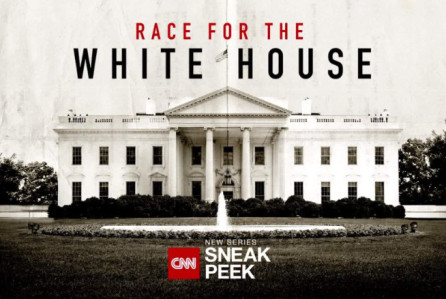
Currently on the cable news channel CNN (and why it’s on there I have no clue, except for the factor that news channels are “entertainment” channels nowadays) is a six-part documentary series (ah, THAT’S how they play it off as “news”) delving into the history of the campaigns for the Presidency of the United States. Race for The White House, narrated and produced by House of Cards actor Kevin Spacey, looks back at six campaigns from the jaded history of the country and the lengths (some would say depths) that people would go to ensure that their candidate was ensconced in the White House. Last week’s episode dealt with the 1960 Presidential election between John F. Kennedy and Richard M. Nixon (I already knew the story and thusly bypassed it) and this week’s episode – unless its preempted for “Breaking News” (“Hey, someone found a piece of that Malaysian plane that’s been missing for two years!”) – will look at the 1860 fight between Abraham Lincoln and Stephen Douglas.

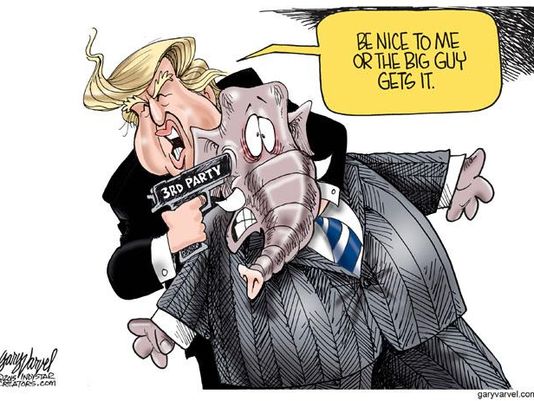
To say that the 2016 Presidential campaign has been unique and may someday be a part of the 75th anniversary of Race for the White House on the Interstellar News Network (INN) would be an understatement. For the most part, however, it isn’t two parties or candidates going after each other that have made this a campaign that has either been memorable or an embarrassment, depending on viewpoint. It is one person whose repeated usage of inflammatory rhetoric has, indeed, drawn an audience of knuckle-draggers out of the woodwork that have repeatedly attacked even the slightest hint of protest at his campaign rallies. Now, however, the chickens are coming home to roost.
TrumpThirdParty

Of course, we are talking about Donald Drumpf, who has led the charge for the Republican Party after eight years of heated, borderline racist rhetoric of their own that castigated the twice elected President Barack Obama. It started for Drumpf with the 2012 election when he drove the “birther” movement (even after it had calmed down in most Republican circles) and Trump himself fanned the flames higher. “You won’t believe the information my investigators have found,” the Orangutan Mutant crowed in news conferences – that was before Obama stood up, showed a full birth certificate showing his place of birth to be Hawaii and basically told Drumpf to put up or shut up (note:  Drumpf shut up).

When Drumpf announced his run for President in 2016, he simply continued the divisive, racist, xenophobic and misogynist rhetoric that he has parroted since he entertained thoughts of running for the office in the late 1990s. No matter the nationality or region – Mexican, Syrian, South American, Asian – nor the ethnicity or religion, Drumpf has cursed them all, pumping his StormTrumpers with an Aryan vision of “making America great again.” Then, when things got violent, Drumpf simply ratcheted the verbosity and tension even more.

Since that day in June 2015, Drumpf has continually encouraged his rallygoers to verbally and physically attack those in the crowd that would even think to disagree with him. In February, Drumpf literally said if someone at one of his rallies saw someone even giving the slightest appearance of trying to disrupt his speech to “knock the crap out of them, would you? Seriously. OK, just knock the hell – I promise you, I will pay for the legal fees. I promise, I promise.”

So what do you think happened?

On March 8, a member of the Drumpf crowd DRESSED IN HIS KOREAN WAR VETERANS ASSOCIATION GARB pushed and threatened a black protestor in Louisville, KY, forcing the WOMAN from the rally for apparently protesting too much (there is no video of what she did). The man, Al Bamberger, has since repeatedly apologized to his Veterans’ Chapter and his family, but basically has handed out a big “fuck you” to the woman whom he assaulted. So has Drumpf, who encouraged the actions from the stage (as he has virtually every one of the altercations at his rallies).

Another Drumpf rally on March 10 got even worse. As Cumberland County Sherriff’s Department officers escorted two men from the Crown Coliseum in Fayetteville, racial epitaphs reportedly were hurled by the crowd towards both black men. Then another man, John McGraw, stepped up and sucker-punched one of the men as he walked by. Instead of apprehending McGraw for the assault, Cumberland County officers tackled the punched man and quickly got him and his partner out of the Coliseum. It wasn’t until the next day – and after the tabloid show Inside Edition interviewed McGraw with him saying “Yes, he deserved it. The next time we see him, we might have to kill him…he might be with a terrorist organization” – that the Cumberland authorities got around to arresting McGraw for assault (an investigation is ongoing by the Sheriff’s Department as to why they didn’t act at that time).

Then there’s Drumpf’s treatment of the press. Breitbart.com reporter Michelle Fields – and Breitbart is a conservative-leaning website that has been VERY closely associated with promoting the Drumpf campaign – was allegedly accosted by Drumpf campaign manager Corey Lewandowski while the campaign was in Florida on Friday. Fields filed charges of assault against Lewandowski and displayed bruising on her arm where she said she was “forcefully grabbed” by Lewandowski, who doesn’t say he didn’t do it but calls Fields “delusional” and the campaign says is “entirely false.” There is video, however, of Lewandowski being within close proximity to Fields while Drumpf is departing a press engagement and, at a point, her body jerking back violently, giving credence to her side of the story. The investigation is ongoing.

And this all has gone on while the Orangutan Mutant continues to up the ante, increase the bile in every speech and ratchet up the rhetoric to histrionic proportions. But what happens when the odds are evened up and it isn’t a screaming horde of a few hundred people against one or two? Drumpf and his supporters scream like little weaklings with their panties in a bunch and say that their rights are being violated!

On Friday, Drumpf scheduled two rallies, one in St. Louis and the other in Chicago, and everything short of street warfare broke out. Outside of the St. Louis rally, protestors from both sides clashed and, in what has become a usual occurrence inside a Drumpf rally, the speeches were interrupted on more than a dozen occasions. That just served as the appetizer for Chicago, where the crowd was evenly split and, this time, Drumpf’s campaign decided not to hold the rally out of “security concerns.”

Now these protesters were apparently organized by the Black Lives Matters and MoveOn.org groups, but that isn’t a point worth arguing. When it came time for Drumpf to actually have to face off against those whom his supporters have targeted for attacks time and time again, they decided to back off. Drumpf himself then whined about his “First Amendment” rights and how he had a right to hold his rallies.

First-Amendment

Let’s get something straight here. Yes, everyone has a First Amendment right to say whatever the hell they want to say (and that the First Amendment is there to prevent the GOVERNMENT from infringing on that right). In utilizing that First Amendment right, you also have to accept the ramifications of what comes from that exercise. If your rhetoric is constantly demeaning of – well, virtually everyone – then you have to expect that you are going to get some backlash at some point from the targets of your vitriol.

Those protesters have the same right to be heard. Now there may be a question as to the usage of violence (and that is one that can be asked on both sides), but there should be no question that protesters can call out the Orangutan Mutant and his slobbering horde for their idiocy. That First Amendment thing? It works both ways.

What doesn’t work is to try and act like you haven’t done anything to aggravate the situation. For most of Friday evening and into Saturday (a Cincinnati Drumpf rally was also canceled due to “security concerns” while another in Dayton saw the Secret Service perform their duties admirably when a potential threat rushed the stage, surrounding Drumpf in a protective cocoon), Drumpf tried to say that he hasn’t said anything onstage to encourage his supporters to take the actions that have occurred, that there is nothing he regrets having said, that he is completely innocent regarding the “issues.”

To that, everyone – whether you agree with the Orangutan Mutant or don’t – has to raise up and loudly say “BULLSHIT!” Drumpf is the one that has turned the 2016 Presidential campaign into the shitshow that it has become, that has tossed it into the racial commode and continues to stir the malodorous pot. There’s an ever-so-slim chance that someone might get to Drumpf and see if he can walk it back a bit…if not, then I fear it’s going to get worse, perhaps to the point of dead bodies worse, rather than improve.

Why I Didn’t Watch President Obama’s Town Hall on Gun Control

Obama takes part in a live town hall on reducing gun violence on CNN in Virginia

Thursday night, I got my sick wife (who has been battling the King of all Colds for the past week) and our son cuddled up in bed together, watching cartoons, before they headed off to Slumberland. I headed back downstairs, looking to peruse the 200-plus channels that Time Warner Cable happens to throw at me at any given moment. It was at that time that I realized that there was something on that I should have been watching but I had utterly no interest in wasting two hours of my solo viewing time on.

Earlier this week, President Barack Obama issued Executive Orders – actions that a sitting President can take, without the input of Congress, to clarify and/or adjust how his administration either adjudicates laws or applies them to the citizenry of the United States – to stiffen some of the background checks that are applied when people look to buy guns in this country. As a result of several mass shootings that have occurred across the nation and the continuing inaction by a Congress that, if a vote was to be held on legislation that all days should end in “y” couldn’t pass said legislation, Obama stepped up and announced reasonable changes that could be implemented without infringing on anyone’s right to own weapons. After making these announcements, you’d have thought Obama had pissed on the U. S. flag and run it through the colon of a water buffalo.

Conservatives immediately decried Obama’s actions as an “attack on the 2d Amendment,” “a very threat to freedom-loving Americans,” or “a way to take your guns away from you.” This paranoia was ratcheted up by virtually every conservative hack in print, televised and internet media. Even the Presidential campaigns got into the action, with Senator Ted Cruz literally running a campaign ad saying “Obama is coming for your guns,” with a picture of Obama with a military helmet on and the Cruz campaign asking for campaign contributions.

The problem with this is nowhere in Obama’s statements were any measures to take any weapons away from any owners. There weren’t any laws to prohibit any weapons from being owned, bought or sold. About the most aggressive and invasive action was a movement to increase the passing of information regarding mental health issues between departments to ensure that those with mental health problems wouldn’t be passing the increased background checks to be able to purchase weapons.

Executive Orders have been used by sitting Presidents of the United States since the inception of the United States of America. Believe it or not, even George Washington used Executive Orders to push across things that otherwise wouldn’t have made it past a reluctant Congress (because, logically, if Congress could pass laws for the President supporting his position, he wouldn’t have to resort to Executive Orders). Other things that were Executive Orders include the Emancipation Proclamation, the New Deal and the order to desegregate schools in the South and the Armed Forces. Unfortunately, there are some negatives that also fall under this umbrella, including the internment of Japanese-Americans during World War II and the usage of force against Native Americans in taking their tribal lands from them.

Not surprisingly, the announcement by the Obama Administration of these new Executive Orders came a few days before the broadcast on CNN on Thursday night. CNN went to great lengths to say that they were the creators of the Town Hall, not President Obama, and also went to great lengths to state that representatives from the National Rifle Association (NRA) were invited (and declined) to participate in the program. The audience was made up of those whose lives had been impacted by gun violence and by those who believe in the sanctity of the 2d Amendment and the right to gun ownership.

So what did I do when I passed by this program on the tube last night? Continued on to watch a college basketball game between two teams I didn’t even give a shit about.

I kind of knew how the entire two-hour “discussion” would go just from watching the general shitstorm that had raged across social media when Obama initially made his announcement of his Executive Orders (by the way, you know how many Obama has used as he enters his final year? 226. Know how many his predecessor, George H. W. Bush, used? 291. How about Saint Reagan? 381. The first Bush was pretty good with only 166, but he only served four years). I didn’t really want to watch a replay of that same thing spread out over two hours on television. Still, I couldn’t help but occasionally, during timeouts in whatever game I was watching (think there was a Scottish soccer game on at some point), drop back over to CNN to see just what was going on.

Imagine if you will a room full of people who were simply there for the factor of hate-watching each other. An Arizona sheriff who is running to join the U. S. Congress (for some reason) challenged the President that his actions wouldn’t have changed anything that happened with recent mass shootings; President Obama responded by saying just because something happens doesn’t mean the response is to “do nothing.” Another woman, the widow of the late U. S. military sniper Chris Kyle, berated the President for “trying to take guns away from people” and giving “false hope.” Obama responded by speaking past her to the NRA and why they weren’t there to discuss the issue. All in all, it was a two-hour circle jerk that left no one satisfied, with both sides talking past each other instead of TO each other.

It was even worse following the discussion when the pundits became a part of the show. A former New York City cop who spoke out of both sides of his mouth joined some of the liberal CNN political commentators (Van Jones, Gloria Borger) and some conservative voices (Hugh Hewitt, S. E. Cupp) to basically yell over each other and Jake Tapper for an hour, reaching no new discussion points, basically reasserting that no one actually wants to discuss the issue but rivet their heels to the ground and not yield an inch one way or the other.

Therein lies one of the problems with the situation regarding guns in our society. There are those that take the U. S. Constitution and the Bill of Rights – two of the greatest documents for governmental leadership in the history of mankind – as if they are God-given documents that can never be challenged nor changed. The Founding Fathers gave their descendants a way – yes, difficult, but for a reason…so that it wasn’t overused – to make changes when deemed necessary. They also encouraged their descendants to make those changes as time passed.

This is why a black person isn’t still considered 3/5ths a person anymore; this is why there is liquor to drink (after a previous effort to banish such activity) and that women can have the right to vote. This is why 18 year olds who can die on the battlefields of war have the ability to vote in this country. The 1st Amendment isn’t sacred – there are limitations on how far you can go with your speech and activities – and the 4th and 5th Amendment face constant modification. The 2d Amendment shouldn’t be considered sacred, either. It should have to adjust with the times and, yes, with the will of the people, who currently believe there should be more stringent control on guns (albeit not sure how to go about that) and, by a wide margin, more extensive background checks.

So what was the reaction of people following the show on CNN last night? After SportsCenter went off the air and “College Basketball Tonight” was coming on, I jumped on Facebook to check and see if there was a raging flame war between the pro- and anti-gun advocates. I nearly woke the crickets that were there regarding the subject.

With that said, this is a critical issue to try to gain a handle on (we are never going to eradicate it, we can simply only hope to lessen the impact of the next situation). Until all parties can come together and lay aside the radicalism of their political actions (NRA, are you listening?) or we can elect a Congress that isn’t beholden to one industry (not likely either), then discussions such as what CNN aired with President Obama last night will be a waste of time. When the next one comes on, you’ll probably find me watching the Swedish curling team…there’s some drama as to the outcome with that event, at least.

…But “Black Lives Matter” Isn’t Helping the Situation

There is an old adage, “there are two sides to every story.” I personally have always liked the rock band Extreme’s take with their album III Sides to Every Story. III Sides to Every Story was a concept album (an outstanding album that stretched genres in hard rock) regarding different “sides” to a story that was divided into three sections – “Yours,” “Mine” and “The Truth.” That concept is more realistic than many who divide things into two sections because, regardless of who is telling the story, there is some truth in both sides. That middle ground – “The Truth” or the third side – is 99 times out of 100 the way something occurred.

When it comes to the case of police shootings, especially of unarmed civilians, across the United States, there has been the grassroots growth of a “side” to help tell their story. The loosely affiliated group known as Black Lives Matter has sprung up across the country, trying to take the helm of the protests against the overreach of law enforcement in its actions against minorities. While a coalition such as this is necessary to continue to keep the focus on the actions of law enforcement, Black Lives Matter isn’t helping the situation and, in fact, the situation overall may be better off if they didn’t intercede.

Black Lives Matter actually date back further than the turmoil that first arose in 2014 and truly exploded over the course of 2015. The shooting of Trayvon Martin by George Zimmerman in Florida in 2013 – and his subsequent acquittal in a trial in Florida – brought about the usage of the hashtag “#BlackLivesMatter” on Twitter, long before any incidences from the past couple of years. It is only with the deaths of Michael Brown in Ferguson and Eric Garner in New York that the founders of BLM emerged as a nationwide organization. As of today, there are now 23 chapters of BLM, spread across the U. S., Canada and Ghana.

According to their website, BLM is an organization “intended to build connections between Black (sic) people and our allies to fight anti-Black racism, to spark dialogue among Black people and to facilitate the types of connections necessary to encourage social action and engagement.” What you won’t find on this webpage is the one thing that is critical for any organization to have to be successful in their endeavors – leadership on a national level. Without this leadership, the message of BLM can sometimes get lost and, in some cases, the tactics used by those in the organization’s name can be a detriment to the overall cause of the group.

We only have to look back to 2011 to see what happens when a movement initially has a good purpose but gets derailed by the lack of recognizable leadership. In September 2011, protesters took to the grounds of Zuccotti Park in New York City’s Wall Street area to protest against the largesse of the “1%.” What came to be called “Occupy Wall Street” intended to bring attention to several facets of life in today’s world – wage inequality, financial corruption, the other reasons behind the financial collapse that brought the Recession of 2008 to life – but gradually devolved into something that was nowhere near what the original intentions of the group had been.

By the time the protesters and their tent city in Zuccotti Park was busted up in November, there were various fringe elements hanging on the “Occupy Wall Street” movement. This occurred because there was no leadership for the group to issue its thoughts, its beliefs, its coherent goals. Instead of actually having an impact, by the time the Zuccotti Park grounds were cleared, there was little that was actually accomplished by the Occupy Wall Street “movement.”

In many ways, BLM is seemingly on the same path that the OWS movement trod before them. BLM initially had a very solid reason for coming together – the killing of unarmed men (in this case black) by law enforcement under suspicious circumstances – but lacked a national coalition to be able to organize its “chapters” and drive this message home first. As a result of the inability to have a focal point to work from, the individual chapters have gone about pushing the message to the people in all the wrong ways.

One of the most obvious methods of protesting was taken from the old marches from Dr. Martin Luther King, Jr., in blocking roadways while delivering the message through a walking protest. In some areas, however, BLM supporters weren’t just satisfied with getting their message across through a moving march, they decided to lie in the streets of major cities and block traffic, sometimes for hours on end. This method of protest violates one of the major keys of protesting:  don’t offend those whose opinions you’re trying to sway.

This style of protest became even more prevalent during the holidays this year. In Chicago – where there are seriously some issues with the police department – BLM protesters disrupted holiday shopping on Black Friday along the “Magnificent Mile,” the line of high end shops in the Windy City. It even reached the point that the Mall of America and the Minneapolis Airport (a city also protesting a police shooting) was the site of sometimes violent clashes between BLM and law enforcement.

Once you’ve made the point of your protest, then you can let life return to normal for people who had nothing to do with the situation. If you either continue to push your demonstration (look at the two months of OWS and how public opinion changed there) and exceed a reasonable amount of time, you can turn public opinion against your group and, hence, your cause. What was the reason for denying people the ability to shop? To really make them dislike you? That isn’t a desired end for the protests.

The next one was much more sinister in its message. According to several media outlets, marchers who were offered a booth inside the Minnesota State Fair this summer to advocate for their cause refused said location to instead march directly in the street outside the entrance to the carnival. During this march, the BLM banner was flying while the marchers chanted “Pigs in a blanket, fry ‘em like bacon.” Law enforcement officials viewed this as a death threat against officers (a reasonable assumption), one that was weakly refuted by BLM “leaders” who said they didn’t hear such words being used (the You Tube links are quite numerous).

Finally, there’s been the methods used by the movement to thrust themselves into the 2016 Presidential race. Through virtually storming several campaign stops – on both the Democratic and Republican sides – the BLM movement has tried to make their cause celebre the focal point of what is a very complex election (even to the point of demanding from each party a Presidential debate on racial justice; both parties declined). Not only have the persons involved with the organization disrupted several speeches from Presidential candidates, they have caused several campaign stops to be closed due to their disruptions.

Once again, with a solid national leadership and some organization, this wouldn’t have to happen. With those simple pieces of structure, there wouldn’t be the turn against BLM that there has been. I personally have several issues that are quite important to me in this campaign (on the federal, state and local levels) – the revamping (training, screening and monitoring) of law enforcement can be done on the state or local levels, not on the federal one.

Now you might say, “Well, you don’t understand, you’re white…” and you would be correct. I don’t understand what it is like to constantly be thought of as breaking the law by simply being a certain ethnicity. I don’t understand what it is like to be viewed with suspicion in virtually every aspect of life because of my skin tone. I do understand, however, that things can be changed through solid leaders and national organization…right now, Black Lives Matter doesn’t have that and they should remove themselves from the equation with law enforcement until there is such organization as mentioned previously to this organization that could do a great deal for life in these United States.

The Situation with Police Isn’t Changing…

Back in 2014, a young man was shot in the middle of the street in Ferguson, MO, reputedly in cold blood by a renegade cop who shot first and asked questions later. As the investigation played out, however, it was found that the young man, who was black, was possibly a suspect in a convenience store theft and allegedly reached inside the officer’s (who was white) car and wrestled for his weapon. Thus, the proper investigative organizations – including state and federal agencies and a grand jury convened for the case – decided not to press charges against the police officer, who summarily quit his position as a member of the force and disappeared.

Many have called the situation that occurred in Ferguson the spark of what has been an increase in attention to the conduct of police in the United States. While it was wrong in this case – the police officer was well within his authority to use his weapon against a suspect who had previously attacked him – there have now been a litany of other cases that have come up (perhaps thanks to the attention brought regarding police conduct in the Missouri case) that show the situation with police isn’t changing.

The true “spark” might have been the 2014 death of Eric Garner, a 43-year old father who, while allegedly selling loose cigarettes to people, was allegedly choked to death by police. After a great deal of investigation, a Staten Island, NY, grand jury found that the officer in question, Daniel Pantaleo, might have used an illegal move in restraining Garner but he wasn’t responsible for his death. While you might think that police would have gotten a bit smarter about the situation after this, it instead has become obvious that the cases of police misconduct are much more prevalent than we previously thought.

2015 saw the spark turn into a wildfire. In April, the confrontation between Walter Scott and officer Michael Slager in North Charleston rattled the nation. Claiming that Scott had (at the minimum) grabbed at his Taser, Slager said that he “feared for his life” (get ready, you’ll hear this frequently) in shooting Scott to death. This would have probably been the story that was accepted…until video came out that showed Scott, running away from Slager, mercilessly shot several times in the back and, as he lay dying, Slager come up to him and drop the Taser beside his body. That case, in which Slager was charged with murder and dismissed from the police force, is still pending.

Also in April, the death of Freddie Gray in a Baltimore paddy wagon – despite telling officers he needed medical attention and allegedly having his injuries made more severe through a “rough ride” (a jerking and rough treatment in the cage of a paddy wagon of a person under arrest for causing “problems” for officers) – set the Maryland skies ablaze. Rioting in the inner-city Baltimore neighborhoods brought back sad and eerie reminders of the Ferguson rioting a year earlier, but it seemed to calm once the District Attorney in the case indicted six Baltimore police officers on varying charges related to Gray’s death. One of those officers had his case end in a mistrial and will be retried in 2016; the other five are still awaiting trial.

This isn’t even looking at the case earlier in 2015 in Texas. A 17-year old girl, who had walked into a Longview, TX, police station, was gunned down by police. With a knife in her hand and four words – “I have a gun” – written on her hand, Kristiana Coignard was surrounded by three officers, with one of them shooting the teenager, who was obviously mentally off. After investigation by the Texas Rangers (the law enforcement arm, not the baseball team), no charges were brought against the officers involved.

Now, as we approach the end of 2015, one case from 2014 and several others in one major city over the past couple of years are painting law enforcement in an ever-worsening light. The November 2014 shooting of 12-year old Tamir Rice by Cleveland police officers was a tragedy that shouldn’t have occurred. According to testimony, Rice was carrying an air pistol – a BB gun, basically – and menacingly holding it out at passersby and cars. Police were called and, after two seconds of being on the scene, one officer, Timothy Loehmann, pulled his weapon and shot Rice in the torso; Rice would die the next day from the single shot.

From the start, this case has been a clusterfuck. The Cleveland DA, not wanting to taint his relationship with Cleveland police, laid the case at a grand jury’s feet while allegedly trying to ensure that charges wouldn’t be brought against the officers through manipulation of the evidence (such as getting paid experts to side with the police officers’ side of the story, something unheard of unless in a trial, among other things). This is despite evidence that Loehmann had been found to be an “emotionally unstable recruit unfit for duty” by a previous employer in law enforcement. The DA’s work prevailed as it was announced charges would not be brought against the officers on Monday, putting an entire city on the razor’s edge.

Another city that has been walking the tightrope of tension is Chicago. In a police shooting against a man in November 2014, city officials had dragged their feet on the investigation, including not releasing the videotape from the police cruisers at the scene that reportedly showed Officer Jason Van Dyke gunning down 17-year old Laquan McDonald on a Chicago street. After a Freedom of Information Act request from a local blogger wasn’t blocked by the courts, Chicago government authorities released the video to the general public in all of its ugliness and charged Van Dyke with first-degree murder…more than a year following the shooting.

The video showed McDonald, erratically walking down a street and allegedly waving a small pocketknife around (it cannot be seen in the video until it is kicked away from his body at the end), as police attempted to control the situation with their squad cars and their experience. Allegedly Van Dyke showed up to the scene and, within six seconds of arrival, pulled his weapon and pumped a full clip – 15 shots – into McDonald, who was spun around after two shots and laid prone on the ground as more shots entered his body. He laid in the street for several minutes, without any medical attention, while police cordoned off the scene.

Once again, video was the thing that brought out the discrepancies in the story. Van Dyke alleges that he felt “in fear of his life” in shooting McDonald and that McDonald had lunged at him; in fact, McDonald was walking away from Van Dyke when hit with the first shot. After emptying his clip, Van Dyke was reloading his .45 automatic and preparing to shoot some more until a fellow officer issued a “stand down” order. Perhaps more problematic that Van Dyke’s actions, for which he is currently charged with murder (the first time a Chicago police officer has been charged with murder since 1968) and will face trial in 2016, other officers AGREED with Van Dyke’s account, stating they immediately went in to provide medical attention to McDonald following the shooting.

Now there is another shooting that is roiling the Chicago landscape. The day after Christmas, 19-year old Quintonio LeGrier, allegedly wielding a baseball bat following a domestic disturbance, was shot to death by Chicago police. LeGrier wasn’t the only fatality, however; a 55-year old neighbor, Bettie Jones, was hit by stray police gunfire and died during the shooting. The investigation is ongoing in this case.

It is painfully obvious that there is a need for seismic change in the way police officers are trained and how they conduct themselves in the “real” world. Although it may be claimed that these are “isolated” incidences, when you add in other situations such as those in Alabama and in Maryland, it is happening far too frequently for it to simply be “rogue” officers (this doesn’t even bring up the embezzlement that the Illinois police officer had done for years before he committed suicide – while trying to make it look like he was killed in action – this summer). Through these simple steps, there might be a change in how officers are hired, trained and kept on the force.

Every two years, a police officer – regardless of position or power – should be subjected to a complete physical, psychological and financial review. These reviews would be withering, looking into social media usage and actions outside of the workday (hey, if we can fire teachers for starring in porn videos outside of school hours, we ought to be able to fire officers for being aligned with the KKK, as some in Missouri have alleged to have been) and into their personal lives. If an officer doesn’t agree to such testing, he should lay his badge and gun down then and there and leave the force.

In an effort to further ensure that the truth is discovered, all patrol cars should have video cameras on them and officers themselves should be wearing personal cameras. The penalties for not operating these devices should be dismissal from the police force and banishment from law enforcement. Through the usage of these devices – and the FULL release of said video on demand of the public (several locales are looking to block the public from seeing these videos, corrupting the system rather than making it more transparent) – the truth, more often than not in the favor of law enforcement, would be demonstrated.

Yes, a job in law enforcement is highly dangerous and can result in a person’s death. This doesn’t give a person the right to be the judge, jury and executioner when it comes to situations on the street. It also doesn’t give them carte blanche to indiscriminately fire weapons, as it appears this latest incident in Chicago was.

It is time there was definitive change in the way police conduct themselves for the constituency they are supposed to serve. The day of being able to “fudge” reports, plant evidence (remember the Charleston case) or skew a case through the appropriate language (“in fear of my life”) being used should be long past over. Stand up and take responsibility for what you are doing, law enforcement, or face even more problems down the road.

As The Bullets Continue To Fly…

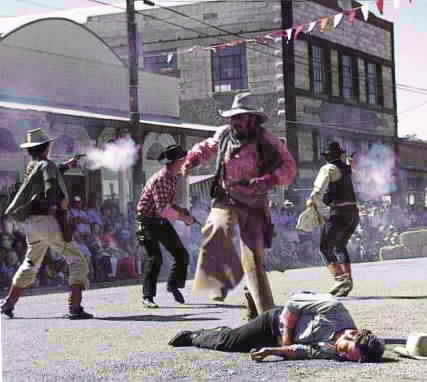
Gunfight

Thanksgiving…a time for all of us to join together with our families and friends and truly demonstrate that we are grateful for the bounty that our lives have provided for us. I was feeling quite heartened by these spirits as Thanksgiving Day elapsed, having a great time preparing (OK, thanks to Harris Teeter, there wasn’t much preparing) our Thanksgiving dinner with my lovely wife as our son bounded about watching the Macy’s Thanksgiving Parade (probably the first year he actually paid attention to it). The very next day, the bullets continued to fly as it ruined any amount of goodwill I might have mustered from that one day.

It started on Tuesday and I did try to ignore it but, as the news continued to grow, I grew more irritated at our current condition. Last Tuesday, city officials in Chicago finally got around to releasing the dash cam video of the death of Laquan McDonald, the 17 year old who was allegedly gunned down by police in an attack that dated back MORE THAN A YEAR PREVIOUSLY. The investigation supposedly had been going on that entire time and officials reluctantly (after being forced by an FOIA request from a journalist) released the video to the general public late in the afternoon. They also decided to charge the officer responsible for the shooting, Jason Van Dyke, with first degree murder while releasing the video.

If you haven’t had the chance to watch the dash cam video of that fateful night, it is angering. With no audio from the dash cam (a violation of Chicago videotaping procedures, by the way), we see McDonald (who was found with PCP in his system in the autopsy afterwards) acting erratically as he walks down a city street carrying what would later be learned to be a pocket knife. Several police officers, either in their cars or on foot, are following McDonald from a distance as they try to get the situation under control.

What happens next is outrageous. Van Dyke allegedly pulls up on the scene and steps from his vehicle, drawing his weapon. Within six seconds of Van Dyke’s arrival on the scene, the bullets start to fly from his weapon. In total, McDonald was hit sixteen (16) times, Van Dyke emptying a full magazine into his body. There are even shots hitting McDonald’s body while he is on the ground and no longer moving. The act takes all of 10-15 seconds and no other officer fired a shot that night; in fact, Van Dyke allegedly went to RELOAD and continue firing before an officer called him off. These other officers did add to the egregious nature of the act, however, by not offering any medical assistance to McDonald, even though that is what they wrote in their reports.

Van Dyke surrendered to authorities on Wednesday and it became known that the officer had 18 complaints against him over the 14 years that he had been on the Chicago Police Department rolls, but he had never been reprimanded in any of those cases. These incidences, which ranged from “roughing up” suspects to usage of racist language, are unfortunately common – if someone is getting arrested, it sometimes slows their prosecution process down to accuse the arresting officer of some malfeasance – but perhaps in this instance were indicative of something more.

What finally got me, however, was the support of Van Dyke from his union, the Chicago branch of the Fraternal Order of Police. In a Yahoo! article Saturday, the FOP admitted they were actively trying to raise bail money for Van Dyke (first through a GoFundMe account that was closed soon after launch and then through the chapter’s website) and providing an attorney for him. One of the officers from that chapter of the FOP even stated to Yahoo! “First degree (murder) is a high bar to set and of course it is political (the charges),” indicating some level of support for Van Dyke.

I know it is the job of a union to support its members, but we’ve seen this type of story far too often. Be it in North Charleston, the streets of Staten Island or even on a playground in Cleveland, police officers nowadays are far too often shooting first and asking questions later. I leave out Ferguson because, after all the evidence was in, there were some grounds for the officer’s actions in that situation. It is then followed up by fictionalized police reports – the same documents that are admitted as EVIDENCE in a court of law – and fellow officers who tacitly support ANY officer whose actions are questioned.

The Chicago situation is particularly angering on several fronts. We’ve mentioned the lack of medical attention provided and we’ve talked about the unduly long time it took to even bring charges against the officer, but what hasn’t been mentioned are the supposed “good cops.” Sure, you can write off some of these acts as that of a “bad apple,” but “bad apples” continue to fester when the “good apples” don’t get them removed from the barrel. The continued silence and/or tacit approval (as what the Chicago FOP is doing) of anyone’s actions is wrong, nearly as bad as that of the actual killing.

There was one suggestion that I made in a discussion that, when heard by a former officer, he responded as if I was cutting off one of his limbs. Every two years, an officer should go through a thorough performance, psychiatric and financial background check and review to determine their mindset and stability to remain on the active police force. Enforcing such a program as this would have found the Fox Lake, IL officer who, after a lengthy mourning process for a “hero” that was gunned down by a trio of “bad guys,” was found to have committed suicide because he was embezzling money and threatening public employees; in the Chicago case, there could have been more focus on the complaints against Van Dyke that might have prevented what happened in 2014.

The role of law enforcement officers isn’t an easy one. It also isn’t one where you are given free reign over all who are “beneath you” by your viewpoint, to do whatever you feel is appropriate. The people you are supposed to protect also have to know you’re equipped to handle the job…if not, then you shouldn’t be on the street. Perhaps if the bi-annual reviews were done (and other things more immediate, like video cameras appropriately used), we’d weed out the “bad apples.”

If that wasn’t enough, then Friday came along. Instead of the usual reports of “Black Friday” idiocy such as an old woman having that $99 HDTV “Black Friday deal” snatched from them by an 18-year old (you know, those heartwarming Christmas tales), the attack of a Planned Parenthood clinic in Colorado Springs, CO, dominated the news. As we know now, a man who was obviously mentally off somehow penetrated the doors of one of the most secure Planned Parenthood branches in the United States and proceeded to kill three people and injure nine others. If this doesn’t bother you, then the callous response from a particular branch of politicians is probably up your alley.

During the day on Friday and into Saturday, NOT ONE of the GOP candidates for President issued a statement in support of the employees of Planned Parenthood nor those that were injured in the shooting. A few mumbled some support for the officer who was killed in the Colorado Springs shooting, but nothing about the business or the people who were there for the services. As of Monday, these GOP “leaders” are trying to come out with their lame statements even as they try to keep from even being seen as showing any support for Planned Parenthood.

Yes, these are our choices for the Republican nomination of the President of the United States.

When you lead this country, YOU LEAD ALL. If you cannot fashion the words, “The shooting at a Planned Parenthood clinic, despite my objection to the clinic’s purposes, is completely wrong. The people killed and injured is a tragedy that shouldn’t occur in the United States. My campaign extends our condolences to all at the clinic and to the state of Colorado” into a cohesive statement within hours of the arrest of the suspect, then you do not have the ability to lead the nation. Just because you have an opposition to an issue is no reason to remove the humanity from it. But, then again, we are also talking about the same party who believes that shutting the door in the face of refugees is the correct course to take.

While the two issues aren’t connected, they do show the continued degradation of our society. Continually allowing the “bad apples” – whether they are politicians or police – to ruin the whole batch can be changed. The question is whether anyone is willing to take on the dirty work to do it or not.

How to Fix the Presidential Debates

2016GOPCandidates

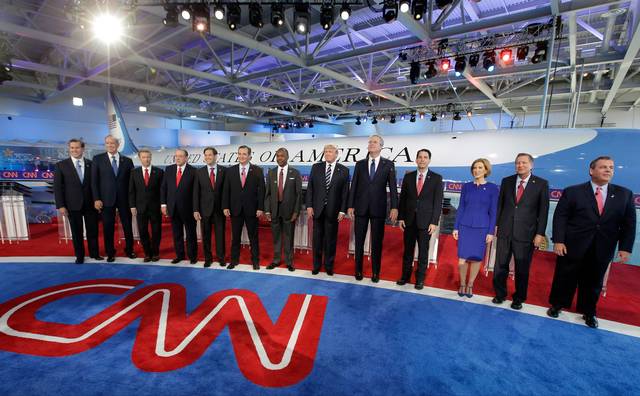
Since the conclusion of the last GOP Presidential debate that was held on the cable network CNBC – a truly dismal effort that left nobody satisfied with the outcome – there has been bellowing from pretty much everyone. Yes, the CNBC debate was a clusterfuck from the start – with three moderators and two guest questioners, it was never clear who was in charge – but once they became coalesced around an issue, the Republican debate participants struck back with veiled threats against the “mainstream media” (important point here:  if you’re going to govern a country as vast as the United States, you’re going to need that “mainstream media” at some point to get things done). It left the entire night as a giant stain on the 2016 Presidential campaign process.

The candidates complained about a multitude of things, including the length of the debate, the number of questions received, the quality of the questions and so forth. The moderators, in their defense, were faced with participants who, when presented with a viable question – such as Dr. Ben Carson’s involvement with the snake oil provider Mannatech, Senator Marco Rubio’s attendance in the Senate, how billionaire Donald Trump plans on paying for his myriad of xenophobic programs or why Senator Ted Cruz was against the recent compromise that passed a federal budget out of Congress and to President Barack Obama for the next two years – either didn’t answer the question, answered another question that they wanted to answer, waited for a partisan GOP audience to air their opinion through booing or attacked the moderators and the media. When you have this type of Mexican standoff (which Trump is now looking to wall off at Ciudad Juarez), there’s not much that is going to occur in said debate.

Now the candidates have decided to set up their own rules for how debates will be conducted. There is supposedly a letter that a majority of the 14 remaining candidates in the GOP race have gotten behind (bypassing the logical arranger for such events, their own Republican National Committee) that is being sent out, but it isn’t to be taken seriously. The letter supposedly would allow the candidates to vet the moderators, review the questions of the debate before it is conducted and such bullshit as whether there will be a gong, bell or buzzer to indicate their time is up when answering a question.

It was announced on Thursday night that next week’s debate on November 10 (which wasn’t expected to fall under this supposed “letter” being drafted) and being aired on Fox Business Channel will already have a smaller “main event” field. Through their criteria, Fox Business has chopped the “main event” debate stage down to eight, separating New Jersey Governor Chris Christie and former Arkansas Governor Mike Huckabee off to the “kiddie table” debate beforehand. That “kiddie table” debate has also been chopped, with former New York Governor George Pataki and current South Carolina Senator Lindsey Graham being eliminated from the debates altogether. Those that are being dropped down or out completely are not polling at the prescribed levels by Fox Business and, as such, have met the axe as to the debates and probably will soon as a viable candidate in the GOP race.

As a result of some of these changes, get ready for more whining out of the GOP candidates. If the GOP candidates – and also their Democratic brethren – want a chance to take on a serious debate, replete with issues to discuss, then it would be necessary to follow these rules.

2016DemocraticDebates

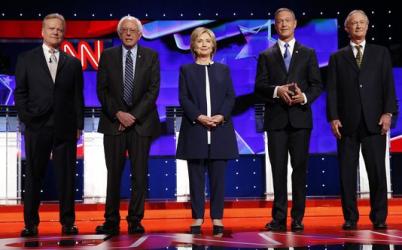
Both Parties Must Have a Debate On Foreign Ground – The GOP is the only party who has stepped outside of their traditional “home turf” of Fox News (or Fox Business), where they could be semi-comfortable in that they would receive a decent hearing (even these GOP candidates, however, complained about the Fox News debate). The CNN GOP debate was considered to be quite good as the longest debate yet, providing for more discussion of the issues but not enjoyed by Trump or Carson, who lack the background to describe how their policies would work other than “they’ll be great.” By this point, you already know about the CNBC snafu. The Democratic Party hasn’t left its cozy home with CNN and their next “debate” – a candidates’ forum in South Carolina on Friday night that will feature former Secretary of State Hillary Clinton, current Vermont Senator Bernie Sanders and former Maryland Governor Martin O’Malley (Lincoln Chafee, Jim Webb and Lawrence Lessig have ended their campaigns since the first Democratic debate a couple of weeks ago) – will be hosted and aired by MSNBC and commentator Rachel Maddow.

Each party has their partisans; I would be more interested in how they speak to a hostile audience and, just maybe, both sides could have a chance at swinging those in the middle ground to some of their viewpoints (this would also help as far as governance, but that’s another story for another time).

The Arbiter Determines All – While one or two moderators is OK, one should be the rule. There should be only three questioners involved in the game and the participants in the debate have NO RIGHT to choose who they want to fire questions (why would I want to hear you and a “friendly” questioner lob softballs all night?). Finally, there will be one voice who makes all determinations on the floor of the debate hall – The Arbiter (usually a moderator would do this, but they are too encumbered by their own networks to draw in ratings and worried about any potential future dealings with the candidates to have the balls to do anything).

The Arbiter will be an unknown person, presumably with knowledge about debate procedure, the subjects that would be presented during the debate, the histories of the participants involved in the debate and should have as little involvement with one political side or the other or be in media as a current broadcaster (if it has to be, then The Arbiter should be from the opposing party or media outlet – couldn’t you imagine someone from the Wall Street Journal serving as The Arbiter for an MSNBC debate and someone from the New York Times handling the Fox debates?). The Arbiter will be in charge of officiating the event and providing the punishments (we’ll get to that in just a second) that will be meted out for violations of the debate protocol. At the end of the debate, The Arbiter slinks back into the dark, never known by those who were in attendance.

The Arbiter will have several weapons at his/her disposal:

Question Refusal – The Arbiter will have the right, after a question is posed, to determine if the question is worthy of being answered. Such questions as whether some other candidate has the “moral authority” to do something or something that prods two candidates to spat at each other over insignificant bullshit would be the main thing that The Arbiter is looking for. If a questioner poses such a question, the first infraction is a warning with a second infraction resulting in a 10-minute penalty (removal from the debate). A third violation will result in the questioner’s removal from the remainder of the debate.

Microphone Control – The Arbiter would have control over the candidates’ microphones for the purpose of keeping them on track with questions. If a candidate is posed a question and said candidate either starts off on a tangent or doesn’t address the question directly, The Arbiter has the power to cut the candidate’s microphone. The Arbiter will pause for five seconds before reactivating the candidate’s microphone and, if at any time during the candidate’s response he goes off topic again, The Arbiter will end the question by shutting off the microphone for the remainder of the question.

The Arbiter will also be in control of how long the candidate speaks; once the candidate has reached the maximum allotted time (60 seconds in the previous debates), The Arbiter will cut off the candidate’s microphone permanently unless asked a follow-up question.

If the candidate cannot keep on track with his replies to the questions being posed, The Arbiter will have the right to remove the candidate from the debate or, if the candidate refuses to move, will have his microphone cut off for the remainder of the debate and his/her constant interruptions will begin to annoy everyone.

Question Count – The Arbiter will be responsible for keeping a running count (can be aided on this by electronic timing of each candidate’s responses) or time bank on how many questions each candidate has received and/or how much time each candidate has been speaking. If The Arbiter notes a predominance of questions to a few candidates, then he will inform the moderator and the moderator must change tactics and ask other candidates questions until The Arbiter feels it is balanced out.

Have a Manageable Debate Field – This has been the major problem with the GOP debates is the number of people on the stage. When you have 10 candidates looking to make their mark in a two hour debate, the most a person is going to be able to speak is probably around seven or eight minutes (once you deduct commercials, opening and closing statements and audience applause/outrage/outbursts). In the GOP field, there is probably no more than six viable candidates (I’ll let you choose your six); the Democrats have already limited their field from six to three, so they are on course for the primaries.

The whittling of the field is useful because, if you’re drawing 1% of the vote six months to a year after you announced your candidacy, the likelihood of you earning the party’s nomination next summer is highly unlikely. It’s simply a numbers game in that you aren’t going to get the attention as someone at the back of the pack that the frontrunners are going to get from being the, well, leaders. It IS a Catch-22, but that’s the way many things are in life. Unless the front six are mysteriously overcome with a debilitating illness that renders them incapable of running for office (and Christie isn’t above trying to inflict said illness on the frontrunners), you’re going back to your previous job or hosting duties on Fox News.

Implementing these rules – and simply letting the respective committees, the RNC and the Democratic National Committee – handle the nuts and bolts of debate preparations is the logical way to go. You’re running for the most important office in the United States; being concerned that the debate hall has a temperature more than 67 degrees shouldn’t be on your mind. Policy thoughts, debate tactics and proving yourself to U. S. citizens should be your goal. As President Obama also stated earlier this week, if you aren’t able to handle the queries of journalists from the news networks, you’re going to have trouble handling Putin.

Will these rules be adopted? No way in hell…but it would make for a more streamlined debate with plenty of policy discussion. And who wouldn’t want to see The Arbiter enforce his rules on both bags of bozo biscuits running for President?

Wondering Whatever Happened To…For September 12

Wondering whatever happened to the women of The A-Team while pondering…

Is Hollywood Bereft of Ideas? – Earlier this week, plenty of branches of the media – the sports and entertainment worlds, in particular – were abuzz over the latest casting decision made in Tinseltown. Word has it that mixed martial arts (MMA) champion Ronda Rousey had agreed to join the cast of a reboot of the movie Road House, with Rousey taking on the iconic role originally portrayed by the late Patrick Swayze. Road House, for those that have been able to avoid the 975 broadcasts of the movie per day on cable, is the story of a highly educated bouncer who goes to a small Missouri town to “clean up” a bar, but has to deal with a dastardly crime boss while romancing said crime boss’ ex-girlfriend (there’s more, but I hate to provide too many spoilers).

Give Rousey credit, she actually contacted Lisa Niemi, Swayze’s widow, to ask if it would be OK for her to take on the role her husband had created in the 1989 movie (according to reports, Niemi was more than pleased to give her blessing). And it isn’t as if Rousey hasn’t been working her way onto the Big Screen previously. Starring roles in both The Expendables 3 and Fast & Furious 7 plus a cameo in Entourage have already paved the way in demonstrating that Rousey may have some bankable acting talent. But why couldn’t Hollywood come up with something original for Rousey to make her big-screen breakthrough?

The current trend for Hollywood to “reboot” or “reimage” movies and television shows is wrong in that it gives those who are supposed to be creative an easy escape rather than challenging them to new material. Movies less than a decade old such as the Spider Man trilogy and the Fantastic Four franchise have been “rebooted” not for any artistic purpose but simply to either double-dip at the trough because the movies or shows were ahead of their time (re:  the acceptance of superhero movies as money-making outlets) or to fleece their audience a second time. While it hasn’t made the airwaves yet, the NBC series Heroes Reborn smacks of this double dipping also.

Instead of letting the creativity muscle atrophy to the point it’s nonexistent, why not come up with original programming and movies rather than fall back on tried and true tropes? Why not venture outside the box and allow for new minds to come up with programming and movies that challenge their audience while entertaining them at the same time (the USA Network’s Mr. Robot was one of the few things I’ve seen this year that challenged its viewers mind)? While Rousey is more than able to take on the role of Dalton, she should have her own vehicle to carry her to stardom.

It’s Not about Your Color, But… – The U. S. Open in tennis its final stages, looking to crown champions in the final major of the year. Tennis powerhouse Serena Williams is looking to become the first person since 1988 to win all four of tennis’ Grand Slam events (the Australian Open, the French Open and Wimbledon alongside the U. S. Open) in the same calendar year (last achieved by Steffi Graf), truly a remarkable achievement. It was the treatment of another member of the tennis community at the hands of the New York Police Department that has garnered the news, however.

On Wednesday, retired U. S. tennis star James Blake – who was ranked #4 in the world at one point during his career – was waiting outside his hotel to head to Flushing Meadows, where he was to offer commentary on the tournament. Much to Blake’s surprise, he was rushed by an unknown person, slammed to the concrete and forced to lay handcuffed face down by the attacker. The person was an undercover police officer, who never identified himself but seemed to enjoy his apprehension of a violent criminal. That was until the person laying prone in the street in front of them was identified, however.

A retired police officer told the approximately six officers standing around Blake that they, in fact, had violently attacked and apprehended a former tennis champion, not the credit card fraudster (a white collar crime, not one you’d think of for such treatment) they thought they’d apprehended. What was truly reprehensible after the incident was that the officers didn’t report the incident to their superiors; it took Blake stepping up to requests for an interview from the New York Daily News before any mention of the incident became public.

The mayor of New York, Bill deBlasio, and NYPD Chief Bill Bratton fell over themselves with an apology to Blake. “I would be very interested in talking to him to extend my apologies,” Bratton said in a press conference after the incident came to light. “Mr. Blake had no role or involvement in the criminal investigation that we were conducting and was totally innocent.” Here’s the kicker, though:  Bratton went on to say that Blake’s skin color had nothing to do with how he was treated, that “if you look at the photograph of the suspect it looks like the twin brother of Mr. Blake.” I’m sure that’s the case, Chief, and that’s why your officers were so quick to report the incident to you…

Hell Freezes Over, Occasion #1 – There is no middle ground when it comes to Fox News and the opinions that people hold of the channel. Either everything they say is the gospel and should be followed by an “Amen” or they are the second coming of the Antichrist. Sometimes, however, one of the many talented anchors and/or opinion makers they employ steps off the usual script and surprises people.

On Tuesday, Fox News anchor/commentator Shepard Smith apparently forgot to check his in-box for the latest memos or he simply decided to think for himself. The discussion over the continued jailing of Kentucky court clerk Kim Davis – who at that time was still incarcerated for her refusal to do her job and issue marriage licenses to all couples, including those of the same sex – was at a boiling point (this was but a few hours before her release from jail) when Smith ripped off his commentary on the subject.

Smith stated that Davis’ refusal to do her job on religious grounds was but a publicity stunt aimed at drumming up supporters of “religious freedoms.” “We thought what this woman wanted was an accommodation, which they’ve now granted her, something that worked for everybody,” Smith said after telling his audience that a compromise – her clerks performing the duty – had been offered. “But it’s not what (Kim Davis and her attorney) want.”

“This is what they want, what you’re hearing now, and this what they’re going to get: stirred up argument and a couple of days in the news cycle,” he said. Smith also pointed out the hypocrisy of their argument, saying, “This is the same crowd that says, ‘We don’t want Sharia law, don’t let them tell us what to do, keep their religion out of our lives and out of our government.’” Seems as though Smith might have to go to the Fox “dungeon” for some attention…

Now to answer the question…what happened to the women of The A-Team?

Of course, The A-Team was a popular television show from the mid 1980s that focused on a crack military commando unit helmed by Colonel Hannibal Smith (the late George Peppard) that was convicted of a crime they didn’t commit. Along with Templeton “Face” Peck (Dirk Benedict), B. A. “Bad Attitude” Baracus (Mr. T) and H. M. “Howlin’ Mad” Murdock (Dwight Schultz), the team helped out those who could afford their services while trying to clear their name and get the U. S. Army off their back. As a part of that effort, a young reporter was a part of the show’s cast.

Amy Amanda Adams (portrayed by Melinda Culea) was a reporter who accidentally hooked up with The A-Team through an investigation she was doing background research. She became a valuable member of the team, often getting them access to certain areas and providing them with information on the parties they were attacking. Behind the scenes, however, the “team” wasn’t quite as tight as portrayed.

Culea wanted to expand her role in the show, even to the point of taking up arms beside her male costars, but the creators and producers of the show didn’t want to breach the fraternity of the military ensemble. After slightly more than one season on the show, Culea was written out of the show and had a semi-successful life afterwards as a guest star on such programs as Star Trek:  The Next Generation, Murder, She Wrote and Knots Landing. She last was seen on the silver screen in 2001, when she was in the movie Dying on the Edge.

Although Culea’s character would be mentioned on occasion, the producers still felt the show needed a female presence. With that in mind, Marla Heasley was brought in to portray another reporter, Tawnia Baker. Heasley confirmed the anti-female mentality of the program through two instances with Peppard and, by the start of the third season, she was gone as well. Although she later would appear in the movie The Marrying Man, Heasley was out of the industry by 1993.

A third female was given a shot in the fifth season, but she didn’t even reach beyond the introduction. Tia Carrere was supposed to play a Vietnam war orphan (The A-Team was supposed to be Vietnam War veterans) who would join up with the team on its missions but, due to conflicts with General Hospital (the ABC soap opera she was also performing on), Carrere was unable to take on the show following her debut. Following that disappointment, Carrere went on to have arguably the best career of the three actresses.

Carrere would be the paramour of Mike Myers’ character Wayne in the two Wayne’s World movies and had a long run in the syndicated television program Relic Hunter as the lead character Sydney Fox. Most recently, Carrere has earned two Grammy Awards for her performance of Hawaiian music and lives in Los Angeles where she continues to perform.

It Works Both Ways in “Black Lives Matter,” But Not In Every Other Case

Since the shooting of Houston, TX, Deputy Darren Goforth, allegedly by Shannon Miles and for some unknown reason(s), the rhetoric on both sides has ramped up drastically. Harris County, TX, Sheriff Ron Hickman, Goforth’s boss, stated it plainly on CNN when he said, “This rhetoric has gotten out of control. We’ve heard ‘Black lives matter,’ ‘All lives matter.’ Well, cops’ lives matter, too. So why don’t we just drop the qualifier, and just say ‘Lives matter,’ and take that to the bank?”

While Sheriff Hickman’s comments might be construed as not being acceptable (and, as a member of law enforcement, personal feelings aren’t supposed to be a part of the job), it comes on the heels of a “Black Lives Matter” protest in Minneapolis, MN, this weekend that were just as reprehensible. Although the particular “Black Lives Matter” group was offered a booth at the Minnesota State Fair, the organizers refused that opportunity to connect with people and instead decided to hold their protests on the streets in front of the fairgrounds. This allowed the protesters to say things such as “Pigs in a blanket, fry ‘em like bacon.” All of this supposedly helpful bullshit comes on the heels of the Virginia shooting of two newspaper reporters by a former coworker, who supposedly was a homosexual male and supported the politics of President Barack Obama.

There is so much that is wrong in the current climate of discussion that it is difficult for anyone to wrap their heads around the subject. One of the main issues, however, is that no one wants to admit that the prescribed norms work both ways and should be applied equally to both sides. With that application, the outcome isn’t the same in every case, however.

The Texas case is tragic in that, on the surface, it does seem to be spawned by the anti-law enforcement sentiment that has festered throughout at least 2015 if not for the past 100 years itself. Lacking any information from the authorities, we are only left with conjecture as to why Miles decided on Friday night to cold-bloodedly gun down Goforth as he filled his squad car with gas. The same thing was seen in December 2014, when two New York City police officers were senselessly executed by another black man (who subsequently committed suicide), supposedly in response to the decision by grand juries in Missouri and New York not to indict police officers in the deaths of two black men.

In the Texas case, we could start with not escalating the situation any further than it already has been. Sheriff Hickman didn’t need to step in front of the microphones outside his office and toss gasoline on the fire by implying that the “Black Lives Matter” movement had something to do with the execution of his officer. He could have just as easily said, “We currently have no information on any motive or reason for my officer’s shooting.” Instead, he chose that moment to inflame conditions even more than they might have been. In a volatile state such as Texas, where very widely divergent viewpoints often don’t meet with genteel outcomes, it is something he should have thought about.

That doesn’t let the “Black Lives Matter” protestors off the hook, though. To actually chant for the execution of police officers – which has also been alleged in several other protest marches throughout the United States during “Black Lives Matter” events, among other violent acts – is downright wrong if not borderline criminal. If an individual can be charged with “voicing a threat” against another person, then what is the charge that should be put on those whose basic statement is “kill a cop?” (Let’s not get this wrong, I do believe in freedom of speech. That’s why I don’t have a problem with Body Count’s “Cop Killer” (an artistic statement) but do have an issue with this situation).

Some of the spokespeople for the “Black Lives Matter” organization have come out and said not to paint the organization with a broad brush for the actions of one person or one part of the group. Law enforcement and police unions have said virtually the same thing – “Don’t judge us all due to the actions of one bad cop” (we’ll leave alone for the moment the systemic incidences of police abuse of power for now over the years). The answer is that it works both ways and for both groups, but neither wants to admit it.

Where it doesn’t work is in the senseless Virginia murders of reporter Allison Parker and cameraman Adam Ward. While there has been plenty of information that has come out regarding Vester Flanagan – including that he went to the voting booth in 2012 as an Obama supporter to the point of wearing a pin and advocating in line for him (we know this because this is one of the litany of things that WDBJ management reprimanded him for while he worked there) and that he was gay, among other much more important things such as his emotional volatility in the workplace – the case has slowly slipped into the background because Flanagan killed himself and there will be no charges brought (unlike the Texas case). What is ridiculous is some of the statements over social media that try to show that it should go both ways and, in this case, it shouldn’t.

Some on social media have advocated for the “banning” of the rainbow flag that has become the banner of the LGBT community (and was seen on many a Facebook profile following the U. S. Supreme Court decision that made same-sex marriage a right), positing that it was the banner of “hatred” much like which happened when Dylan Roof used the Confederate Banner Flag as his “reason” for executing nine people in a Charleston, SC church. They also have demanded contrition from President Obama because one of his supporters – somehow like the illegal immigrant in San Francisco who killed a woman and, according to anti-Obama people, LOVED Obama – gunned down two people.

Unlike the “Black Lives Matter” situation where a) both sides could tone down the rhetoric and b) both sides should chastise their not-as-eloquent members, these accusations laid down in the Virginia case are completely ludicrous. First off, there is no indication that Flanagan’s sexuality was the hell-bent reason behind his decision to kill Parker and Ward. An argument can be raised that Flanagan was looking to do the same thing as Roof – incite a “race war” (Flanagan’s manifesto talked about how Roof’s actions pushed him to commit his crime) – and it should be discussed that Flanagan and Roof are cut from the same cloth. That’s about the point where the similarities end, however.

To suggest that the rainbow banner used by the LGBT community is a “flag of hatred” (never has been shown to be) like the Confederate Battle Flag (plenty of examples where it has been used as such) is about the most illogical thing there is…it’s called an association fallacy, one that basically says because you did one thing one time for one situation, you should always do that when similar situations arise. Thus, those that are frothing at the mouth to ban the rainbow flag merely show their idiocy rather than any practice of rational thought.

Situations such as Virginia and Texas – and even the issues between law enforcement and the communities they are supposed to protect (and who knows how many other aspects of society) – have to be judged on a case-by-case basis. In every case, both sides should be held to the same burdens of representation and held to a certain criteria that is used against both schools of thought equally. You cannot hold one to a separate, higher standard without applying the same principles on the opposition. After exercising this mantra, however, the answer aren’t always going to come out the same way every time.

Why Do We Keep Repeating Ourselves When It Comes To Gun Violence?

It’s been a couple of days since the tragic shooting of WDBJ-TV Roanoke, VA, reporter Alison Parker and her cameraman, Adam Ward (and the life-threatening injury to Vicki Gardner, a member of the Chamber of Commerce that they were interviewing), live during the broadcast of the station’s morning show by a deranged former co-worker of the duo. Over the past couple of days, there has once again been the hand-wringing that comes about following one of these inexplicable shootings that seem to happen like clockwork in the United States. When these periods of mourning occur, there is also a renewed “effort” (if you want to call it that) to enact sensible gun regulation; in the Roanoke case, it is Parker’s father that has led the call this time. There’s also that dreadful feeling that, like many other times before and for much worse cases, nothing at all will be done about the situation.

The problem is, in the past couple of instances, the current laws and any tougher restrictions may not have done any good.

In the Roanoke case the shooter, former reporter Vester Flanagan (we will not respect him by using his on-air name) legally purchased not just one but two Glock semi-automatic pistols, one that he would eventually use in the shooting of Parker, Ward and Gardner. Flanagan passed through the background check, no bells went off and he walked out (there is no waiting period for gun purchases in Virginia) of a licensed gun dealer’s shop in Virginia with his weapons after paying for them.

This situation also applies to the horrific tragedy that is the Charleston, SC church shooting. The person responsible for that, 21-year old Dylan Roof, also was able to pass a background check (later found to be faulty) to be able to obtain the weaponry that he used to gun down the nine churchgoers in cold blood. Even the Sandy Hook tragedy was done by a shooter, Adam Lanza, whose mother legally bought him the weapons he had (and would use on her and 26 others) in 2012.

Add in Virginia Tech, Aurora, Chattanooga and many other cases and you see that the United States has way too many instances of mass shootings on its soil (this is just in the past decade and not even a comprehensive list). To be able to correct this problem, there are several issues that have to be considered here and implementation of all are necessary if we are to get the usage of guns in horrendous crimes under control.

A 2013 Pew Research Center survey states that slightly more than one-third of U. S. citizens own or live with someone who owns a weapon. With the population of the U. S. around 320 million, that means there are over 100 million people who own at least one weapon. For arguments sake, let’s cut that number to around 50 million gun owners, counting for duplication in a husband and wife household at the minimum. That’s a scary number to see, especially when you consider “at least one” in the ownership realm.

The reason I say “at least one” is that it is also estimated that there are anywhere from 270 to 310 million weapons in the United States, nearly enough to outfit each man, woman and child in the U. S. with a weapon whether they like it or not. That number of guns available in itself is far too many and needs to be examined in its own right. But through implementation of some common sense ideas, many of the problematic issues regarding weapons can be corrected; it’s going to take some time, however, perhaps decades.

First off is a suitable waiting period before someone can obtain any type of firearm:  rifle, pistol, shotgun or a variety of other weaponry. In some cases, the Federal Bureau of Investigation (FBI) performs the background checks on potential gun owners, in others it is the individual State Bureaus of Investigation; both should be utilized, the state’s investigation first and the FBI as a double-check. There should be a 10-day waiting period in which to give the proper authorities ample time to review a person’s background and, if there is no result from the responsible investigative bureau, then the sale is rejected. To implement this change, however, you can’t continually cut funding from the proper authorities to do their jobs properly.

Second is better recording and sharing of mental health records. There should be a national registry for those suffering from mental health issues that flag them, in particular for law enforcement groups when they are looking over pretty much anything they do. Wouldn’t a police officer like to know that the person sitting in the vehicle ahead of them might have a history of mental health issues and therefore might handle a situation differently? The same holds true when they are reviewing someone’s application for a weapon, especially if the applicant’s mental health issues are only recorded in another state.

Now I am sure that someone is going to say that this is an “invasion of privacy” or a violation of doctor/patient privilege. Unfortunately, when you’ve reached the point that your particular affliction is causing issues with law enforcement, you do lose some privacy considerations. Don’t take it too far, however; someone has to have demonstrated previously an incident, either on the job or with law enforcement, to show just cause for being placed on such a registry, not someone who has been simply treated for issues that affect their abilities to function in normal life. Even with this caveat thrown into the mix, the Roanoke situation may still have happened, however.

Finally, there has to be some recognition from the political sphere that this is a significant problem in the United States and pay it real attention rather than hiding behind the skirts of several usual suspects.

For the Democrats, we already have enough gun restrictions on the books. There are going to be shootings on a RARE occasion, even with all the gun laws in the U. S. implemented to the fullest. Banning high capacity magazines and automatic weapons isn’t the answer, a better one would be to regulate their usage and allow for their ownership by the populace. Continuing to push for deeper and deeper restrictions or bans beyond what already exist only infringe on a lawful individual’s rights, not the criminal who actually committed the crime.

For the Republicans, it is time to take the pacifier that the National Rifle Association sticks in your mouth after each mass shooting out, get out from behind the U. S. Constitution and allow for some more regulation on guns. The NRA leadership (rumor has it the base membership of the organization doesn’t have a problem with some additional regulation, especially in banning sales at gun shows and more extensive background checks) has shown repeatedly that it isn’t about defending the right of U. S. citizens to own weapons. With that leadership in particular (and the same can be said for plenty of other groups), it is more of a political stance to get the proper person into a seat in Congress or state legislatures across the country to be able to manipulate them at will.

The Second Amendment in the Bill of Rights to the U. S. Constitution does provide for the right of the citizenry to own weapons and it is an important amendment to defend. However, it doesn’t provide for someone to own an arsenal that sometimes outpaces even law enforcement (no matter how good you are, you can only shoot two weapons at a time). Add in to that equation the issue of when the Second Amendment was written. At that time, it took even the best musket shooter anywhere from two to three minutes to reload their weapon and said weapon was only accurate to about 100 yards for the best marksman. Today, when you can spray 600 rounds per minute – with accuracy from 300 to 500 yards – from an Uzi by an untrained person, perhaps it’s time to reconsider the Second Amendment’s intent.

Additional regulation doesn’t have to be draconian, it can be as simple as banning gun show sales (hey, if you really want that weapon, go to the store and go through the process) or waiting a few extra days to get a particular weapon in your hand. What about liability insurance on gun owners to hold them personally responsible for the ownership and usage of their weapons? We do more for cars and their ownership than what we do when it comes to weapons.

It is particularly shocking when those whose livelihood once were dependent on the world of weapons are actually asking for more regulations on weapons.

One year ago in Nevada, gun range instructor Charles Vacca was the unfortunate victim of a gun range incident that resulted in his death. The perpetrator? A nine year old girl who legally could fire the weapon, an Uzi submachine gun, but logically shouldn’t have been allowed to even put it in her hand. The six children of Vacca are now advocates for new guns laws that would prohibit people under the age of 16 from shooting certain semiautomatic weapons like those as powerful as the Uzi, an instance of gun control that make completely logical sense.

The real issue that needs to be addressed, however, is the mentality of the citizens of the United States. It would take several generations to change the mindset of how guns are used in the U. S., to get it beyond its “Wild West” romantic nostalgia or its inner city “equalizer” role. We as a people need to start looking at guns as something that, like many things in life, in the wrong hands can be fatal and how can we attempt to make it a bit safer (let’s be honest, there is no such thing as “perfectly safe”). The rest of the civilized world seems to have learned that using guns as a method of solving conflict isn’t the way to go, why can’t U. S. citizens?

Implementing the measures above – and all of them need to be done, not a piecemeal approach that minces around the subject – would be an outstanding start. After that work is done, we can then sit back and review to see if there is anything else that needs to be done.

Should I REALLY Send That Tweet?

If you haven’t kept up with the news of late (and admittedly it isn’t Earth-shattering news), ESPN baseball analyst and former Boston Red Sox pitcher Curt Schilling is currently under suspension from “The Worldwide Leader in Sports” over some things that he posted over his personal Twitter account. In one meme (and really, can we cut the usage of memes? If you can’t say it yourself, don’t use a supposedly funny picture to do it) Schilling compared radical Islamic terrorists to the Nazi Party of Germany in the 1930s; in another, he details what each component of the Confederate Battle Flag represents, apparently as a method of making it palatable for others. For posting those things, Schilling was removed from his seat covering the Little League World Series in Williamsport, PA, and it is possible that he may lose his job over the situation.

Schilling isn’t alone in being caught in this situation. Three years ago, Olympic athlete Lolo Jones unknowingly responded “want to race me” in a Tweet to former Rutgers football player Eric LeGrand. The problem? LeGrand was paralyzed in 2010 in an on-field incident (she also backhanded him by implying he had a concussion, something that is plaguing organized football even today). In January, Missouri State Senator Maria Chappelle-Nadal used her Twitter account to imply that she would use her influence as a politician to thwart “white privilege.” Then there is the entertaining, infuriating buffoon known as Donald Trump who, in his pursuit (?) of being the next President of the United States, seems to at least once an hour issue a social media missive that probably should have been reconsidered. And we’re barely scratching the surface, folks…there’s a litany of things like this.

It seems as though athletes and celebrities fall into this pit way too often. In an attempt to either look intelligent, hip or funny, the people that are famous (or infamous) for what they do post items on social media that get them into hot water with most importantly their employers but also their sponsors, charitable organizations and even advocacy groups they work to support. It leaves many wondering what these people are thinking of when they get on their particular social media of choice.

Social media has definitely changed the way that the world interacts. As little as 20 years ago, it was difficult to instantly contact someone on the other side of the globe in real time. Even ten years ago, such things as Facebook, YouTube and LinkedIn were in their infancy (Twitter wasn’t created until 2006, believe it or not) while MySpace was dominating the world. At that time, we hadn’t even heard of such things as Instagram, Tumblr and Foursquare. All of these social media outlets, however, have had their time in the spotlight due to somebody doing something stupid while on the computer.

There are definitely some rules that a person should implement before they decide if they should go ahead with a post, Tweet or Instagram picture. If celebrities, politicians and other important people used these – and the Everyday Joe should consider it also – then we could avoid the embarrassment that sometimes appears each time a brainless dolt who has millions of admirers does something they shouldn’t have done on the internet.

1. Does This Picture (Meme)…? – There are many considerations that come into play when it comes to pictures (and memes used by people) posted on Facebook, Instagram and even Snapchat (while the photos and videos delete, they can be captured for the short period they are online and they are a permanent part of the Snapchat servers) and they all begin with some form of “Does this picture…” Let’s list off a couple here:

A) Does this picture present me in a bad light? Perhaps the photo of you doing a keg stand at that college football tailgate party isn’t the best one you want to use as your Facebook account profile picture. Employers have started searching the Facebook and Twitter rolls when people apply for jobs and, especially in the case of those just leaving college or even already in the workforce but looking for new employment, the photos and memes you present on social media is going to be something that reflects on you (unless your name is John Smith, then you might be able to get a flyer).

B) Is this a picture of some illegal or illicit activity? Just ask former New York Congressman Anthony Weiner about how a picture he thought he was sending to someone privately exploded in his face. When you are committing an illicit act (or even an illegal one), it is probably not a good idea to trumpet it over the internet. Even though Weiner’s activity was a private one, even a private activity or conversation can come back to bite you in the ass.

2. Would I Say This (Post This Picture) In Public? – This is a huge one that many overlook when they get on social media. Just because you have some semblance of anonymity on the internet (hey, people don’t know you, you’re just a pixelated page in front of them and, in some cases, you can use an alias!), it is not a license to say whatever you think without regard for common decency. Many may decry this as being “too-PC” but in reality it comes from something that we used to have to deal with on a daily basis, being a halfway decent person.

My rules regarding this part are twofold:

A) Would I say what I am about to say to my mother? Hey, Mom is always a good idea to fall back on when it comes to considering whether something you’re about to do or say should be broadcast. In some cases, Mom’s always been proud of what I’ve done, but there’s been those times when Mom washed my mouth out with soap for the things I said (literally). Although I like to think my Mom is pretty hip, she’s still older and there is a modicum of decorum that has to be upheld.

B) Would I say what I am about to say in a bar? Stick with me on this one. If I am sitting in a bar having some drinks, there are usually several conversations between its patrons. If something that I am going to say is going to push one of those patrons to punch me in the mouth for saying it, I probably shouldn’t be broadcasting it over the internet. While some people find enjoyment in “stirring the shit,” if you do it too often, you’re going to catch that fist in the jaw.

3. Am I Doing This Too Soon? – Sometimes people look to be first with a post (or a picture, even) rather than thinking about just what they are doing or saying. For myself, I’ve learned in some circumstances to use the “24-Hour Rule” when it comes to posting. The “24-Hour Rule” is simple enough:  if I still feel the same way about a situation 24 hours later, then I’ll go ahead with a post or comment regarding an issue. Likewise, if I feel that the photo I’ve taken while I MIGHT be doing something questionable is a good one, then I’ll go about putting it on the internet. Through using the “24-Hour Rule,” there are many circumstances that could be avoided by celebrities and, well, everyone.

And finally perhaps the most important point…

4. Is What I Am Saying True? – This is more in tune with commenting regarding certain posts, putting up memes and situations such as that rather than pictures. There is already enough falsehood on the internet. Hell, there are sites that have sprung up, like Snopes.com or PolitiFact.com, that will let you know whether that anecdote or photograph is true or not. Use them! I personally don’t like when someone attempts to use a lie to get their point across as it completely discredits them in that arguments and future discussions.

Through usage of some or all of these thoughts, everyone – not just celebrities, politicians and other notable figures – can avoid getting entangled in such situation on social media. While the internet is a great place for the exchange of ideas, it doesn’t mean that you have to hit “Send” or “Post” for everything that you do online. If everyone implemented these ideas, it would give the mainstream media less to talk about; perhaps we would then get some “real” news on the channels rather than celebrity gossip.

(Thinking)…Nah, that’ll never happen!