What if the Answer to Terrorism is That There Isn’t One?

ParisAttack

Much like the rest of the world, I’ve been riveted to the coverage and aftermath of the terrorist attacks in Paris. The news agencies, in their haste to “be first” with the story, refused to simply say that “the situation is flexible” and that they weren’t fully aware of the ramifications of the attacks at any point. As such, the world saw the death toll mount from a dozen…then 30…then 60…until, on Saturday, the most up to date death toll of 129 was released, along with 352 injured in one manner or another. (There are unconfirmed reports that it has risen to 132 people as of Monday morning.)

The tragedy of such a violent attack on one of the world’s most beautiful cities is at once angering and saddening. That a multicultural center of the world such as Paris could be the focal point of such a racist and theistic attack – if we are to believe that it is the work of ISIS, as reports throughout the weekend suggest – leaves a person to wonder just what may come next. With 9/11, we kind of knew that the perpetrator of that attack, the Osama bin Laden-led Al Qaeda in Afghanistan, had shot everything the organization had into that travesty; with this attack in Paris, however, it was a meticulously run military-style operation that was well-planned and could be transplanted to any major city on the planet. Moscow? London? Tokyo? Rio de Janeiro? Mexico City? Los Angeles? New York again? It would not take much to have a similar style Paris-type attack occur at these or any one of hundreds of major locales in the world.

As the weekend continued, the dichotomy between the thoughts of people was vastly different. My Facebook and Twitter accounts hummed with the drumbeats of war, with the sentiment of “bomb them back to the Stone Age,” while a smaller faction of voices advocated for a peaceful remedy to the situation. This same point/counterpoint was seen on Sunday morning when some of the opinion show’s hosts (such as Fareed Zakaria’s GPS on CNN) suggested not taking any action against ISIS (with the opinion being that, by the world not showing any aftereffect from the terrorist attack, it would force the group from their terroristic actions) while their guests, mostly members of the United States government and former military commanders, sounded the clarion call for the troops to come to the battlefield for another Middle East conflict.

Being the Marine at heart that I once was on active duty, you never want to see war. I don’t know of any military person – from the seaman on a nuclear sub in the Navy to a grunt in the Army trenches to a flyboy in the Air Force dropping his bombs from afar – who actually cheers when his brethren are sent off to a conflict. The U.S. military, if we are to be honest, has been wrongly used arguably since the end of World War II, put in situations where it is supposed to fight but not win and defend without going on offense.

The unfortunate thing is war is probably where we are headed again. France has “declared war” (according to its leaders) against ISIS and enacted bombing runs (approximately 20 over the past few days) against ISIS strongholds in the Middle East. Beyond that, the U. S. and Russia continue to battle “terrorist elements” (the problem being is that the U. S. and Russia don’t exactly view the same people as terrorists) that may include ISIS in Syria and the Iraq government, known for its ability to tuck tail and run in the face of the black flag of ISIS, continues to “fight” the group inside its borders.

Diplomacy is always the correct route to take first but, in the situation with ISIS, what do you diplomatically do? It isn’t as if there is a way to put sanctions on the money that ISIS has and, if there is, no one has done it as of yet. You cannot restrict the travel of the group’s “leaders” (because that is a constantly changing cast of characters) or appeal to a segment of the ISIS community that they should “rise up” and overthrow those in control of the organization. Hell, there isn’t even representation in the United Nations nor an elected figure whom you could have logical negotiations with.

By all estimations, ISIS is one of the biggest terrorist groups in the world but probably one of the smallest military groups. The Central Intelligence Agency (CIA) estimates the size of ISIS inside Syria and Iraq to be somewhere between 20,000-31,000 people, with other organizations stating it is more along the lines of 100K-200K. Outside of Syria and Iraq, in such areas as Africa and Asia, the count is between 32,600-57,900 jihadists that are considered the “Military of ISIS.” If those numbers were totaled up, ISIS followers and military totals somewhere between 52,600 and 257,900, depending on who you believe. That is slightly more (if we take the high end) than what the country of Saudi Arabia has (249,000) but less than that of Japan (317,913).

Spread out as the organization is, one nation cannot take on the entire responsibility of battling ISIS. It has to be a worldwide coalition of countries using every bit of their resources, including putting men and women at risk of losing their lives or being maimed, on the battlefield (remember, I personally dislike the term “boots on the ground” because it removes the human factor that people might actually die from your actions), through the skies and by locking down the borders where ISIS is supposedly in power. It would take Europe, Russia, the U. S. and the Middle East – countries like Jordan, Saudi Arabia, Iraq and Iran, who haven’t exactly been stepping up to the plate in this fight – putting aside their personal distrusts if (and that is a mighty big IF) they are to destroy the group.

But here’s a thought… what if the answer, the response to “terrorism,” was to do nothing at all?

By its inherent definition, “terrorism” is the usage of “terror” or frightening people to achieve a political goal. Whether the terrorism is an attack on a military ship (the USS Stark in 1987 and the USS Cole in 2000), on an iconic building, monument or area (9/11, the Paris attacks) or on people who supposedly follow the same faith (ISIS claimed responsibility for a suicide bombing in Beirut on November 12 that killed 43 people, mostly Muslims; it was overshadowed by the Paris attack the next day), the goal is to force changes in lifestyle, actions or political philosophies. There are some differences with ISIS, though, that make it a bit different.

In the past, terrorist organizations would make political or financial demands, such as when the Irish Republican Army or Red Army Faction in Germany would request the release of key leaders of their organizations during the 1970s or a ransom for hostages they held. While ISIS does this too (especially if it is a Western hostage), they are more interested in building a nation of their own, taken from other Muslim countries in the Middle East. Would their power – and their uncanny ability to draw in followers from around the world – be dismantled by simply ignoring their actions?

Israel is an example of what might be done regarding terrorism. While they are one of the most aggressive countries when it comes to protecting their own people (as any nation should be), they don’t dwell on the subject when an attack occurs. The knifing attacks over the past few months, while they did draw attention, quickly went away as Israelis cleaned up from the attacks and continued about their lives as if nothing happened. They have gotten used to the air-raid sirens that will pierce the night or shatter a day’s tranquility. They choose not to let terrorism dictate what they will do with their lives.

I know many would say, “Well, I don’t want to live like that.” Unfortunately, we don’t have a choice anymore. This isn’t the 1970s, where it took days to traverse between continents. Today, a person in Nebraska can be in Baghdad within 24 hours if they so desire. That same holds true for potential terrorists, provided they can penetrate the extreme amount of security that is in place around the world.

Second, there is a fallacy that we can be “perfectly safe.” No matter what restrictions are put on, no matter how many security devices are used, there is nothing that can be made “perfectly safe.” All you can do is make it as safe as humanly possible and, if there is a failure, you reinforce the safeguards and continue on with life’s activities.

Finally, let’s look at the actual opponent. Despite the boogeyman persona that has been laid upon ISIS, nearly the entire world will never cross paths with a member of the group. To battle ISIS, we have to ignore what they do while simultaneously thwart their attempts through diligent security measures that will on occasion fail. By giving them the credence that they are at the proverbial “barbarians at the gates” puts unnecessary fear into the weak and wastes the efforts for those that are vigilant.

Terrorism isn’t a “war” that can be won. In war, you battle over territory until one or the other side is defeated. With terrorism, there is a nine-headed Hydra that can never be extinguished. The best that can be hoped with terrorism is that it is castrated to the point where its actions are miniscule and its impact on people nearly non-existent. If we are able to reach that point with ISIS, then the battle will have been won.

Are the University of Missouri’s Issues Indicative of a Bigger Problem?

I have been watching the recent spate of news out of the University of Missouri with a great deal of interest but not much conclusion. This is something that bothers me because, usually after I study an issue for a period of time, I can normally come down on one side or the other in the discussion (this doesn’t mean, however, that it is set in concrete). With the current situation at Missouri the more I read, the more confusion sets in on my thoughts.

For those that have come a bit late to the story, the situation at the University of Missouri that many think exploded over the last two weeks has actually been simmering for some time. Earlier this semester on the Columbia, MO, campus, the school’s student government president stated that he was targeted with a racial slur by someone on campus. A campus group, the Legion of Black Collegians, followed up the student government president’s accusation in adding that they, too, had been targeted by people (assumedly white) who used racial slurs against their group. Then there was a swastika, drawn in fecal matter, found in a dorm bathroom.

Now, those situations are all serious incidences and require a good deal of investigation. Unfortunately, it doesn’t seem that there was much sympathy for the Mizzou administration to taking the time to examine the issues. During the school’s homecoming back on October 10, a group of protesters actually surrounded the vehicle of school president Tim Wolfe to the point of interrupting the parade, questioning him about the investigation. According to local television reports, Wolfe’s vehicle actually bumped into one of the protestors and he didn’t interact with them during the parade or at any time following the altercation.

As to be expected, it pretty much went to Hell after that. A graduate student, Jonathan Butler, started a hunger strike with the intent to force Wolfe out of his position at the school. This didn’t have an effect on the school’s administration but, once the Tigers football team stated they would not practice nor play until Wolfe was removed from his position (with a game scheduled for this Saturday against Brigham Young University at Arrowhead Stadium in Kansas City set to pull in $3 million), the writing was on the wall. Earlier this week, Wolfe resigned his position and the school’s chancellor also said he would step down within the next few months.

The resulting turmoil has spread across the United States to other college campuses and isn’t showing any signs of slowing down. Early this morning, the Dean of Students at Claremont McKenna College in California, Mary Spellman, resigned after standing and being photographed with students dressed as Mexicans to celebrate Halloween. At Yale University, two weeks of protests regarding a “white girls only” party at a fraternity on the campus culminated in a massive march against racism on the campus. Ithaca College in New York, Smith College in Massachusetts and Guilford College in North Carolina have also felt the rumblings of racial unrest and protests.

Now it isn’t like there aren’t some issues with relations between young people that are of different cultures. Black students have discussed how their white classmates – or even their roommates – have made racially insensitive statements around them. Those black students have also discussed how they feel they are viewed on the campus. It even goes into the Hispanic community, as the situation in California demonstrates. There is also something problematic in that the group at the University of Missouri, Concerned Students 1950, draws part of their name from the year the first person of color was admitted to the university. The question is, however, is it blatant racism or just something that is inherent from upbringing?

The University of Missouri is estimated to be 80% white, with blacks making up approximately 8% of the student population (no breakdown as to the remainder of the student body). With a few exceptions, this is a breakdown that you would probably find at many public colleges and universities and, to be honest, it may be worse at private institutions. When I went to college long ago, I went to Butler University, a private school in Indianapolis that was predominantly white and, as far as I know, is still that way today. There wasn’t, however, a base of racism that ran through the school (at least to my knowledge).

Some of the incidences brought up by black students at colleges and universities across the country do have some serious racial overtones and/or problems. Being asked about how a black person styles their hair, asking a black person to teach them the latest dance moves or even state that black people’s skin is greasy because slavery made their ancestors “sweat a lot”…these are all examples of some of the idiotic questions or statements posed to black students. What these statements demonstrate isn’t inherently racism as much as it is pure stupidity.

This isn’t an uncommon occurrence, though. For the most part, when 17-18 year olds get together at a college or university, they aren’t well-versed in the ways of the world. They aren’t educated as to the diversity of the world and how to actually treat people who aren’t just like you (here’s a thought, how about the Golden Rule?). Finally, they are pretty stupid to begin with; this is the reason for college is to further educate yourself about the world that is around you.

While some of these instances may be racial in nature, there are some problems on the other side also. Reportedly journalists looking to report on the protests at the University of Missouri were harassed, kicked out and generally not allowed to either videotape the proceedings or what some of the protest leaders were saying. In one particular instance, a student with the Missouri school newspaper has filed a complaint against one of the professors who was leading the Concerned Student 1950 protest, who is allegedly videotaped calling for “muscle” to eject the student reporter and his videographer from the protest.

Furthermore, there are questions as to the validity of some of the alleged situations. Part of the reason that there was so much time taken in the University of Missouri situation (that investigation – and its length – was a major complaint by Concerned Student 1950) is that there is little evidence to investigate. A student who is the victim of a racial slur thrown from a moving vehicle is going to be difficult to investigate, unless the student has a photographic memory and/or has their cellphone video running (although racism is problematic, the knee-jerk reaction completely to the other side isn’t logical either). The “poop swastika” situation, short of taking DNA samples from the entirety of the Mizzou campus (something that would violate pretty much every privacy law on the books), isn’t going to be solved quickly.

One of the problems overall is that there is still racism in the United States today. Despite what many might want to think, there is still an ugly part of the citizenry that believes people of a different ilk are beneath them and should be treated as less than human. There is still the problem of de facto racism, where it isn’t blatant but is ingrained in the psyche and practices of a particular segment of society. Does it make it right? No, but you have to recall that, even up until the mid-1970s, there was blatant racism going on in both the North and the South (busing in Boston comes to mind). Just because a black man was elected President of the United States twice doesn’t mean that “racism is over.”

On the other side, there are some things that are going to take time if they are to be rectified. Those people that “clutch a purse tighter when I come by?” Those people who ask inappropriate questions regarding your ethnicity? Those people who may shy away from you because they grew up in a 99.9% white country town? Those things aren’t going to change overnight…hell, it may not change until late in this century at the earliest. Change doesn’t happen immediately; for it to firmly take hold it has to be, like a science experiment, performed over and over again with the same outcome occurring.

There is also a problem on college campuses in the fact that they aren’t a bastion of open thought anymore. The ability to be racist isn’t something that should be protected, don’t get me wrong, but the examination of issues regarding race, religion and other areas is something that has traditionally been a discussion point at colleges and universities. The oversensitivity of one or several parties on a college campus – and their overwrought demands to “make it stop” – is something that seriously inhibits free thought, something we should strive for as humans.

Furthermore, I have problems with protesters getting no response from administrators but, as soon as an athletic team threatens to boycott a game, then the change comes rapidly. A sports team shouldn’t have an undue influence on who is in the leadership of the school. What does it say about that leadership if, recognizing that they’ll lose millions of dollars if that team doesn’t play their game, they knuckle under?

The turmoil regarding these situations – wherever they are either in the United States or in the world – are continuing to roil and it doesn’t appear that it will stop anytime soon. I am still on the sidelines, however, as there are way too many moving parts – and changing stories – to be able to draw a firm conclusion as of yet. Perhaps will some more time and the completion of some of these investigations (which SHOULD be given time to come to fruition rather than complaints about their slow pace), those of us on the outside looking in might be able to determine who is right.

What to Expect from Tomorrow’s GOP Debate

Republican-Presidential-Candidates-2016

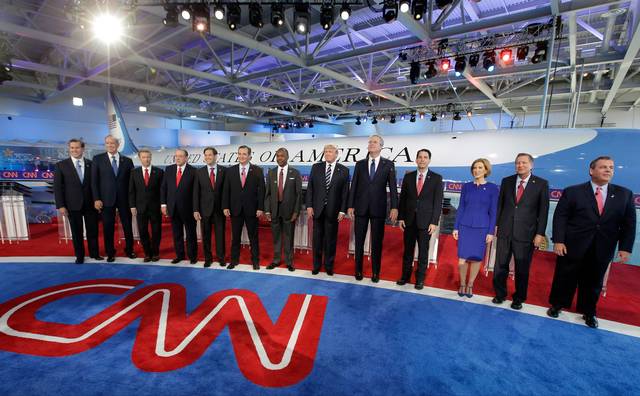
They are beginning to happen so frequently – not only on the Republican side but also on the Democratic – that it is becoming a bit mind-numbing when they come up. For the fourth time in the past three months, however, the Republican Party will be gathering at the Milwaukee Theatre in Wisconsin for another two tiered debate. The debate, hosted by Fox Business Channel and moderated by FBC’s Neil Cavuto, Maria Bartiromo and Wall Street Journal editor in chief Gerard Baker, may appear to be the same on the surface, but there are underpinnings that have changed some of the dynamics.

The change will be apparent from the pregame show, otherwise known as the “kiddie table” debate. Gone from that stage will be former New York Governor George Pataki and current South Carolina Senator Lindsey Graham, who have both been polling in the microscopic digits and were deemed as no longer viable in the race by Fox Business. Despite both candidates complaining that the Republican National Committee is looking to knock out candidates rather than have their constituency decide (Graham stated on MSNBC that the RNC “couldn’t run a one-car funeral”), neither man will be in attendance when former Pennsylvania Senator Rick Santorum and current Louisiana Governor Bobby Jindal take the stage for the opening act on Tuesday.

It isn’t just going to be Santorum and Jindal on the stage for the pregame show, however (despite the high comedy of how they would attempt to “out-righteous” each other for the evangelical vote). Coming down the ramp like wrestlers in the WWE to battle against The Religious Way (oh, wait…they’ll be looking to join the team!) will be two veterans of the “Main Event,” former Arkansas Governor Mike Huckabee and current New Jersey Governor Chris Christie (at a combined weight of 600 pounds!). These two gentlemen have been cast away from the main debate for the same reasons that Pataki and Graham aren’t around anymore; their poll numbers have plunged to a depth that they no longer are considered serious contenders for the GOP nomination.

This will leave eight players – political outsiders Dr. Ben Carson and businessman billionaire Donald Trump (tossing the lead back and forth between each other), Florida Senator Marco Rubio (garnering more support from the “establishment” wing of the GOP as they desert another candidate), Texas Senator Ted Cruz (clinging to the Tea Party vote while he waits for Trump to leave the campaign), former Florida Governor Jeb Bush (losing that establishment vote while eliminating exclamation marks from his campaign slogan in favor of “fixing” something, just what isn’t known), Ohio Governor John Kasich, former businesswoman Carly Fiorina and Kentucky Senator Rand Paul – to take the stage for the “Main Event” on Tuesday night. Debate organizers probably could have cut Paul, Kasich and Fiorina (who has plummeted after making her run out of the “minor leagues” to the Adult Table due to her inability to find a subject to run on) for the same low poll numbers that they have been using in dismissing others, but they (and the RNC) probably didn’t want to appear that they were trying to manipulate the game too much. As such, they will be trying to wedge themselves into discussion amongst the Top Five candidates, who are viable in that they control roughly 75% (76.6% to be exact, according to Real Clear Politics) of potential GOP voters.

Not only have the dynamics of the participants changed for this fourth debate, there will probably be noticeable changes to the general tenor of the questioning from the Fox Business Channel moderators and staff.

The first debate, basically a “get your feet wet” affair, was on the home turf of Fox News Channel, but some of the candidates still found something to bitch about even though their questioning was rather low-key. The second debate, conducted by CNN, amped up the pressure on the candidates over a three hour span (the longest debate so far of the 2015-16 primary season) and has generally been recognized as the best debate to this point. The candidates complained – especially Trump and Carson – that the debate was too long (in reality, it actually forced them to have substance rather than fluff to their statements in requiring explanation). Then there was the debacle of last month’s CNBC debate, an unruly affair that featured inane questions from the panel and outright refusal to answer questions from the candidates.

That CNBC debate, however, will hover like a smoke cloud over the Fox Business proceedings. The ineptitude of the CNBC moderators will probably remove any character questions from the Fox Business panel’s repertoire, meaning that there will be no answers to Carson’s consistently false claims in his books and in his speeches. Carson, who has come under fire for inaccuracies and perhaps fabrication of some of his past actions and achievements (most people do this but, then again, most people aren’t running for President; for the ultimate job interview, you pretty much have to be scot-free of scandal nowadays or at least have “plausible deniability”), has continually ducked those questions. Cavuto, Bartiromo and Company aren’t going to be able to query Carson on these inaccuracies lest they be besmirched with the Scarlet “G” of “gossip.”

This also means that the panel will not be able to point out differences between the candidates regarding their policies. They will probably stay far away from any sparring sessions between Trump and…well, anyone on the stage…regarding his draconian plans on immigration. There is the slimmest of possibilities that there will be some discussion between the candidates as they delve into their differences, but Fox Business doesn’t want to give the candidates the ability to say they were “set up” to fight with each other (as Cruz alleged in the CNBC debate).

Although there won’t be the circus atmosphere on the stage in Milwaukee, this is a chance to see some actual discussion on the issues (that is, if the candidates will answer the questions as they are presented to them). I WOULD like to see Trump’s feet held to the fire regarding how he plans to round up 11 million people without it looking like he’s sending an entire race to the gulag. I’d like to see Trump explain where the money is coming from for this and his other fantasyland projects such as the Great Wall of Mexico. I’d like to hear from Carson how his tax plan isn’t going to put an even larger crater in the national debt; hell, this is something I’d like to hear from all the candidates in how, if they cut taxes to the bare bones, how it is supposed to translate to more revenues actually coming into the government (the “trickle down” economics from the Reagan Administration have been proven time and again to be false).

In this explanation, I want more than “increased buying power of customers,” “repatriation of money from overseas companies” and “small business growth” as platitudes. Explain in simple terms how cutting taxes without an appropriate or deeper cuts in the spending is supposed to either stanch the growth or lower the national debt. Then also explain to me what some people are to do when those cuts are so deep that they can no longer keep their heads above water and stay in the game (re:  actually stay alive).

Rubio, Cruz, Bush, Paul, Fiorina, Kasich…there are a host of inquiries about policies that they have stated to the public that could be the basis of a myriad of questions from the hosts at Fox Business. My only hope in the debate is that we don’t get a castrated Fox Business panel that either can’t or won’t ask the tough questions in fear of “offending” the candidates. This is a Presidential debate, for fuck’s sake, and not a coquette’s debutante ball. The questioning is supposed to be harsh, unnerving and probing…you are going to be leading the strongest nation in the world and, as such, you’d BETTER be able to handle the heat of the job rather than running to a pulpit to seek permission from a “higher authority.”

Unfortunately, this is what I believe we are going to see on Tuesday night. Cavuto will have a choker on him from the Fox Business brass (or perhaps even Fox News chairman Roger Ailes himself will have his hand on the jerker chain) and will have all the strength of a neutered Chihuahua. Bartiromo will bat her eyes as she “seriously” looks into the numbers, while Baker will rubber stamp things as long as he can lock up the candidates for an op-ed in the WSJ in the near future. The debate will not be providing anything substantive that people can examine in depth, allowing the candidates themselves to crow about how “they have control of the message” (what that message is really is anyone’s guess), at least until the next debate.

Those looking to be a leader of ALL people, not just one segment of the people, have to be able to answer the hard questions and with something more than platitudes or dismissals. If a group isn’t challenged to show their abilities in leadership, then they don’t earn that chance to be a leader. If those that question them – and those that listen to the answers to those questions – allow them to bypass this process and immediately put them into leadership because of other non-leadership qualities, then you get what you asked – or didn’t ask – for.

How to Fix the Presidential Debates

2016GOPCandidates

Since the conclusion of the last GOP Presidential debate that was held on the cable network CNBC – a truly dismal effort that left nobody satisfied with the outcome – there has been bellowing from pretty much everyone. Yes, the CNBC debate was a clusterfuck from the start – with three moderators and two guest questioners, it was never clear who was in charge – but once they became coalesced around an issue, the Republican debate participants struck back with veiled threats against the “mainstream media” (important point here:  if you’re going to govern a country as vast as the United States, you’re going to need that “mainstream media” at some point to get things done). It left the entire night as a giant stain on the 2016 Presidential campaign process.

The candidates complained about a multitude of things, including the length of the debate, the number of questions received, the quality of the questions and so forth. The moderators, in their defense, were faced with participants who, when presented with a viable question – such as Dr. Ben Carson’s involvement with the snake oil provider Mannatech, Senator Marco Rubio’s attendance in the Senate, how billionaire Donald Trump plans on paying for his myriad of xenophobic programs or why Senator Ted Cruz was against the recent compromise that passed a federal budget out of Congress and to President Barack Obama for the next two years – either didn’t answer the question, answered another question that they wanted to answer, waited for a partisan GOP audience to air their opinion through booing or attacked the moderators and the media. When you have this type of Mexican standoff (which Trump is now looking to wall off at Ciudad Juarez), there’s not much that is going to occur in said debate.

Now the candidates have decided to set up their own rules for how debates will be conducted. There is supposedly a letter that a majority of the 14 remaining candidates in the GOP race have gotten behind (bypassing the logical arranger for such events, their own Republican National Committee) that is being sent out, but it isn’t to be taken seriously. The letter supposedly would allow the candidates to vet the moderators, review the questions of the debate before it is conducted and such bullshit as whether there will be a gong, bell or buzzer to indicate their time is up when answering a question.

It was announced on Thursday night that next week’s debate on November 10 (which wasn’t expected to fall under this supposed “letter” being drafted) and being aired on Fox Business Channel will already have a smaller “main event” field. Through their criteria, Fox Business has chopped the “main event” debate stage down to eight, separating New Jersey Governor Chris Christie and former Arkansas Governor Mike Huckabee off to the “kiddie table” debate beforehand. That “kiddie table” debate has also been chopped, with former New York Governor George Pataki and current South Carolina Senator Lindsey Graham being eliminated from the debates altogether. Those that are being dropped down or out completely are not polling at the prescribed levels by Fox Business and, as such, have met the axe as to the debates and probably will soon as a viable candidate in the GOP race.

As a result of some of these changes, get ready for more whining out of the GOP candidates. If the GOP candidates – and also their Democratic brethren – want a chance to take on a serious debate, replete with issues to discuss, then it would be necessary to follow these rules.

2016DemocraticDebates

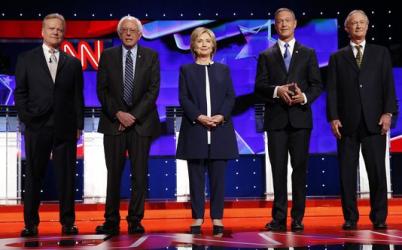
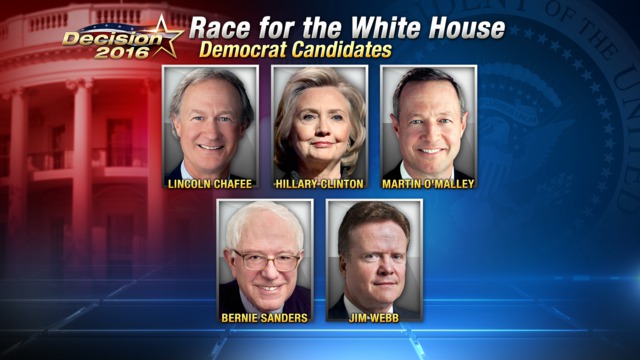
Both Parties Must Have a Debate On Foreign Ground – The GOP is the only party who has stepped outside of their traditional “home turf” of Fox News (or Fox Business), where they could be semi-comfortable in that they would receive a decent hearing (even these GOP candidates, however, complained about the Fox News debate). The CNN GOP debate was considered to be quite good as the longest debate yet, providing for more discussion of the issues but not enjoyed by Trump or Carson, who lack the background to describe how their policies would work other than “they’ll be great.” By this point, you already know about the CNBC snafu. The Democratic Party hasn’t left its cozy home with CNN and their next “debate” – a candidates’ forum in South Carolina on Friday night that will feature former Secretary of State Hillary Clinton, current Vermont Senator Bernie Sanders and former Maryland Governor Martin O’Malley (Lincoln Chafee, Jim Webb and Lawrence Lessig have ended their campaigns since the first Democratic debate a couple of weeks ago) – will be hosted and aired by MSNBC and commentator Rachel Maddow.

Each party has their partisans; I would be more interested in how they speak to a hostile audience and, just maybe, both sides could have a chance at swinging those in the middle ground to some of their viewpoints (this would also help as far as governance, but that’s another story for another time).

The Arbiter Determines All – While one or two moderators is OK, one should be the rule. There should be only three questioners involved in the game and the participants in the debate have NO RIGHT to choose who they want to fire questions (why would I want to hear you and a “friendly” questioner lob softballs all night?). Finally, there will be one voice who makes all determinations on the floor of the debate hall – The Arbiter (usually a moderator would do this, but they are too encumbered by their own networks to draw in ratings and worried about any potential future dealings with the candidates to have the balls to do anything).

The Arbiter will be an unknown person, presumably with knowledge about debate procedure, the subjects that would be presented during the debate, the histories of the participants involved in the debate and should have as little involvement with one political side or the other or be in media as a current broadcaster (if it has to be, then The Arbiter should be from the opposing party or media outlet – couldn’t you imagine someone from the Wall Street Journal serving as The Arbiter for an MSNBC debate and someone from the New York Times handling the Fox debates?). The Arbiter will be in charge of officiating the event and providing the punishments (we’ll get to that in just a second) that will be meted out for violations of the debate protocol. At the end of the debate, The Arbiter slinks back into the dark, never known by those who were in attendance.

The Arbiter will have several weapons at his/her disposal:

Question Refusal – The Arbiter will have the right, after a question is posed, to determine if the question is worthy of being answered. Such questions as whether some other candidate has the “moral authority” to do something or something that prods two candidates to spat at each other over insignificant bullshit would be the main thing that The Arbiter is looking for. If a questioner poses such a question, the first infraction is a warning with a second infraction resulting in a 10-minute penalty (removal from the debate). A third violation will result in the questioner’s removal from the remainder of the debate.

Microphone Control – The Arbiter would have control over the candidates’ microphones for the purpose of keeping them on track with questions. If a candidate is posed a question and said candidate either starts off on a tangent or doesn’t address the question directly, The Arbiter has the power to cut the candidate’s microphone. The Arbiter will pause for five seconds before reactivating the candidate’s microphone and, if at any time during the candidate’s response he goes off topic again, The Arbiter will end the question by shutting off the microphone for the remainder of the question.

The Arbiter will also be in control of how long the candidate speaks; once the candidate has reached the maximum allotted time (60 seconds in the previous debates), The Arbiter will cut off the candidate’s microphone permanently unless asked a follow-up question.

If the candidate cannot keep on track with his replies to the questions being posed, The Arbiter will have the right to remove the candidate from the debate or, if the candidate refuses to move, will have his microphone cut off for the remainder of the debate and his/her constant interruptions will begin to annoy everyone.

Question Count – The Arbiter will be responsible for keeping a running count (can be aided on this by electronic timing of each candidate’s responses) or time bank on how many questions each candidate has received and/or how much time each candidate has been speaking. If The Arbiter notes a predominance of questions to a few candidates, then he will inform the moderator and the moderator must change tactics and ask other candidates questions until The Arbiter feels it is balanced out.

Have a Manageable Debate Field – This has been the major problem with the GOP debates is the number of people on the stage. When you have 10 candidates looking to make their mark in a two hour debate, the most a person is going to be able to speak is probably around seven or eight minutes (once you deduct commercials, opening and closing statements and audience applause/outrage/outbursts). In the GOP field, there is probably no more than six viable candidates (I’ll let you choose your six); the Democrats have already limited their field from six to three, so they are on course for the primaries.

The whittling of the field is useful because, if you’re drawing 1% of the vote six months to a year after you announced your candidacy, the likelihood of you earning the party’s nomination next summer is highly unlikely. It’s simply a numbers game in that you aren’t going to get the attention as someone at the back of the pack that the frontrunners are going to get from being the, well, leaders. It IS a Catch-22, but that’s the way many things are in life. Unless the front six are mysteriously overcome with a debilitating illness that renders them incapable of running for office (and Christie isn’t above trying to inflict said illness on the frontrunners), you’re going back to your previous job or hosting duties on Fox News.

Implementing these rules – and simply letting the respective committees, the RNC and the Democratic National Committee – handle the nuts and bolts of debate preparations is the logical way to go. You’re running for the most important office in the United States; being concerned that the debate hall has a temperature more than 67 degrees shouldn’t be on your mind. Policy thoughts, debate tactics and proving yourself to U. S. citizens should be your goal. As President Obama also stated earlier this week, if you aren’t able to handle the queries of journalists from the news networks, you’re going to have trouble handling Putin.

Will these rules be adopted? No way in hell…but it would make for a more streamlined debate with plenty of policy discussion. And who wouldn’t want to see The Arbiter enforce his rules on both bags of bozo biscuits running for President?

Wondering Whatever Happened To…For November 3

Wondering whatever happened to California Congressman Gary Condit while pondering…

What If There Wasn’t Any Grits? – Pointing out the ignorance of some when it comes to the issue of the Confederate Battle Flag, a Tupelo, MS man is in jail facing a potential life sentence for using an explosive device against the retail outlet Walmart.

According to reports from local papers, Tupelo Police Chief Bart Aguirre said that 61-year old Marshall Leonard threatened the megastore a few days ago when he wrote on the local paper’s Facebook page, “Journal corporate, you are on final warning. You are part of the problem. As a result of this, y’all (sic) are going down, along with Walmart, WTVA (a local television station), Reed’s department store and all the rest of the anti-American crooks. I’m not kidding. No messing around anymore!”

While some might have thought this to be the ravings of a lunatic, this was a lunatic who decided to take action. On Sunday morning at about 1:30AM, Leonard allegedly drove his car to the local Walmart in question, lit a package on fire and threw it in the entryway of the store. An employee standing nearby was told by Leonard, “You better run,” and, as the employee did, a small explosion went off that didn’t cause much damage to the store.

So what was Leonard’s problem with Walmart? The factor that the superstore had quit selling the Confederate Battle Flag. Leonard is an outspoken opponent of current legislation, Initiative 55, which would remove the Battle Flag from the current Mississippi state flag permanently. Leonard doesn’t believe the flag to have any racial or slavery overtones (despite the statement in the documents of secession by the state of Mississippi in 1861 stating, “Our position is thoroughly identified with the institution of slavery – the greatest material interest of the world.”) and has been tossed out of a city council hearing on the subject (while draped in a Battle Flag).

The police didn’t have to investigate too deep to find Leonard either. Leonard’s vehicle, with a flagpole sticking through the roof that displays the Battle Flag while he drives, ran a red light at 2AM after allegedly tossing the explosive device into the Walmart. Police stopped Leonard and, as their radios crackled with news of the bombing, Chief Aguirre said, “We quickly figured out we needed to hang on to this suspect.”

Why Should I Be Educated If I’m In Heaven? – In another entry into the idiocy of the South, parents of nine Texas children are suing the state over their home-schooling techniques. Texas laws are quite permissive regarding what home-schooled students have to learn and one family, the McIntyre family of El Paso, TX, decided they didn’t need to have a curriculum, any oversight from local officials and didn’t have to take any of the tests that children in public and private schools had to take. Why? Why waste time on education when the Second Coming is upon us.

The situation came to light after the 17-year old daughter of the family ran away from home and, upon being placed in the foster system and in a real school, couldn’t keep up with her peers (seniors). She was placed in a ninth-grade class and was even struggling to keep up at that pace. Further investigation by authorities through other family members found that not only was there any “home schooling” going on, but the parents were flaunting the results.

According to Tracy McIntyre, the twin brother of Michael, the other children were “never reading, working on math problems, using computers or doing much of anything educational.” The reason that Tracy gave for this was Michael telling him that the children’s learning was unnecessary because “they were going to be raptured.”

The El Paso school district began to investigate further, at which time the McIntyre’s sued them for “oppressing their right to not educate their children.” In a deeply Republican state, the family called the all-Republican Texas Supreme Court “anti-Christian” and claimed that the oversight by the El Paso school system is “a startling assertion of sweeping governmental power.” While these claims may sound as ludicrous as they look, there is a chance that they might have some effect; the current head of the Texas Board of Education is a Christian homeschooler and Governor Greg Abbott is staunchly behind the homeschooling system, which in many conservative homeschooling cases lacks any knowledge of sciences, technology or mathematics and instead delves into Bible-based explanations of subjects.

But The Slurpee Machine Is Always Spotless! – We already know that there is a great deal of waste in the U. S. government and, in particular, in military spending. But a $43 million gas station?

In a recent report from John Sopko, the Special Inspector General for Afghanistan Reconstruction, the building of a compressed natural gas station cost an alleged $43 million, including $30 million in overhead costs (operational expenses) in a country where few vehicles exist and those that do don’t run on natural gas. Not only was this station highly expensive (a similar station in Pakistan was built for $500,000), but there was no examinations of whether building the station was feasible or not ever performed or ever deemed necessary.

“One of the most troubling aspects of this project is that the Department of Defense claims that it is unable to provide an explanation for the high cost of the project or to answer any other questions concerning its planning, implementation or outcome,” Sopko stated to the Washington Post. The reason? The department that was in charge of building the station, the Task Force for Stability and Business Operations (with an $800 million budget), was closed six months ago and the Pentagon has no comment on its activities.

Simple investigation by Sopko questioned the legitimacy of building the station. With a non-viable market for natural gas vehicles, Afghanis would have to convert their vehicles to the fuel. The cost of such a conversion is around $700. The problem there is that the average Afghani wages for a year are $690.

Sopko says he will continue to investigate the situation but, without cooperation from the Pentagon, it is unlikely he will find any reasons for the wasteful spending.

The Inmates Running the Asylum, Part 420 – The candidates for President on the Republican Party ticket have been loudly complaining about how the three debates they have taken part in (especially the last one on cable station CNBC) have been conducted, despite the first debate being conducted on their home ground of Fox News and a second debate on CNN considered fairly decent. Now, instead of allowing for a central group to set the standards for debates – say, perhaps, their own Republican National Committee – the candidates want to set the rules that future debates will be held under until the party’s convention next summer.

GOP candidates have floated such ideas as keeping the room at 67 degrees, splitting the 14 remaining candidates into two randomly picked groups of seven and asking them the same questions and setting strict time limits on the proceedings. It is expected that some of the candidates have already coalesced behind some framework of demands for the forthcoming debates (probably those after their November 10 scheduled debate), but one candidate thinks he can get more through his negotiations (take a wild guess).

Representatives for billionaire Donald Trump, who has seen his numbers of late slide as Dr. Ben Carson has slowly gained traction, are currently refusing to sign any letter of demands alongside the other candidates, believing that through his own force of will he can get more. According to the New York Times, however, Trump is actually hurting the cause because the candidates only have power if they are united. If they are fragmented or are asking for far too much from debate organizers, then the possibility of the networks, the RNC or even the candidates canceling a debate comes into play.

First they couldn’t find a Speaker for the House of Representatives, now they can’t determine a debate format – it truly is the inmates running the asylum.

Now to answer the question…what happened to California Congressman Gary Condit?

Through the 1990s, Gary Condit was a rising star in the Democratic Party. A congressman from California, Condit looked the part of the perfect representative from the Golden State, with a pearly smile and ambitions of even bigger things in his future. The discovery that he was having an affair in 2001 with an intern by the name of Chandra Levy effectively derailed his burgeoning political career.

The discovery of the affair only came about after Levy disappeared in May 2001 and Condit, who vehemently accused then-President Bill Clinton of illicit activities with intern Monica Lewinsky in the 1990s, for some time was considered a suspect in her disappearance (in 2010, an illegal immigrant from El Salvador was convicted in Levy’s disappearance and murder). It was enough to derail his career; in 2002, Condit was defeated for reelection in the 18th District in California and, instead of going back home, moved to Arizona.

In Arizona, Condit opened up an ice cream store franchise that failed and in which he is currently embroiled in litigation over. His son, Chad, is attempting to follow in his father’s footsteps (hopefully not literally) in running for Congress in California’s 10th District. Condit, at 67, has called it a career in politics, now serving as the president of the Phoenix Institute of Desert Agriculture, a non-profit group created in 2011 with offices strangely located in San Diego, CA, that doesn’t list any responsible owners or operators.

When All Else Fails, Attack the Messenger: Thoughts on the Third GOP Debate

After I took a week off last week, the third debate for the Republican Party snuck up on me. That week spent away from a computer left me with little debate preparation that would have given me some insight into what might be the major themes of Wednesday night’s soiree in Colorado, but that sometimes isn’t a bad thing. The ability to go in fresh sometimes will allow you to view things in a different light and present some new insights that you might not have previously considered. Unfortunately, the overall performance of the GOP in last night’s debate – and at the same time the presenter of the debate, the cable network CNBC – left me feeling nothing.

I should have known from the start of the debate that it was going to be a massive train wreck (and an apology to comedian Amy Schumer for using the title of her movie in that manner). Lead moderator Carl Quintanilla, a respected investigative reporter who has traversed the world (and an alumni of where the debate was held, the University of Colorado at Boulder, for trivia’s sake), opened the proceedings with one of those “eye roll” questions that occur far too often. Likening the debates to a “job interview,” Quintanilla asked the GOP candidates what was their biggest weakness (one of those bullshit psychological questions that come up sometimes in employment interviews). After getting several milquetoast responses from pretty much the entirety of the ten-person stage, the debate careened off the tracks.

At no point in the debate did it seem that Quintanilla had any control over what was going on in the event. Quintanilla allowed the candidates – ALL of them, not just a couple – to run roughshod over his direction of the event. I lost count of the number of times that there was little to no response to a question from the candidates and he often let the candidates interject at times when, according to the rules of the debate, they didn’t have a horse in the race (Carly Fiorina was particularly irritating in this account). His co-moderators – fellow CNBC journalists Becky Quick and John Harwood – weren’t much better with their questions and also were ridden like Grand Canyon mules over the span of the debate.

There was also no reason to have more than these three people asking questions of the candidates. I could have done without watching snake oil salesman Jim Cramer pushing his mug across the screen – even if it only was a couple of questions – and Sharon Epperson’s appearance wasn’t necessary either. In fact, if Cramer and Epperson’s raison d’etre was to give some more prep time to the triumvirate of Quintanilla, Quick and Harwood (who all seemed very unprepared for the event), they failed miserably.

With this said, there was no reason for the reaction from the GOP candidates to some legitimate questions that came up during the debate on Wednesday. It was a case of those under questioning shooting the messenger rather than answering the questions – regardless of their difficulty – presented to them.

One of the most popular methods of anyone under fire – whether they are in politics, entertainment or even the media itself – is to attack the person who is presenting the challenge to them. This is well-known in the debate world as an ad hominem attack and is recognized as a logical fallacy that allows for those under fire to sometimes escape the flames by turning the attack back on the questioner (the “messenger”). It is a tactic that has been well practiced by those in the GOP, railing against the “mainstream media” while at the same time avoiding queries about questions surrounding their past and/or their policies.

Give it to the men and Fiorina on the stage, they were quick learners during the debate last night. After the crowd expressed their displeasure with a line of questioning put towards former Governor Mike Huckabee about Donald Trump’s “moral purity” (a completely correct displeasure, by the way), the others seemed to grasp onto the “red meat” of attacking the media for the line of questioning would give them the desired response from the Republicans in attendance.

Dr. Ben Carson grasped onto that tactic next when questioned over his involvement with a nutritional supplement company called Mannatech. After stating that he had no connection with the company, Carson was challenged by Quintanilla regarding the usage of his image on their website, among other things. After Carson shot a shit-eating grin over his face following the umbrage of the audience to Quintanilla’s questions, he deftly was able to avoid the question.

The problem? The line of questioning was a viable one. The company in question, Mannatech, and Carson have had a relationship for the past decade. Carson shot many videos promoting the company and gave several paid speeches. The company has previously been sued by the state of Texas, resulting in a settlement with then-Attorney General (and current Governor) Greg Abbott for $5 million and the banishment of founder Samuel Caster from having any job with the company. The company has also settled a lawsuit with the Securities and Exchange Commission and still faces issues regarding the claims of cures their “dietary supplements” provide.

A similar situation arose in what many recognized as a “big” moment during the night’s debate. Senator Ted Cruz fed the lions of the right by rattling off the list of “insulting questions” asked by the CNBC panel. “This is not a cage match,” Cruz began (and you got the feeling this is one of those prepped answers he had been waiting to use). “Donald Trump, are you a comic book villain? Ben Carson, can you do math? John Kasich, will you insult two people over here? Marco Rubio, why don’t you resign? Jeb Bush, why have your numbers fallen? How about talking about the substantive issues?”

The problem was is that Cruz’s attack on the moderators was in response to, once again, legitimate questions from the panel. The Trump question was why his policies – including deporting 11 million people, building a nearly 2000 mile long wall along our border with Mexico and forcing them to pay for it and his handling of Russia and the Middle East – “sound like a comic book version of a presidential campaign?” Needless to say, Trump did not answer the question, instead replying to the Mexico situation by saying, “A politician cannot get them to pay…I can,” a non-answer if there is one.

Carson’s question was on how his flat tax plan – similar to that of tithing to a church (someone has to remind the GOP there is a SEPARATION between church and state) – wouldn’t leave the U. S. with a huge budget deficit. Instead of pointing out what cuts would be made or other tactics necessary, Carson instead responded by saying, “That’s not true,” and never answered the question.

Cruz himself dodged a legitimate question. When asked about why he opposed the recent deal in the U. S. Congress that would set the U. S. budget for the next two years, Cruz instead railed about how the moderators wouldn’t ask anything substantive and didn’t actually get around to answering the question presented to him.

And let’s not even get into Trump’s convoluted stance regarding guns…

When you have no defense for the positions you’ve taken, when you have no knowledge beyond the bare-boned rhetoric that has been presented, the only other course of action is to attack the messenger. The GOP seems to have done that pretty well – and not without some truly atrocious questioning by the CNBC moderators to bring it on – in avoiding being held responsible for their proposals and actions.

With this situation taken care of, there were some takeaways from last night’s debate. The one thing I consistently kept wondering about was what the candidates meant when they complained about how government doesn’t do anything. My knowledge of history looks at things like FDR’s “New Deal,” which helped to get the U. S. out of the Great Depression (along with World War II), how government investment in medical research found cures for major diseases such as polio and smallpox, investment in education (especially college educations) has allowed for the baby boomers to be the most educated generation in history and investment in sciences that led to NASA and our exploration of space (and this is just a small sampling). Instead of consistently railing about the “evils” of government, try to admit that sometimes things wouldn’t get done unless there was government intervention.

Secondly, I saw a bunch of candidates complain about Washington seven ways to Sunday as if it were a bastard stepchild. The takeaway I had with was “Why do any of these people want to do something that A) they aren’t going to invest in (in reply to my above thoughts) and B) they despise to the point that they do?” Out-and-out hatred of an institution isn’t exactly going to be something that makes those there welcome you to the table and it isn’t going to inspire confidence in how you will “change” it. Instead of “making America great again” (which is about as asinine a statement there is; our country is already great and it hasn’t gone anywhere except for those nimrods who see boogeymen around every corner), how about we “improve on the United States we have?”

As to the candidates, it was Rubio’s best debate to date and sets himself up well for a future run (perhaps 2020) for the nomination (I don’t see him getting it this year really, but it wouldn’t be a surprise). Chris Christie found his groove (too little, too late) and Kasich was pretty good about presenting a moderate Republican stance. I don’t like to say someone was a “loser” in the debate, but the “Fat Lady” is warming up in the wings for Bush. Rubio flicked aside Bush’s attack on his Senatorial attendance and voting record without breaking a sweat and Bush spent the remainder of the night awkwardly trying to regain his footing.

There’s less than two weeks to the next GOP debate (November 10), so some of the things I’d like to see done won’t come true. I’d like to see the “kiddie table” debate dropped (hey, if you haven’t dug yourself over the 2% mark by this point, you don’t have any viability in the race) and perhaps see a couple of those candidates that were on the “main stage” step aside. Perhaps a little contraction in the GOP race – say eight candidates instead of 14 – would allow some people to truly put their support behind someone with a realistic shot at winning the nomination. It won’t stop, however, the “red meat” rhetoric out of the GOP regarding their “persecution” by the “mainstream media.”

What to Expect at the First Democratic Debate

DemocraticCandidates

Just when you thought that the political world had calmed down, the first of a planned six debates from the Democratic Party will be held on Tuesday night in Las Vegas. The five announced candidates – former New York Senator and Secretary of State Hillary Clinton, current Vermont Senator Bernie Sanders, former Maryland Governor Martin O’Malley, former Rhode Island Senator and Governor Lincoln Chafee and former Secretary of the Navy Jim Webb – will take the stage around 9PM Eastern Time on Tuesday night at the Wynn Las Vegas, presenting their reasoning for being the party’s selection for the 2016 Presidential nomination. It may not be as visually exciting as what the Republican Party have been able to put on in their previous two clashes, with their myriad of candidates all saying the same thing but trying to sound different, but these debates are just as important as those on the GOP side.

With President Barack Obama heading off into the sunset following his two terms in office, it is up to one of these five people to try to maintain the legacy of the Democratic Party for several reasons. One, the next President will probably have at least one and potentially as many as three Supreme Court justices to name in their 4-8 year term, basically allowing for a reshaping of the Court towards a more conservative or liberal bend. Two, if the next President is one of these Democrats, they will be able to firmly ensconce the Affordable Care Act – “ObamaCare” to many – as the “law of the land” and make it even more difficult to take away through repeal as it becomes more entrenched in the U. S. psyche. And three, the Democrats would be able to maintain the current foreign policy viewpoint of diplomacy before dominance – the major difference between them and the GOP, who want a war on all days that end in a “y.”

Anyone who says that the Democrats didn’t think that this would be a simple coronation for Clinton on the way to the Democratic National Convention in Philadelphia in July 2016 would be out-and-out lying. After getting stunningly pummeled in 2008 by Obama, Clinton did her duty in first accepting the Secretary of State role in the Obama Administration and then in not trying to usurp Obama is 2012. Her reward for this party loyalty was supposed to be a free pass to the Democratic nomination in 2016 but, along the way to the coronation party, someone threw a huge monkey wrench in the plans.

Sanders, the genial, grandfatherly Senator from the Northeast who calls himself a “democratic socialist,” has been stealing a great deal of Clinton’s thunder, especially in the early primary states of Iowa and New Hampshire. Part of the appeal of Sanders has been his Quixotic-tilt against the uber-rich, banks and corporations, which has struck a chord with the young and the downtrodden. His firm stance against all military action in the Middle East has also drawn comparisons of Sanders to fellow Kentucky Senator and Presidential hopeful Rand Paul – you know, back when Rand Paul was cool before he became a Republican.

Sanders has become so popular with some Democrats that the threats against Clinton in the early primary states have forced her into campaigning much sooner than she would like to have done. The Clinton team is looking to get her through the first few primaries in Iowa and New Hampshire, ready to take a second place finish behind Sanders, and prepare for the “SEC Primaries” at the beginning of March in the South, a traditional stronghold of the Clintons that would allow her to be able to thwart a Sanders attack through numerous victories.

There are a few differences between Clinton and Sanders, but there is more diversity when you toss the other candidates in the mix. O’Malley is a “law and order” type that, as mayor of Baltimore, was able to lower crime rates and improve the city’s image (it is also alleged that the tactics employed by O’Malley – the “stop and frisk” utilized by police officers, in particular, where officers could stop anyone for investigation despite not visually committing a crime – were a major impetus for the Baltimore riots of earlier this summer). Chafee is a former Republican who first became an independent before moving to the Democratic Party, while Webb is almost a DINO (Democrat in Name Only) as he supports the “close the border first, then maybe amnesty” program popular with Republicans as well as reining in the Environmental Protection Agency and its regulatory authority.

The 800-pound gorilla in the room will be the specter of current Vice President Joe Biden. Supposedly considering a third run for President, Biden has not committed to this debate as of Monday, but CNN has stated that a podium will be on hand should Biden state he wants to take part in the festivities. With Biden polling better than Sanders (but still behind Clinton), Biden would be an immediate (and strong) challenger to Clinton, forcing her to fend off not only Sanders but also Biden.

What exactly is going to happen in the debate? First off, Sanders and Clinton – and throw Biden into the mix should he show up – will not attack each other as the GOP candidates did in their second debate. First, moderator Anderson Cooper and his panelists, CNN reporter/anchor Dana Bash, CNN anchor Don Lemon and CNN en Espanol’s Juan Carlos Lopez, are not going to ask the “challenging” questions that saw the Republicans rip into each other during their debates. “I think it’s just as interesting to kind of learn about some of these candidates who the American public doesn’t really know much about,” Cooper stated in an interview on CNN’s Reliable Sources over the weekend, “as it is to hear from some of the candidates you do.”

There has also been a remarkable bonhomie between Sanders and Clinton in that they haven’t brought the knives out against each other. Sanders, in particular, has been given multiple opportunities to rip into Clinton over a variety of problems she has faced (her private e-mail server, her work with the Clinton Foundation and the Clinton Global Initiative and how it affected her time as Secretary of State, her vote for the Iraq War in 2003, etc.), but he has refused to do any mudslinging and instead concentrated on his message. That is a bit refreshing in this current day and age of politics.

Both Clinton and Sanders are going to continue with their own presentations of what their plans as President will be, which differ in some areas. Sanders in particular has made many suggestions regarding what he would do as President – free college for all students, raising the minimum wage to $15 nationwide, universal health care (going beyond ObamaCare) – but he will also have to answer about how he’s going to pay for those things; if Sanders’ plan to increase taxes on the 1% (for your information, that would be anyone who makes more than $344,000) and reduce military spending doesn’t stand up to the scrutiny, then his other plans won’t be taken seriously.

The ones who have nothing to lose are O’Malley, Chafee and Webb. Any airtime they get during the debates would be welcome as the three men currently are barely even making an impact on the polls (Webb is averaging .9%, O’Malley .6% and Chafee .2%, according to Real Clear Politics and their national polls). They also have to make viewers/voters remember them, so taking some shots at Clinton, Sanders and/or Biden (if he shows up and he’s polling at 18.6%) might help them out. If these candidates can’t get a bump out of this debate, they may not get another shot at the next debate in November, especially if Biden announces a run for the Presidency and their numbers stay the same.

One thing that will NOT happen is any of the candidates making a serious faux pas. All of them are experienced debaters and, as such, will be able to withstand the slings and arrows that come from their opponents. Only the introduction of Biden into the mix (due to preparation by the candidates for those that are currently on the dais and not an 11th hour introduction of another player) or a change in tactics by Sanders regarding his “no mudslinging” tactics with Clinton might change the game.

It might not be as electric as the GOP debates have been to this point, but the Democratic debate should provide viewers/voters with more substantive information on the candidates. It will also mark the drive towards next November when the next President of the United States will be chosen.

Is The “American” Too Stupid To Handle The Responsibility of Guns?

HeyCongress

The United States, in its creation and its development, is one of the most brilliant experiments that has occurred in human history. Instead of a homogenous society such as many Asian nations or one of tribal dominance such as those that are found in Africa, the United States of America was a true attempt at something that many would feel is impossible:  incorporating different people, different ideologies and different cultures into a “melting pot” where the end goal is an amalgam of the world’s best into a new creature…an “American” (I must say at this point I’ve never liked the term “American” – when that term is used, I immediately wonder “North, South or Central?” How about “citizen of the United States?”). While the list of success stories from the 200-plus years of the existence of the United States of America – and another 150 years or so of settlement into this earthen laboratory – are some of the greatest in mankind’s history, there are some areas where the nation has fallen short.

One of those areas has become painfully evident as details have come out over the past few days. Last Thursday a white male walked into a community college in Oregon and, with no provocation or apparent motive, gunned down nine classmates and instructors and wounded another seven people. In the more than 72 hours since the last echo of gunshots filtered across the Oregon landscape, we’ve dredged up the old tapes of the previous arguments over past mass shooting situations rather than advancing any significant solutions for changing the climate.

The “Usual Suspects” have divided along their prescribed lines, with one side stating that further laws on guns are a necessity to prevent this from happening again. The other side states that it is their “God given right” to have weapons, as many as they want, and any move to take them away is roughly akin to an attack against the very fabric of life itself. The potential reality, however, is that this new creature we’ve created – the “American” – is too fucking stupid to handle the responsibility of guns.

In looking at it from the “law of the land” – the U. S. Constitution – there would appear to be nothing that could be done, but that would be inaccurate. The Second Amendment – “A well-regulated Militia, being necessary to the security of a free State, the right of the people to keep and bear Arms, shall not be infringed.” – was put into the Bill of Rights for the essential purpose of having each state providing its own Army – its “Militia” – for the defense of the individual State and for the purpose of providing a standing Army for the federal government. The people who would make up that “Militia” would be the citizens of the state, who would need weaponry to be able to fight in battle (not to mention that they already had these weapons for providing food for their families).

Fast forward to the 21st century and the theory of the state-run “Militia” has run its course. The federal government has the responsibility for the national defense, accepting volunteers from its citizenry, thus the theory that a person may have to join a “Militia” to defend their state or country is an antiquated one (no more so than blacks and women don’t have the right to vote, for example…that was also in the Constitution at one time). Since hunting has now also become a leisure activity for virtually everybody rather than a survival one, sane people would naturally examine the point of weapons in today’s society.

Secondly, let’s look at the situation from the evolution of weapons. In the 18th century, the weapon of choice for many in the Colonies was a musket, which took anywhere from two to five minutes to load up with a single shot. The weapon’s effective range was about 50 meters (roughly 164 feet), meaning you had to virtually be right beside your target before you squeezed the trigger (in those days, ammunition was expensive and not to be wasted). It was also fairly easy to see when you had your musket with you; at 60 inches (five feet), there wasn’t anywhere on your body to conceal the weapon.

Once again, let’s rocket through history to today. Weapons such as the AR-15 – which was the predecessor to the military usage M-16 – have become popular for ownership by civilians for their ease of use as well as their power. That weapon can be converted to be able to fire fully automatic, meaning it can spew rounds out at the rate of hundreds per minute (remember the musket was a shot every two to five minutes) and has an effective target range of 500 meters or more (in the hands of a military person or someone well trained on the weapon). Even a .45 automatic handgun can pop out rounds at around one per second (60) and has an effective range of about 100 meters, if the shooter is quick with the trigger and reloading the weapon. And this isn’t even introducing a weapon such as the M-60, a weapon with the range of 1200 meters and up to 2000 meters in a trained sniper’s hands. When comparing the two situations, any logically minded person might entertain the option, at the minimum, that the Second Amendment WASN’T written with today’s sophisticated weaponry in mind.

US Stupidity

Finally, let’s take a look at the general stupidity of those that own weapons today. In September the state of Georgia, who for some unexplainable reason allow for weapons to be carried in bars, was greeted with a shootout in a bar when several people whipped out their weapons just before 3AM in the morning. Three people were found shot there and seven others, looking to avoid police, took themselves to the hospital. Only the stupidity of not being able to aim a weapon properly prevented a significant loss of life in this instance.

Typing the search phrase “child finds gun and shoots” into Google returns over five MILLION results on the subject. Looking up “person cleaning gun shoots” returns over EIGHT MILLION hits, including a North Carolina father who shot his 10-year old son to death while wiping down his shotgun in 2013. Last year a Las Vegas gun instructor handed an Uzi to a nine-year old girl on a gun range. The girl, unable to properly control the weapon, killed the instructor immediately as she struggled with its power. These and other stories continually demonstrate the stupidity of the “American” to simply maintain their weapons safely, keep them out of the hands of those who might not know what to do with them or even momentarily pause to think if something this dangerous should be done at all.

The gun fanatics can be shot down quickly. “The only counter for a bad guy…” yeah…yeah…yeah. How many times has that “good guy” taken down the baddie? On the grounds of that community college in Oregon were several people with concealed/carry permits and at least one person who was actively carrying. What did they do to stop the situation? In such a situation, the objective is to head for cover, not open up like it’s the fucking Wild West and escalate a situation beyond what it is. The Virginia Tech shooting was done on campus in the midst of plenty of University police and security…the shooter stopped his rampage when he committed suicide. I don’t see these “good guys” civilians jumping up and, even if they could, their own personal logic and training would probably prevent them from taking action and making a situation worse.

“It’s a right…”yeah…yeah…yeah. It was previously a “right” for women not to vote, that slaves were 3/5 of a person (so much for that “all created equal” stuff), that you couldn’t drink, etc. Rights are critical to keeping society free, sure. Rights aren’t set in stone, however; recognize the end of slavery, women’s suffrage, civil rights and the end of Prohibition. Besides, if Donald Trump can debate the legality of the 14th Amendment, maybe it’s time we started to take a look at all of them in our current society.

“I’m protecting against the tyrant Obama and the New World Order…” yeah…yeah…yeah. You’re part of the problem, bub, and shouldn’t be holding a weapon if you believe in a conspiracy theory like that (the “New World Order” or Illuminati is pretty lame if it has been in existence for well over 600-700 years and hasn’t TAKEN OVER ANYTHING). Put down the weapon, step away from it slowly and pick up your tinfoil hat and binky to suck to help keep you calm. (Funny how we never heard about these armed “Militias” wanting to take down President Bush, isn’t it? Perhaps that’s a question for another time…)

The stupidity of “Americans” regarding weapons will continue until there is some change to the mentality. There are fewer restrictions on guns than there are on an automobiles; while admittedly not a right, driving an auto requires an age requirement, insurance, licensing, training on the vehicle (we just don’t allow anyone to jump into a gasoline tanker truck without the proper training) and, if they don’t abide by the rules, then people are punished both financially and with their very freedom. Why can’t the same thing be done regarding our love affair with guns? If your too stupid to be able to handle them responsibly, then you don’t need to have them at all.

I won’t go through the litany of civilized nations that have come up with the answer to the questions we United States citizens face regarding the gun issue. If we continue to let the stupid rule the issue, however, we are doomed to continual tragedy. If we cannot get this system under control, then we will continue to see (to paraphrase a Jimmy Buffett song about ignoring problems around you) “a river of blood pouring out from a wound that will not heal.”

“Routine” Tragedies Will Continue Until the Chain is Broken

We didn’t even wait until later into October to get our “mass shooting of the month” out of the way for the next 30 days or so. In Oregon this afternoon, a man walked onto the grounds of Umpqua Community College, entered the classrooms and, reportedly after querying his potential victims on their religious backgrounds, appears to have executed 10 people. The shooter would injure another seven people before police arrived on the scene and gunned him down.

We’ve become numb to it in the United States, these mass shootings where someone – whether for religious or racial reasons, whether they are mentally ill or completely sane – snuffs out the existences of those who are either at the beginning of what should be great lives (the Sandy Hook shootings), defending our nation (Chattanooga), joyously praising their God in a house of worship (Charleston), meeting with their Congressional district’s residents (Tucson) or just simply going to school, trying to learn something to advance themselves (Columbine).

First off, let’s define a “mass shooting.” The definition has come to be determined that which A) four or more people are victims, and B) don’t include gang killings or the death of multiple members of the same family. This criteria makes sense in that emotion (such as a familial situation) or an involuntary occurrence (killing two people at the same time by accident) wouldn’t fall into the equation. Using the criteria, this would include every one of the situations noted a couple of paragraphs previous and would also include the Aurora, CO, theater massacre, among several others. What wouldn’t make the “grade”? The recent point-blank execution of the journalists in Virginia, unless you want to count the shooter as Victim #4.

As to be expected, the respective representatives came out on both sides and began to toss their rhetoric. President Barack Obama summed up one end perhaps most concisely in saying, “Somehow this has become routine. The reporting is routine. My response here at this podium ends up being routine, the conversation in the aftermath of it. We’ve become numb to this. Our thoughts and prayers are not enough. It’s not enough. It does not capture the heartache and grief and anger that we should feel, and it does nothing to prevent this carnage from being inflicted someplace else in America — next week, or a couple months from now.” Of course, after Obama made this statement, gun advocates screamed that he was “politicizing” the situation when it “wasn’t appropriate.”

The National Rifle Association, which is about as oriented to the safe usage of weapons as Volkswagen was in creating environmentally safe vehicles, will continue to wail about how it isn’t about the guns. “It’s about the people,” they’ll sniffle as they hug their little weapon close to their chest, petting it gently. “If they weren’t bad people/high on drugs/mentally ill (choose your excuse du jour), then they wouldn’t have done something like this…It wasn’t the gun’s fault, though (Pat…Pat).” And when their paid henchmen in Congress get up and repeat this line of bullshit, they should be forced to go look at the bodies of the dead as they lie on the grounds of a college or a school playground and then try to repeat their idiocy.

Strangely enough, the rest of the world doesn’t have this problem. Using the criteria set above regarding what constitutes a mass shooting, between 1966 and 2012 (this isn’t even counting the last couple of years of this fucked-up situation) there were 292 such incidences around the world. While they weren’t all in the United States, a sizeable chunk of them were. There were 90 such mass shootings in the U. S., meaning that although the U. S. makes up 5% of the world, we have 31% of the mass shootings. Finally, in the U. S. shootings, more than half of the cases involved a shooter with more than one gun; in the foreign cases, the gunman usually had one weapon. For the gun nuts in the crowd, here’s something to hang your hat on:  the average number of victims in U. S. shootings is 6.87 per incident; internationally, it is 8.8 victims.

In another study from the Harvard School of Public Health looking at mass shooting incidences between 2011 and 2014, mental illness is examined as the cause for the attacks. While the rates of mental illness remain level for the time period, the research shows that mass shootings tripled in frequency. The study also showed that, in the previous 30 years, mass shootings occurred about every 200 days; in the three years examined closely, that rate had dropped to 64 days.

So what can we learn from this data? The problem with mass shootings isn’t about who is committing the atrocities, it IS in the choice of what they are using to complete their twisted fantasies. Weapons – handguns, rifles, shotguns, etc. – are the reason that so many people are being killed when someone decides to commit these acts. We often hear from the gun lobby, “Well, if he had a knife and did the same thing, would you ban the knife?” The answer is probably not because, with only one knife, there’s the chance that the situation could be averted and/or not as extreme in its deaths. When someone has a rack of weapons and enough ammunition to fight their way out of a Syrian village, many people are going to die or be permanently scarred from the wounds they receive.

It’s time we actually did something about this situation. The fuckheads on the opposite side of the aisle – those that suck at the teat of the National Rifle Association and spout off about how their “Second Amendment rights” are under siege when there hasn’t been a federal gun law enacted in the United States since the 1994 Assault Weapons Ban that expired under President George Bush (Bush II, as I like to say) – will spout off about how “this isn’t the time” to talk about the plague of mass shootings in the United States. If this isn’t the time – and if it wasn’t appropriate the first 100 times this occurred in this country – then what the fuck time is a good one?

The NRA needs to get the hell out of the discussion or quit being obstructionist and admit that it is time that there are strong regulations put in place on all weapons in the United States. I consistently hear that the NRA grassroots isn’t represented by the hateful, rhetoric spewing Wayne LaPierre, the executive vice president of the organization, and that those “sensible gun owners” actually wouldn’t mind having some regulatory laws regarding guns on the books. It is time that this segment of the NRA shows up and forces their elected leadership to listen to them instead of allowing for a radical minority (if it is so) of the NRA to dictate the course of action.

They should acquiesce to federal licensing of weapons to individuals (we have stronger licensing principals in place for driving a fucking car, mind you, than owning a piece of military hardware created to end lives) and for all gun owners to have liability insurance on their weapon if it is used in a criminal act (that way there is some compensation outlet for the victims, at the minimum). Finally, gun show sales should be halted and a 10-day “waiting period” should be instituted for ANY gun purchase, be it a semi-automatic pistol, a pump shotgun or a pellet gun.

It’s tough to give any anger to those who are the victims of such acts, but there are some things that can be done. First off, sometimes things will happen in the course of life (easy for me to wax philosophically over) that we cannot prevent. We can never understand why certain things, especially some of the vilest crimes committed by mankind, happen in our existence. All that can be done in some cases is investigate it thoroughly and use the information to try to ensure that it doesn’t happen again.

Furthermore, even if the above laws were ALL put into place, there would still be mass shootings – they probably just wouldn’t be as prevalent as they are today. Normally sane people would still be able to stockpile weapons, even those that have no application in hunting and are created especially for the act of warfare and killing other humans, and ammunition will still be plentiful. As such, someone might be able to talk a buddy into giving, selling and/or stealing from enough guns to inflict such pain.

Finally, mental illness is a viable reason for mass shootings so, when it comes to those challenges, the U. S. should revamp the system and adequately fund and support the system. As it is now, the U. S. as a whole does NOT put enough money into education on the subject, treatment of those afflicted with the differing mental illnesses nor provide enough to adequately assist these people upon their return to public life. Without attention being paid to this area, then all the laws instituted won’t have any effect.

If six-year old children, pregnant women, members of the Armed Forces, churchgoing people, high school and college students and, yes, even the everyday Average Joe being executed by the business end of a firearm through no fault of their own doesn’t spur you to action, then you cannot be a member of the human race. It is time we end this scourge of mass shootings in the United States or, at the minimum, rein them in tremendously and reduce the number of times that the nation sheds tears for those murdered viciously.

Let’s just hope that we’re not talking about this again in a couple of weeks…

Why Does Pope Francis Have Such a Positive Effect on People?

If you’ve been here any length of time, you know by this point that I have, at best, an arm’s length relationship with religion. From the start, I have yet to find a religion that has a basis in fact. When I say fact, it has to have a scientific base to it. I refuse to have my intelligence insulted into thinking that the Earth is 10,000 years old, that man walked with the dinosaurs and has ruled the planet over the last 6000 years. There’s also that dichotomy between a Supreme Being that is supposed to “love you” but, if you don’t follow His laws to the letter, will cast into a fiery pit to roast for all eternity, but that’s a minor point. Let’s just leave it that religion and I have several areas we would need to work on if there was to be any contemplations.

This isn’t meant to imply that I don’t know my share about many of the major religions around the world and even some of the minor ones. Catholicism was one of those that has always interested me because there is so little effort made to change it from the pagan days of Roman mythology. Whereas Christianity brought about the birth of Jesus on December 25 to coincide with the pagan celebrations of the Winter Solstice (Bible scholars believe that Jesus Christ was either born in the spring or the fall, with fall much more likely – September 25 is a more accurate date to some), Catholicism doesn’t even try to hide their “patron saints,” basing them on the Roman gods and goddesses that populated the polytheistic religion that preceded them. As to the “God of gods,” ancient Romans looked to the deity Jupiter; to watch over the “patron saints,” there was, well…God.

Catholicism, with its roughly 1.13 billion followers (that’s the number the Vatican, the base for the Church of Rome and Catholicism, offers), is the second largest religious base in the world behind only Islam (I am separating Catholicism from Christianity because there are major differences between the two in my opinion; for the sake of argument, if you combine Catholicism and Christianity they are larger than Islam by number of followers). In the United States, 69.4 million citizens recognize themselves as Catholic, making them the largest denomination in the country. The Catholic faith has permeated U. S. society and government, with our current Vice President Joe Biden, the Speaker of the House John Boehner, six of the nine Supreme Court justices (including Chief Justice John Roberts) and a majority of the members of Congress and the state’s Governors worshipping as Catholics.

Therefore, it isn’t that surprising the attention that the papal visit of the current Bishop of Rome, Pope Francis, to the United States has captured. Every major news network covered Pope Francis’ arrival in the U. S. on Wednesday (from Cuba, interestingly enough…a country that the U. S. just recently reestablished diplomatic ties with that was aided by this current Pope) with a fervor that is usually reserved for the British monarchy (that one I can’t even figure out). On Thursday, his address to Congress was “must see” television, as was his departure for New York City and more meetings. But what has been especially interesting – and I can honestly say that I am counted in this area – is the effect that Pope Francis’ visit has had on those of us with a skewed view of religion.

To say that Pope Francis isn’t a change from the past…oh, 2000 years?…of papal history would be the understatement of several millennia. Pope Francis, born Jorge Mario Bergoglio in Buenos Aires, Argentina, is the first Pope from the Western Hemisphere in the over 2000-year history of the Catholic Church, the first non-European pope since 741 A.D. and the first Jesuit pope in history…that’s quite a few firsts on the docket already. Where Pope Francis has been able to further separate himself, however, is in his words and actions, which are probably the things that make him appealing to non-religious people.

Because of his Jesuit background that has an emphasis on social justice, Pope Francis – perhaps the least gaudily clad Pope in my lifetime, eschewing any gold jewelry or other finery unlike past Popes – has put an emphasis on working with the poor and bringing their standard of living out of the sewer from where it exists in many parts of the world. Sometimes this has caused Pope Francis to rail against “greed” and the pursuit of money over anything else in life. The Pope wasn’t the one who came up with this…it is part of the teachings of the Bible, the book that many claim to follow but when asked to put into practice decide to forget the sections they don’t agree with.

Pope Francis also recently released an encyclical (a papal comment on Catholic doctrine) that discussed global warming. Saying that humans and their lifestyles are causing increased problems with the situation, Pope Francis directed people to take an appreciation of their planet as they are “stewards of the Earth.” Once again, this isn’t anything radical (unlike what some might say), this is something that is in the Bible and a challenge to humanity to not fuck up the only place that they can live.

For myself, the biggest thing that Pope Francis did was today. In Washington, D. C., following his speech to the U. S. Congress, the schedule had Pope Francis having a high powered lunch with the leaders of both parties of the House and Senate, Senate Majority Leader Mitch McConnell, Senate Minority Leader Harry Reid, Speaker Boehner and Minority Leader Nancy Pelosi, as well as other Congressional staffers. Instead of noshing with these “power brokers,” Pope Francis did what a man of God would do:  turned them down and headed to lunch with 200 people at Catholic Charities of the Archdiocese of Washington, including some who were homeless or in need of the services of the organization.

The ability of Pope Francis to not only take the examples put into the Bible – love thy neighbor, reach out to those less fortunate, be a good caretaker of life and your surroundings (I could go on, but you get the idea) – but also to buck the trends of some in his own Church to politicize many of the beliefs of Catholicism (if there was ever a day to bring back the Papal food tester to make sure Pope Francis’ food wasn’t tainted, these days would be it). When some religious conservatives even have issues with what Pope Francis says, then he must be on the right track somewhere.

In my lifetime, this is only the second time that a religious figure has been able to impress me on any level. The first person was Billy Graham, who was able to look past religious beliefs and speak directly to whoever was listening about the word of God. Sure, Graham was a Christian but his sermons could be heard by, respected and learned from by anyone from any denomination or from no denomination at all (his son Franklin, on the other hand, has almost blasphemed the Graham name). Until Pope Francis came along (this Pope seems to have the same ability to get people to listen to what he’s saying), Graham was the only religious person whose viewpoint I actually respected.

This doesn’t give pass to the Catholic Church on some of their other subjects, however. The Vatican Bank is one of the largest in the world, with assets conservatively estimated at $5 billion, along with art treasures that the world has never seen. Property owned by the Catholic Church is worth well into the billions. The Vatican Library has documents that potentially could change history that few have ever seen. There is the denial of several atrocities that have occurred over the course of history, including the Crusades, the Spanish Inquisition, the war against science in the Middle Ages (and the continued struggle between science and religion as a whole today), allowing the Nazi persecution of the Jews during World War II, the past and continued cover-up of child molestation by priests and several other issues. These are areas that have been woefully addressed by the Catholic Church and its leadership in the 20th and 21st centuries.

Even with Pope Francis at the helm, there are still issues that the Catholic Church is behind the times on (let’s not even get started there). But Pope Francis has shown that there is potentially a light that is leading the Catholic Church into the future instead of the darkness of dogma.

Will this light continue to shine? Pope Francis has already said he doesn’t envision his tenure with the papacy being a long one, but the hope does exist that the next man chosen to be the “right hand of God” will at least listen to what Francis has said and perhaps put his own futuristic mark on the direction of the Catholic Church. If the Church does decide to try to reverse what Pope Francis has started, then they might just push more people – of their own faith, other faiths and even those with no faith – away from the basis of believing.