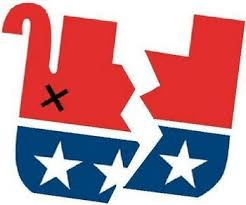
The Sane Side Finally Stands Up in The Republican Party, But It’s Too Late to Save the Institution

GOPLogoBroke

Ever since the stampede that began literally three years ago following Barack Obama’s re-election and inauguration to a second term as President of the United States – and if you don’t think the 2016 Presidential Race began there, you’re adorably naïve – it seems that, at least for one side of the two party system in the United States, the inmates have taken over the asylum (and just as a tangent, if any other country in the world said “we only have two parties to choose our leadership from,” the U. S. would be screaming voter repression from the highest peaks…in our own country? Not a peep.). The Republican Party – the party that once held such great thinkers as Presidents Abraham Lincoln, Theodore Roosevelt, Dwight Eisenhower, other politicians such as Barry Goldwater and Nelson Rockefeller, journalists Peggy Noonan, David Brooks and the late William F. Buckley – has usually been able to bring some sane minds to its leadership. Around the turn of the century, however, there was a change in the thinking, what became the Neo-conservative mindset, that splintered a once great party. Instead of being a party of intelligence like the people above, it began to erode from the inside, with its hoi polloi beginning to follow the baying of hounds such as Rush Limbaugh, Glenn Beck, Sarah Palin and the en masse robotic diatribes that flow from Fox News, turning the GOP base into an ugly, misogynistic, xenophobic, scared-of-its-own-shadow (and any minority that may have the audacity to even begin to think its…equal…to them) mob.

The sane side let the mob rant and rave after Obama’s election in 2008 and his re-election in 2012, saving its energy for the 2016 election. They set about trying to say all the right things in their 2012 “autopsy” about what went wrong:  they needed to reach out to women and all minorities – Asians, Hispanics, blacks and gay voters – and needed to have a comprehensive approach to immigration reform. They needed to have fewer debates – presumably so their candidates didn’t shoot themselves in the foot as often as they did in the run-up to the 2012 election – and needed to decide their nominee earlier, changing their primary structure. But the sane side said their principles were still good, they just weren’t “resonating” with the electorate.

Then the sane side let the maniacs in the asylum take over.

It started in 2010, actually. Elected that year, Florida Senator Marco Rubio had made it clear that there was only one aspiration that he desired in his political career and it wasn’t to sit in the U. S. Senate for the rest of his career, it was to be the President of the United States. In 2012, another player came along with that same philosophy, Texas Senator Ted Cruz, and both of these men were embraced by the “Tea Party” element (the “Tea Party” element is actually a bastardization of the group originally started by former Texas Representative Ron Paul, but that’s another story for another time). While they didn’t announce it, both of these men were running for the GOP nomination well before they even inked the paper letting the Republican Party know they were in the race for 2016.

The Republican National Committee, after their 2012 “autopsy” and all their plans and their sanity, saw the maniacs bring that all crashing down. They were OK with Rubio (not so much with Cruz) but, after the November 2014 midterm elections Dr. Ben Carson, a darling of the “Tea Party,” began to leak information that he “was interested” in running for the GOP nomination and actually entered the race in May 2015. Instead of getting a few “qualified” candidates, the floodgates opened; by the time the spigot closed, 17 people had announced their candidacy for the Republican nomination, an unruly amount that would present logistical difficulties on several fronts.

It was one of those 17 candidates that truly exposed the maniacal – or, perhaps at its unfortunate worst, the true heart – of the Republican Party. When he made his announcement in June that he would seek the GOP nomination, billionaire Donald Trump immediately stuck his foot in his mouth by insinuating that Mexicans were “rapists, drug dealers…and a few are good people, I’m sure.” He said he would deport all illegal immigrants – estimated to be approximately 12 million in the United States – and build “a wall” on the border between Mexico and the U. S. and “force Mexico to pay for it.”

In a normal world, under normal circumstances and with a normal party that hadn’t fanned the flames of xenophobia and racism after being thumped twice in a Presidential race, Trump’s comments would have brought a direct disavowal from the party’s leadership. Instead, the party’s leadership reached out and embraced Trump while at the same time trying to look aghast at what he was saying. The sane side of the party sat on the bench and tried to reason that their fellow Republicans would come to their senses and realize the rhetoric that the Orangutan Mutant was spewing wasn’t A) becoming of a member of their party, let alone the human race, and B) would eventually move towards a better choice.

As Trump’s comments became more outrageous, his support grew rather than fell. Disparage a decorated military veteran who was a POW in Vietnam? Sure! Ridicule a handicapped journalist? He’s on it! Want me to bash women? Let’s talk about their looks and menstrual cycle! It’s now gotten to the point that Trump has discussed killing journalists and that he could “shoot someone” in the middle of Fifth Avenue in New York City and not lose any voter support. We’ve even reached the point where white supremacist organizations are sending Trump information over Twitter…AND HE RETWEETS IT without anyone blinking!

It’s finally gotten to be a bit much for the sane side of the Republican Party, but it is far too late as you’ve already lost your party to the lunatics. The conservative magazine National Review dedicated an entire issue last week to the question of Trump’s leadership of the Republican Party, firmly stating their opposition to his candidacy and his position as the potential GOP nominee for President. 22 conservative voices stepped up and penned essays explaining their reasoning for not supporting Trump, with a predictable response.

Trump, after lauding the magazine the week prior to the issue’s release, ripped the Review as a “failing rag” saying that Buckley (the founder of the Review) “would be ashamed of them.” The RNC, not surprisingly, sided with Trump in removing the Review from a future debate as moderator, citing that a “moderator can’t have a predisposition.” Other voices have also sounded off and it may actually have an effect.

In New Hampshire, the mood is supposedly turning against Trump despite what current polls say in the state’s upcoming primary. According to the New York Times, a sizeable number of GOP voters are anti-Trump and feel that the polls are being swayed by those that won’t be voting in the primaries. They call themselves the “68 Percent” – “the significant majority of Republican voters here who are immune to Mr. Trump’s charms and entreaties, according to a battery of voter interviews on Thursday at campaign events for his rivals,” according to the Times.

The problem is that the sane side hasn’t stood up to this point yet, to put an end to the maniacal side’s reign of terror. They haven’t been able to thwart the drive from those that feel that Donald Dickhead is the one who should be the face of the United States, the one that we should send to discuss important worldwide topics as climate change, nuclear proliferation (let’s not get into the factor that he doesn’t even understand what the “nuclear triad” is), worldwide famine or pestilence, potable drinking water for lacking areas, reasonable solutions for refugee situations (either through war or natural disasters) and other critical matters. Then there’s the home issues, such as domestic spending, military spending, Medicare/Medicaid, improving employment options and living arrangements, drug and alcohol treatment and a litany of other areas. If Trump thinks he can come in and wave a magic wand, “hire the right people” or just “it’s gonna be huge” everything away, he’s going to be greatly surprised.

Then there’s the problem with the GOP itself. For a party that ran an “autopsy” on itself in 2012, they don’t seem to have learned anything. It seems that the party’s leadership is willing to make the same mistake with the Hispanic vote, thinking that a miraculous outpouring of disaffected white voters will somehow appear out of the woodwork to somehow counteract the damage that Trump has done. Then there’s the factor that the spokesperson for your party’s leading candidate (Trump, naturally) wants to call President Obama a “half-breed” and defends it because she is one, too…not exactly the way to embrace minorities.

Finally, let’s get to the GOP…it really doesn’t seem that they are “for” anything, rather it seems that they are advocates for “taking” things. The Republican Party wants to take away the woman’s right to choose, take away gender equality and gay rights, take away “welfare” and food stamps. They’ll defend “family values” as long as they agree with them (right, Governor Huckabee?), shrink the government (unless it infringes on the military), put Jesus back in the school system (but no other religions) and create jobs (despite not introducing a jobs bill in the past six years) by cutting taxes on everyone who already has more money than they absolutely will ever need.

Perhaps the sane side should have spoken sooner. But perhaps the sane side was lulled to sleep, thinking that they had taken care of the potential problems for 2016 and just needed to keep the wolves at bay with a little red meat. Now, those wolves – the maniacs that they let grow to a size too large to keep in the kennel – are recalcitrant to the sane side’s arguments and discussions. Along the way, they may have destroyed what was once known as the Republican Party…the remainder of 2016 will decide that question.

Why I Didn’t Watch President Obama’s Town Hall on Gun Control

Obama takes part in a live town hall on reducing gun violence on CNN in Virginia

Thursday night, I got my sick wife (who has been battling the King of all Colds for the past week) and our son cuddled up in bed together, watching cartoons, before they headed off to Slumberland. I headed back downstairs, looking to peruse the 200-plus channels that Time Warner Cable happens to throw at me at any given moment. It was at that time that I realized that there was something on that I should have been watching but I had utterly no interest in wasting two hours of my solo viewing time on.

Earlier this week, President Barack Obama issued Executive Orders – actions that a sitting President can take, without the input of Congress, to clarify and/or adjust how his administration either adjudicates laws or applies them to the citizenry of the United States – to stiffen some of the background checks that are applied when people look to buy guns in this country. As a result of several mass shootings that have occurred across the nation and the continuing inaction by a Congress that, if a vote was to be held on legislation that all days should end in “y” couldn’t pass said legislation, Obama stepped up and announced reasonable changes that could be implemented without infringing on anyone’s right to own weapons. After making these announcements, you’d have thought Obama had pissed on the U. S. flag and run it through the colon of a water buffalo.

Conservatives immediately decried Obama’s actions as an “attack on the 2d Amendment,” “a very threat to freedom-loving Americans,” or “a way to take your guns away from you.” This paranoia was ratcheted up by virtually every conservative hack in print, televised and internet media. Even the Presidential campaigns got into the action, with Senator Ted Cruz literally running a campaign ad saying “Obama is coming for your guns,” with a picture of Obama with a military helmet on and the Cruz campaign asking for campaign contributions.

The problem with this is nowhere in Obama’s statements were any measures to take any weapons away from any owners. There weren’t any laws to prohibit any weapons from being owned, bought or sold. About the most aggressive and invasive action was a movement to increase the passing of information regarding mental health issues between departments to ensure that those with mental health problems wouldn’t be passing the increased background checks to be able to purchase weapons.

Executive Orders have been used by sitting Presidents of the United States since the inception of the United States of America. Believe it or not, even George Washington used Executive Orders to push across things that otherwise wouldn’t have made it past a reluctant Congress (because, logically, if Congress could pass laws for the President supporting his position, he wouldn’t have to resort to Executive Orders). Other things that were Executive Orders include the Emancipation Proclamation, the New Deal and the order to desegregate schools in the South and the Armed Forces. Unfortunately, there are some negatives that also fall under this umbrella, including the internment of Japanese-Americans during World War II and the usage of force against Native Americans in taking their tribal lands from them.

Not surprisingly, the announcement by the Obama Administration of these new Executive Orders came a few days before the broadcast on CNN on Thursday night. CNN went to great lengths to say that they were the creators of the Town Hall, not President Obama, and also went to great lengths to state that representatives from the National Rifle Association (NRA) were invited (and declined) to participate in the program. The audience was made up of those whose lives had been impacted by gun violence and by those who believe in the sanctity of the 2d Amendment and the right to gun ownership.

So what did I do when I passed by this program on the tube last night? Continued on to watch a college basketball game between two teams I didn’t even give a shit about.

I kind of knew how the entire two-hour “discussion” would go just from watching the general shitstorm that had raged across social media when Obama initially made his announcement of his Executive Orders (by the way, you know how many Obama has used as he enters his final year? 226. Know how many his predecessor, George H. W. Bush, used? 291. How about Saint Reagan? 381. The first Bush was pretty good with only 166, but he only served four years). I didn’t really want to watch a replay of that same thing spread out over two hours on television. Still, I couldn’t help but occasionally, during timeouts in whatever game I was watching (think there was a Scottish soccer game on at some point), drop back over to CNN to see just what was going on.

Imagine if you will a room full of people who were simply there for the factor of hate-watching each other. An Arizona sheriff who is running to join the U. S. Congress (for some reason) challenged the President that his actions wouldn’t have changed anything that happened with recent mass shootings; President Obama responded by saying just because something happens doesn’t mean the response is to “do nothing.” Another woman, the widow of the late U. S. military sniper Chris Kyle, berated the President for “trying to take guns away from people” and giving “false hope.” Obama responded by speaking past her to the NRA and why they weren’t there to discuss the issue. All in all, it was a two-hour circle jerk that left no one satisfied, with both sides talking past each other instead of TO each other.

It was even worse following the discussion when the pundits became a part of the show. A former New York City cop who spoke out of both sides of his mouth joined some of the liberal CNN political commentators (Van Jones, Gloria Borger) and some conservative voices (Hugh Hewitt, S. E. Cupp) to basically yell over each other and Jake Tapper for an hour, reaching no new discussion points, basically reasserting that no one actually wants to discuss the issue but rivet their heels to the ground and not yield an inch one way or the other.

Therein lies one of the problems with the situation regarding guns in our society. There are those that take the U. S. Constitution and the Bill of Rights – two of the greatest documents for governmental leadership in the history of mankind – as if they are God-given documents that can never be challenged nor changed. The Founding Fathers gave their descendants a way – yes, difficult, but for a reason…so that it wasn’t overused – to make changes when deemed necessary. They also encouraged their descendants to make those changes as time passed.

This is why a black person isn’t still considered 3/5ths a person anymore; this is why there is liquor to drink (after a previous effort to banish such activity) and that women can have the right to vote. This is why 18 year olds who can die on the battlefields of war have the ability to vote in this country. The 1st Amendment isn’t sacred – there are limitations on how far you can go with your speech and activities – and the 4th and 5th Amendment face constant modification. The 2d Amendment shouldn’t be considered sacred, either. It should have to adjust with the times and, yes, with the will of the people, who currently believe there should be more stringent control on guns (albeit not sure how to go about that) and, by a wide margin, more extensive background checks.

So what was the reaction of people following the show on CNN last night? After SportsCenter went off the air and “College Basketball Tonight” was coming on, I jumped on Facebook to check and see if there was a raging flame war between the pro- and anti-gun advocates. I nearly woke the crickets that were there regarding the subject.

With that said, this is a critical issue to try to gain a handle on (we are never going to eradicate it, we can simply only hope to lessen the impact of the next situation). Until all parties can come together and lay aside the radicalism of their political actions (NRA, are you listening?) or we can elect a Congress that isn’t beholden to one industry (not likely either), then discussions such as what CNN aired with President Obama last night will be a waste of time. When the next one comes on, you’ll probably find me watching the Swedish curling team…there’s some drama as to the outcome with that event, at least.

Another Day, Another Mass Shooting…Part One

SanBernShooting

It’s beginning to become arduously mind numbing. A delightful office party on a sunny morning in San Bernardino, CA, celebrating the holiday season was suddenly wracked by automatic gunfire and improvised explosive devices (IEDs). Two people, a husband and a wife with the husband actually employed by the company throwing the party (and plenty of evidence continuing to come out about), came into the gathering with this weaponry, semi-automatic rifles, handguns and bombs, blazing a trail of brains, guts and sinew across the floor of what was once a happy celebration. When the scent of gunpowder was the only thing remaining, 14 people laid dead and 17 others suffered from injuries.

Of course, the usual procedural began before the bodies had even quit leaking blood. President Barack Obama, pulled out of an interview with CBS News as the bullets flew, made his usual commentary (accurate) that we are the only civilized country that has these issues, the same speech given five days earlier when a gunman shot up a Planned Parenthood clinic in Colorado. President Obama also called for politicians to put aside their differences and come to agreement on a plan of action to thwart future potential attacks. Pro-guns advocates threw up the “thoughts and prayers” bullshit (more on this in a minute) rather than take any logical approach to the issue. Meanwhile, those in the middle that might actually be affected by these insane actions feel another bit of our heart, our belief in the good of man, ripped away from us.

The “thoughts and prayers” platitude (just heard President Obama utter it too, not just Republicans) is about the most useless piece of wasted words that have ever been uttered. When people lie dead and injured from situations that are simply too outlandish to comprehend, “thoughts and prayers” aren’t going to do shit for them except to make your little heart feel good that you offered something up. In reality, you’ve offered nothing except empty words that have little actual thought or prayer behind it, a simplistic vagary that has become commonplace instead of actually taking legitimate action.

With that out of the way, how do we actually go about taking care of these issues? Both sides – and why there has to be sides on this issue is completely ludicrous (we enjoy seeing people ripped apart by gunfire, spreading their life essence on the ground?) – are going to have to give on the issue.

First, the rhetoric has to be squelched. As far back as President Ronald Reagan (if not further), the depiction of the President of the United States as a Hitler-esque figure has made the rounds. Back during Reagan’s heyday, however, those photos and comparisons were held in small groups that had a more difficult time in breeding their particular stew of radicalism because of the lack of connectivity.

Those same pictures of President Bill Clinton, President George Bush, President Obama or even Hillary Clinton today can race across the United States as quickly as a fiber optic line can carry them. Along with those photos comes the rhetoric – of the federal government as “jackbooted thugs” (a term used by Campaign for Liberty and I have the e-mails), that the “New World Order” is coming or that several tragic occurrences (including 9/11) were “false flag” operations (situations “staged” by the government to allow them to impede the freedom of the ‘American’ people) – and the ability to meet and exchange radical rhetoric much easier. This leads to radicalization, whether it is on an international level or a domestic one.

No leader of the United States has looked for the destruction of the country or its beliefs. Every leader since Reagan (at the minimum) has been accused and vilified for this, however, and the rhetoric has ratcheted up as people become immune to the last outrageous statement that was made (something we’re seeing in the 2016 Presidential races also). Instead of using incendiary words – yes, words can infuse a thought or action into someone’s mind that they might not have considered previously – try disagreeing on a different level, one where actual discourse about policy comes into play.

This also applies to other aspects of our lives. Tolerance of other religions (ALL religions), respect to a person’s particular thoughts and beliefs outside of a God-based nature, even someone’s opinions on politics or other seemingly insignificant issues can, in an unfettered discussion, devolve into a frenzy of rhetoric denouncing a person to their very essence, if not directly leading to questionable talk that wouldn’t be used if a person was standing directly in front of their opponent. The rhetoric, the speech…it has to be reined in.

Before it is accused, I am all for the “freedom of speech.” I am also all for speech that advances us as a country and as a species. Continually devolving ourselves to the lowest common denominator – or even lower – doesn’t seem to be working out too well.

The next step would be to put some regulation on the weaponization of the United States. In 1994, then-President Clinton passed, along with the U. S. Congress, a ban on assault weapons for a 10-year span. That law was allowed to expire in 2004 and, although there have been attempts to reinstate the law and make it permanent, the powerful gun lobby (re:  the National Rifle Association) has been able to squelch such efforts.

There is some evidence to state that semi-automatic weapons and their availability have little to no effect on the numbers of mass shootings. It is obvious, however, since the law expired in 2004 that there has been a rise in the usage of the weapons for that purpose. From 2004 to the Sandy Hook shooting in 2012, 27 mass shootings (the definition of a mass shooting is a minimum of four people either killed or injured, including the shooter, through the usage of guns) occurred; this leaves out those that have drawn attention in 2015, including this most recent shooting, the Colorado attack or the college shooting in Oregon earlier this fall.

Semi-automatic rifles are used in the military to give troops the rapid fire that is necessary during warfare to defend themselves and fight battles. The weapon is NOT meant for use by civilians; there is no practical purpose – hunting, target shooting, etc. – that these style of weapons would be necessary to find in the hands of the Average Joe. If you’re argument is that “you’re defending the country against the fascism of our government” then you need to go back and read the first part and reexamine your mindset.

Next, there needs to be some changes to other areas of our “gun culture.” People are supposed to have insurance on their vehicles that, in the event of an accident, can help to provide compensation for any victims. The ownership of weaponry needs the same treatment as this is part of responsible ownership. It would also provide for someone to report when their weapons are stolen or sold to another party because that would alleviate any responsibility for the weapon.

Finally, the left has to get used to the factor that this is a country that was built on the ownership of guns and that, treated responsibly, this isn’t a problem. In recent mass shootings three-quarters of the weapons used were legally purchased, hence back to the tightening of what weapons are available and the need to put controls in that area. But the complete eradication of guns from the U. S. society isn’t going to happen.

Through an amalgamation of some of these previous thoughts – our country’s overall rhetoric, control on some weapons, penalties for usage of weapons in serious crimes and the understanding that every situation doesn’t call for the banishment of something you disagree with – we might start to clamp down on the overall malignancy that is festering in our soul. The inability to implement some if not all of these suggestions will just continue to lead us down a road until drastic actions take place that no one will be pleased with.

Will it happen? If you see this same article again, with a different “Part” number and a different lead paragraph, then obviously it hasn’t…

How to Fix the Presidential Debates

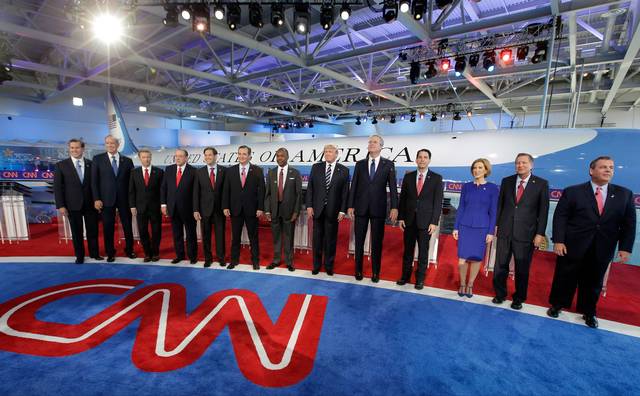
2016GOPCandidates

Since the conclusion of the last GOP Presidential debate that was held on the cable network CNBC – a truly dismal effort that left nobody satisfied with the outcome – there has been bellowing from pretty much everyone. Yes, the CNBC debate was a clusterfuck from the start – with three moderators and two guest questioners, it was never clear who was in charge – but once they became coalesced around an issue, the Republican debate participants struck back with veiled threats against the “mainstream media” (important point here:  if you’re going to govern a country as vast as the United States, you’re going to need that “mainstream media” at some point to get things done). It left the entire night as a giant stain on the 2016 Presidential campaign process.

The candidates complained about a multitude of things, including the length of the debate, the number of questions received, the quality of the questions and so forth. The moderators, in their defense, were faced with participants who, when presented with a viable question – such as Dr. Ben Carson’s involvement with the snake oil provider Mannatech, Senator Marco Rubio’s attendance in the Senate, how billionaire Donald Trump plans on paying for his myriad of xenophobic programs or why Senator Ted Cruz was against the recent compromise that passed a federal budget out of Congress and to President Barack Obama for the next two years – either didn’t answer the question, answered another question that they wanted to answer, waited for a partisan GOP audience to air their opinion through booing or attacked the moderators and the media. When you have this type of Mexican standoff (which Trump is now looking to wall off at Ciudad Juarez), there’s not much that is going to occur in said debate.

Now the candidates have decided to set up their own rules for how debates will be conducted. There is supposedly a letter that a majority of the 14 remaining candidates in the GOP race have gotten behind (bypassing the logical arranger for such events, their own Republican National Committee) that is being sent out, but it isn’t to be taken seriously. The letter supposedly would allow the candidates to vet the moderators, review the questions of the debate before it is conducted and such bullshit as whether there will be a gong, bell or buzzer to indicate their time is up when answering a question.

It was announced on Thursday night that next week’s debate on November 10 (which wasn’t expected to fall under this supposed “letter” being drafted) and being aired on Fox Business Channel will already have a smaller “main event” field. Through their criteria, Fox Business has chopped the “main event” debate stage down to eight, separating New Jersey Governor Chris Christie and former Arkansas Governor Mike Huckabee off to the “kiddie table” debate beforehand. That “kiddie table” debate has also been chopped, with former New York Governor George Pataki and current South Carolina Senator Lindsey Graham being eliminated from the debates altogether. Those that are being dropped down or out completely are not polling at the prescribed levels by Fox Business and, as such, have met the axe as to the debates and probably will soon as a viable candidate in the GOP race.

As a result of some of these changes, get ready for more whining out of the GOP candidates. If the GOP candidates – and also their Democratic brethren – want a chance to take on a serious debate, replete with issues to discuss, then it would be necessary to follow these rules.

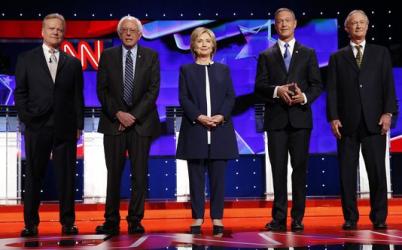
2016DemocraticDebates

Both Parties Must Have a Debate On Foreign Ground – The GOP is the only party who has stepped outside of their traditional “home turf” of Fox News (or Fox Business), where they could be semi-comfortable in that they would receive a decent hearing (even these GOP candidates, however, complained about the Fox News debate). The CNN GOP debate was considered to be quite good as the longest debate yet, providing for more discussion of the issues but not enjoyed by Trump or Carson, who lack the background to describe how their policies would work other than “they’ll be great.” By this point, you already know about the CNBC snafu. The Democratic Party hasn’t left its cozy home with CNN and their next “debate” – a candidates’ forum in South Carolina on Friday night that will feature former Secretary of State Hillary Clinton, current Vermont Senator Bernie Sanders and former Maryland Governor Martin O’Malley (Lincoln Chafee, Jim Webb and Lawrence Lessig have ended their campaigns since the first Democratic debate a couple of weeks ago) – will be hosted and aired by MSNBC and commentator Rachel Maddow.

Each party has their partisans; I would be more interested in how they speak to a hostile audience and, just maybe, both sides could have a chance at swinging those in the middle ground to some of their viewpoints (this would also help as far as governance, but that’s another story for another time).

The Arbiter Determines All – While one or two moderators is OK, one should be the rule. There should be only three questioners involved in the game and the participants in the debate have NO RIGHT to choose who they want to fire questions (why would I want to hear you and a “friendly” questioner lob softballs all night?). Finally, there will be one voice who makes all determinations on the floor of the debate hall – The Arbiter (usually a moderator would do this, but they are too encumbered by their own networks to draw in ratings and worried about any potential future dealings with the candidates to have the balls to do anything).

The Arbiter will be an unknown person, presumably with knowledge about debate procedure, the subjects that would be presented during the debate, the histories of the participants involved in the debate and should have as little involvement with one political side or the other or be in media as a current broadcaster (if it has to be, then The Arbiter should be from the opposing party or media outlet – couldn’t you imagine someone from the Wall Street Journal serving as The Arbiter for an MSNBC debate and someone from the New York Times handling the Fox debates?). The Arbiter will be in charge of officiating the event and providing the punishments (we’ll get to that in just a second) that will be meted out for violations of the debate protocol. At the end of the debate, The Arbiter slinks back into the dark, never known by those who were in attendance.

The Arbiter will have several weapons at his/her disposal:

Question Refusal – The Arbiter will have the right, after a question is posed, to determine if the question is worthy of being answered. Such questions as whether some other candidate has the “moral authority” to do something or something that prods two candidates to spat at each other over insignificant bullshit would be the main thing that The Arbiter is looking for. If a questioner poses such a question, the first infraction is a warning with a second infraction resulting in a 10-minute penalty (removal from the debate). A third violation will result in the questioner’s removal from the remainder of the debate.

Microphone Control – The Arbiter would have control over the candidates’ microphones for the purpose of keeping them on track with questions. If a candidate is posed a question and said candidate either starts off on a tangent or doesn’t address the question directly, The Arbiter has the power to cut the candidate’s microphone. The Arbiter will pause for five seconds before reactivating the candidate’s microphone and, if at any time during the candidate’s response he goes off topic again, The Arbiter will end the question by shutting off the microphone for the remainder of the question.

The Arbiter will also be in control of how long the candidate speaks; once the candidate has reached the maximum allotted time (60 seconds in the previous debates), The Arbiter will cut off the candidate’s microphone permanently unless asked a follow-up question.

If the candidate cannot keep on track with his replies to the questions being posed, The Arbiter will have the right to remove the candidate from the debate or, if the candidate refuses to move, will have his microphone cut off for the remainder of the debate and his/her constant interruptions will begin to annoy everyone.

Question Count – The Arbiter will be responsible for keeping a running count (can be aided on this by electronic timing of each candidate’s responses) or time bank on how many questions each candidate has received and/or how much time each candidate has been speaking. If The Arbiter notes a predominance of questions to a few candidates, then he will inform the moderator and the moderator must change tactics and ask other candidates questions until The Arbiter feels it is balanced out.

Have a Manageable Debate Field – This has been the major problem with the GOP debates is the number of people on the stage. When you have 10 candidates looking to make their mark in a two hour debate, the most a person is going to be able to speak is probably around seven or eight minutes (once you deduct commercials, opening and closing statements and audience applause/outrage/outbursts). In the GOP field, there is probably no more than six viable candidates (I’ll let you choose your six); the Democrats have already limited their field from six to three, so they are on course for the primaries.

The whittling of the field is useful because, if you’re drawing 1% of the vote six months to a year after you announced your candidacy, the likelihood of you earning the party’s nomination next summer is highly unlikely. It’s simply a numbers game in that you aren’t going to get the attention as someone at the back of the pack that the frontrunners are going to get from being the, well, leaders. It IS a Catch-22, but that’s the way many things are in life. Unless the front six are mysteriously overcome with a debilitating illness that renders them incapable of running for office (and Christie isn’t above trying to inflict said illness on the frontrunners), you’re going back to your previous job or hosting duties on Fox News.

Implementing these rules – and simply letting the respective committees, the RNC and the Democratic National Committee – handle the nuts and bolts of debate preparations is the logical way to go. You’re running for the most important office in the United States; being concerned that the debate hall has a temperature more than 67 degrees shouldn’t be on your mind. Policy thoughts, debate tactics and proving yourself to U. S. citizens should be your goal. As President Obama also stated earlier this week, if you aren’t able to handle the queries of journalists from the news networks, you’re going to have trouble handling Putin.

Will these rules be adopted? No way in hell…but it would make for a more streamlined debate with plenty of policy discussion. And who wouldn’t want to see The Arbiter enforce his rules on both bags of bozo biscuits running for President?

What to Expect at the First Democratic Debate

DemocraticCandidates

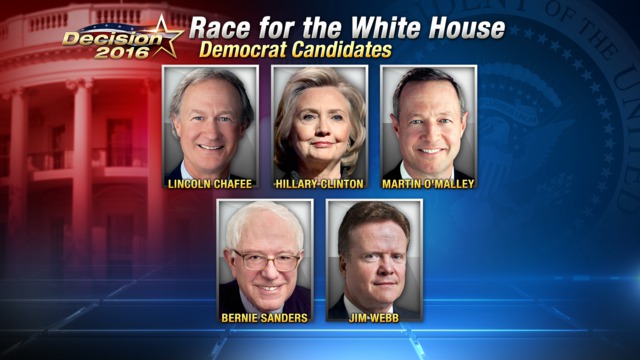
Just when you thought that the political world had calmed down, the first of a planned six debates from the Democratic Party will be held on Tuesday night in Las Vegas. The five announced candidates – former New York Senator and Secretary of State Hillary Clinton, current Vermont Senator Bernie Sanders, former Maryland Governor Martin O’Malley, former Rhode Island Senator and Governor Lincoln Chafee and former Secretary of the Navy Jim Webb – will take the stage around 9PM Eastern Time on Tuesday night at the Wynn Las Vegas, presenting their reasoning for being the party’s selection for the 2016 Presidential nomination. It may not be as visually exciting as what the Republican Party have been able to put on in their previous two clashes, with their myriad of candidates all saying the same thing but trying to sound different, but these debates are just as important as those on the GOP side.

With President Barack Obama heading off into the sunset following his two terms in office, it is up to one of these five people to try to maintain the legacy of the Democratic Party for several reasons. One, the next President will probably have at least one and potentially as many as three Supreme Court justices to name in their 4-8 year term, basically allowing for a reshaping of the Court towards a more conservative or liberal bend. Two, if the next President is one of these Democrats, they will be able to firmly ensconce the Affordable Care Act – “ObamaCare” to many – as the “law of the land” and make it even more difficult to take away through repeal as it becomes more entrenched in the U. S. psyche. And three, the Democrats would be able to maintain the current foreign policy viewpoint of diplomacy before dominance – the major difference between them and the GOP, who want a war on all days that end in a “y.”

Anyone who says that the Democrats didn’t think that this would be a simple coronation for Clinton on the way to the Democratic National Convention in Philadelphia in July 2016 would be out-and-out lying. After getting stunningly pummeled in 2008 by Obama, Clinton did her duty in first accepting the Secretary of State role in the Obama Administration and then in not trying to usurp Obama is 2012. Her reward for this party loyalty was supposed to be a free pass to the Democratic nomination in 2016 but, along the way to the coronation party, someone threw a huge monkey wrench in the plans.

Sanders, the genial, grandfatherly Senator from the Northeast who calls himself a “democratic socialist,” has been stealing a great deal of Clinton’s thunder, especially in the early primary states of Iowa and New Hampshire. Part of the appeal of Sanders has been his Quixotic-tilt against the uber-rich, banks and corporations, which has struck a chord with the young and the downtrodden. His firm stance against all military action in the Middle East has also drawn comparisons of Sanders to fellow Kentucky Senator and Presidential hopeful Rand Paul – you know, back when Rand Paul was cool before he became a Republican.

Sanders has become so popular with some Democrats that the threats against Clinton in the early primary states have forced her into campaigning much sooner than she would like to have done. The Clinton team is looking to get her through the first few primaries in Iowa and New Hampshire, ready to take a second place finish behind Sanders, and prepare for the “SEC Primaries” at the beginning of March in the South, a traditional stronghold of the Clintons that would allow her to be able to thwart a Sanders attack through numerous victories.

There are a few differences between Clinton and Sanders, but there is more diversity when you toss the other candidates in the mix. O’Malley is a “law and order” type that, as mayor of Baltimore, was able to lower crime rates and improve the city’s image (it is also alleged that the tactics employed by O’Malley – the “stop and frisk” utilized by police officers, in particular, where officers could stop anyone for investigation despite not visually committing a crime – were a major impetus for the Baltimore riots of earlier this summer). Chafee is a former Republican who first became an independent before moving to the Democratic Party, while Webb is almost a DINO (Democrat in Name Only) as he supports the “close the border first, then maybe amnesty” program popular with Republicans as well as reining in the Environmental Protection Agency and its regulatory authority.

The 800-pound gorilla in the room will be the specter of current Vice President Joe Biden. Supposedly considering a third run for President, Biden has not committed to this debate as of Monday, but CNN has stated that a podium will be on hand should Biden state he wants to take part in the festivities. With Biden polling better than Sanders (but still behind Clinton), Biden would be an immediate (and strong) challenger to Clinton, forcing her to fend off not only Sanders but also Biden.

What exactly is going to happen in the debate? First off, Sanders and Clinton – and throw Biden into the mix should he show up – will not attack each other as the GOP candidates did in their second debate. First, moderator Anderson Cooper and his panelists, CNN reporter/anchor Dana Bash, CNN anchor Don Lemon and CNN en Espanol’s Juan Carlos Lopez, are not going to ask the “challenging” questions that saw the Republicans rip into each other during their debates. “I think it’s just as interesting to kind of learn about some of these candidates who the American public doesn’t really know much about,” Cooper stated in an interview on CNN’s Reliable Sources over the weekend, “as it is to hear from some of the candidates you do.”

There has also been a remarkable bonhomie between Sanders and Clinton in that they haven’t brought the knives out against each other. Sanders, in particular, has been given multiple opportunities to rip into Clinton over a variety of problems she has faced (her private e-mail server, her work with the Clinton Foundation and the Clinton Global Initiative and how it affected her time as Secretary of State, her vote for the Iraq War in 2003, etc.), but he has refused to do any mudslinging and instead concentrated on his message. That is a bit refreshing in this current day and age of politics.

Both Clinton and Sanders are going to continue with their own presentations of what their plans as President will be, which differ in some areas. Sanders in particular has made many suggestions regarding what he would do as President – free college for all students, raising the minimum wage to $15 nationwide, universal health care (going beyond ObamaCare) – but he will also have to answer about how he’s going to pay for those things; if Sanders’ plan to increase taxes on the 1% (for your information, that would be anyone who makes more than $344,000) and reduce military spending doesn’t stand up to the scrutiny, then his other plans won’t be taken seriously.

The ones who have nothing to lose are O’Malley, Chafee and Webb. Any airtime they get during the debates would be welcome as the three men currently are barely even making an impact on the polls (Webb is averaging .9%, O’Malley .6% and Chafee .2%, according to Real Clear Politics and their national polls). They also have to make viewers/voters remember them, so taking some shots at Clinton, Sanders and/or Biden (if he shows up and he’s polling at 18.6%) might help them out. If these candidates can’t get a bump out of this debate, they may not get another shot at the next debate in November, especially if Biden announces a run for the Presidency and their numbers stay the same.

One thing that will NOT happen is any of the candidates making a serious faux pas. All of them are experienced debaters and, as such, will be able to withstand the slings and arrows that come from their opponents. Only the introduction of Biden into the mix (due to preparation by the candidates for those that are currently on the dais and not an 11th hour introduction of another player) or a change in tactics by Sanders regarding his “no mudslinging” tactics with Clinton might change the game.

It might not be as electric as the GOP debates have been to this point, but the Democratic debate should provide viewers/voters with more substantive information on the candidates. It will also mark the drive towards next November when the next President of the United States will be chosen.

What’s the Problem with Gambling? The U. S. Was Built On It!

(Author’s note:  With the uproar over daily fantasy sports – or DFS – in the news right now, there are folks discussing the issue of gambling. This is something that I wrote slightly more than a year ago that is as true now as it was then.)

One of the best ways to learn about whatever country you live in is to take a lengthy drive. Last month, as part of a move from the Midwest to the East Coast, I sat behind the wheel of the family’s Mercedes-Benz and did just that, covering about 1000 miles along the way. When the only conversation that you can have in a sports car is the cat that is riding along with you (after the first ten minutes of meowing, they tend to go to sleep and, even if they are listening, aren’t exactly someone to bounce ideas off of), you have time to notice some of the oddities of the United States.

As I went by such strange things as the Creation Museum (would have loved a stop there for just the simple comedy), roadside vegetable sales and various Appalachian curios, one of the things that I noticed as the miles began to pile up was the roadside billboards that popped up as I drove. Easing out of Illinois into Indiana, I was hit with those billboards from many of the popular gaming destinations in the Hoosier State. A quick hit into Ohio saw those billboards change over to the new destinations that have been opened in Cincinnati. In Kentucky, the billboards changed over from casino gaming to racetracks and horse farms that promoted the Bluegrass State’s main industry. Even in Tennessee (where there isn’t a casino scene), the billboards promoting North Carolina’s Harrah’s Cherokee casino disturbed the natural beauty that the Great Smoky Mountains provided.

Mind you, it wasn’t just one billboard. There were more than a hundred of them, ticking down the miles until you reached the exit of said casino/racetrack/etc. It got my mind thinking (as my cat companion slumbered quietly in the passenger seat)…what’s the problem with gambling? The United States was (and is) built on it!

All you have to do to reach this conclusion is have a basic understanding of U. S. history. The very first gamble was performed from the European continent as several explorers including Leif Erickson in the 11th century and Christopher Columbus in the 15th century, decided that there was “something” where the sun was setting and (in Columbus’ case) that the earth just didn’t drop off into the Great Unknown. Erickson’s gamble was a bit bolder in that he bankrolled himself for the trip; Columbus, on the other hand, was able to get Spanish Queen Isabella and King Ferdinand II to pay for his trip (potentially the first act of “backing” in a gambling setting).

As the “New World” began to garner attention, even the bastions of religious piety showed they weren’t above taking a chance. England was the location for this as first the “Lost Colony” of Roanoke (the ultimate gamble as the residents “disappeared” in 1590) was settled. Following that, the Puritans – who were so religious they were considered more restrictive than the Church of England and whose very name means ‘against pleasure’ – rolled the dice and settled at Plymouth Colony in 1620.

By the end of the 17th century, the Colonies were thriving and so was gambling. Lotteries were the prevalent form of gambling (and were used to fund several prominent colleges such as Yale, Harvard and Princeton), but dice, cards and horse racing were also popular (even the more unpalatable gambling escapades as cockfighting and dogfighting had their audience). As the rumblings of revolution came to a head in the mid-18th century, our country’s Founding Fathers – most notably George Washington and Benjamin Franklin – enjoyed a good card game. Playing cards was so popular that the Stamp Act (one of the catapults for the American Revolution) included a clause that taxed every deck of cards.

After the Revolution, however, some of the old “puritanical” ideas began to set in. Gambling was banned in some of the fledgling states, but legal (and illegal) lotteries still flourished. The lotteries even came under attack, however, so that by the time of the Civil War, only three states permitted them. The “War Between The States” would prove to be the next catalyst for gambling in the United States.

Locked in a battle for the soul of the country, both Union and Confederate soldiers would pass the time playing poker (a recent immigrant to the United States through the port city of New Orleans) with their brothers in arms as they waited for the next wager for their lives. After the conclusion of the Civil War, that gambling mentality continues as citizens pushed westward and poker came along for the ride. Nearly every Western town could be found to have a casino (legal or otherwise), where a game of faro or poker would be ongoing, and the Mississippi River bustled with commerce and the “riverboat gamblers” that plied their trade on the paddleboats.

Although it was attempted many times, gambling still found a way around banishment. The actions of Prohibition in the early 20th century saw gambling and alcohol usage pushed underground and into the hands of organized crime. Laws to make gambling illegal in the Eastern part of the U. S. saw those organized crime figures move westward to Nevada and California, with the first casinos opened in 1931 as the Boulder Dam was being built near Las Vegas. Today, only two states (Hawaii and Utah) don’t have some sort of casino or card room in their jurisdictions.

Presidents of the United States have actively taken up the game of poker and, for some of them, been advocates for the game. Harry Truman’s “The Buck Stops Here” is directly related to his love of a game of poker. Richard Nixon allegedly financed his first political campaign with money won from playing Seven Card Stud. Even Barack Obama is thought to have an affinity for the game, playing in a weekly Senate poker game prior to entering the White House.

This is only looking at gambling as it relates to cards, dice, table games, etc. U. S. citizens have taken a gamble throughout the country’s history, dating from the Puritans to the signers of the Declaration of Independence (a bold gamble, you might say) to the westward expansion of the country into areas once thought to be foreboding and unsuitable for human habitat. Americans start businesses, sometimes failing but, most of the time, successful (Henry Ford, the Wright Brothers, the Rockefellers and Bill Gates (to name a few) ring any bells?). Americans gamble on innovations that have improved the world through industry, scientific discovery and even traveling to space. Even war, the most unfortunate invention of human society, has been impacted by American gambles.

Gambling is as inherent to the American persona as the flag, our National Anthem and our basic premise of “life, liberty and the pursuit of happiness.” Without that inner drive to take a risk, to take a chance on an unknown outcome, much of what the country has become today would have not been achieved, let alone even attempted. The United States – and much of the world, to be honest – always has to have those “dreamers,” “schemers” and gamblers to move society forward, otherwise we stagnate and, eventually, devolve.

So, as my drive ended by pulling up to our family’s new house, once again I’ll ask…why do we, not only as U. S. citizens but as an evolving species, have a problem with gambling?

Is The “American” Too Stupid To Handle The Responsibility of Guns?

HeyCongress

The United States, in its creation and its development, is one of the most brilliant experiments that has occurred in human history. Instead of a homogenous society such as many Asian nations or one of tribal dominance such as those that are found in Africa, the United States of America was a true attempt at something that many would feel is impossible:  incorporating different people, different ideologies and different cultures into a “melting pot” where the end goal is an amalgam of the world’s best into a new creature…an “American” (I must say at this point I’ve never liked the term “American” – when that term is used, I immediately wonder “North, South or Central?” How about “citizen of the United States?”). While the list of success stories from the 200-plus years of the existence of the United States of America – and another 150 years or so of settlement into this earthen laboratory – are some of the greatest in mankind’s history, there are some areas where the nation has fallen short.

One of those areas has become painfully evident as details have come out over the past few days. Last Thursday a white male walked into a community college in Oregon and, with no provocation or apparent motive, gunned down nine classmates and instructors and wounded another seven people. In the more than 72 hours since the last echo of gunshots filtered across the Oregon landscape, we’ve dredged up the old tapes of the previous arguments over past mass shooting situations rather than advancing any significant solutions for changing the climate.

The “Usual Suspects” have divided along their prescribed lines, with one side stating that further laws on guns are a necessity to prevent this from happening again. The other side states that it is their “God given right” to have weapons, as many as they want, and any move to take them away is roughly akin to an attack against the very fabric of life itself. The potential reality, however, is that this new creature we’ve created – the “American” – is too fucking stupid to handle the responsibility of guns.

In looking at it from the “law of the land” – the U. S. Constitution – there would appear to be nothing that could be done, but that would be inaccurate. The Second Amendment – “A well-regulated Militia, being necessary to the security of a free State, the right of the people to keep and bear Arms, shall not be infringed.” – was put into the Bill of Rights for the essential purpose of having each state providing its own Army – its “Militia” – for the defense of the individual State and for the purpose of providing a standing Army for the federal government. The people who would make up that “Militia” would be the citizens of the state, who would need weaponry to be able to fight in battle (not to mention that they already had these weapons for providing food for their families).

Fast forward to the 21st century and the theory of the state-run “Militia” has run its course. The federal government has the responsibility for the national defense, accepting volunteers from its citizenry, thus the theory that a person may have to join a “Militia” to defend their state or country is an antiquated one (no more so than blacks and women don’t have the right to vote, for example…that was also in the Constitution at one time). Since hunting has now also become a leisure activity for virtually everybody rather than a survival one, sane people would naturally examine the point of weapons in today’s society.

Secondly, let’s look at the situation from the evolution of weapons. In the 18th century, the weapon of choice for many in the Colonies was a musket, which took anywhere from two to five minutes to load up with a single shot. The weapon’s effective range was about 50 meters (roughly 164 feet), meaning you had to virtually be right beside your target before you squeezed the trigger (in those days, ammunition was expensive and not to be wasted). It was also fairly easy to see when you had your musket with you; at 60 inches (five feet), there wasn’t anywhere on your body to conceal the weapon.

Once again, let’s rocket through history to today. Weapons such as the AR-15 – which was the predecessor to the military usage M-16 – have become popular for ownership by civilians for their ease of use as well as their power. That weapon can be converted to be able to fire fully automatic, meaning it can spew rounds out at the rate of hundreds per minute (remember the musket was a shot every two to five minutes) and has an effective target range of 500 meters or more (in the hands of a military person or someone well trained on the weapon). Even a .45 automatic handgun can pop out rounds at around one per second (60) and has an effective range of about 100 meters, if the shooter is quick with the trigger and reloading the weapon. And this isn’t even introducing a weapon such as the M-60, a weapon with the range of 1200 meters and up to 2000 meters in a trained sniper’s hands. When comparing the two situations, any logically minded person might entertain the option, at the minimum, that the Second Amendment WASN’T written with today’s sophisticated weaponry in mind.

US Stupidity

Finally, let’s take a look at the general stupidity of those that own weapons today. In September the state of Georgia, who for some unexplainable reason allow for weapons to be carried in bars, was greeted with a shootout in a bar when several people whipped out their weapons just before 3AM in the morning. Three people were found shot there and seven others, looking to avoid police, took themselves to the hospital. Only the stupidity of not being able to aim a weapon properly prevented a significant loss of life in this instance.

Typing the search phrase “child finds gun and shoots” into Google returns over five MILLION results on the subject. Looking up “person cleaning gun shoots” returns over EIGHT MILLION hits, including a North Carolina father who shot his 10-year old son to death while wiping down his shotgun in 2013. Last year a Las Vegas gun instructor handed an Uzi to a nine-year old girl on a gun range. The girl, unable to properly control the weapon, killed the instructor immediately as she struggled with its power. These and other stories continually demonstrate the stupidity of the “American” to simply maintain their weapons safely, keep them out of the hands of those who might not know what to do with them or even momentarily pause to think if something this dangerous should be done at all.

The gun fanatics can be shot down quickly. “The only counter for a bad guy…” yeah…yeah…yeah. How many times has that “good guy” taken down the baddie? On the grounds of that community college in Oregon were several people with concealed/carry permits and at least one person who was actively carrying. What did they do to stop the situation? In such a situation, the objective is to head for cover, not open up like it’s the fucking Wild West and escalate a situation beyond what it is. The Virginia Tech shooting was done on campus in the midst of plenty of University police and security…the shooter stopped his rampage when he committed suicide. I don’t see these “good guys” civilians jumping up and, even if they could, their own personal logic and training would probably prevent them from taking action and making a situation worse.

“It’s a right…”yeah…yeah…yeah. It was previously a “right” for women not to vote, that slaves were 3/5 of a person (so much for that “all created equal” stuff), that you couldn’t drink, etc. Rights are critical to keeping society free, sure. Rights aren’t set in stone, however; recognize the end of slavery, women’s suffrage, civil rights and the end of Prohibition. Besides, if Donald Trump can debate the legality of the 14th Amendment, maybe it’s time we started to take a look at all of them in our current society.

“I’m protecting against the tyrant Obama and the New World Order…” yeah…yeah…yeah. You’re part of the problem, bub, and shouldn’t be holding a weapon if you believe in a conspiracy theory like that (the “New World Order” or Illuminati is pretty lame if it has been in existence for well over 600-700 years and hasn’t TAKEN OVER ANYTHING). Put down the weapon, step away from it slowly and pick up your tinfoil hat and binky to suck to help keep you calm. (Funny how we never heard about these armed “Militias” wanting to take down President Bush, isn’t it? Perhaps that’s a question for another time…)

The stupidity of “Americans” regarding weapons will continue until there is some change to the mentality. There are fewer restrictions on guns than there are on an automobiles; while admittedly not a right, driving an auto requires an age requirement, insurance, licensing, training on the vehicle (we just don’t allow anyone to jump into a gasoline tanker truck without the proper training) and, if they don’t abide by the rules, then people are punished both financially and with their very freedom. Why can’t the same thing be done regarding our love affair with guns? If your too stupid to be able to handle them responsibly, then you don’t need to have them at all.

I won’t go through the litany of civilized nations that have come up with the answer to the questions we United States citizens face regarding the gun issue. If we continue to let the stupid rule the issue, however, we are doomed to continual tragedy. If we cannot get this system under control, then we will continue to see (to paraphrase a Jimmy Buffett song about ignoring problems around you) “a river of blood pouring out from a wound that will not heal.”

“Routine” Tragedies Will Continue Until the Chain is Broken

We didn’t even wait until later into October to get our “mass shooting of the month” out of the way for the next 30 days or so. In Oregon this afternoon, a man walked onto the grounds of Umpqua Community College, entered the classrooms and, reportedly after querying his potential victims on their religious backgrounds, appears to have executed 10 people. The shooter would injure another seven people before police arrived on the scene and gunned him down.

We’ve become numb to it in the United States, these mass shootings where someone – whether for religious or racial reasons, whether they are mentally ill or completely sane – snuffs out the existences of those who are either at the beginning of what should be great lives (the Sandy Hook shootings), defending our nation (Chattanooga), joyously praising their God in a house of worship (Charleston), meeting with their Congressional district’s residents (Tucson) or just simply going to school, trying to learn something to advance themselves (Columbine).

First off, let’s define a “mass shooting.” The definition has come to be determined that which A) four or more people are victims, and B) don’t include gang killings or the death of multiple members of the same family. This criteria makes sense in that emotion (such as a familial situation) or an involuntary occurrence (killing two people at the same time by accident) wouldn’t fall into the equation. Using the criteria, this would include every one of the situations noted a couple of paragraphs previous and would also include the Aurora, CO, theater massacre, among several others. What wouldn’t make the “grade”? The recent point-blank execution of the journalists in Virginia, unless you want to count the shooter as Victim #4.

As to be expected, the respective representatives came out on both sides and began to toss their rhetoric. President Barack Obama summed up one end perhaps most concisely in saying, “Somehow this has become routine. The reporting is routine. My response here at this podium ends up being routine, the conversation in the aftermath of it. We’ve become numb to this. Our thoughts and prayers are not enough. It’s not enough. It does not capture the heartache and grief and anger that we should feel, and it does nothing to prevent this carnage from being inflicted someplace else in America — next week, or a couple months from now.” Of course, after Obama made this statement, gun advocates screamed that he was “politicizing” the situation when it “wasn’t appropriate.”

The National Rifle Association, which is about as oriented to the safe usage of weapons as Volkswagen was in creating environmentally safe vehicles, will continue to wail about how it isn’t about the guns. “It’s about the people,” they’ll sniffle as they hug their little weapon close to their chest, petting it gently. “If they weren’t bad people/high on drugs/mentally ill (choose your excuse du jour), then they wouldn’t have done something like this…It wasn’t the gun’s fault, though (Pat…Pat).” And when their paid henchmen in Congress get up and repeat this line of bullshit, they should be forced to go look at the bodies of the dead as they lie on the grounds of a college or a school playground and then try to repeat their idiocy.

Strangely enough, the rest of the world doesn’t have this problem. Using the criteria set above regarding what constitutes a mass shooting, between 1966 and 2012 (this isn’t even counting the last couple of years of this fucked-up situation) there were 292 such incidences around the world. While they weren’t all in the United States, a sizeable chunk of them were. There were 90 such mass shootings in the U. S., meaning that although the U. S. makes up 5% of the world, we have 31% of the mass shootings. Finally, in the U. S. shootings, more than half of the cases involved a shooter with more than one gun; in the foreign cases, the gunman usually had one weapon. For the gun nuts in the crowd, here’s something to hang your hat on:  the average number of victims in U. S. shootings is 6.87 per incident; internationally, it is 8.8 victims.

In another study from the Harvard School of Public Health looking at mass shooting incidences between 2011 and 2014, mental illness is examined as the cause for the attacks. While the rates of mental illness remain level for the time period, the research shows that mass shootings tripled in frequency. The study also showed that, in the previous 30 years, mass shootings occurred about every 200 days; in the three years examined closely, that rate had dropped to 64 days.

So what can we learn from this data? The problem with mass shootings isn’t about who is committing the atrocities, it IS in the choice of what they are using to complete their twisted fantasies. Weapons – handguns, rifles, shotguns, etc. – are the reason that so many people are being killed when someone decides to commit these acts. We often hear from the gun lobby, “Well, if he had a knife and did the same thing, would you ban the knife?” The answer is probably not because, with only one knife, there’s the chance that the situation could be averted and/or not as extreme in its deaths. When someone has a rack of weapons and enough ammunition to fight their way out of a Syrian village, many people are going to die or be permanently scarred from the wounds they receive.

It’s time we actually did something about this situation. The fuckheads on the opposite side of the aisle – those that suck at the teat of the National Rifle Association and spout off about how their “Second Amendment rights” are under siege when there hasn’t been a federal gun law enacted in the United States since the 1994 Assault Weapons Ban that expired under President George Bush (Bush II, as I like to say) – will spout off about how “this isn’t the time” to talk about the plague of mass shootings in the United States. If this isn’t the time – and if it wasn’t appropriate the first 100 times this occurred in this country – then what the fuck time is a good one?

The NRA needs to get the hell out of the discussion or quit being obstructionist and admit that it is time that there are strong regulations put in place on all weapons in the United States. I consistently hear that the NRA grassroots isn’t represented by the hateful, rhetoric spewing Wayne LaPierre, the executive vice president of the organization, and that those “sensible gun owners” actually wouldn’t mind having some regulatory laws regarding guns on the books. It is time that this segment of the NRA shows up and forces their elected leadership to listen to them instead of allowing for a radical minority (if it is so) of the NRA to dictate the course of action.

They should acquiesce to federal licensing of weapons to individuals (we have stronger licensing principals in place for driving a fucking car, mind you, than owning a piece of military hardware created to end lives) and for all gun owners to have liability insurance on their weapon if it is used in a criminal act (that way there is some compensation outlet for the victims, at the minimum). Finally, gun show sales should be halted and a 10-day “waiting period” should be instituted for ANY gun purchase, be it a semi-automatic pistol, a pump shotgun or a pellet gun.

It’s tough to give any anger to those who are the victims of such acts, but there are some things that can be done. First off, sometimes things will happen in the course of life (easy for me to wax philosophically over) that we cannot prevent. We can never understand why certain things, especially some of the vilest crimes committed by mankind, happen in our existence. All that can be done in some cases is investigate it thoroughly and use the information to try to ensure that it doesn’t happen again.

Furthermore, even if the above laws were ALL put into place, there would still be mass shootings – they probably just wouldn’t be as prevalent as they are today. Normally sane people would still be able to stockpile weapons, even those that have no application in hunting and are created especially for the act of warfare and killing other humans, and ammunition will still be plentiful. As such, someone might be able to talk a buddy into giving, selling and/or stealing from enough guns to inflict such pain.

Finally, mental illness is a viable reason for mass shootings so, when it comes to those challenges, the U. S. should revamp the system and adequately fund and support the system. As it is now, the U. S. as a whole does NOT put enough money into education on the subject, treatment of those afflicted with the differing mental illnesses nor provide enough to adequately assist these people upon their return to public life. Without attention being paid to this area, then all the laws instituted won’t have any effect.

If six-year old children, pregnant women, members of the Armed Forces, churchgoing people, high school and college students and, yes, even the everyday Average Joe being executed by the business end of a firearm through no fault of their own doesn’t spur you to action, then you cannot be a member of the human race. It is time we end this scourge of mass shootings in the United States or, at the minimum, rein them in tremendously and reduce the number of times that the nation sheds tears for those murdered viciously.

Let’s just hope that we’re not talking about this again in a couple of weeks…

As Syria Burns, the World Simply Watches

The Middle East is a powder keg of differing religions, different religious factions and different viewpoints on pretty much everything, including whether the sky is blue or not. Many in the United States and Europe, far removed from the turbulent area, think that it is the issues between the Muslims and the nation of Israel that are the major problems. Far from it…the major problems are between the Muslims themselves.

Much like Christianity in Europe and the U. S., there are different factions when you discuss the Muslim faith. In Christianity, you can be Baptist, Lutheran, Methodist or Protestant…the list is quite lengthy. Each of the sects has their own particular take on the subject of God, Jesus, the Bible and how to worship as a whole. The same can be said for Muslims as well; there are the Sunnis, the Shias, the Kharijte and the Kurds, and each of those sects have their own subdivisions to make it even more confusing. And, much like Christianity in the Middle Ages (and some would argue even today), the Muslim sects fight with each other, albeit between the Muslims it is a legitimate life or death fight, not one of simply words.

The civil war in Syria is a synopsis of the problems in the Middle East. Three different sects, the Sunnis (the Islamic State – call them ISIL, ISIS or IS), the Kurds and the Shias (some from Iran), battling for control of one of the richest supplies of oil in the world, destroying their own lands and people over the past 4½ years to the point that refugees are fleeing from the country while Syrian President Bashar al-Assad plays the role of Nero. The warfare in Syria is of the utmost cruelty:  gas bombs, poison and nerve gases, phosphorous weaponry and a variety of improvised explosive devices (IEDs). These weapons are used most frequently, but the armies of all the combatants can simply walk into a village and execute its male population. As Syria continues to burn, the world has simply watched and, with the refugee situation, it cannot watch much longer.

Since the beginning of 2015, the United Nations estimates that 366,000 refugees have left Syria and Iraq, heading for Europe for a new beginning. There are plenty of problems with this situation. The situation is in the Middle East, but few nations in that area are stepping up to take on some responsibility to help a neighboring country. Nations like Saudi Arabia, Jordan, Turkey or even Iran have not even stepped forward to welcome refugees into their countries, content to sit back and watch even further while al-Assad continues to murder his own people and IS continues to destroy the remainder of the country. This refusal to assist in lessening the tragedy leads to desperate people making desperate moves.

Without the ability to remain even close to their own region, many refugees are heading for Europe by any means necessary. Europe – and in particular Germany – have welcoming regulations when it comes to those who are politically oppressed or are leaving war-torn areas, but the issue is getting to Germany or one of these other nations. Over the weekend, the nation of Hungary, which has accepted roughly 130,000 asylum requests (of which roughly 38,000 were Syrian, according to the Wall Street Journal) was the roadblock, holding up thousands of refugees to the point where many Syrians started walking rather than waiting for transportation. The reason for Hungary’s decision to block the refugees? Fears of the refugees being sent back to Hungary once they reach another European Union country and they are not allowed entry (under the rules of the European Union, a member nation can send a refugee back to the last EU nation they went through if they are not allowed asylum).

The problem that Europe is facing regarding the influx of Syrians is twofold. First, the sheer number of incoming refugees means that several nations are going to have to step up and take on an appropriate number of the refugees. German Chancellor Angela Merkel has said that Germany can handle a certain number of refugees but that, in the future, other countries would have to be willing to allow the refugees into their countries without issue. France is refusing to allow refugees inside its borders, fortifying their defenses with more troops and catching refuges as they try to cross and sending them back to Italy, while Greece (having its own issues since its near default on its financial debt earlier this year with the European Union) hasn’t stepped forward either.

The second issue is a matter of security in the countries where Syrians are headed. Analysts with the Central Intelligence Agency have stated that the potential for terrorists to embed themselves with the true Syrian refugees is quite realistic, even to the point that it is “conceivable” that a terrorist attack could occur in Europe within the next few months from someone that is a part of the Syrian refugee situation. While we would like to think that this isn’t possible, it is a potential reason why the United States hasn’t stepped up further itself other than humanitarian aid in the region and one that has to be in the minds of security officials in the European Union also.

The main thing that many are overlooking is that more could have been done from the start of the conflict. Instead of looking for resolutions, many saw an opportunity to remove a powerful dictator from power (al-Assad is the only leader who survived the “Arab Spring” protests of 2011, watching as Libya, Egypt and other countries saw their leaders toppled). When that dictator stepped over the line in using poison gas on his own people, world governments failed to keep the dictator in check and do anything about it (potentially President Barack Obama’s biggest mistake in his term in the White House) or allowed it to continue through denying it even existed (Vladimir Putin in Russia and Xi Jinping in China catch the blame here). Now we have a situation in Syria that is volatile at the least and a threat to the world’s security at its extreme.

The images on our television screens may seem far away as those Syrians who are looking for a new home, a new opportunity or even a new life traipse across a continent far from their homes, but something should be felt and done for the people who haven’t asked for anything like this to happen to them. The deaths of men, women and children while trying to flee the ravages of war shouldn’t be happening, nor should the villainous charlatans who fleece these people and then leave them to sickness or death in a truck or a cargo hold of a ship (those bastards just need to be executed). We also need to see what we can do as people, even for those who may not think like us religiously or philosophically…the first step to bringing the world together would be to get beyond simple divisions such as skin color or religion and look at each other as we truly are, flesh and blood humans looking for the best for our family’s futures or for the best out of life.

It’s Tough to Give the GOP the Benefit of the Doubt

Here we are, six months from whence the primaries for the 2016 election of our next President will be taking place, and I’ve yet to find some candidate to get behind. In the past, that person was pretty much self-evident and I could step into the ballot box on Election Day with a clear conscience as to whom I was voting for. Recently, however, it has been a difficult road when it comes to picking that one candidate.

When it comes to the Democratic side of the equation, it looks more like the Republican side has looked like for most of my life. In the past, the GOP normally had a hierarchy that ran as such:  if you lost to a Republican who became president in the previous election, the next time the office was open without a Republican incumbent, it was your turn to take the nomination. This has happened in the Republican Party for virtually the last 50 years.

In 1968 it was Richard Nixon (defeated by Kennedy in 1960, won nomination in 1968); 1980 brought us Ronald Reagan (a half-hearted try in 1976 to topple incumbent Gerald Ford, who took over after Nixon resigned) and 1988 brought us George Bush (or Bush I, lost to Reagan in 1980). In 2000, George Bush (Bush II) was an outlier in that he didn’t show any interest in running in 1996, but John McCain (defeated by Bush II in 2000) and Mitt Romney (defeated by McCain in 2008) picked up where he left off.

On the other side of the aisle, the Democrats normally throw a donnybrook when it comes to choosing their own nominee for President of the United States. 1968 saw a reluctant Hubert Humphrey step up after the incumbent, Lyndon Johnson, decided not to run for a second term (by law, he technically could have; he served the remainder of John Kennedy’s term from 1960 and only was elected once himself in 1964) and another bright star from Camelot, Robert Kennedy, gunned down in Los Angeles just as it looked as if he were to win the nomination. 1972 saw six different candidates enter with George McGovern capturing the hearts of Democrats over Humphrey, George Wallace, Edmund Muskie, Henry Jackson and Shirley Chisholm. This occurrence of multiple choices – and viable ones, not half-assed efforts – has repeated itself pretty much every time over the Democratic Presidential nominations since…except for this one, where it seems the parties have flip-flopped.

There’s very little choice in 2016 if you examine the Democratic nominees. While everyone might grouse over Hillary Clinton and the Titanic-load of baggage she has, the other candidates lack the ability to forge a way past her as Barack Obama did in 2008 (there’s also the instance that this is the Democratic Party’s payback to Clinton for being a “good soldier” in losing to Obama in 2008, something as shown previously to be something the GOP did often). Even the person most likely to have some power to go against Clinton, incumbent Vice President Joe Biden, doesn’t seem to have the heart for a drawn out campaign battle (understandable after the death of his son). Anyone thinking that Clinton won’t be the nominee when the Democrats hit Philadelphia next summer would be considered out of their mind, even with the problems hovering over her.

The 2016 GOP field is the one that is reminiscent of the Democrats in the “come one, come all” approach they’ve used in throwing the door open and allowing anyone to come to the party. In total there are 17 candidates as of September 2015 and, in theory, there should be something there for anybody in the election even if the candidate themselves aren’t viable. The actions of the candidates since the campaigning has begun full bore this summer hasn’t exactly shown that “something for anyone” feel and makes it very difficult to give any member of the GOP the benefit of the doubt going forward, however.

Over the past week, there were a couple of instances where members of the Republican Party could have made great inroads into showing that they were someone who could lead all citizens of the U. S., not just those from one party or the other. First there was the shameful assassination of a police officer in Houston, TX that, instead of being a chance to not only unify people behind law enforcement but also a chance to have a moment of commiseration with their Democratic opponents, some members of the conservative movement chose to attack. These attacks were picked up on by some of the Presidential nominees who, in trying to make inroads into Donald Trump’s lead, came up just short of insinuating that the “Black Lives Matter” groups were the spearhead for the number of police shootings.

If you are going to piss off about 35% of the population (and their supporters), that seems to be the way to do it. Fox News talk show host Bill O’Reilly stated, “Every time there is a controversy about an officer shooting a black person, they’re out there stirring the pot.” Conservative radio “host” (I’ll be nice here) Rush Limbaugh has out-and-out called the “Black Lives Matter” organizations “hate groups.” Meanwhile, some on the GOP slate of candidates are following this lead with their rhetoric as a way to get back in the good graces of the Trump-mad acolytes. (And this doesn’t count Trump’s previous insulting of the Hispanic community, which he continues to do; count another 15-20% of the electorate out there the GOP can’t count.)

While there have been some tremendously stupid rallying cries heard during these “Black Lives Matter” rallies (anytime you advocate for the killing of a segment of society, your rally should be shut down), there has actually only been one proven and one possible case where a black person gunned down law enforcement individuals due to prior grievance against law enforcement’s treatment of blacks. In December 2014, two New York officers were executed in their squad car by a maniac who actually stated that was his goal (the proven case) and the Houston case mentioned previously, where Shannon Miles “allegedly” (I say that for legal reasons; when you have videotape, it’s tough to debate) executed Deputy Darren Goforth while he fueled his squad car (the possible case). That is two out of the 85 deaths of law enforcement officers in 2015, not exactly an indicator of rampant incitement of the masses against law enforcement.

Second, there was the controversy regarding Kim Davis, the Kentucky clerk who refused to issue ANY marriage licenses due to her religious objections to same-sex marriage. If there was a point for the GOP to demonstrate that they weren’t beholden to religion or religious groups, the opportunity to point out that Davis was violating her duties and should be jailed or fined was the one to take. Instead, the GOP fumbled over itself trying to placate the Religious Right.

Former Arkansas Governor Mike Huckabee was the worst, calling Davis’ jailing the “criminalization of Christianity” and the latest attack in the “War on Christianity,” insisting he will go to Kentucky next week to hold a rally/campaign stop at the jail where she is currently incarcerated. Senator Ted Cruz stated he stood with Davis “unequivocally.” There were some surprises such as former Senator Rick Santorum, who stopped short of criticizing Davis’ arrest but commended her stand on her “principles” and Scott Walker, who hemmed and hawed on both sides of the issue, as did Trump. No one on the GOP slate, however, held up following the U. S. Constitution, a familiar battle cry for the Republicans, instead kowtowing to the small religious wing of their party.

If they were to have shown some chutzpah, the GOP had a chance here to capture someone in the center, the “independents” that have to be captivated in order to win an election. If the GOP candidates had just stepped away from the religious question – as they are supposed to do with the separation of Church and State in the U. S. Constitution – they would have stated outright that Davis was violating the laws as they are on the book. They could have said, “Despite (my) personal feelings on the issue, the law of the land is the Constitution and, as such, she has to follow it.” How many did that? Exactly zero.

Instead of demonstrating that they are a party with 21st century ideas and people who can bring those ideas to the forefront, the candidates for President from the GOP instead fell back on mid-1900s (at the minimum) philosophy, when blacks “stayed in their place” and the addition of “In God We Trust” to our currency and the Pledge of Allegiance was allowed to fight off the “godless” Communists. Unless they can actually demonstrate that there are some original ideas left in the party, that there are those who can embrace the future and attack its problems with science, education and thought – and they have people who aren’t afraid to leave those that cling to the past with the intent on bringing it back – the GOP will not encourage me to pull the handle for them.