What to Expect from Tomorrow’s GOP Debate

Republican-Presidential-Candidates-2016

They are beginning to happen so frequently – not only on the Republican side but also on the Democratic – that it is becoming a bit mind-numbing when they come up. For the fourth time in the past three months, however, the Republican Party will be gathering at the Milwaukee Theatre in Wisconsin for another two tiered debate. The debate, hosted by Fox Business Channel and moderated by FBC’s Neil Cavuto, Maria Bartiromo and Wall Street Journal editor in chief Gerard Baker, may appear to be the same on the surface, but there are underpinnings that have changed some of the dynamics.

The change will be apparent from the pregame show, otherwise known as the “kiddie table” debate. Gone from that stage will be former New York Governor George Pataki and current South Carolina Senator Lindsey Graham, who have both been polling in the microscopic digits and were deemed as no longer viable in the race by Fox Business. Despite both candidates complaining that the Republican National Committee is looking to knock out candidates rather than have their constituency decide (Graham stated on MSNBC that the RNC “couldn’t run a one-car funeral”), neither man will be in attendance when former Pennsylvania Senator Rick Santorum and current Louisiana Governor Bobby Jindal take the stage for the opening act on Tuesday.

It isn’t just going to be Santorum and Jindal on the stage for the pregame show, however (despite the high comedy of how they would attempt to “out-righteous” each other for the evangelical vote). Coming down the ramp like wrestlers in the WWE to battle against The Religious Way (oh, wait…they’ll be looking to join the team!) will be two veterans of the “Main Event,” former Arkansas Governor Mike Huckabee and current New Jersey Governor Chris Christie (at a combined weight of 600 pounds!). These two gentlemen have been cast away from the main debate for the same reasons that Pataki and Graham aren’t around anymore; their poll numbers have plunged to a depth that they no longer are considered serious contenders for the GOP nomination.

This will leave eight players – political outsiders Dr. Ben Carson and businessman billionaire Donald Trump (tossing the lead back and forth between each other), Florida Senator Marco Rubio (garnering more support from the “establishment” wing of the GOP as they desert another candidate), Texas Senator Ted Cruz (clinging to the Tea Party vote while he waits for Trump to leave the campaign), former Florida Governor Jeb Bush (losing that establishment vote while eliminating exclamation marks from his campaign slogan in favor of “fixing” something, just what isn’t known), Ohio Governor John Kasich, former businesswoman Carly Fiorina and Kentucky Senator Rand Paul – to take the stage for the “Main Event” on Tuesday night. Debate organizers probably could have cut Paul, Kasich and Fiorina (who has plummeted after making her run out of the “minor leagues” to the Adult Table due to her inability to find a subject to run on) for the same low poll numbers that they have been using in dismissing others, but they (and the RNC) probably didn’t want to appear that they were trying to manipulate the game too much. As such, they will be trying to wedge themselves into discussion amongst the Top Five candidates, who are viable in that they control roughly 75% (76.6% to be exact, according to Real Clear Politics) of potential GOP voters.

Not only have the dynamics of the participants changed for this fourth debate, there will probably be noticeable changes to the general tenor of the questioning from the Fox Business Channel moderators and staff.

The first debate, basically a “get your feet wet” affair, was on the home turf of Fox News Channel, but some of the candidates still found something to bitch about even though their questioning was rather low-key. The second debate, conducted by CNN, amped up the pressure on the candidates over a three hour span (the longest debate so far of the 2015-16 primary season) and has generally been recognized as the best debate to this point. The candidates complained – especially Trump and Carson – that the debate was too long (in reality, it actually forced them to have substance rather than fluff to their statements in requiring explanation). Then there was the debacle of last month’s CNBC debate, an unruly affair that featured inane questions from the panel and outright refusal to answer questions from the candidates.

That CNBC debate, however, will hover like a smoke cloud over the Fox Business proceedings. The ineptitude of the CNBC moderators will probably remove any character questions from the Fox Business panel’s repertoire, meaning that there will be no answers to Carson’s consistently false claims in his books and in his speeches. Carson, who has come under fire for inaccuracies and perhaps fabrication of some of his past actions and achievements (most people do this but, then again, most people aren’t running for President; for the ultimate job interview, you pretty much have to be scot-free of scandal nowadays or at least have “plausible deniability”), has continually ducked those questions. Cavuto, Bartiromo and Company aren’t going to be able to query Carson on these inaccuracies lest they be besmirched with the Scarlet “G” of “gossip.”

This also means that the panel will not be able to point out differences between the candidates regarding their policies. They will probably stay far away from any sparring sessions between Trump and…well, anyone on the stage…regarding his draconian plans on immigration. There is the slimmest of possibilities that there will be some discussion between the candidates as they delve into their differences, but Fox Business doesn’t want to give the candidates the ability to say they were “set up” to fight with each other (as Cruz alleged in the CNBC debate).

Although there won’t be the circus atmosphere on the stage in Milwaukee, this is a chance to see some actual discussion on the issues (that is, if the candidates will answer the questions as they are presented to them). I WOULD like to see Trump’s feet held to the fire regarding how he plans to round up 11 million people without it looking like he’s sending an entire race to the gulag. I’d like to see Trump explain where the money is coming from for this and his other fantasyland projects such as the Great Wall of Mexico. I’d like to hear from Carson how his tax plan isn’t going to put an even larger crater in the national debt; hell, this is something I’d like to hear from all the candidates in how, if they cut taxes to the bare bones, how it is supposed to translate to more revenues actually coming into the government (the “trickle down” economics from the Reagan Administration have been proven time and again to be false).

In this explanation, I want more than “increased buying power of customers,” “repatriation of money from overseas companies” and “small business growth” as platitudes. Explain in simple terms how cutting taxes without an appropriate or deeper cuts in the spending is supposed to either stanch the growth or lower the national debt. Then also explain to me what some people are to do when those cuts are so deep that they can no longer keep their heads above water and stay in the game (re:  actually stay alive).

Rubio, Cruz, Bush, Paul, Fiorina, Kasich…there are a host of inquiries about policies that they have stated to the public that could be the basis of a myriad of questions from the hosts at Fox Business. My only hope in the debate is that we don’t get a castrated Fox Business panel that either can’t or won’t ask the tough questions in fear of “offending” the candidates. This is a Presidential debate, for fuck’s sake, and not a coquette’s debutante ball. The questioning is supposed to be harsh, unnerving and probing…you are going to be leading the strongest nation in the world and, as such, you’d BETTER be able to handle the heat of the job rather than running to a pulpit to seek permission from a “higher authority.”

Unfortunately, this is what I believe we are going to see on Tuesday night. Cavuto will have a choker on him from the Fox Business brass (or perhaps even Fox News chairman Roger Ailes himself will have his hand on the jerker chain) and will have all the strength of a neutered Chihuahua. Bartiromo will bat her eyes as she “seriously” looks into the numbers, while Baker will rubber stamp things as long as he can lock up the candidates for an op-ed in the WSJ in the near future. The debate will not be providing anything substantive that people can examine in depth, allowing the candidates themselves to crow about how “they have control of the message” (what that message is really is anyone’s guess), at least until the next debate.

Those looking to be a leader of ALL people, not just one segment of the people, have to be able to answer the hard questions and with something more than platitudes or dismissals. If a group isn’t challenged to show their abilities in leadership, then they don’t earn that chance to be a leader. If those that question them – and those that listen to the answers to those questions – allow them to bypass this process and immediately put them into leadership because of other non-leadership qualities, then you get what you asked – or didn’t ask – for.
How to Fix the Presidential Debates

2016GOPCandidates

Since the conclusion of the last GOP Presidential debate that was held on the cable network CNBC – a truly dismal effort that left nobody satisfied with the outcome – there has been bellowing from pretty much everyone. Yes, the CNBC debate was a clusterfuck from the start – with three moderators and two guest questioners, it was never clear who was in charge – but once they became coalesced around an issue, the Republican debate participants struck back with veiled threats against the “mainstream media” (important point here:  if you’re going to govern a country as vast as the United States, you’re going to need that “mainstream media” at some point to get things done). It left the entire night as a giant stain on the 2016 Presidential campaign process.

The candidates complained about a multitude of things, including the length of the debate, the number of questions received, the quality of the questions and so forth. The moderators, in their defense, were faced with participants who, when presented with a viable question – such as Dr. Ben Carson’s involvement with the snake oil provider Mannatech, Senator Marco Rubio’s attendance in the Senate, how billionaire Donald Trump plans on paying for his myriad of xenophobic programs or why Senator Ted Cruz was against the recent compromise that passed a federal budget out of Congress and to President Barack Obama for the next two years – either didn’t answer the question, answered another question that they wanted to answer, waited for a partisan GOP audience to air their opinion through booing or attacked the moderators and the media. When you have this type of Mexican standoff (which Trump is now looking to wall off at Ciudad Juarez), there’s not much that is going to occur in said debate.

Now the candidates have decided to set up their own rules for how debates will be conducted. There is supposedly a letter that a majority of the 14 remaining candidates in the GOP race have gotten behind (bypassing the logical arranger for such events, their own Republican National Committee) that is being sent out, but it isn’t to be taken seriously. The letter supposedly would allow the candidates to vet the moderators, review the questions of the debate before it is conducted and such bullshit as whether there will be a gong, bell or buzzer to indicate their time is up when answering a question.

It was announced on Thursday night that next week’s debate on November 10 (which wasn’t expected to fall under this supposed “letter” being drafted) and being aired on Fox Business Channel will already have a smaller “main event” field. Through their criteria, Fox Business has chopped the “main event” debate stage down to eight, separating New Jersey Governor Chris Christie and former Arkansas Governor Mike Huckabee off to the “kiddie table” debate beforehand. That “kiddie table” debate has also been chopped, with former New York Governor George Pataki and current South Carolina Senator Lindsey Graham being eliminated from the debates altogether. Those that are being dropped down or out completely are not polling at the prescribed levels by Fox Business and, as such, have met the axe as to the debates and probably will soon as a viable candidate in the GOP race.

As a result of some of these changes, get ready for more whining out of the GOP candidates. If the GOP candidates – and also their Democratic brethren – want a chance to take on a serious debate, replete with issues to discuss, then it would be necessary to follow these rules.

2016DemocraticDebates

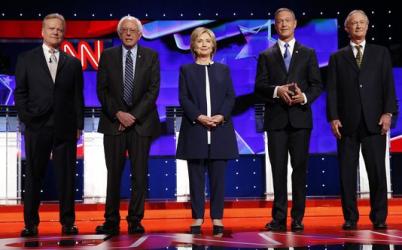
Both Parties Must Have a Debate On Foreign Ground – The GOP is the only party who has stepped outside of their traditional “home turf” of Fox News (or Fox Business), where they could be semi-comfortable in that they would receive a decent hearing (even these GOP candidates, however, complained about the Fox News debate). The CNN GOP debate was considered to be quite good as the longest debate yet, providing for more discussion of the issues but not enjoyed by Trump or Carson, who lack the background to describe how their policies would work other than “they’ll be great.” By this point, you already know about the CNBC snafu. The Democratic Party hasn’t left its cozy home with CNN and their next “debate” – a candidates’ forum in South Carolina on Friday night that will feature former Secretary of State Hillary Clinton, current Vermont Senator Bernie Sanders and former Maryland Governor Martin O’Malley (Lincoln Chafee, Jim Webb and Lawrence Lessig have ended their campaigns since the first Democratic debate a couple of weeks ago) – will be hosted and aired by MSNBC and commentator Rachel Maddow.

Each party has their partisans; I would be more interested in how they speak to a hostile audience and, just maybe, both sides could have a chance at swinging those in the middle ground to some of their viewpoints (this would also help as far as governance, but that’s another story for another time).

The Arbiter Determines All – While one or two moderators is OK, one should be the rule. There should be only three questioners involved in the game and the participants in the debate have NO RIGHT to choose who they want to fire questions (why would I want to hear you and a “friendly” questioner lob softballs all night?). Finally, there will be one voice who makes all determinations on the floor of the debate hall – The Arbiter (usually a moderator would do this, but they are too encumbered by their own networks to draw in ratings and worried about any potential future dealings with the candidates to have the balls to do anything).

The Arbiter will be an unknown person, presumably with knowledge about debate procedure, the subjects that would be presented during the debate, the histories of the participants involved in the debate and should have as little involvement with one political side or the other or be in media as a current broadcaster (if it has to be, then The Arbiter should be from the opposing party or media outlet – couldn’t you imagine someone from the Wall Street Journal serving as The Arbiter for an MSNBC debate and someone from the New York Times handling the Fox debates?). The Arbiter will be in charge of officiating the event and providing the punishments (we’ll get to that in just a second) that will be meted out for violations of the debate protocol. At the end of the debate, The Arbiter slinks back into the dark, never known by those who were in attendance.

The Arbiter will have several weapons at his/her disposal:

Question Refusal – The Arbiter will have the right, after a question is posed, to determine if the question is worthy of being answered. Such questions as whether some other candidate has the “moral authority” to do something or something that prods two candidates to spat at each other over insignificant bullshit would be the main thing that The Arbiter is looking for. If a questioner poses such a question, the first infraction is a warning with a second infraction resulting in a 10-minute penalty (removal from the debate). A third violation will result in the questioner’s removal from the remainder of the debate.

Microphone Control – The Arbiter would have control over the candidates’ microphones for the purpose of keeping them on track with questions. If a candidate is posed a question and said candidate either starts off on a tangent or doesn’t address the question directly, The Arbiter has the power to cut the candidate’s microphone. The Arbiter will pause for five seconds before reactivating the candidate’s microphone and, if at any time during the candidate’s response he goes off topic again, The Arbiter will end the question by shutting off the microphone for the remainder of the question.

The Arbiter will also be in control of how long the candidate speaks; once the candidate has reached the maximum allotted time (60 seconds in the previous debates), The Arbiter will cut off the candidate’s microphone permanently unless asked a follow-up question.

If the candidate cannot keep on track with his replies to the questions being posed, The Arbiter will have the right to remove the candidate from the debate or, if the candidate refuses to move, will have his microphone cut off for the remainder of the debate and his/her constant interruptions will begin to annoy everyone.

Question Count – The Arbiter will be responsible for keeping a running count (can be aided on this by electronic timing of each candidate’s responses) or time bank on how many questions each candidate has received and/or how much time each candidate has been speaking. If The Arbiter notes a predominance of questions to a few candidates, then he will inform the moderator and the moderator must change tactics and ask other candidates questions until The Arbiter feels it is balanced out.

Have a Manageable Debate Field – This has been the major problem with the GOP debates is the number of people on the stage. When you have 10 candidates looking to make their mark in a two hour debate, the most a person is going to be able to speak is probably around seven or eight minutes (once you deduct commercials, opening and closing statements and audience applause/outrage/outbursts). In the GOP field, there is probably no more than six viable candidates (I’ll let you choose your six); the Democrats have already limited their field from six to three, so they are on course for the primaries.

The whittling of the field is useful because, if you’re drawing 1% of the vote six months to a year after you announced your candidacy, the likelihood of you earning the party’s nomination next summer is highly unlikely. It’s simply a numbers game in that you aren’t going to get the attention as someone at the back of the pack that the frontrunners are going to get from being the, well, leaders. It IS a Catch-22, but that’s the way many things are in life. Unless the front six are mysteriously overcome with a debilitating illness that renders them incapable of running for office (and Christie isn’t above trying to inflict said illness on the frontrunners), you’re going back to your previous job or hosting duties on Fox News.

Implementing these rules – and simply letting the respective committees, the RNC and the Democratic National Committee – handle the nuts and bolts of debate preparations is the logical way to go. You’re running for the most important office in the United States; being concerned that the debate hall has a temperature more than 67 degrees shouldn’t be on your mind. Policy thoughts, debate tactics and proving yourself to U. S. citizens should be your goal. As President Obama also stated earlier this week, if you aren’t able to handle the queries of journalists from the news networks, you’re going to have trouble handling Putin.

Will these rules be adopted? No way in hell…but it would make for a more streamlined debate with plenty of policy discussion. And who wouldn’t want to see The Arbiter enforce his rules on both bags of bozo biscuits running for President?

Wondering Whatever Happened To…For November 3

Wondering whatever happened to California Congressman Gary Condit while pondering…

What If There Wasn’t Any Grits? – Pointing out the ignorance of some when it comes to the issue of the Confederate Battle Flag, a Tupelo, MS man is in jail facing a potential life sentence for using an explosive device against the retail outlet Walmart.

According to reports from local papers, Tupelo Police Chief Bart Aguirre said that 61-year old Marshall Leonard threatened the megastore a few days ago when he wrote on the local paper’s Facebook page, “Journal corporate, you are on final warning. You are part of the problem. As a result of this, y’all (sic) are going down, along with Walmart, WTVA (a local television station), Reed’s department store and all the rest of the anti-American crooks. I’m not kidding. No messing around anymore!”

While some might have thought this to be the ravings of a lunatic, this was a lunatic who decided to take action. On Sunday morning at about 1:30AM, Leonard allegedly drove his car to the local Walmart in question, lit a package on fire and threw it in the entryway of the store. An employee standing nearby was told by Leonard, “You better run,” and, as the employee did, a small explosion went off that didn’t cause much damage to the store.

So what was Leonard’s problem with Walmart? The factor that the superstore had quit selling the Confederate Battle Flag. Leonard is an outspoken opponent of current legislation, Initiative 55, which would remove the Battle Flag from the current Mississippi state flag permanently. Leonard doesn’t believe the flag to have any racial or slavery overtones (despite the statement in the documents of secession by the state of Mississippi in 1861 stating, “Our position is thoroughly identified with the institution of slavery – the greatest material interest of the world.”) and has been tossed out of a city council hearing on the subject (while draped in a Battle Flag).

The police didn’t have to investigate too deep to find Leonard either. Leonard’s vehicle, with a flagpole sticking through the roof that displays the Battle Flag while he drives, ran a red light at 2AM after allegedly tossing the explosive device into the Walmart. Police stopped Leonard and, as their radios crackled with news of the bombing, Chief Aguirre said, “We quickly figured out we needed to hang on to this suspect.”

Why Should I Be Educated If I’m In Heaven? – In another entry into the idiocy of the South, parents of nine Texas children are suing the state over their home-schooling techniques. Texas laws are quite permissive regarding what home-schooled students have to learn and one family, the McIntyre family of El Paso, TX, decided they didn’t need to have a curriculum, any oversight from local officials and didn’t have to take any of the tests that children in public and private schools had to take. Why? Why waste time on education when the Second Coming is upon us.

The situation came to light after the 17-year old daughter of the family ran away from home and, upon being placed in the foster system and in a real school, couldn’t keep up with her peers (seniors). She was placed in a ninth-grade class and was even struggling to keep up at that pace. Further investigation by authorities through other family members found that not only was there any “home schooling” going on, but the parents were flaunting the results.

According to Tracy McIntyre, the twin brother of Michael, the other children were “never reading, working on math problems, using computers or doing much of anything educational.” The reason that Tracy gave for this was Michael telling him that the children’s learning was unnecessary because “they were going to be raptured.”

The El Paso school district began to investigate further, at which time the McIntyre’s sued them for “oppressing their right to not educate their children.” In a deeply Republican state, the family called the all-Republican Texas Supreme Court “anti-Christian” and claimed that the oversight by the El Paso school system is “a startling assertion of sweeping governmental power.” While these claims may sound as ludicrous as they look, there is a chance that they might have some effect; the current head of the Texas Board of Education is a Christian homeschooler and Governor Greg Abbott is staunchly behind the homeschooling system, which in many conservative homeschooling cases lacks any knowledge of sciences, technology or mathematics and instead delves into Bible-based explanations of subjects.

But The Slurpee Machine Is Always Spotless! – We already know that there is a great deal of waste in the U. S. government and, in particular, in military spending. But a $43 million gas station?

In a recent report from John Sopko, the Special Inspector General for Afghanistan Reconstruction, the building of a compressed natural gas station cost an alleged $43 million, including $30 million in overhead costs (operational expenses) in a country where few vehicles exist and those that do don’t run on natural gas. Not only was this station highly expensive (a similar station in Pakistan was built for $500,000), but there was no examinations of whether building the station was feasible or not ever performed or ever deemed necessary.

“One of the most troubling aspects of this project is that the Department of Defense claims that it is unable to provide an explanation for the high cost of the project or to answer any other questions concerning its planning, implementation or outcome,” Sopko stated to the Washington Post. The reason? The department that was in charge of building the station, the Task Force for Stability and Business Operations (with an $800 million budget), was closed six months ago and the Pentagon has no comment on its activities.

Simple investigation by Sopko questioned the legitimacy of building the station. With a non-viable market for natural gas vehicles, Afghanis would have to convert their vehicles to the fuel. The cost of such a conversion is around $700. The problem there is that the average Afghani wages for a year are $690.

Sopko says he will continue to investigate the situation but, without cooperation from the Pentagon, it is unlikely he will find any reasons for the wasteful spending.

The Inmates Running the Asylum, Part 420 – The candidates for President on the Republican Party ticket have been loudly complaining about how the three debates they have taken part in (especially the last one on cable station CNBC) have been conducted, despite the first debate being conducted on their home ground of Fox News and a second debate on CNN considered fairly decent. Now, instead of allowing for a central group to set the standards for debates – say, perhaps, their own Republican National Committee – the candidates want to set the rules that future debates will be held under until the party’s convention next summer.

GOP candidates have floated such ideas as keeping the room at 67 degrees, splitting the 14 remaining candidates into two randomly picked groups of seven and asking them the same questions and setting strict time limits on the proceedings. It is expected that some of the candidates have already coalesced behind some framework of demands for the forthcoming debates (probably those after their November 10 scheduled debate), but one candidate thinks he can get more through his negotiations (take a wild guess).

Representatives for billionaire Donald Trump, who has seen his numbers of late slide as Dr. Ben Carson has slowly gained traction, are currently refusing to sign any letter of demands alongside the other candidates, believing that through his own force of will he can get more. According to the New York Times, however, Trump is actually hurting the cause because the candidates only have power if they are united. If they are fragmented or are asking for far too much from debate organizers, then the possibility of the networks, the RNC or even the candidates canceling a debate comes into play.

First they couldn’t find a Speaker for the House of Representatives, now they can’t determine a debate format – it truly is the inmates running the asylum.

Now to answer the question…what happened to California Congressman Gary Condit?

Through the 1990s, Gary Condit was a rising star in the Democratic Party. A congressman from California, Condit looked the part of the perfect representative from the Golden State, with a pearly smile and ambitions of even bigger things in his future. The discovery that he was having an affair in 2001 with an intern by the name of Chandra Levy effectively derailed his burgeoning political career.

The discovery of the affair only came about after Levy disappeared in May 2001 and Condit, who vehemently accused then-President Bill Clinton of illicit activities with intern Monica Lewinsky in the 1990s, for some time was considered a suspect in her disappearance (in 2010, an illegal immigrant from El Salvador was convicted in Levy’s disappearance and murder). It was enough to derail his career; in 2002, Condit was defeated for reelection in the 18th District in California and, instead of going back home, moved to Arizona.

In Arizona, Condit opened up an ice cream store franchise that failed and in which he is currently embroiled in litigation over. His son, Chad, is attempting to follow in his father’s footsteps (hopefully not literally) in running for Congress in California’s 10th District. Condit, at 67, has called it a career in politics, now serving as the president of the Phoenix Institute of Desert Agriculture, a non-profit group created in 2011 with offices strangely located in San Diego, CA, that doesn’t list any responsible owners or operators.

When All Else Fails, Attack the Messenger: Thoughts on the Third GOP Debate

After I took a week off last week, the third debate for the Republican Party snuck up on me. That week spent away from a computer left me with little debate preparation that would have given me some insight into what might be the major themes of Wednesday night’s soiree in Colorado, but that sometimes isn’t a bad thing. The ability to go in fresh sometimes will allow you to view things in a different light and present some new insights that you might not have previously considered. Unfortunately, the overall performance of the GOP in last night’s debate – and at the same time the presenter of the debate, the cable network CNBC – left me feeling nothing.

I should have known from the start of the debate that it was going to be a massive train wreck (and an apology to comedian Amy Schumer for using the title of her movie in that manner). Lead moderator Carl Quintanilla, a respected investigative reporter who has traversed the world (and an alumni of where the debate was held, the University of Colorado at Boulder, for trivia’s sake), opened the proceedings with one of those “eye roll” questions that occur far too often. Likening the debates to a “job interview,” Quintanilla asked the GOP candidates what was their biggest weakness (one of those bullshit psychological questions that come up sometimes in employment interviews). After getting several milquetoast responses from pretty much the entirety of the ten-person stage, the debate careened off the tracks.

At no point in the debate did it seem that Quintanilla had any control over what was going on in the event. Quintanilla allowed the candidates – ALL of them, not just a couple – to run roughshod over his direction of the event. I lost count of the number of times that there was little to no response to a question from the candidates and he often let the candidates interject at times when, according to the rules of the debate, they didn’t have a horse in the race (Carly Fiorina was particularly irritating in this account). His co-moderators – fellow CNBC journalists Becky Quick and John Harwood – weren’t much better with their questions and also were ridden like Grand Canyon mules over the span of the debate.

There was also no reason to have more than these three people asking questions of the candidates. I could have done without watching snake oil salesman Jim Cramer pushing his mug across the screen – even if it only was a couple of questions – and Sharon Epperson’s appearance wasn’t necessary either. In fact, if Cramer and Epperson’s raison d’etre was to give some more prep time to the triumvirate of Quintanilla, Quick and Harwood (who all seemed very unprepared for the event), they failed miserably.

With this said, there was no reason for the reaction from the GOP candidates to some legitimate questions that came up during the debate on Wednesday. It was a case of those under questioning shooting the messenger rather than answering the questions – regardless of their difficulty – presented to them.

One of the most popular methods of anyone under fire – whether they are in politics, entertainment or even the media itself – is to attack the person who is presenting the challenge to them. This is well-known in the debate world as an ad hominem attack and is recognized as a logical fallacy that allows for those under fire to sometimes escape the flames by turning the attack back on the questioner (the “messenger”). It is a tactic that has been well practiced by those in the GOP, railing against the “mainstream media” while at the same time avoiding queries about questions surrounding their past and/or their policies.

Give it to the men and Fiorina on the stage, they were quick learners during the debate last night. After the crowd expressed their displeasure with a line of questioning put towards former Governor Mike Huckabee about Donald Trump’s “moral purity” (a completely correct displeasure, by the way), the others seemed to grasp onto the “red meat” of attacking the media for the line of questioning would give them the desired response from the Republicans in attendance.

Dr. Ben Carson grasped onto that tactic next when questioned over his involvement with a nutritional supplement company called Mannatech. After stating that he had no connection with the company, Carson was challenged by Quintanilla regarding the usage of his image on their website, among other things. After Carson shot a shit-eating grin over his face following the umbrage of the audience to Quintanilla’s questions, he deftly was able to avoid the question.

The problem? The line of questioning was a viable one. The company in question, Mannatech, and Carson have had a relationship for the past decade. Carson shot many videos promoting the company and gave several paid speeches. The company has previously been sued by the state of Texas, resulting in a settlement with then-Attorney General (and current Governor) Greg Abbott for $5 million and the banishment of founder Samuel Caster from having any job with the company. The company has also settled a lawsuit with the Securities and Exchange Commission and still faces issues regarding the claims of cures their “dietary supplements” provide.

A similar situation arose in what many recognized as a “big” moment during the night’s debate. Senator Ted Cruz fed the lions of the right by rattling off the list of “insulting questions” asked by the CNBC panel. “This is not a cage match,” Cruz began (and you got the feeling this is one of those prepped answers he had been waiting to use). “Donald Trump, are you a comic book villain? Ben Carson, can you do math? John Kasich, will you insult two people over here? Marco Rubio, why don’t you resign? Jeb Bush, why have your numbers fallen? How about talking about the substantive issues?”

The problem was is that Cruz’s attack on the moderators was in response to, once again, legitimate questions from the panel. The Trump question was why his policies – including deporting 11 million people, building a nearly 2000 mile long wall along our border with Mexico and forcing them to pay for it and his handling of Russia and the Middle East – “sound like a comic book version of a presidential campaign?” Needless to say, Trump did not answer the question, instead replying to the Mexico situation by saying, “A politician cannot get them to pay…I can,” a non-answer if there is one.

Carson’s question was on how his flat tax plan – similar to that of tithing to a church (someone has to remind the GOP there is a SEPARATION between church and state) – wouldn’t leave the U. S. with a huge budget deficit. Instead of pointing out what cuts would be made or other tactics necessary, Carson instead responded by saying, “That’s not true,” and never answered the question.

Cruz himself dodged a legitimate question. When asked about why he opposed the recent deal in the U. S. Congress that would set the U. S. budget for the next two years, Cruz instead railed about how the moderators wouldn’t ask anything substantive and didn’t actually get around to answering the question presented to him.

And let’s not even get into Trump’s convoluted stance regarding guns…

When you have no defense for the positions you’ve taken, when you have no knowledge beyond the bare-boned rhetoric that has been presented, the only other course of action is to attack the messenger. The GOP seems to have done that pretty well – and not without some truly atrocious questioning by the CNBC moderators to bring it on – in avoiding being held responsible for their proposals and actions.

With this situation taken care of, there were some takeaways from last night’s debate. The one thing I consistently kept wondering about was what the candidates meant when they complained about how government doesn’t do anything. My knowledge of history looks at things like FDR’s “New Deal,” which helped to get the U. S. out of the Great Depression (along with World War II), how government investment in medical research found cures for major diseases such as polio and smallpox, investment in education (especially college educations) has allowed for the baby boomers to be the most educated generation in history and investment in sciences that led to NASA and our exploration of space (and this is just a small sampling). Instead of consistently railing about the “evils” of government, try to admit that sometimes things wouldn’t get done unless there was government intervention.

Secondly, I saw a bunch of candidates complain about Washington seven ways to Sunday as if it were a bastard stepchild. The takeaway I had with was “Why do any of these people want to do something that A) they aren’t going to invest in (in reply to my above thoughts) and B) they despise to the point that they do?” Out-and-out hatred of an institution isn’t exactly going to be something that makes those there welcome you to the table and it isn’t going to inspire confidence in how you will “change” it. Instead of “making America great again” (which is about as asinine a statement there is; our country is already great and it hasn’t gone anywhere except for those nimrods who see boogeymen around every corner), how about we “improve on the United States we have?”

As to the candidates, it was Rubio’s best debate to date and sets himself up well for a future run (perhaps 2020) for the nomination (I don’t see him getting it this year really, but it wouldn’t be a surprise). Chris Christie found his groove (too little, too late) and Kasich was pretty good about presenting a moderate Republican stance. I don’t like to say someone was a “loser” in the debate, but the “Fat Lady” is warming up in the wings for Bush. Rubio flicked aside Bush’s attack on his Senatorial attendance and voting record without breaking a sweat and Bush spent the remainder of the night awkwardly trying to regain his footing.

There’s less than two weeks to the next GOP debate (November 10), so some of the things I’d like to see done won’t come true. I’d like to see the “kiddie table” debate dropped (hey, if you haven’t dug yourself over the 2% mark by this point, you don’t have any viability in the race) and perhaps see a couple of those candidates that were on the “main stage” step aside. Perhaps a little contraction in the GOP race – say eight candidates instead of 14 – would allow some people to truly put their support behind someone with a realistic shot at winning the nomination. It won’t stop, however, the “red meat” rhetoric out of the GOP regarding their “persecution” by the “mainstream media.”

What to Expect From the Second GOP Debate

Republican-Presidential-Candidates-2016

After what turned out to be a relatively calm first debate last month, the Republican Party will gather their candidates for President of the United States together again tonight for a debate. The second GOP debate will begin at 6PM on CNN with the undercard – the four competitors, South Carolina Senator Lindsey Graham; Louisiana Governor Bobby Jindal; former New York Governor George Pataki and former Pennsylvania Senator Rick Santorum (two of their brethren, former Texas Governor Rick Perry (has ended his campaign) and former Virginia Governor Jim Gilmore (nonexistent in the polls) have already been excluded from the debate) who couldn’t build up enough support to crack low single digits – will be featured in this showdown at the Ronald Reagan Presidential Library in Simi Valley, CA. While some points may be scored here, the attention of the 500 or so people who will be in attendance will more than likely be on the “Main Event” that begins at 8PM (Eastern Time).

The main field is now expanded to 11 participants, with former Hewlett Packard CEO Carly Fiorina the only candidate who came out of the “Happy Hour” debate in Cleveland improving on her support and earning her way onto the main stage. Even with the addition of Fiorina, the leader has stayed constant:  Donald Trump, despite pissing off and insulting pretty much the entirety of the human race with a brain, continues to lead the Republican parade. What has made it interesting is that the second place candidate has changed and it isn’t one of the “usual suspects.”

Coming off a notable debate performance in Cleveland, Dr. Ben Carson has been able to pull his way up to second in some polls and at least in the Top Five in others. Former Florida Governor Jeb Bush will be beside Trump also, putting two “low energy” opponents (Trump’s words, not mine) on each of the New York billionaire’s hands. The difference this time around is that both of those hands are in danger of being gnawed off.

Unlike the first debate, this one is going to be a free-for-all. In the first debate, the novelty of a Trump campaign hadn’t worn off yet for the other nine competitors as they, for the most part (save for Kentucky Senator Rand Paul), stayed away from Trump, expecting to see him crash and burn on his own. Not to say that Trump didn’t try, making a point as the only candidate at that time who would not pledge support of the eventual GOP nominee and/or swear off a third-party run (he has since signed a “loyalty pledge” which will be about as binding as the toilet paper in Trump Tower) before then insulting Fox News commentator Megyn Kelly during and after the event. Another month into the campaign – and with polling and favorability numbers for Trump that are going up instead of down – and the rest of the GOP has finally come to the realization that they have to take him out.

Jindal has basically said that Trump is a “madman” who will do irreparable damage to the conservative cause and perhaps even end the Republican Party. “It’s pointless arguing policy with someone not intellectually curious enough to care and who makes it up on the fly,” Jindal wrote in an op/ed on CNN. “According to him, his plans will be ‘fabulous’ and ‘something terrific.’” With his own polling numbers around 1%, Jindal has seemingly taken on the sword of taking Trump down (and he may have some backup in Graham). The problem is these men are on the “kiddie table” while Trump plays on the Grand Stage; the only way that anyone from the early debate will be able to touch Trump is with a trebuchet.

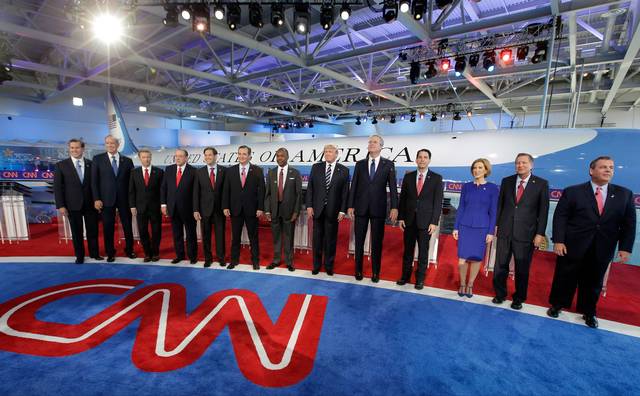
So who will it be on the stage in front of President Reagan’s Air Force One (if you haven’t already seen the stage for the CNN debate, it is a feat of engineering that has the 747 right behind the candidates – a feat that required set designers to build a 30 foot scaffolding for the stage itself) that tries to take down Trump? How about everyone?

The moderators for the debate, CNN’s Jake Tapper and Dana Bash and conservative radio host Hugh Hewitt, have already said they want the debate to take on more of a donnybrook look than a genteel tea party. “My goal is more about: Let’s draw the contrasts between the candidates, and have them fight it out over these policies, over who has the best approach to Putin, over who has the best approach to taxes, over who believes what over immigration reform,” Tapper stated to the New York Times on Tuesday. “Have them lay it all out so voters can see it.”

Paul has already stated he will come at Trump with every weapon he has available, telling CNN that Trump is a “fake conservative” who won’t be able to handle the job of the Presidency. “Do we really want someone in charge of our nuclear arsenal who goes around basically using the insults of a junior high, or a sophomore in high school?” said Paul during a CNN interview. “That’s not the kind of person we want to be practicing the diplomacy of the United States.”

What about the other candidates? New Jersey Governor Chris Christie, former Arkansas Governor Mike Huckabee, Florida Senator Marco Rubio, Wisconsin Governor Scott Walker and Ohio Governor John Kasich have been non-committal on what their approach to Trump will be, but if any of them are to last much longer than Iowa and New Hampshire, their time is now to make a move and attack the frontrunner(s). Texas Senator Ted Cruz, whose lips have been locked on Trump’s ass for so long it may take Ben Carson’s surgical talents to remove him, won’t be looking to harass Trump as he hopes to take his supporters if, and or when Trump decides he’s had enough of the campaign. For their part, Bush and Carson have also said they aren’t looking to attack “anyone” in particular, but you can be sure that if the opportunity arises they’ll be looking to cut their own pound of flesh out of Trump.

As it has been since he entered the race, it could be Trump who is the key as to what this debate may turn out to be, a bloodbath or a policy discussion. If the Trump that comes out on stage on Wednesday night is the same boorish, misogynistic, xenophobic, arrogant ass that has been running around the United States for the last two months, then the other 10 competitors on the stage are going to carve him up. Yes, Trump is an excellent counter-puncher, but there isn’t a counterpunch to a death by 1000 cuts. If you’re constantly on the defensive – and if you even show a glimpse that you’re thin-skinned, you’re over with – you’re not going to be taken seriously.

On the other hand, if Trump comes out and talks halfway intelligently about issues – discusses SERIOUSLY where the money will come from to build the wall across the border between Mexico and the U. S. and not the half-cocked plan of having Mexico pay for it; offers a plan for the humane treatment of immigrants here illegally to return them to their home countries (or offer them a form of amnesty, an anathematic word to conservatives); give a few details as to his taxation plans (once again, Trump sees nothing wrong with the wealthy and businesses paying “their fair share,” another policy point that whips the GOP into a horrified frenzy) – then his opponents will have no opportunity to go at him except on a policy level. Instead of attacking his general personality, now the other GOP candidates would have to pick apart details of his suggested plans and probably have to stake themselves to something they might not want to do with their own plans at this point. Trump has to be careful here because as soon as he strays from policy into any sort of “insult campaigning” (which has been his creation for political scientists to dissect in the future), the floodgates open and the attacks will fly.

So what is going to happen in the sacred grounds of the Reagan Library? It’s going to be a bloodbath. Simply because he is either too proud or has too big an ego, Trump isn’t going to be able to hold back his personal attacks on his opponents and, as such, the other 10 players in the game are going to descend on him like a pack of hyenas. The hyenas may not kill the wildebeest quickly on Wednesday night, but it will mark the beginning of the end as they will, while getting their fangs and claws bloodied, rip apart any thought that Trump could actually have a solid plan to lead the nation. (I wonder what the odds are of an expletive making it out over the CNN airwaves is.)

It’ll all go down later tonight and will probably be more entertaining that boxing champion Floyd Mayweather’s fight was last weekend. The two debates – the “kiddie table” at 6PM and the “Main Event” at 8PM – promise to be high theater for all involved. Unfortunately, it will also show the worst of what is the U. S. political process in a mudslinging debacle instead of a discussion of ideas and opinions.