
I thought it would be an interesting experiment. I’ve read quite a bit lately about people who have been ditching their cable or satellite companies – “cutting the cord” as it is called – and just going with what can be found on their computer or other streaming services. For the last couple of years, I’ve owned a Roku 3 (a great Christmas gift from my lovely wife) and use it quite frequently, especially during the baseball season. As an experiment, I thought I would give it a day’s trial, just to see if I could “cut the cord” for a simple 24-hour period. You might be surprised about a couple of things that occurred.
It is something that is happening more than you think across the United States and around the world. Estimates are that as many as 10% of U. S. homes are disconnected from traditional cable or satellite service. A 2014 survey by Mike Vorhaus of Frank N. Magid Associates for a trade conference estimated that 59% of U. S. households paid for a subscription video-on-demand (VOD) service and Netflix was 43% of that group. Finally, that same survey from Vorhaus noted that, among 18-34 year olds, television as the primary medium for entertainment was down to only 21%. Two years later, imagine where those numbers are…
My experiment, however, didn’t get off to a great start. First of all, getting up in the morning and turning on the television was distinctly out. As I prepared my son’s lunch for school, I absentmindedly hit the television in the kitchen for CNN. Just as quickly, I shut it off as I reminded myself what today’s experiment was to be about. After I returned home, it was fortunate that I had some work to do and a doctor’s appointment because I wasn’t concerned about what was either on the television or what I was missing from the news. This was good and bad, in my opinion.
Being able to get your work done – especially for someone like myself who works from home – takes a great deal of discipline. Sure, part of the reason we do it is for the flexibility of the situation (my wife and I also save a great deal on child care), but to be able to look at what you have to complete from a work status and be able to achieve those goals while sitting in your abode is something that all people enjoy. The down side is that, yes, we do work from home so we can have a few extra niceties, such as the television on in the background; I especially like CNN because it isn’t something that you have to concentrate heavily on and, in the cases of “BREAKING NEWS,” it allows you to keep on top of what’s going on in the world.
After the doctor’s appointment, I tried to use one of the new features from CNN, CNNGo, which brings their live broadcast to your computer screen. As I halfway listened to the news that Speaker of the House Paul Ryan was “absolutely, positively NOT” going to be the GOP’s savior at their convention in Cleveland (sure, Paul…just like you “DIDN’T WANT” the Speakership), it suddenly cut off and I brought up the window. Sure enough, I reached a situation that many do when they try to break away from their cable service.
To be able to access CNNGo (and, as I was to find out later with my son, to be able to access Disney Junior), you had to have an active cable service account. While CNNGo asked for several of the prominent carriers in the business – names such as Charter, Xfinity, DISH Network and others – they didn’t come up with mine: Time Warner Cable. As such, I couldn’t WATCH CNNGo on my computer – and my son could not watch Disney Junior through the Roku 3 later in the day – because the companies cannot come to a financial agreement so that CNNGo or Disney Junior can be offered on the computer or Roku (you can, however, access them through the Time Warner app that is available through the Roku…figure that one out). This is one of the reasons that pisses off many with the whole “cutting the cord” thing; in reality, you’re not cutting the cord because, at the minimum, you have to at least have minimal cable service to be allowed access to certain channels, whether it is on the computer or through such a streaming device as a Roku.
 After this revelation, the next problem arose as to the “break away” from the cable company. I sat back and watched, through Poker Central, some of the action from the Global Poker League on the Roku 3 during the afternoon and got a bit restless. Taking a look around, there were very few free streaming channels that you could find to actually watch any type of substantive programming (PBS is good for this and free, but fun isn’t the first thing you think of with PBS). To be able to have any selection to be able to choose from, you had to have access to something like Netflix, Amazon Prime Video or Hulu Plus, each of which charge a monthly fee for access.
These three are the “power brokers” in the new streaming world (“streaming” being whether you watch on your cellphone, your computer or through a device like the Roku) and could have a seismic impact on the shape of the television world in the future. They have already had an impact on programming, beginning to offer their own scripted television shows that have garnered critical acclaim (at the expense of the traditional television networks). But would people actually move to a piecemeal system like this over the traditional cable system?
Some studies suggest that the bundled channel system that cable companies use actually save customers money rather than cost them more, and there’s some evidence to suggest that they may be right. If your cable company offers a basic cable package for $20 per month (and that’s about as base as it gets in many areas, pretty much offering the local channels and a few other stations like the Weather Channel, CNN, ESPN and others), that is normally what people will watch; where people get irritated is when they have 300 channels and nothing is on. With the streaming outlets, you pay somewhere along the lines of $9 a month for Netflix or Hulu (Amazon Prime is $99 per year), but you might have to pay $4.99 for this station to get access over your streaming device and another $4.99 to access another station…it begins to mount up if you have several access points.
Then there is the factor of live sports. Pretty much every sports league has some sort of live package where you can watch every game from the league (except the National Football League; at this time, the NFL Sunday Ticket package is still the domain of DirecTV, although you can pay to be able to watch, on a tape-delayed basis, the NFL games the next day). These packages can range in cost up to $129…if you put that together for baseball, basketball, hockey and hell, let’s say the NFL comes around and does it too, it’s over $500 per year. That’s not counting any NCAA collegiate games, NASCAR, Formula 1, Indy Car, Major League Soccer, Premier League…you might be getting my point by now.
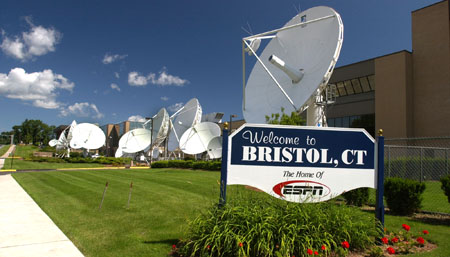
Then there’s the monolith known as ESPN. Losing money left and right nowadays (as much due to the competition from outlets like Fox Sports, the CBS Sports Network, the NBC Sports Network and insane fees to the sports leagues for broadcasting rights), ESPN has been considering taking the route of Netflix into an “a la carte” service. According to a 2015 article from The Motley Fool, 40% of people would be willing to pay $10 per month for a “Netflix” version of ESPN. The problem is, the Fool states, that ESPN would need at least $15 per month from subscribers AT THIS TIME to maintain its current standard of performance revenues. This isn’t even looking into the future, when the marketplace is further crowded and the bidding wars for rights fees for athletic events gets even more bloodthirsty.
By the time the Yankees game against the Toronto Blue Jays ended tonight on the Roku, it was time to end the “cut the cord” experiment. I had proved I could do it – there’s enough out there and there is the capability to still watch what the television networks provide, if you’re willing to wait in some cases – for at least a day, but any longer might be a stretch. Perhaps in a few years, when the streaming networks have become more like the cable companies and are actually offering “channel packages” and the cable companies have gone truly “a la carte” to allow their customers to choose ONLY the channels they want, then it would be good to try it again. Right now, I’ll dance between the two worlds quite happily – and enjoy them both immensely.

 Earl Burton