…But “Black Lives Matter” Isn’t Helping the Situation

There is an old adage, “there are two sides to every story.” I personally have always liked the rock band Extreme’s take with their album III Sides to Every Story. III Sides to Every Story was a concept album (an outstanding album that stretched genres in hard rock) regarding different “sides” to a story that was divided into three sections – “Yours,” “Mine” and “The Truth.” That concept is more realistic than many who divide things into two sections because, regardless of who is telling the story, there is some truth in both sides. That middle ground – “The Truth” or the third side – is 99 times out of 100 the way something occurred.

When it comes to the case of police shootings, especially of unarmed civilians, across the United States, there has been the grassroots growth of a “side” to help tell their story. The loosely affiliated group known as Black Lives Matter has sprung up across the country, trying to take the helm of the protests against the overreach of law enforcement in its actions against minorities. While a coalition such as this is necessary to continue to keep the focus on the actions of law enforcement, Black Lives Matter isn’t helping the situation and, in fact, the situation overall may be better off if they didn’t intercede.

Black Lives Matter actually date back further than the turmoil that first arose in 2014 and truly exploded over the course of 2015. The shooting of Trayvon Martin by George Zimmerman in Florida in 2013 – and his subsequent acquittal in a trial in Florida – brought about the usage of the hashtag “#BlackLivesMatter” on Twitter, long before any incidences from the past couple of years. It is only with the deaths of Michael Brown in Ferguson and Eric Garner in New York that the founders of BLM emerged as a nationwide organization. As of today, there are now 23 chapters of BLM, spread across the U. S., Canada and Ghana.

According to their website, BLM is an organization “intended to build connections between Black (sic) people and our allies to fight anti-Black racism, to spark dialogue among Black people and to facilitate the types of connections necessary to encourage social action and engagement.” What you won’t find on this webpage is the one thing that is critical for any organization to have to be successful in their endeavors – leadership on a national level. Without this leadership, the message of BLM can sometimes get lost and, in some cases, the tactics used by those in the organization’s name can be a detriment to the overall cause of the group.

We only have to look back to 2011 to see what happens when a movement initially has a good purpose but gets derailed by the lack of recognizable leadership. In September 2011, protesters took to the grounds of Zuccotti Park in New York City’s Wall Street area to protest against the largesse of the “1%.” What came to be called “Occupy Wall Street” intended to bring attention to several facets of life in today’s world – wage inequality, financial corruption, the other reasons behind the financial collapse that brought the Recession of 2008 to life – but gradually devolved into something that was nowhere near what the original intentions of the group had been.

By the time the protesters and their tent city in Zuccotti Park was busted up in November, there were various fringe elements hanging on the “Occupy Wall Street” movement. This occurred because there was no leadership for the group to issue its thoughts, its beliefs, its coherent goals. Instead of actually having an impact, by the time the Zuccotti Park grounds were cleared, there was little that was actually accomplished by the Occupy Wall Street “movement.”

In many ways, BLM is seemingly on the same path that the OWS movement trod before them. BLM initially had a very solid reason for coming together – the killing of unarmed men (in this case black) by law enforcement under suspicious circumstances – but lacked a national coalition to be able to organize its “chapters” and drive this message home first. As a result of the inability to have a focal point to work from, the individual chapters have gone about pushing the message to the people in all the wrong ways.

One of the most obvious methods of protesting was taken from the old marches from Dr. Martin Luther King, Jr., in blocking roadways while delivering the message through a walking protest. In some areas, however, BLM supporters weren’t just satisfied with getting their message across through a moving march, they decided to lie in the streets of major cities and block traffic, sometimes for hours on end. This method of protest violates one of the major keys of protesting:  don’t offend those whose opinions you’re trying to sway.

This style of protest became even more prevalent during the holidays this year. In Chicago – where there are seriously some issues with the police department – BLM protesters disrupted holiday shopping on Black Friday along the “Magnificent Mile,” the line of high end shops in the Windy City. It even reached the point that the Mall of America and the Minneapolis Airport (a city also protesting a police shooting) was the site of sometimes violent clashes between BLM and law enforcement.

Once you’ve made the point of your protest, then you can let life return to normal for people who had nothing to do with the situation. If you either continue to push your demonstration (look at the two months of OWS and how public opinion changed there) and exceed a reasonable amount of time, you can turn public opinion against your group and, hence, your cause. What was the reason for denying people the ability to shop? To really make them dislike you? That isn’t a desired end for the protests.

The next one was much more sinister in its message. According to several media outlets, marchers who were offered a booth inside the Minnesota State Fair this summer to advocate for their cause refused said location to instead march directly in the street outside the entrance to the carnival. During this march, the BLM banner was flying while the marchers chanted “Pigs in a blanket, fry ‘em like bacon.” Law enforcement officials viewed this as a death threat against officers (a reasonable assumption), one that was weakly refuted by BLM “leaders” who said they didn’t hear such words being used (the You Tube links are quite numerous).

Finally, there’s been the methods used by the movement to thrust themselves into the 2016 Presidential race. Through virtually storming several campaign stops – on both the Democratic and Republican sides – the BLM movement has tried to make their cause celebre the focal point of what is a very complex election (even to the point of demanding from each party a Presidential debate on racial justice; both parties declined). Not only have the persons involved with the organization disrupted several speeches from Presidential candidates, they have caused several campaign stops to be closed due to their disruptions.

Once again, with a solid national leadership and some organization, this wouldn’t have to happen. With those simple pieces of structure, there wouldn’t be the turn against BLM that there has been. I personally have several issues that are quite important to me in this campaign (on the federal, state and local levels) – the revamping (training, screening and monitoring) of law enforcement can be done on the state or local levels, not on the federal one.

Now you might say, “Well, you don’t understand, you’re white…” and you would be correct. I don’t understand what it is like to constantly be thought of as breaking the law by simply being a certain ethnicity. I don’t understand what it is like to be viewed with suspicion in virtually every aspect of life because of my skin tone. I do understand, however, that things can be changed through solid leaders and national organization…right now, Black Lives Matter doesn’t have that and they should remove themselves from the equation with law enforcement until there is such organization as mentioned previously to this organization that could do a great deal for life in these United States.
The Situation with Police Isn’t Changing…

Back in 2014, a young man was shot in the middle of the street in Ferguson, MO, reputedly in cold blood by a renegade cop who shot first and asked questions later. As the investigation played out, however, it was found that the young man, who was black, was possibly a suspect in a convenience store theft and allegedly reached inside the officer’s (who was white) car and wrestled for his weapon. Thus, the proper investigative organizations – including state and federal agencies and a grand jury convened for the case – decided not to press charges against the police officer, who summarily quit his position as a member of the force and disappeared.

Many have called the situation that occurred in Ferguson the spark of what has been an increase in attention to the conduct of police in the United States. While it was wrong in this case – the police officer was well within his authority to use his weapon against a suspect who had previously attacked him – there have now been a litany of other cases that have come up (perhaps thanks to the attention brought regarding police conduct in the Missouri case) that show the situation with police isn’t changing.

The true “spark” might have been the 2014 death of Eric Garner, a 43-year old father who, while allegedly selling loose cigarettes to people, was allegedly choked to death by police. After a great deal of investigation, a Staten Island, NY, grand jury found that the officer in question, Daniel Pantaleo, might have used an illegal move in restraining Garner but he wasn’t responsible for his death. While you might think that police would have gotten a bit smarter about the situation after this, it instead has become obvious that the cases of police misconduct are much more prevalent than we previously thought.

2015 saw the spark turn into a wildfire. In April, the confrontation between Walter Scott and officer Michael Slager in North Charleston rattled the nation. Claiming that Scott had (at the minimum) grabbed at his Taser, Slager said that he “feared for his life” (get ready, you’ll hear this frequently) in shooting Scott to death. This would have probably been the story that was accepted…until video came out that showed Scott, running away from Slager, mercilessly shot several times in the back and, as he lay dying, Slager come up to him and drop the Taser beside his body. That case, in which Slager was charged with murder and dismissed from the police force, is still pending.

Also in April, the death of Freddie Gray in a Baltimore paddy wagon – despite telling officers he needed medical attention and allegedly having his injuries made more severe through a “rough ride” (a jerking and rough treatment in the cage of a paddy wagon of a person under arrest for causing “problems” for officers) – set the Maryland skies ablaze. Rioting in the inner-city Baltimore neighborhoods brought back sad and eerie reminders of the Ferguson rioting a year earlier, but it seemed to calm once the District Attorney in the case indicted six Baltimore police officers on varying charges related to Gray’s death. One of those officers had his case end in a mistrial and will be retried in 2016; the other five are still awaiting trial.

This isn’t even looking at the case earlier in 2015 in Texas. A 17-year old girl, who had walked into a Longview, TX, police station, was gunned down by police. With a knife in her hand and four words – “I have a gun” – written on her hand, Kristiana Coignard was surrounded by three officers, with one of them shooting the teenager, who was obviously mentally off. After investigation by the Texas Rangers (the law enforcement arm, not the baseball team), no charges were brought against the officers involved.

Now, as we approach the end of 2015, one case from 2014 and several others in one major city over the past couple of years are painting law enforcement in an ever-worsening light. The November 2014 shooting of 12-year old Tamir Rice by Cleveland police officers was a tragedy that shouldn’t have occurred. According to testimony, Rice was carrying an air pistol – a BB gun, basically – and menacingly holding it out at passersby and cars. Police were called and, after two seconds of being on the scene, one officer, Timothy Loehmann, pulled his weapon and shot Rice in the torso; Rice would die the next day from the single shot.

From the start, this case has been a clusterfuck. The Cleveland DA, not wanting to taint his relationship with Cleveland police, laid the case at a grand jury’s feet while allegedly trying to ensure that charges wouldn’t be brought against the officers through manipulation of the evidence (such as getting paid experts to side with the police officers’ side of the story, something unheard of unless in a trial, among other things). This is despite evidence that Loehmann had been found to be an “emotionally unstable recruit unfit for duty” by a previous employer in law enforcement. The DA’s work prevailed as it was announced charges would not be brought against the officers on Monday, putting an entire city on the razor’s edge.

Another city that has been walking the tightrope of tension is Chicago. In a police shooting against a man in November 2014, city officials had dragged their feet on the investigation, including not releasing the videotape from the police cruisers at the scene that reportedly showed Officer Jason Van Dyke gunning down 17-year old Laquan McDonald on a Chicago street. After a Freedom of Information Act request from a local blogger wasn’t blocked by the courts, Chicago government authorities released the video to the general public in all of its ugliness and charged Van Dyke with first-degree murder…more than a year following the shooting.

The video showed McDonald, erratically walking down a street and allegedly waving a small pocketknife around (it cannot be seen in the video until it is kicked away from his body at the end), as police attempted to control the situation with their squad cars and their experience. Allegedly Van Dyke showed up to the scene and, within six seconds of arrival, pulled his weapon and pumped a full clip – 15 shots – into McDonald, who was spun around after two shots and laid prone on the ground as more shots entered his body. He laid in the street for several minutes, without any medical attention, while police cordoned off the scene.

Once again, video was the thing that brought out the discrepancies in the story. Van Dyke alleges that he felt “in fear of his life” in shooting McDonald and that McDonald had lunged at him; in fact, McDonald was walking away from Van Dyke when hit with the first shot. After emptying his clip, Van Dyke was reloading his .45 automatic and preparing to shoot some more until a fellow officer issued a “stand down” order. Perhaps more problematic that Van Dyke’s actions, for which he is currently charged with murder (the first time a Chicago police officer has been charged with murder since 1968) and will face trial in 2016, other officers AGREED with Van Dyke’s account, stating they immediately went in to provide medical attention to McDonald following the shooting.

Now there is another shooting that is roiling the Chicago landscape. The day after Christmas, 19-year old Quintonio LeGrier, allegedly wielding a baseball bat following a domestic disturbance, was shot to death by Chicago police. LeGrier wasn’t the only fatality, however; a 55-year old neighbor, Bettie Jones, was hit by stray police gunfire and died during the shooting. The investigation is ongoing in this case.

It is painfully obvious that there is a need for seismic change in the way police officers are trained and how they conduct themselves in the “real” world. Although it may be claimed that these are “isolated” incidences, when you add in other situations such as those in Alabama and in Maryland, it is happening far too frequently for it to simply be “rogue” officers (this doesn’t even bring up the embezzlement that the Illinois police officer had done for years before he committed suicide – while trying to make it look like he was killed in action – this summer). Through these simple steps, there might be a change in how officers are hired, trained and kept on the force.

Every two years, a police officer – regardless of position or power – should be subjected to a complete physical, psychological and financial review. These reviews would be withering, looking into social media usage and actions outside of the workday (hey, if we can fire teachers for starring in porn videos outside of school hours, we ought to be able to fire officers for being aligned with the KKK, as some in Missouri have alleged to have been) and into their personal lives. If an officer doesn’t agree to such testing, he should lay his badge and gun down then and there and leave the force.

In an effort to further ensure that the truth is discovered, all patrol cars should have video cameras on them and officers themselves should be wearing personal cameras. The penalties for not operating these devices should be dismissal from the police force and banishment from law enforcement. Through the usage of these devices – and the FULL release of said video on demand of the public (several locales are looking to block the public from seeing these videos, corrupting the system rather than making it more transparent) – the truth, more often than not in the favor of law enforcement, would be demonstrated.

Yes, a job in law enforcement is highly dangerous and can result in a person’s death. This doesn’t give a person the right to be the judge, jury and executioner when it comes to situations on the street. It also doesn’t give them carte blanche to indiscriminately fire weapons, as it appears this latest incident in Chicago was.

It is time there was definitive change in the way police conduct themselves for the constituency they are supposed to serve. The day of being able to “fudge” reports, plant evidence (remember the Charleston case) or skew a case through the appropriate language (“in fear of my life”) being used should be long past over. Stand up and take responsibility for what you are doing, law enforcement, or face even more problems down the road.

Wondering Whatever Happened To…For December 11

TheDictators

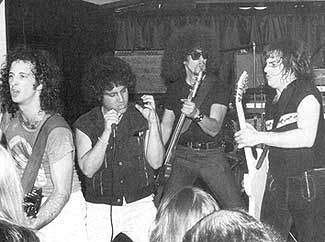
Sitting around wondering whatever happened to “Handsome Dick” Manitoba (second from left) while pondering…

Don’t Know What You’ve Got Sitting in the Barn – There has been a recent rash of classic American muscle cars suddenly being discovered rotting away in, of all locations, farm barns.

Most recently, a 1969 Dodge Charger Daytona was discovered in an Alabama barn, covered in rust but still recognizable by the racing fin sprouting from its rear deck. The Daytona was a very special car in that it was built exactly to the specifics of the racing model that tooled around Daytona International Speedway back in the late 1960s (in those days, the term “stock car” sometimes meant exactly what was said). It is also special in that it was one of only 503 that were ever built; auctioneers estimate that, after restoration, the car could earn a bid between $150,000 and $180,000 at auction.

This comes on the heels of a 1969 Pontiac GTO Judge being found in a cow barn in an undisclosed location. This particular Judge was involved in a trade in 1990 and, to put the car in safekeeping, the new owner stored the car in said barn. Looking to restore the vehicle, the new owner instead allowed it to degrade to the point that the car is buried up to its hubs in cow manure and other vermin have ravaged the interior and wiring. The owner “hopes” to start renovating the car but doesn’t seem to be in too much of a hurry.

And somewhere, millions of muscle car fanatics are crying…

Good Can Come Out of Tragic Circumstances – It is befuddling to most how professional athletes, with millions riding on their careers, can take tragic turns. In one case, however, the tragic turn has resulted in a bit of a good story.

Sixteen years ago, then-Carolina Panthers’ Rae Carruth was enjoying his position as one of the top wide receivers in the National Football League. That was before, however, he was charged with setting up his then-girlfriend Cherica Adams in an assassination-style attack that left her dead. The issue? She was pregnant with Carruth’s child, a situation he apparently wasn’t quite ready for.

One night as Adams followed Carruth back to his place, Carruth allegedly stopped the car long enough in front of Adams at a traffic signal to allow for a shooter to pull up besides Adams and empty a pistol into her vehicle. Adams would die of her injuries from the shooting just before the New Year 2000 and Carruth was eventually arrested in connection with the case. In 2001, a trial in Charlotte convicted Carruth of hiring a hit man to kill Adams; Carruth has, despite appeals, remained in jail since he was arrested in 2000 and, in 2018, is set to be paroled.

The good news out of this tragic situation? The child that Adams was carrying at the time survived the incident and, from all accounts, is doing well. Chancellor Adams does have cerebral palsy resulting from the trauma of his birth but seems to be functioning well for a 16-year old boy. There is one final tragedy of this story, however; Carruth, who hasn’t seen Chancellor since he was 1, has yet to apologize to Adams’ family members; every other person involved and convicted in the case has expressed their regret over being involved in the death of Cherica Adams.

Just Don’t Go into Meetings Uttering, “Bond…James Bond” – According to one of the top business magazines around, who would be a good role model to base your business approach on? How about the ultimate male, the international superspy and all-around expert at everything James Bond?

When the latest Bond film, Spectre, was released, Forbes Magazine pointed out the ways that people could learn from 007 about their approach to business. Citing Bond’s overall ability to “think on his feet,” “dress appropriately” and “finish what you start,” Forbes was able to craft the mystery of a nerdy mid-management being the next great ladies’ man. What they didn’t say was “how much money” it would take to make this change take full effect.

That’s One Way to Make Your Escape – According to many outlets, a man accused of several local robberies in Florida thought he had a way to make his escape…one which proved to be fatal.

Matthew Riggins was accused of several home invasions when police in Orlando, FL caught up with him. Despite being cornered, Riggins apparently dashed into a nearby lake and hid from his pursuers. In the dark, officers equipped with search dogs and an overhead helicopter couldn’t locate Riggins and, thinking he had eluded their capture, gave up on the search. After Riggins’ family reported him missing, police went back to search further.

Upon their return a few days after the pursuit, police found Riggins’ body floating in the lake while an 11-foot alligator stood watch over his snack. Both the body and the alligator (unfortunately the alligator had to be killed) were recovered and the necropsy on the alligator revealed some of Riggins’ body parts to be inside the creature.

Sometimes surrendering is the better option…

Now the answer to the question…what happened to Handsome Dick Manitoba?

For many, the name of Handsome Dick Manitoba won’t ring any bells. Some, however, will remember one of the forefathers of the punk world. He was the lead singer for the Dictators in the late 1970s and, following his time with that group, went off on his own with his band Manitoba’s Wild Kingdom (the band’s 1990 album …And You? and the song “The Party Starts Now” were considered the first great punk efforts in that decade). Manitoba would be the front man for the reconstructed MC5 in the 2000s and delve into other areas.

In 2004, Manitoba (born Richard Blum, here with Iggy Pop) started a program on Sirius XM’s “Underground Garage” channel that he still does today. Most of the time, however, you can find the former punk rocker at his bar, Manitoba’s, in New York City. Manitoba owns the bar but, surprisingly, he has been sober since the late 1990s, a time way before he even considered opening the bar. Patrons sometimes will make a trip to New York just to visit Manitoba’s and perhaps meet one of the originals of punk rock in a setting that befits him.

DickManitobawIggyPop

Another Day, Another Mass Shooting…Part One

SanBernShooting

It’s beginning to become arduously mind numbing. A delightful office party on a sunny morning in San Bernardino, CA, celebrating the holiday season was suddenly wracked by automatic gunfire and improvised explosive devices (IEDs). Two people, a husband and a wife with the husband actually employed by the company throwing the party (and plenty of evidence continuing to come out about), came into the gathering with this weaponry, semi-automatic rifles, handguns and bombs, blazing a trail of brains, guts and sinew across the floor of what was once a happy celebration. When the scent of gunpowder was the only thing remaining, 14 people laid dead and 17 others suffered from injuries.

Of course, the usual procedural began before the bodies had even quit leaking blood. President Barack Obama, pulled out of an interview with CBS News as the bullets flew, made his usual commentary (accurate) that we are the only civilized country that has these issues, the same speech given five days earlier when a gunman shot up a Planned Parenthood clinic in Colorado. President Obama also called for politicians to put aside their differences and come to agreement on a plan of action to thwart future potential attacks. Pro-guns advocates threw up the “thoughts and prayers” bullshit (more on this in a minute) rather than take any logical approach to the issue. Meanwhile, those in the middle that might actually be affected by these insane actions feel another bit of our heart, our belief in the good of man, ripped away from us.

The “thoughts and prayers” platitude (just heard President Obama utter it too, not just Republicans) is about the most useless piece of wasted words that have ever been uttered. When people lie dead and injured from situations that are simply too outlandish to comprehend, “thoughts and prayers” aren’t going to do shit for them except to make your little heart feel good that you offered something up. In reality, you’ve offered nothing except empty words that have little actual thought or prayer behind it, a simplistic vagary that has become commonplace instead of actually taking legitimate action.

With that out of the way, how do we actually go about taking care of these issues? Both sides – and why there has to be sides on this issue is completely ludicrous (we enjoy seeing people ripped apart by gunfire, spreading their life essence on the ground?) – are going to have to give on the issue.

First, the rhetoric has to be squelched. As far back as President Ronald Reagan (if not further), the depiction of the President of the United States as a Hitler-esque figure has made the rounds. Back during Reagan’s heyday, however, those photos and comparisons were held in small groups that had a more difficult time in breeding their particular stew of radicalism because of the lack of connectivity.

Those same pictures of President Bill Clinton, President George Bush, President Obama or even Hillary Clinton today can race across the United States as quickly as a fiber optic line can carry them. Along with those photos comes the rhetoric – of the federal government as “jackbooted thugs” (a term used by Campaign for Liberty and I have the e-mails), that the “New World Order” is coming or that several tragic occurrences (including 9/11) were “false flag” operations (situations “staged” by the government to allow them to impede the freedom of the ‘American’ people) – and the ability to meet and exchange radical rhetoric much easier. This leads to radicalization, whether it is on an international level or a domestic one.

No leader of the United States has looked for the destruction of the country or its beliefs. Every leader since Reagan (at the minimum) has been accused and vilified for this, however, and the rhetoric has ratcheted up as people become immune to the last outrageous statement that was made (something we’re seeing in the 2016 Presidential races also). Instead of using incendiary words – yes, words can infuse a thought or action into someone’s mind that they might not have considered previously – try disagreeing on a different level, one where actual discourse about policy comes into play.

This also applies to other aspects of our lives. Tolerance of other religions (ALL religions), respect to a person’s particular thoughts and beliefs outside of a God-based nature, even someone’s opinions on politics or other seemingly insignificant issues can, in an unfettered discussion, devolve into a frenzy of rhetoric denouncing a person to their very essence, if not directly leading to questionable talk that wouldn’t be used if a person was standing directly in front of their opponent. The rhetoric, the speech…it has to be reined in.

Before it is accused, I am all for the “freedom of speech.” I am also all for speech that advances us as a country and as a species. Continually devolving ourselves to the lowest common denominator – or even lower – doesn’t seem to be working out too well.

The next step would be to put some regulation on the weaponization of the United States. In 1994, then-President Clinton passed, along with the U. S. Congress, a ban on assault weapons for a 10-year span. That law was allowed to expire in 2004 and, although there have been attempts to reinstate the law and make it permanent, the powerful gun lobby (re:  the National Rifle Association) has been able to squelch such efforts.

There is some evidence to state that semi-automatic weapons and their availability have little to no effect on the numbers of mass shootings. It is obvious, however, since the law expired in 2004 that there has been a rise in the usage of the weapons for that purpose. From 2004 to the Sandy Hook shooting in 2012, 27 mass shootings (the definition of a mass shooting is a minimum of four people either killed or injured, including the shooter, through the usage of guns) occurred; this leaves out those that have drawn attention in 2015, including this most recent shooting, the Colorado attack or the college shooting in Oregon earlier this fall.

Semi-automatic rifles are used in the military to give troops the rapid fire that is necessary during warfare to defend themselves and fight battles. The weapon is NOT meant for use by civilians; there is no practical purpose – hunting, target shooting, etc. – that these style of weapons would be necessary to find in the hands of the Average Joe. If you’re argument is that “you’re defending the country against the fascism of our government” then you need to go back and read the first part and reexamine your mindset.

Next, there needs to be some changes to other areas of our “gun culture.” People are supposed to have insurance on their vehicles that, in the event of an accident, can help to provide compensation for any victims. The ownership of weaponry needs the same treatment as this is part of responsible ownership. It would also provide for someone to report when their weapons are stolen or sold to another party because that would alleviate any responsibility for the weapon.

Finally, the left has to get used to the factor that this is a country that was built on the ownership of guns and that, treated responsibly, this isn’t a problem. In recent mass shootings three-quarters of the weapons used were legally purchased, hence back to the tightening of what weapons are available and the need to put controls in that area. But the complete eradication of guns from the U. S. society isn’t going to happen.

Through an amalgamation of some of these previous thoughts – our country’s overall rhetoric, control on some weapons, penalties for usage of weapons in serious crimes and the understanding that every situation doesn’t call for the banishment of something you disagree with – we might start to clamp down on the overall malignancy that is festering in our soul. The inability to implement some if not all of these suggestions will just continue to lead us down a road until drastic actions take place that no one will be pleased with.

Will it happen? If you see this same article again, with a different “Part” number and a different lead paragraph, then obviously it hasn’t…

Are the University of Missouri’s Issues Indicative of a Bigger Problem?

I have been watching the recent spate of news out of the University of Missouri with a great deal of interest but not much conclusion. This is something that bothers me because, usually after I study an issue for a period of time, I can normally come down on one side or the other in the discussion (this doesn’t mean, however, that it is set in concrete). With the current situation at Missouri the more I read, the more confusion sets in on my thoughts.

For those that have come a bit late to the story, the situation at the University of Missouri that many think exploded over the last two weeks has actually been simmering for some time. Earlier this semester on the Columbia, MO, campus, the school’s student government president stated that he was targeted with a racial slur by someone on campus. A campus group, the Legion of Black Collegians, followed up the student government president’s accusation in adding that they, too, had been targeted by people (assumedly white) who used racial slurs against their group. Then there was a swastika, drawn in fecal matter, found in a dorm bathroom.

Now, those situations are all serious incidences and require a good deal of investigation. Unfortunately, it doesn’t seem that there was much sympathy for the Mizzou administration to taking the time to examine the issues. During the school’s homecoming back on October 10, a group of protesters actually surrounded the vehicle of school president Tim Wolfe to the point of interrupting the parade, questioning him about the investigation. According to local television reports, Wolfe’s vehicle actually bumped into one of the protestors and he didn’t interact with them during the parade or at any time following the altercation.

As to be expected, it pretty much went to Hell after that. A graduate student, Jonathan Butler, started a hunger strike with the intent to force Wolfe out of his position at the school. This didn’t have an effect on the school’s administration but, once the Tigers football team stated they would not practice nor play until Wolfe was removed from his position (with a game scheduled for this Saturday against Brigham Young University at Arrowhead Stadium in Kansas City set to pull in $3 million), the writing was on the wall. Earlier this week, Wolfe resigned his position and the school’s chancellor also said he would step down within the next few months.

The resulting turmoil has spread across the United States to other college campuses and isn’t showing any signs of slowing down. Early this morning, the Dean of Students at Claremont McKenna College in California, Mary Spellman, resigned after standing and being photographed with students dressed as Mexicans to celebrate Halloween. At Yale University, two weeks of protests regarding a “white girls only” party at a fraternity on the campus culminated in a massive march against racism on the campus. Ithaca College in New York, Smith College in Massachusetts and Guilford College in North Carolina have also felt the rumblings of racial unrest and protests.

Now it isn’t like there aren’t some issues with relations between young people that are of different cultures. Black students have discussed how their white classmates – or even their roommates – have made racially insensitive statements around them. Those black students have also discussed how they feel they are viewed on the campus. It even goes into the Hispanic community, as the situation in California demonstrates. There is also something problematic in that the group at the University of Missouri, Concerned Students 1950, draws part of their name from the year the first person of color was admitted to the university. The question is, however, is it blatant racism or just something that is inherent from upbringing?

The University of Missouri is estimated to be 80% white, with blacks making up approximately 8% of the student population (no breakdown as to the remainder of the student body). With a few exceptions, this is a breakdown that you would probably find at many public colleges and universities and, to be honest, it may be worse at private institutions. When I went to college long ago, I went to Butler University, a private school in Indianapolis that was predominantly white and, as far as I know, is still that way today. There wasn’t, however, a base of racism that ran through the school (at least to my knowledge).

Some of the incidences brought up by black students at colleges and universities across the country do have some serious racial overtones and/or problems. Being asked about how a black person styles their hair, asking a black person to teach them the latest dance moves or even state that black people’s skin is greasy because slavery made their ancestors “sweat a lot”…these are all examples of some of the idiotic questions or statements posed to black students. What these statements demonstrate isn’t inherently racism as much as it is pure stupidity.

This isn’t an uncommon occurrence, though. For the most part, when 17-18 year olds get together at a college or university, they aren’t well-versed in the ways of the world. They aren’t educated as to the diversity of the world and how to actually treat people who aren’t just like you (here’s a thought, how about the Golden Rule?). Finally, they are pretty stupid to begin with; this is the reason for college is to further educate yourself about the world that is around you.

While some of these instances may be racial in nature, there are some problems on the other side also. Reportedly journalists looking to report on the protests at the University of Missouri were harassed, kicked out and generally not allowed to either videotape the proceedings or what some of the protest leaders were saying. In one particular instance, a student with the Missouri school newspaper has filed a complaint against one of the professors who was leading the Concerned Student 1950 protest, who is allegedly videotaped calling for “muscle” to eject the student reporter and his videographer from the protest.

Furthermore, there are questions as to the validity of some of the alleged situations. Part of the reason that there was so much time taken in the University of Missouri situation (that investigation – and its length – was a major complaint by Concerned Student 1950) is that there is little evidence to investigate. A student who is the victim of a racial slur thrown from a moving vehicle is going to be difficult to investigate, unless the student has a photographic memory and/or has their cellphone video running (although racism is problematic, the knee-jerk reaction completely to the other side isn’t logical either). The “poop swastika” situation, short of taking DNA samples from the entirety of the Mizzou campus (something that would violate pretty much every privacy law on the books), isn’t going to be solved quickly.

One of the problems overall is that there is still racism in the United States today. Despite what many might want to think, there is still an ugly part of the citizenry that believes people of a different ilk are beneath them and should be treated as less than human. There is still the problem of de facto racism, where it isn’t blatant but is ingrained in the psyche and practices of a particular segment of society. Does it make it right? No, but you have to recall that, even up until the mid-1970s, there was blatant racism going on in both the North and the South (busing in Boston comes to mind). Just because a black man was elected President of the United States twice doesn’t mean that “racism is over.”

On the other side, there are some things that are going to take time if they are to be rectified. Those people that “clutch a purse tighter when I come by?” Those people who ask inappropriate questions regarding your ethnicity? Those people who may shy away from you because they grew up in a 99.9% white country town? Those things aren’t going to change overnight…hell, it may not change until late in this century at the earliest. Change doesn’t happen immediately; for it to firmly take hold it has to be, like a science experiment, performed over and over again with the same outcome occurring.

There is also a problem on college campuses in the fact that they aren’t a bastion of open thought anymore. The ability to be racist isn’t something that should be protected, don’t get me wrong, but the examination of issues regarding race, religion and other areas is something that has traditionally been a discussion point at colleges and universities. The oversensitivity of one or several parties on a college campus – and their overwrought demands to “make it stop” – is something that seriously inhibits free thought, something we should strive for as humans.

Furthermore, I have problems with protesters getting no response from administrators but, as soon as an athletic team threatens to boycott a game, then the change comes rapidly. A sports team shouldn’t have an undue influence on who is in the leadership of the school. What does it say about that leadership if, recognizing that they’ll lose millions of dollars if that team doesn’t play their game, they knuckle under?

The turmoil regarding these situations – wherever they are either in the United States or in the world – are continuing to roil and it doesn’t appear that it will stop anytime soon. I am still on the sidelines, however, as there are way too many moving parts – and changing stories – to be able to draw a firm conclusion as of yet. Perhaps will some more time and the completion of some of these investigations (which SHOULD be given time to come to fruition rather than complaints about their slow pace), those of us on the outside looking in might be able to determine who is right.

If You Could Change Everything, Would You Do It?

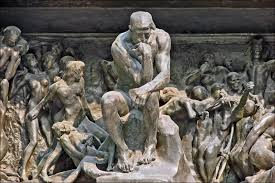
TheThinker

One of the greatest traits of humans is their never-ceasing ability to question its surroundings, its science and even itself. The ability to innovate – Johannes Gutenberg’s printing press, Nikola Tesla and Thomas Edison’s work in radio and electricity, Albert Einstein’s work with theoretical physics…all have expanded our knowledge of the world and, at the same time, expanded the knowledge of ourselves. But at what point does that innovation go beyond the expansion of human knowledge and enter into realms that shouldn’t be explored?

A recent article at BusinessInsider.com discussed the issue of what the next great innovation will be in technology. It won’t come in any grand leap in computer technology or even in some areas that would be truly fascinating, such as virtual reality. According to those who were surveyed, the next great “leap” will come in the arena of genetics.

This research, as related by BusinessInsider.com’s Kevin Loria, would be the ability to look at the human genome – the basic building block for the traits that make everyone individualistic – and be able to manipulate particular segments of the DNA code. Through the analysis, it is predicted that debilitating diseases could be found and cut out, potential errors in the DNA sequence could be reversed to prevent mental illness and even the creation of the “superhuman” resilient to all diseases could potentially be created.

This process, called gene-editing (also known as CRISPR), is something that has scientists in a frenzy as to the possibilities. “We’re basically able to have a molecular scalpel for genomes,” Jennifer Doudna, a biologist credited as one of the co-discoverers of CRISPR who has used the technology, is quoted by Loria. “All the technologies in the past were sort of like sledgehammers…This just gives scientists the capability do something that is incredibly powerful.”

The ever-inquisitive nature of humans reaches into every aspect of life, even (believe it or not) the 2016 Presidential campaign. A question in New York Times Magazine that was blasted over the internet – “Could you kill Baby Hitler?” – has become an intriguing experiment with the human psyche (according to the Times statisticians, 42% of people responded “yes,” 30% responded “no” and 28% “not sure”). The question, when posed to GOP Presidential candidate Jeb Bush, brought no hesitation in his reply.

Asked if he had the opportunity to kill an infant Hitler – if he knew what that baby would become but not what effect his death in infancy would have on the overall world – Bush responded to The Huffington Post, “Hell, yeah, I would! You gotta step up, man!” After some contemplation on the potential ramifications of such an act, Bush doesn’t change his mind, instead doubling down by repeating, “It could have a dangerous effect on everything else, but I’d do it – I mean, Hitler,” Bush concluded.

In essence, the question has become “If you could change everything, would you do it?”

People may hear the word “existential” in their lives but not really have an idea as to what it actually means. Many may hear the term “existential threat” and conjure up something that is a threat to their very existence. This is the literal definition of “existential”; for example, if a politician says “Vladimir Putin is an existential threat to the United States,” it literally means that Putin is a threat to the U. S. and its citizens.

When people use the term “existential questions,” they are actually pondering the meaning and thought behind the practice of living, the very essence of being. There is actually a branch of philosophy dedicated to existentialism, with the founders being the philosophers Soren Kierkegaard, Friedrich Nietzsche, Jean-Paul Sartre and Fyodor Dostoyevsky (among others). There are different branches on the Tree of Existentialism, but basically they all come back to the individual being the starting point for pretty much everything.

Finally, an “existential crisis” sounds like something that might come out of deep introspection through Existentialism, but is actually a tool used to joke about someone who is thinking too deeply (normally about themselves). If you’ve heard the term “navel gazing,” then this is what they were talking about.

In looking at these two circumstances, there is plenty to think about in these two “existential questions.” With the first subject, mankind would have the ability to pretty much eradicate any issues that may face humanity. Conditions such as cancer, diabetes, heart disease, neuromuscular diseases (amyotrophic lateral sclerosis (ALS), multiple sclerosis (MS) and others) could be an afterthought in the future if doctors could identify in a single strand of DNA those “trigger points” and remove them from the sequence rather than let them reach actual life.

Then there would be the “other side” of the equation, however. With the ability to manipulate the genome to take away disease, people could also ensure that they have a blonde-haired, blue-eyed child (boy or girl), cause mutations in musculature or height, even perhaps remove the ability to feel pain or maybe even block emotional feelings. While the ability to edit the genome may be a breakthrough that leads us into a bold new future, it could also lead us down a dark path to manipulation.

In the case of Governor Bush, the question has been the subject of plenty of alternate history and science fiction tomes. The killing of Hitler – whether as a child (the preferred theory as he would supposedly be defenseless) or before he reached the apex of his power in Nazi Germany (the theory here is during his service in World War I) – would have theoretically prevented the horror that was World War II and additionally the ghastly philosophy that Hitler inflicted on the Jewish race, the Final Solution (or the Holocaust). If this were to be done from OUR future, however, what would be the ramifications?

The theory on this part is the “Butterfly Effect” which basically says even the smallest action has bigger ramifications (the “butterfly” flapping its wings causes a hurricane thousands of miles away). With the death of Hitler, would WWII have been avoided? At what point would you kill Hitler, in his youth or as an adult? If you waited until he was an adult, would that be too late?

The existential questions continue…if Hitler hadn’t come along at that particular point in history, could someone else who lived in that time simply taken his place? What if one of the people who died during WWII actually went on to discover a cure for cancer or significant breakthroughs in another scientific field? Add into this the fact that, no matter how many times people may use the term “I could kill you,” the ability for one human to kill another isn’t as easy as it sounds, there is plenty to think about.

For myself, the first question is surprisingly easy. As a general rule, I would be against any manipulation of the human genetic code, but as a way of eradicating disease it would be a viable idea. If the debilitating diseases that plague mankind (yes, even the Plague) could be controlled and/or eliminated, think of the improvements in people’s lives (and the ability to bring down medical costs and spending on disease control)! We would be tremendously advanced as a species if we could improve on our basic genetic code and its inherent imperfections to the point of eliminating them completely.

Where I would have a problem, though, is when it is done for simply cosmetic or aesthetic purposes. Don’t like your eye color? Changing your genetic code (or doing it to an in utero child) just so you can satisfy your own vanity is about the most narcissistic thing imaginable. In my mind, we don’t come up with tremendous breakthroughs in our existence to simply use them to change what we see in the mirror, we come up with them to improve mankind and its world.

The second question is a much thornier one. Besides being one of the pivotal moments in human history, not just the 20th century, World War II and its players had a seminal impact on how the world is shaped today. By eliminating Hitler from the equation – and, in theory, eliminating the catalyst for the start of WWII – what effect would that have on the world today? You may not think that is a big deal, but (using the “Butterfly Effect”) what if the lack of WWII caused your grandfather to not enter the military, where he would meet your grandmother at a base dance that led to their marriage and the birth of your father/mother? The resulting theory would be that YOU do not exist.

I would have to use one of science fiction’s greatest creations in musing over killing Hitler or not. In the Star Trek universe, the Prime Directive is the governing philosophy of the United Federation of Planets. In that codified theory, representatives of the Federation aren’t to have an impact on developing societies or their historical direction. With this in mind – and the potential ramifications, both good and bad, in the historical sense – I would have to say that I wouldn’t kill Hitler if given the chance. There is simply too much that could occur otherwise – and in some cases, could be even worse – than even the genocide, hatred and pain that Hitler’s short existence brought about.

Where would you land on these subjects? And what does it say about you? If you could change everything, would you do it?

Wondering Whatever Happened To…For November 3

Wondering whatever happened to California Congressman Gary Condit while pondering…

What If There Wasn’t Any Grits? – Pointing out the ignorance of some when it comes to the issue of the Confederate Battle Flag, a Tupelo, MS man is in jail facing a potential life sentence for using an explosive device against the retail outlet Walmart.

According to reports from local papers, Tupelo Police Chief Bart Aguirre said that 61-year old Marshall Leonard threatened the megastore a few days ago when he wrote on the local paper’s Facebook page, “Journal corporate, you are on final warning. You are part of the problem. As a result of this, y’all (sic) are going down, along with Walmart, WTVA (a local television station), Reed’s department store and all the rest of the anti-American crooks. I’m not kidding. No messing around anymore!”

While some might have thought this to be the ravings of a lunatic, this was a lunatic who decided to take action. On Sunday morning at about 1:30AM, Leonard allegedly drove his car to the local Walmart in question, lit a package on fire and threw it in the entryway of the store. An employee standing nearby was told by Leonard, “You better run,” and, as the employee did, a small explosion went off that didn’t cause much damage to the store.

So what was Leonard’s problem with Walmart? The factor that the superstore had quit selling the Confederate Battle Flag. Leonard is an outspoken opponent of current legislation, Initiative 55, which would remove the Battle Flag from the current Mississippi state flag permanently. Leonard doesn’t believe the flag to have any racial or slavery overtones (despite the statement in the documents of secession by the state of Mississippi in 1861 stating, “Our position is thoroughly identified with the institution of slavery – the greatest material interest of the world.”) and has been tossed out of a city council hearing on the subject (while draped in a Battle Flag).

The police didn’t have to investigate too deep to find Leonard either. Leonard’s vehicle, with a flagpole sticking through the roof that displays the Battle Flag while he drives, ran a red light at 2AM after allegedly tossing the explosive device into the Walmart. Police stopped Leonard and, as their radios crackled with news of the bombing, Chief Aguirre said, “We quickly figured out we needed to hang on to this suspect.”

Why Should I Be Educated If I’m In Heaven? – In another entry into the idiocy of the South, parents of nine Texas children are suing the state over their home-schooling techniques. Texas laws are quite permissive regarding what home-schooled students have to learn and one family, the McIntyre family of El Paso, TX, decided they didn’t need to have a curriculum, any oversight from local officials and didn’t have to take any of the tests that children in public and private schools had to take. Why? Why waste time on education when the Second Coming is upon us.

The situation came to light after the 17-year old daughter of the family ran away from home and, upon being placed in the foster system and in a real school, couldn’t keep up with her peers (seniors). She was placed in a ninth-grade class and was even struggling to keep up at that pace. Further investigation by authorities through other family members found that not only was there any “home schooling” going on, but the parents were flaunting the results.

According to Tracy McIntyre, the twin brother of Michael, the other children were “never reading, working on math problems, using computers or doing much of anything educational.” The reason that Tracy gave for this was Michael telling him that the children’s learning was unnecessary because “they were going to be raptured.”

The El Paso school district began to investigate further, at which time the McIntyre’s sued them for “oppressing their right to not educate their children.” In a deeply Republican state, the family called the all-Republican Texas Supreme Court “anti-Christian” and claimed that the oversight by the El Paso school system is “a startling assertion of sweeping governmental power.” While these claims may sound as ludicrous as they look, there is a chance that they might have some effect; the current head of the Texas Board of Education is a Christian homeschooler and Governor Greg Abbott is staunchly behind the homeschooling system, which in many conservative homeschooling cases lacks any knowledge of sciences, technology or mathematics and instead delves into Bible-based explanations of subjects.

But The Slurpee Machine Is Always Spotless! – We already know that there is a great deal of waste in the U. S. government and, in particular, in military spending. But a $43 million gas station?

In a recent report from John Sopko, the Special Inspector General for Afghanistan Reconstruction, the building of a compressed natural gas station cost an alleged $43 million, including $30 million in overhead costs (operational expenses) in a country where few vehicles exist and those that do don’t run on natural gas. Not only was this station highly expensive (a similar station in Pakistan was built for $500,000), but there was no examinations of whether building the station was feasible or not ever performed or ever deemed necessary.

“One of the most troubling aspects of this project is that the Department of Defense claims that it is unable to provide an explanation for the high cost of the project or to answer any other questions concerning its planning, implementation or outcome,” Sopko stated to the Washington Post. The reason? The department that was in charge of building the station, the Task Force for Stability and Business Operations (with an $800 million budget), was closed six months ago and the Pentagon has no comment on its activities.

Simple investigation by Sopko questioned the legitimacy of building the station. With a non-viable market for natural gas vehicles, Afghanis would have to convert their vehicles to the fuel. The cost of such a conversion is around $700. The problem there is that the average Afghani wages for a year are $690.

Sopko says he will continue to investigate the situation but, without cooperation from the Pentagon, it is unlikely he will find any reasons for the wasteful spending.

The Inmates Running the Asylum, Part 420 – The candidates for President on the Republican Party ticket have been loudly complaining about how the three debates they have taken part in (especially the last one on cable station CNBC) have been conducted, despite the first debate being conducted on their home ground of Fox News and a second debate on CNN considered fairly decent. Now, instead of allowing for a central group to set the standards for debates – say, perhaps, their own Republican National Committee – the candidates want to set the rules that future debates will be held under until the party’s convention next summer.

GOP candidates have floated such ideas as keeping the room at 67 degrees, splitting the 14 remaining candidates into two randomly picked groups of seven and asking them the same questions and setting strict time limits on the proceedings. It is expected that some of the candidates have already coalesced behind some framework of demands for the forthcoming debates (probably those after their November 10 scheduled debate), but one candidate thinks he can get more through his negotiations (take a wild guess).

Representatives for billionaire Donald Trump, who has seen his numbers of late slide as Dr. Ben Carson has slowly gained traction, are currently refusing to sign any letter of demands alongside the other candidates, believing that through his own force of will he can get more. According to the New York Times, however, Trump is actually hurting the cause because the candidates only have power if they are united. If they are fragmented or are asking for far too much from debate organizers, then the possibility of the networks, the RNC or even the candidates canceling a debate comes into play.

First they couldn’t find a Speaker for the House of Representatives, now they can’t determine a debate format – it truly is the inmates running the asylum.

Now to answer the question…what happened to California Congressman Gary Condit?

Through the 1990s, Gary Condit was a rising star in the Democratic Party. A congressman from California, Condit looked the part of the perfect representative from the Golden State, with a pearly smile and ambitions of even bigger things in his future. The discovery that he was having an affair in 2001 with an intern by the name of Chandra Levy effectively derailed his burgeoning political career.

The discovery of the affair only came about after Levy disappeared in May 2001 and Condit, who vehemently accused then-President Bill Clinton of illicit activities with intern Monica Lewinsky in the 1990s, for some time was considered a suspect in her disappearance (in 2010, an illegal immigrant from El Salvador was convicted in Levy’s disappearance and murder). It was enough to derail his career; in 2002, Condit was defeated for reelection in the 18th District in California and, instead of going back home, moved to Arizona.

In Arizona, Condit opened up an ice cream store franchise that failed and in which he is currently embroiled in litigation over. His son, Chad, is attempting to follow in his father’s footsteps (hopefully not literally) in running for Congress in California’s 10th District. Condit, at 67, has called it a career in politics, now serving as the president of the Phoenix Institute of Desert Agriculture, a non-profit group created in 2011 with offices strangely located in San Diego, CA, that doesn’t list any responsible owners or operators.

Spending a Week in the “House of Mouse” Part Three: The Debriefing

WDW

After every major operation in the United States Marine Corps, the troops go through what is called a “debriefing.” The purpose of the exercise is to pass along as much information about what occurred during the operation in question to be able to make a future operation run smoother than the one just concluded. Although you may not think so, taking on the challenge of Walt Disney World in Orlando, FL, is very much like a military maneuver in that it takes an extreme amount of planning to have the best time possible.

What we’re going to cover in this last part of my family vacation to the “House of Mouse” (hereafter referred to as “WDW”) are various miscellaneous things that you might not have picked up in the first two parts. Trust me, I could probably go on for a few more installments about WDW to help your trip, but I have to leave something for you to have an adventure yourself!

Dining

Arguably the best thing about the WDW resort – if you’re not into the rides, the Disney characters or other items around the amusement parks – is the choices for dining on the properties. Each of the amusement parks are replete with dining options and some of them are quite outstanding. But you have to be able to schedule these well in advance – our family did it three MONTHS in advance of our trip – otherwise you might be sitting in line waiting for a meal that will never come.

The dining options can be as simple as cafeteria style dining at some of the Disney hotels on the property to buffet style options that feature Disney characters (Chef Mickey’s is a very popular option in this category) to scrumptious meals featuring cuisine from several foreign lands (perhaps the best example our family found of this was Sanaa at the Animal Kingdom Lodge, excellent Indian and African fare). You have to be careful, however, as the meals with the Disney characters can be quite pricey; for the buffet you’re having, you might be better off waiting until you’re inside one of the parks where you can meet the Disney characters and choose a less pricey option.

There is also the issue of traveling to some of restaurants at other Disney hotels or even in the theme parks themselves. Sometimes you can do as instructed by the Disney staff – take a Disney Transport to one of the parks and catch another bus to the resort you have reservations at – and it will take you at least an hour to travel to and from a meal alone. This is one instance where a rental car comes in handy – especially if you have reservations at something like Olivia’s Café or the Grand Floridian Café – as you can drive directly to the resort, have your meal, and drive back to your hotel without the hassle of having to take the Disney Transport.

If you are going to a theme park restaurant (usually you would do this for dinner) you have to be careful not to languish too long over those after-dinner drinks. Disney Transport runs from the theme parks up to an hour after they close (around 8PM this time of year). If you have a late dinner reservation and repose in satisfaction following the meal, you might find yourself having to take a cab because Disney Transport has shut down for the evening.

There is another thing that you won’t see much of at WDW. Alcohol wasn’t served at the Magic Kingdom and the other two parks (Animal Kingdom and Hollywood Studios) until 2012 and even then it was on a very limited basis (such as restaurants). EPCOT is the only theme park where there are several varieties of alcohol sold around the park, including craft beers, wines from different countries and other spirits. So if you want to get your drink on, EPCOT is the place to be.

Miscellaneous

If you’re going to WDW, do not expect the trip to be an easy one, especially on your feet. You are going to be walking anywhere between five and ten miles a day (depending on how long you spend at the theme parks), so comfortable, well broken in shoes are a necessity. If you are planning on wearing a new pair of sneakers or breaking in those darling ankle boots you just got at Macy’s, you are only setting yourself up for a world of hurt and blistered feet. Don’t forget about comfortable socks, either; thin socks will be chewed up by the end of the day at WDW.

If you have young kids with you, it is quite advisable to pack a bag, like a beach bag, with some snacks and water for them to partake of during the day’s adventure. WDW personnel (they like to call them “cast members” whether they are performing in the shows or letting people through the gates) are pretty good about not hassling people over bringing in food and water into the theme park. These items will come in handy for the kids to rejuvenate themselves and even the adults might like a bottle of water to stem their thirst.

Of course, do not bring weapons into WDW and its theme parks. Even though Florida is a concealed carry state where people can normally carry a concealed weapon such as a handgun, the grounds of WDW are strictly a no-concealed carry area. There are plenty of stories online about people who challenged this law – stating that the WDW ban doesn’t have “force of law” (validity) – but have ended up being banned from the park because they didn’t want to give up their weapon. In fact, if a guest is to bring one to a WDW resort or hotel, the resort requires that the weapon be locked up at the front desk in a safe deposit box. According to WDW representatives, only on-duty law enforcement officers who have jurisdiction at WDW may carry weapons around the property.

There was something else that was a bit of a surprise that cannot be brought into the WDW properties. Selfie sticks – those devices used by many to get a “hands free” look to their cellphone photographs – are also banned by WDW. I didn’t get the opportunity to ask why this was the case (I am figuring two reasons – they can be quite obnoxious if someone is trying to walk around you and you whip this out in their path and, hey, they can be used as a weapon), but my wife and I found out first-hand what happens when you try to get one through the entrance. If you want to retrieve your property, you have to take it to Guest Relations, where it is appropriately tagged and you are given a receipt to be able to retrieve it. You can also voluntarily give it up, but I didn’t notice anyone doing that.

A Final Remembrance

There are a litany of things that I would like to do in my meager existence on this mortal coil – run with the bulls in Pamplona, Spain and experience New Year’s Eve in New York City’s Times Square are two such examples – but with my age, those things have long since passed me by. Going to one of the Walt Disney theme parks – be it Disney Land, WDW or one of the parks in Paris or Japan – may not seem like much, but it is a pretty special experience, especially when you share it through the eyes of a son and share it with your wife and mother-in-law. It was a special time and, even though there were some things that were on the schedule that had to be bypassed, it was still a great time.

If I were to rank the four theme parks in order, it would go something like this:

EPCOT
Magic Kingdom
Animal Kingdom
Hollywood Studios

While they were all outstanding attractions, I was particularly drawn to EPCOT and would have loved to have had a chance to take a more in-depth look at some of the non-ride attractions around the park. The Magic Kingdom is what you would expect – a non-stop day of rides for all ages – and the Animal Kingdom was enjoyable for the most part. The only thing that seemed out of place in the mix was Hollywood Studios (and I thought I would really like it, to be honest); it seemed there was a purpose for all the other theme parks but Hollywood Studios seemed to be forced just a bit. Still, given a day to thoroughly look over Hollywood Studios, that opinion may have been changed.

If you’re planning on going to WDW anytime soon, you are in for the trip of a lifetime. If you haven’t been for several years, it might be time to take another look. As for me and my family, it could be something we plan on doing more frequently before our son gets to be “too cool” (read:  too old) to go to a “kiddie park.” Then again, the Walt Disney World Resort in Orlando, FL is, as its creator wanted, a place where kids and adults can equally have fun.

Spending a Week in the “House of Mouse” Part Two: Taking the High Ground

EPCOT

While having been in the United States Marine Corps isn’t a prerequisite for taking on the challenge of Walt Disney World in Orlando, FL, it is an advisable course of action. Without the intricate planning and the physical training of military maneuvers, many will end up as one of the pretty landscaping efforts around the “House of Mouse.” If you remember Part One and have put its exercises into use, you’re off to a good start. If you can make it to the end of this training course, you’ll be able to take the high ground in any of the resorts’ (hereafter referred to as “WDW”) and make an enjoyable effort out of the battle.

Day Three

After a great breakfast to prime ourselves for the day, Disney’s Animal Kingdom was on the agenda for our family. Animal Kingdom is actually the newest of the four theme parks that make up the WDW entourage, opened in 1998, and is the second largest theme park in the world behind only Six Flags Great Adventure in Jackson, NJ. What sets apart this particular theme park – according to what is told to the visitors – is that the main reason for this park is to promote animal conservation.

This is where I have a bit of a problem with Disney’s Animal Kingdom. I am not one of those “animal rights” activists that foam at the mouth if someone ruins the habitat of the Galapagos Island tree frog (hell, if there is such an animal, let me know). I also, however, am not for their abuse in circuses, zoos, rodeos or water parks, either; just try to tell me about how much a polar bear likes walking around on concrete in the middle of a Southern summer. My son, however, is quite interested in animals and, as he has not yet had the opportunity to form an opinion on this subject, I have decided to allow for his youthful curiosity with the creatures that join human beings on this planet.

From the appearances of the park, there is a premium placed on the animals and their well-being, maintaining as natural a habitat as possible for them and allowing them the freedom of movement that would come in their surroundings (the “Tree of Life” that dominates the center of the park is something to see). That was somewhat reassuring and, once we went on the special “Kilimanjaro Safari” that is one of the major attractions of Disney’s Animal Kingdom, we could see that the animals seemed to think that they were in their natural habitats. You could literally almost touch the animals as you drove past – they are free range in that they can go wherever they wanted to go – but you were discouraged from doing so. Of particular fun was one giraffe who thought it would be a hoot to block the road; our driver waited – and the drivers of another half dozen or so safari trucks behind us waited – until the giraffe had been adequately amused and moved off the road.

It was when we traveled between the different animal compounds on the safari trail that you could see some issues, however. I was quick to notice that the entrances/exits from one compound to another had electronic gratings on the ground across the roads and there were the traditional fencing in the woods or brush that you would see in a normal zoo. Were these in place to discourage the animals from mingling among each other as they would naturally do in the wild? I would have liked to have asked someone on the safari (especially about the grates on the ground) but not wanting to look like a killjoy to a couple of dozen people, I decided to keep my trap shut for a change.

Other than the zoo atmosphere that permeated my mindset, Disney’s Animal Kingdom was quite lovely. Lush trees and bamboo stalks provided shade for a particularly hot day in October and there were plenty of areas to take a load off and rest. Unfortunately, we didn’t get to do much else outside of the Kilimanjaro Safari (the family took a ride on the Kali River Rapids, which sounds just like its name indicates and was quite enjoyable) as our son was getting tired, but that proved to be a good thing as it was the one day we had some afternoon rain that would have put a damper on things (this is also something to remember about Florida…at any moment, despite what the weather forecast was the night before, “pop-up” showers or thunderstorms can and often do occur throughout the day).

Overall, if you’re visiting Disney’s Animal Kingdom, there is plenty to see there that would take a good day to get through, if not more. It also is quite beautiful, if you can get by the fact that it is still a zoo.

Day Four

By this point in the trip, we were getting to be old hats at the “wake up early, get a good breakfast” routine. We also were struck with one of the maladies that pops up when you are on a vacation – illness. Perhaps because he wanted to touch everything that was around him – as children are wont to do – our son started to come down with the “sniffles.” It seemed like nothing – just a little bit of a runny nose – that turned into a full blown cold within about twelve hours of the first appearance of the “snots.” This would have an impact on the remainder of the trip and may have been the cause of one of the stranger cases of the trip.

After breakfast, the plan was to attack Disney’s Hollywood Studios and its myriad of attractions. Opened in 1989, it was originally known as Disney-MGM Studios but, after years of infighting between Disney and MGM Studios over its operational aspects (MGM objected to a full studio and film lab being on the property, Disney objected to the MGM Grand in Las Vegas opening a theme park of their own on The Strip), the name was changed to Hollywood Studios and more of an emphasis on the “early days” of the movie and entertainment industries were emphasized.

Disney’s Hollywood Studios are probably the most difficult of the four theme parks to get around simply because there is so much built in and upon itself. There are six different “performance areas,” including Hollywood Boulevard, Pixar Place and Streets of America, that morph into each other so seamlessly that you can easily get lost. This is problematic if you are trying to find your way out of the park and you are on one of the more “remote” areas of Hollywood Studios (this is something that isn’t going to get easier, either; a Star Wars themed area and something called Toy Story Land are supposed to be constructed on the grounds with an unspecified completion date).

In a change from the previous two parks we had visited, virtually all of the amusement rides at Disney’s Hollywood Studios were indoor affairs instead of outside. This became a problem for our son, surprisingly, as he hadn’t ever shown any problem with being “in the dark” or being scared of, well, anything (he had recently ridden a “spooky” funhouse ride at a county fair with another little friend; the little friend came out of the ride crying uncontrollably while our son was cool, calm and collected). Even something as simple as “The Great Movie Ride,” which captured the iconic history of movies on an indoor ride with sets, live actors and movie clips, caused him to become almost uncontrollable because of the darkness at some moments of the ride.

With this situation presenting itself, we decided to cut the trip short to Hollywood Studios. While it was something that looked interesting (especially the Tower of Terror that we were supposed to ride), it wasn’t worth permanently scarring a young lad on his first major theme park adventure. From what we did do, however, it more than has enough entertainment to cover a day’s activities.

Day Five

Coming into the final full day of action was at once a thrill (as we were heading to an area that I had wanted to see) and a bit sad (leaving the next day). After some medication, our son was a bit better (but still not interested in even taking a look at any ride that was even inside), so we headed off to EPCOT.

If you recall from Part One of our story, EPCOT was what Walt Disney originally envisioned the Florida property would become…an experimental community where innovation and technological feats were to be tested out. Following Disney’s death in 1966, that was scrapped and the Magic Kingdom was instead built in 1971. EPCOT, after it was built and opened in 1982, became more of an amusement park – Disney officials thought of it as more of a “permanent World’s Fair” – but still had some elements of technological wonder and scientific appeal. It is now the third most visited theme park in the United States and sixth most visited in the world.

Unlike Disney’s Hollywood Studio’s, EPCOT was very neatly laid out and has a wide array of attractions that would capture pretty much anyone’s attention. If you’re interested in space, there were attractions for that (Spaceship:  Earth and Mission:  Space). Technology was covered in the Innovations arenas on each side of the park (East and West) and, if you’re wondering what Disney did with the late Michael Jackson’s 3D film Captain EO, it can be found on the EPCOT property.

Unfortunately, our son’s sudden apprehension at indoor rides nearly kept us from what would be one of the better rides of the trip. After we took him home for a nap, my lovely wife and I returned to EPCOT to take on Soarin’, a ride that took you through the skies like a bird as you flew over California (with actor Patrick Warburton appearing as your head flight attendant). Staring at a concave screen as you dangled in a seat watching the terrain race by underneath you, you almost felt as if you could fly; I commented to my wife afterwards that, while flying over ocean surf, about the only thing that would make it better was if there had been a way to have a “sea spray” hit you in the face. It also almost felt as if my toes were touching the treetops as we whizzed past.

While the ride was a great one, I’ve recently learned that it will be replaced soon. Instead of the version that was shown while I was there at EPCOT, a new version called Soarin’ Around the World will take over the screens come 2016. This, as you might expect, will do just what Soarin’ did but amp it up to a world stage instead of just California. When that comes around, that will be worth seeing as even the abbreviated trip was a blast.

With that, our trip through the theme parks was complete. We haven’t finished our review of WDW yet, however. In PART THREE, I’ll offer some tips that you might overlook in planning a trip to WDW and ask a few questions, including one that might anger some people.

Spending a Week in the “House of Mouse” Part One: Surviving the Incursion

WaltDisneyWorld

Yes, I haven’t been around in about a week. The mission I undertook was one that tested every bit of training that I received in the United States Marine Corps. It pushed every fiber of my being to get through it and…oh, the hell with it. The last week was family time as we took a vacation to Walt Disney World in Orlando, FL.

Reportedly – with the reporter being my mother – I had already been to a Disney property, the California location known as Disneyland. Since I was nine months old when I allegedly did this, however, I can pretty confidently say that it wasn’t a part of my decade’s long consciousness. As such, it was safe to say that this would be my first visit to a Disney property, as it was for my son, and the first time my wife had visited the park since she became of drinking age.

You’ve got to hand it to the namesake of the property, he was a visionary. Walt Disney – yes, the man who created Mickey Mouse and his cohorts – wasn’t simply satisfied with dominating the world of cartoons and children’s films. After visiting amusement parks with his daughters in the 30s and 40s, Disney decided that he could do better and set about showing he could.

He would build Disneyland in just over a year, opening the gates to the premises in 1955 on another innovative venue – television – but it reportedly wasn’t well received. Perhaps because of the rush of getting the park opened, several bugs were apparent at the grand premiere, including asphalt that hadn’t sealed yet (and allowed women’s high heels to sink into in the 100 degree heat), non-operating water fountains (given the option of water fountains or operating toilets, I think Disney made the right choice) and traffic delays around the park.

Still, the new attraction in California would become a landmark in the United States. Reportedly Soviet premier Nikita Khrushchev wanted to visit the park when he came to the United States in 1959; he was denied due to security concerns. As of today, it has welcomed over 650 million visitors, young and old, fulfilling Walt Disney’s dream of a place where children and adults could equally have the time of their lives.

While many may think the original in the Golden State is the main attraction for the Disney organization, it is actually the Walt Disney World Resort – also called Walt Disney World or simply Disney World – that is the “flagship” of the Disney Empire. Opened in 1971, it is reportedly the most visited vacation resort in the world, with total attendance over 52 million people per year. Originally, however, it wasn’t supposed to be a huge resort and amusement park like its predecessor.

Disney’s original thoughts for the Florida property was one of discovery and experimentation. It was to include a planned community called the “Experimental Prototype Community of Tomorrow” (remember this, there will be a test later) where new creations and innovations in city living might be tested. Alas, after Disney passed away in 1966, the organization instead moved towards creating an East Coast version of what already existed on the West Coast.

And here I had been able to avoid it for most of my life…

When you have children, you sometimes make those sacrifices. Who hasn’t let their kid occasionally beat them at something, just once, so they don’t get discouraged? Who hasn’t done something that they really didn’t want to do just to make their tot happy? Hey, let’s be honest, if going to Walt Disney World is the toughest thing I have to do to make my little son happy, then I’ll do it every day and twice on Sunday. What you don’t realize is just how difficult it is to make the trek around the grounds of the “House of Mouse” (hereafter referred to as “WDW”) and emerge on the other side unscathed.

Day One

After landing at the Orlando International Airport – one of the nicer airports I’ve been in, honestly – you think you’re on your way to WDW. There are several ways to get there, however, and it is dependent on how you’ve created your trip to how you get out of the airport itself. There are taxis and hotel shuttles for those “off property” hotels around WDW and you can go through the burdensome task of the rental car, but most who have booked their trips through WDW will be dependent on the “Disney’s Magical Express” for their transportation to WDW.

“Disney’s Magical Express” is NOT operated by WDW, however. This is an outside contractor, Mears Transportation, who also seems to have a pretty good lock on the taxi market for the entirety of the WDW complex. The reason I bring this up is that, while efficient, they aren’t exactly looking out for the customers that are traveling via their buses. Personally, my wife and I left our son’s stroller on the bus once we arrived at our hotel; while we didn’t have it for the entirety of our trip, it “magically” appeared in the hotel’s lost and found the day we were to leave WDW. If you get on one of these buses, make DAMN sure that you grab everything upon debarking, otherwise you might not see your property again.

It isn’t a short trip from the airport to WDW, either. Be prepared, depending on which hotel you are staying in on the WDW Resort compound, for up to a 45 minute trip. For example, our bus had to make stops at four different properties on the WDW grounds. As the second stop, we took approximately 30 minutes until we were situated in our hotel room, ready to begin the grand adventure.

But what do you do when it is late in the afternoon? The best bet for Day One was to head to Disney Springs, or “Downtown Disney,” where many restaurants and shops are located. If there is anything that you want to buy, you can probably find it here. There was the Ghirardelli chocolate shops located right next to the Starbucks located right next to a jewelry store located right next to the Disney Store. After a very good dinner at the Rainforest Grill at Disney Springs our family, which had now been joined by my son’s maternal grandmother (or “Noona”), decided to get some rest before the real fun began.

Day Two

First off, write this in your memory bank:  there is NO WAY you will be able to visit the four different parks that make up the WDW compound in one day (the total size of the WDW property is 43 square miles, about the same area as San Francisco). Besides the original Magic Kingdom built in 1971, there are Disney’s Animal Kingdom, Disney’s Hollywood Studios and EPCOT (remember the original plan of Walt Disney?). None of these properties are particularly close together and you must depend on Disney Transport, the in-house bus system for the sprawling park, to get around. About the closest thing that Disney Transport has to a schedule is that “a bus will be around about every 20 minutes” so you never know when you’ll be picked up unless you happen to luck into catching one when it is in the depot.

From a planning aspect, my lovely wife did an outstanding job. I don’t think General George Patton could have put together a better plan of attack for his Sherman tank divisions than what she scheduled for our family. If you don’t think this type of preparation is necessary, it is, otherwise you won’t be able to enjoy each park AND be able to squeeze moments of sustenance around the fun.

For the first day, we attacked the Magic Kingdom as my wife admitted it was her favorite from her visits as a child. And it is easy to see why this, even after more than 40 years, is still the star attraction for WDW. The outdoor rides are pretty much all located at this park, including the popular Space Mountain and other attractions, and there are five different segments of the park that we could probably have a day spent in them alone.

For those that claim that cities such as New York, London, Paris or Munich are the “Crossroads of the World,” these people have obviously never been to WDW and, in particular, the Magic Kingdom. Languages from around the world – Portuguese, Korean, Japanese, Spanish, French, German…you get the idea – fluttered in the air of the Magic Kingdom and mingled like an exquisite jambalaya. There is a bonhomie amongst the visitors to the Magic Kingdom (and across WDW) that transcends simple nationalities, making everyone a true member of the world community, at least for their stay at WDW. It was a bit refreshing in this day and age of hyper-nationalism and the xenophobia we sometimes see in the world.

As to the rides, there is something for everyone. With a young boy who is a burgeoning daredevil, the Big Thunder Mountain Railroad was the first stop and it was a blast (he thought so too). Next on the agenda was Splash Mountain, a water flume ride that was adequate (a bit slow for my tastes and our son “got his butt wet” as he laughed) and a few other rides that were all outdoors. This is important, as you’ll learn later in our program.

If you have a young child and don’t have a stroller, you’re going to have to cut your visits short for each day you are at WDW. Our son required a nap each afternoon from the excitement and the walking (up to eight miles per day, in some cases) and it wasn’t a bad idea for the parents either. We normally were out of the park by 2PM (the hottest part of the day and a good time to take that break) and back at the hotel within a short time.

With two days down and three to go, everyone was in bed by 10PM the second night. You definitely had to be rested up for the daily workout and, as was to be expected, the excitement that would come in the future.

IN PART TWO:  Why outdoor rides are important, dining around WDW and some questions need to be asked.