Another Day, Another Mass Shooting…Part One

SanBernShooting

It’s beginning to become arduously mind numbing. A delightful office party on a sunny morning in San Bernardino, CA, celebrating the holiday season was suddenly wracked by automatic gunfire and improvised explosive devices (IEDs). Two people, a husband and a wife with the husband actually employed by the company throwing the party (and plenty of evidence continuing to come out about), came into the gathering with this weaponry, semi-automatic rifles, handguns and bombs, blazing a trail of brains, guts and sinew across the floor of what was once a happy celebration. When the scent of gunpowder was the only thing remaining, 14 people laid dead and 17 others suffered from injuries.

Of course, the usual procedural began before the bodies had even quit leaking blood. President Barack Obama, pulled out of an interview with CBS News as the bullets flew, made his usual commentary (accurate) that we are the only civilized country that has these issues, the same speech given five days earlier when a gunman shot up a Planned Parenthood clinic in Colorado. President Obama also called for politicians to put aside their differences and come to agreement on a plan of action to thwart future potential attacks. Pro-guns advocates threw up the “thoughts and prayers” bullshit (more on this in a minute) rather than take any logical approach to the issue. Meanwhile, those in the middle that might actually be affected by these insane actions feel another bit of our heart, our belief in the good of man, ripped away from us.

The “thoughts and prayers” platitude (just heard President Obama utter it too, not just Republicans) is about the most useless piece of wasted words that have ever been uttered. When people lie dead and injured from situations that are simply too outlandish to comprehend, “thoughts and prayers” aren’t going to do shit for them except to make your little heart feel good that you offered something up. In reality, you’ve offered nothing except empty words that have little actual thought or prayer behind it, a simplistic vagary that has become commonplace instead of actually taking legitimate action.

With that out of the way, how do we actually go about taking care of these issues? Both sides – and why there has to be sides on this issue is completely ludicrous (we enjoy seeing people ripped apart by gunfire, spreading their life essence on the ground?) – are going to have to give on the issue.

First, the rhetoric has to be squelched. As far back as President Ronald Reagan (if not further), the depiction of the President of the United States as a Hitler-esque figure has made the rounds. Back during Reagan’s heyday, however, those photos and comparisons were held in small groups that had a more difficult time in breeding their particular stew of radicalism because of the lack of connectivity.

Those same pictures of President Bill Clinton, President George Bush, President Obama or even Hillary Clinton today can race across the United States as quickly as a fiber optic line can carry them. Along with those photos comes the rhetoric – of the federal government as “jackbooted thugs” (a term used by Campaign for Liberty and I have the e-mails), that the “New World Order” is coming or that several tragic occurrences (including 9/11) were “false flag” operations (situations “staged” by the government to allow them to impede the freedom of the ‘American’ people) – and the ability to meet and exchange radical rhetoric much easier. This leads to radicalization, whether it is on an international level or a domestic one.

No leader of the United States has looked for the destruction of the country or its beliefs. Every leader since Reagan (at the minimum) has been accused and vilified for this, however, and the rhetoric has ratcheted up as people become immune to the last outrageous statement that was made (something we’re seeing in the 2016 Presidential races also). Instead of using incendiary words – yes, words can infuse a thought or action into someone’s mind that they might not have considered previously – try disagreeing on a different level, one where actual discourse about policy comes into play.

This also applies to other aspects of our lives. Tolerance of other religions (ALL religions), respect to a person’s particular thoughts and beliefs outside of a God-based nature, even someone’s opinions on politics or other seemingly insignificant issues can, in an unfettered discussion, devolve into a frenzy of rhetoric denouncing a person to their very essence, if not directly leading to questionable talk that wouldn’t be used if a person was standing directly in front of their opponent. The rhetoric, the speech…it has to be reined in.

Before it is accused, I am all for the “freedom of speech.” I am also all for speech that advances us as a country and as a species. Continually devolving ourselves to the lowest common denominator – or even lower – doesn’t seem to be working out too well.

The next step would be to put some regulation on the weaponization of the United States. In 1994, then-President Clinton passed, along with the U. S. Congress, a ban on assault weapons for a 10-year span. That law was allowed to expire in 2004 and, although there have been attempts to reinstate the law and make it permanent, the powerful gun lobby (re:  the National Rifle Association) has been able to squelch such efforts.

There is some evidence to state that semi-automatic weapons and their availability have little to no effect on the numbers of mass shootings. It is obvious, however, since the law expired in 2004 that there has been a rise in the usage of the weapons for that purpose. From 2004 to the Sandy Hook shooting in 2012, 27 mass shootings (the definition of a mass shooting is a minimum of four people either killed or injured, including the shooter, through the usage of guns) occurred; this leaves out those that have drawn attention in 2015, including this most recent shooting, the Colorado attack or the college shooting in Oregon earlier this fall.

Semi-automatic rifles are used in the military to give troops the rapid fire that is necessary during warfare to defend themselves and fight battles. The weapon is NOT meant for use by civilians; there is no practical purpose – hunting, target shooting, etc. – that these style of weapons would be necessary to find in the hands of the Average Joe. If you’re argument is that “you’re defending the country against the fascism of our government” then you need to go back and read the first part and reexamine your mindset.

Next, there needs to be some changes to other areas of our “gun culture.” People are supposed to have insurance on their vehicles that, in the event of an accident, can help to provide compensation for any victims. The ownership of weaponry needs the same treatment as this is part of responsible ownership. It would also provide for someone to report when their weapons are stolen or sold to another party because that would alleviate any responsibility for the weapon.

Finally, the left has to get used to the factor that this is a country that was built on the ownership of guns and that, treated responsibly, this isn’t a problem. In recent mass shootings three-quarters of the weapons used were legally purchased, hence back to the tightening of what weapons are available and the need to put controls in that area. But the complete eradication of guns from the U. S. society isn’t going to happen.

Through an amalgamation of some of these previous thoughts – our country’s overall rhetoric, control on some weapons, penalties for usage of weapons in serious crimes and the understanding that every situation doesn’t call for the banishment of something you disagree with – we might start to clamp down on the overall malignancy that is festering in our soul. The inability to implement some if not all of these suggestions will just continue to lead us down a road until drastic actions take place that no one will be pleased with.

Will it happen? If you see this same article again, with a different “Part” number and a different lead paragraph, then obviously it hasn’t…
How to Fix the Presidential Debates

2016GOPCandidates

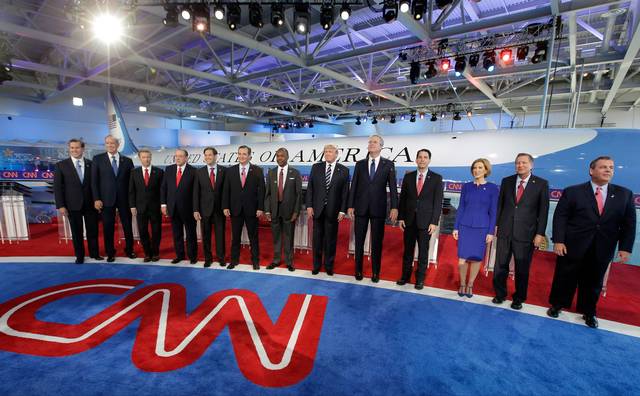
Since the conclusion of the last GOP Presidential debate that was held on the cable network CNBC – a truly dismal effort that left nobody satisfied with the outcome – there has been bellowing from pretty much everyone. Yes, the CNBC debate was a clusterfuck from the start – with three moderators and two guest questioners, it was never clear who was in charge – but once they became coalesced around an issue, the Republican debate participants struck back with veiled threats against the “mainstream media” (important point here:  if you’re going to govern a country as vast as the United States, you’re going to need that “mainstream media” at some point to get things done). It left the entire night as a giant stain on the 2016 Presidential campaign process.

The candidates complained about a multitude of things, including the length of the debate, the number of questions received, the quality of the questions and so forth. The moderators, in their defense, were faced with participants who, when presented with a viable question – such as Dr. Ben Carson’s involvement with the snake oil provider Mannatech, Senator Marco Rubio’s attendance in the Senate, how billionaire Donald Trump plans on paying for his myriad of xenophobic programs or why Senator Ted Cruz was against the recent compromise that passed a federal budget out of Congress and to President Barack Obama for the next two years – either didn’t answer the question, answered another question that they wanted to answer, waited for a partisan GOP audience to air their opinion through booing or attacked the moderators and the media. When you have this type of Mexican standoff (which Trump is now looking to wall off at Ciudad Juarez), there’s not much that is going to occur in said debate.

Now the candidates have decided to set up their own rules for how debates will be conducted. There is supposedly a letter that a majority of the 14 remaining candidates in the GOP race have gotten behind (bypassing the logical arranger for such events, their own Republican National Committee) that is being sent out, but it isn’t to be taken seriously. The letter supposedly would allow the candidates to vet the moderators, review the questions of the debate before it is conducted and such bullshit as whether there will be a gong, bell or buzzer to indicate their time is up when answering a question.

It was announced on Thursday night that next week’s debate on November 10 (which wasn’t expected to fall under this supposed “letter” being drafted) and being aired on Fox Business Channel will already have a smaller “main event” field. Through their criteria, Fox Business has chopped the “main event” debate stage down to eight, separating New Jersey Governor Chris Christie and former Arkansas Governor Mike Huckabee off to the “kiddie table” debate beforehand. That “kiddie table” debate has also been chopped, with former New York Governor George Pataki and current South Carolina Senator Lindsey Graham being eliminated from the debates altogether. Those that are being dropped down or out completely are not polling at the prescribed levels by Fox Business and, as such, have met the axe as to the debates and probably will soon as a viable candidate in the GOP race.

As a result of some of these changes, get ready for more whining out of the GOP candidates. If the GOP candidates – and also their Democratic brethren – want a chance to take on a serious debate, replete with issues to discuss, then it would be necessary to follow these rules.

2016DemocraticDebates

Both Parties Must Have a Debate On Foreign Ground – The GOP is the only party who has stepped outside of their traditional “home turf” of Fox News (or Fox Business), where they could be semi-comfortable in that they would receive a decent hearing (even these GOP candidates, however, complained about the Fox News debate). The CNN GOP debate was considered to be quite good as the longest debate yet, providing for more discussion of the issues but not enjoyed by Trump or Carson, who lack the background to describe how their policies would work other than “they’ll be great.” By this point, you already know about the CNBC snafu. The Democratic Party hasn’t left its cozy home with CNN and their next “debate” – a candidates’ forum in South Carolina on Friday night that will feature former Secretary of State Hillary Clinton, current Vermont Senator Bernie Sanders and former Maryland Governor Martin O’Malley (Lincoln Chafee, Jim Webb and Lawrence Lessig have ended their campaigns since the first Democratic debate a couple of weeks ago) – will be hosted and aired by MSNBC and commentator Rachel Maddow.

Each party has their partisans; I would be more interested in how they speak to a hostile audience and, just maybe, both sides could have a chance at swinging those in the middle ground to some of their viewpoints (this would also help as far as governance, but that’s another story for another time).

The Arbiter Determines All – While one or two moderators is OK, one should be the rule. There should be only three questioners involved in the game and the participants in the debate have NO RIGHT to choose who they want to fire questions (why would I want to hear you and a “friendly” questioner lob softballs all night?). Finally, there will be one voice who makes all determinations on the floor of the debate hall – The Arbiter (usually a moderator would do this, but they are too encumbered by their own networks to draw in ratings and worried about any potential future dealings with the candidates to have the balls to do anything).

The Arbiter will be an unknown person, presumably with knowledge about debate procedure, the subjects that would be presented during the debate, the histories of the participants involved in the debate and should have as little involvement with one political side or the other or be in media as a current broadcaster (if it has to be, then The Arbiter should be from the opposing party or media outlet – couldn’t you imagine someone from the Wall Street Journal serving as The Arbiter for an MSNBC debate and someone from the New York Times handling the Fox debates?). The Arbiter will be in charge of officiating the event and providing the punishments (we’ll get to that in just a second) that will be meted out for violations of the debate protocol. At the end of the debate, The Arbiter slinks back into the dark, never known by those who were in attendance.

The Arbiter will have several weapons at his/her disposal:

Question Refusal – The Arbiter will have the right, after a question is posed, to determine if the question is worthy of being answered. Such questions as whether some other candidate has the “moral authority” to do something or something that prods two candidates to spat at each other over insignificant bullshit would be the main thing that The Arbiter is looking for. If a questioner poses such a question, the first infraction is a warning with a second infraction resulting in a 10-minute penalty (removal from the debate). A third violation will result in the questioner’s removal from the remainder of the debate.

Microphone Control – The Arbiter would have control over the candidates’ microphones for the purpose of keeping them on track with questions. If a candidate is posed a question and said candidate either starts off on a tangent or doesn’t address the question directly, The Arbiter has the power to cut the candidate’s microphone. The Arbiter will pause for five seconds before reactivating the candidate’s microphone and, if at any time during the candidate’s response he goes off topic again, The Arbiter will end the question by shutting off the microphone for the remainder of the question.

The Arbiter will also be in control of how long the candidate speaks; once the candidate has reached the maximum allotted time (60 seconds in the previous debates), The Arbiter will cut off the candidate’s microphone permanently unless asked a follow-up question.

If the candidate cannot keep on track with his replies to the questions being posed, The Arbiter will have the right to remove the candidate from the debate or, if the candidate refuses to move, will have his microphone cut off for the remainder of the debate and his/her constant interruptions will begin to annoy everyone.

Question Count – The Arbiter will be responsible for keeping a running count (can be aided on this by electronic timing of each candidate’s responses) or time bank on how many questions each candidate has received and/or how much time each candidate has been speaking. If The Arbiter notes a predominance of questions to a few candidates, then he will inform the moderator and the moderator must change tactics and ask other candidates questions until The Arbiter feels it is balanced out.

Have a Manageable Debate Field – This has been the major problem with the GOP debates is the number of people on the stage. When you have 10 candidates looking to make their mark in a two hour debate, the most a person is going to be able to speak is probably around seven or eight minutes (once you deduct commercials, opening and closing statements and audience applause/outrage/outbursts). In the GOP field, there is probably no more than six viable candidates (I’ll let you choose your six); the Democrats have already limited their field from six to three, so they are on course for the primaries.

The whittling of the field is useful because, if you’re drawing 1% of the vote six months to a year after you announced your candidacy, the likelihood of you earning the party’s nomination next summer is highly unlikely. It’s simply a numbers game in that you aren’t going to get the attention as someone at the back of the pack that the frontrunners are going to get from being the, well, leaders. It IS a Catch-22, but that’s the way many things are in life. Unless the front six are mysteriously overcome with a debilitating illness that renders them incapable of running for office (and Christie isn’t above trying to inflict said illness on the frontrunners), you’re going back to your previous job or hosting duties on Fox News.

Implementing these rules – and simply letting the respective committees, the RNC and the Democratic National Committee – handle the nuts and bolts of debate preparations is the logical way to go. You’re running for the most important office in the United States; being concerned that the debate hall has a temperature more than 67 degrees shouldn’t be on your mind. Policy thoughts, debate tactics and proving yourself to U. S. citizens should be your goal. As President Obama also stated earlier this week, if you aren’t able to handle the queries of journalists from the news networks, you’re going to have trouble handling Putin.

Will these rules be adopted? No way in hell…but it would make for a more streamlined debate with plenty of policy discussion. And who wouldn’t want to see The Arbiter enforce his rules on both bags of bozo biscuits running for President?

What to Expect at the First Democratic Debate

DemocraticCandidates

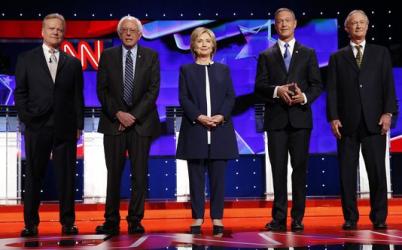
Just when you thought that the political world had calmed down, the first of a planned six debates from the Democratic Party will be held on Tuesday night in Las Vegas. The five announced candidates – former New York Senator and Secretary of State Hillary Clinton, current Vermont Senator Bernie Sanders, former Maryland Governor Martin O’Malley, former Rhode Island Senator and Governor Lincoln Chafee and former Secretary of the Navy Jim Webb – will take the stage around 9PM Eastern Time on Tuesday night at the Wynn Las Vegas, presenting their reasoning for being the party’s selection for the 2016 Presidential nomination. It may not be as visually exciting as what the Republican Party have been able to put on in their previous two clashes, with their myriad of candidates all saying the same thing but trying to sound different, but these debates are just as important as those on the GOP side.

With President Barack Obama heading off into the sunset following his two terms in office, it is up to one of these five people to try to maintain the legacy of the Democratic Party for several reasons. One, the next President will probably have at least one and potentially as many as three Supreme Court justices to name in their 4-8 year term, basically allowing for a reshaping of the Court towards a more conservative or liberal bend. Two, if the next President is one of these Democrats, they will be able to firmly ensconce the Affordable Care Act – “ObamaCare” to many – as the “law of the land” and make it even more difficult to take away through repeal as it becomes more entrenched in the U. S. psyche. And three, the Democrats would be able to maintain the current foreign policy viewpoint of diplomacy before dominance – the major difference between them and the GOP, who want a war on all days that end in a “y.”

Anyone who says that the Democrats didn’t think that this would be a simple coronation for Clinton on the way to the Democratic National Convention in Philadelphia in July 2016 would be out-and-out lying. After getting stunningly pummeled in 2008 by Obama, Clinton did her duty in first accepting the Secretary of State role in the Obama Administration and then in not trying to usurp Obama is 2012. Her reward for this party loyalty was supposed to be a free pass to the Democratic nomination in 2016 but, along the way to the coronation party, someone threw a huge monkey wrench in the plans.

Sanders, the genial, grandfatherly Senator from the Northeast who calls himself a “democratic socialist,” has been stealing a great deal of Clinton’s thunder, especially in the early primary states of Iowa and New Hampshire. Part of the appeal of Sanders has been his Quixotic-tilt against the uber-rich, banks and corporations, which has struck a chord with the young and the downtrodden. His firm stance against all military action in the Middle East has also drawn comparisons of Sanders to fellow Kentucky Senator and Presidential hopeful Rand Paul – you know, back when Rand Paul was cool before he became a Republican.

Sanders has become so popular with some Democrats that the threats against Clinton in the early primary states have forced her into campaigning much sooner than she would like to have done. The Clinton team is looking to get her through the first few primaries in Iowa and New Hampshire, ready to take a second place finish behind Sanders, and prepare for the “SEC Primaries” at the beginning of March in the South, a traditional stronghold of the Clintons that would allow her to be able to thwart a Sanders attack through numerous victories.

There are a few differences between Clinton and Sanders, but there is more diversity when you toss the other candidates in the mix. O’Malley is a “law and order” type that, as mayor of Baltimore, was able to lower crime rates and improve the city’s image (it is also alleged that the tactics employed by O’Malley – the “stop and frisk” utilized by police officers, in particular, where officers could stop anyone for investigation despite not visually committing a crime – were a major impetus for the Baltimore riots of earlier this summer). Chafee is a former Republican who first became an independent before moving to the Democratic Party, while Webb is almost a DINO (Democrat in Name Only) as he supports the “close the border first, then maybe amnesty” program popular with Republicans as well as reining in the Environmental Protection Agency and its regulatory authority.

The 800-pound gorilla in the room will be the specter of current Vice President Joe Biden. Supposedly considering a third run for President, Biden has not committed to this debate as of Monday, but CNN has stated that a podium will be on hand should Biden state he wants to take part in the festivities. With Biden polling better than Sanders (but still behind Clinton), Biden would be an immediate (and strong) challenger to Clinton, forcing her to fend off not only Sanders but also Biden.

What exactly is going to happen in the debate? First off, Sanders and Clinton – and throw Biden into the mix should he show up – will not attack each other as the GOP candidates did in their second debate. First, moderator Anderson Cooper and his panelists, CNN reporter/anchor Dana Bash, CNN anchor Don Lemon and CNN en Espanol’s Juan Carlos Lopez, are not going to ask the “challenging” questions that saw the Republicans rip into each other during their debates. “I think it’s just as interesting to kind of learn about some of these candidates who the American public doesn’t really know much about,” Cooper stated in an interview on CNN’s Reliable Sources over the weekend, “as it is to hear from some of the candidates you do.”

There has also been a remarkable bonhomie between Sanders and Clinton in that they haven’t brought the knives out against each other. Sanders, in particular, has been given multiple opportunities to rip into Clinton over a variety of problems she has faced (her private e-mail server, her work with the Clinton Foundation and the Clinton Global Initiative and how it affected her time as Secretary of State, her vote for the Iraq War in 2003, etc.), but he has refused to do any mudslinging and instead concentrated on his message. That is a bit refreshing in this current day and age of politics.

Both Clinton and Sanders are going to continue with their own presentations of what their plans as President will be, which differ in some areas. Sanders in particular has made many suggestions regarding what he would do as President – free college for all students, raising the minimum wage to $15 nationwide, universal health care (going beyond ObamaCare) – but he will also have to answer about how he’s going to pay for those things; if Sanders’ plan to increase taxes on the 1% (for your information, that would be anyone who makes more than $344,000) and reduce military spending doesn’t stand up to the scrutiny, then his other plans won’t be taken seriously.

The ones who have nothing to lose are O’Malley, Chafee and Webb. Any airtime they get during the debates would be welcome as the three men currently are barely even making an impact on the polls (Webb is averaging .9%, O’Malley .6% and Chafee .2%, according to Real Clear Politics and their national polls). They also have to make viewers/voters remember them, so taking some shots at Clinton, Sanders and/or Biden (if he shows up and he’s polling at 18.6%) might help them out. If these candidates can’t get a bump out of this debate, they may not get another shot at the next debate in November, especially if Biden announces a run for the Presidency and their numbers stay the same.

One thing that will NOT happen is any of the candidates making a serious faux pas. All of them are experienced debaters and, as such, will be able to withstand the slings and arrows that come from their opponents. Only the introduction of Biden into the mix (due to preparation by the candidates for those that are currently on the dais and not an 11th hour introduction of another player) or a change in tactics by Sanders regarding his “no mudslinging” tactics with Clinton might change the game.

It might not be as electric as the GOP debates have been to this point, but the Democratic debate should provide viewers/voters with more substantive information on the candidates. It will also mark the drive towards next November when the next President of the United States will be chosen.

Why Does Big Business Have a Bad Reputation?

No matter who you are or where you are in the world, you are going to have some interaction with big business in today’s world. Whether it is a trip to the local Target, a quick fast food lunch at McDonald’s or Burger King or, on the more serious end of the spectrum, a hospital or a pharmaceutical company, anyone in the world and U. S. citizens in particular are constantly in contact with the world of business. However, these companies don’t seem to grasp the concept of “customer satisfaction” but entirely get the concept of “maximizing profits.”

There are many that try to defend big business by saying “it’s just a few bad apples in the bunch” (an argument heard far too often on far too many subjects, to be honest), but historical evidence doesn’t support that connotation. Upton Sinclair’s novel The Jungle depicted the atrocities that occurred in the meatpacking industry in the early 20th century, including people losing body parts in food vats (or, in some cases, entire bodies), child labor, long working hours and inadequate wages (and Sinclair knew about these cases by experience; he worked in the Chicago meatpacking industry for several weeks researching the subject). A couple of decades later, John Steinbeck penned the story of the migrant farmer in his epic novel The Grapes of Wrath.

Throughout the last century, the mistreatment of those who worked in the coal mines of West Virginia, Kentucky and other Appalachian area by big business has become well known to the world, including coal companies cutting back on safeguards that might keep their employees alive. The rail industry, construction industries (how many men were killed just during the building of the Hoover Dam? Officially 96, in case you’re wondering) and other high risk jobs also have many incidences where those that employed the workers cut corners or unnecessarily risked their employees lives all to make a little extra money. Following the financial crash of 2008, only 15% of U. S. citizens trusted business leaders to make the proper choices – the ETHICAL choices – when faced with a decision, something that got worse during the British Petroleum oil spill in 2010 and the insistence by the then-President of the company, Tony Hayward, that he’d “like his life back.”

The actions over the past week aren’t exactly looking to improve on those numbers any further for big business. First up was the automaker Volkswagen, who was found last week of purposely sending out 11 million vehicles with a serious defect in their product. These vehicles, for the most part the diesels that Volkswagen is known for producing, had their emissions software tampered with to make it appear that the emissions weren’t violating U. S. regulations. VW attempted to call the tampering with the software “an irregularity” but it soon became apparent that it went much further.

Other countries such as Germany, France, Italy and South Korea – all big customers of Volkswagen’s product – are examining their own laws to see if there were any violations and the company itself is looking to stem the damage. Officials with the company have decided to put together a $7 billion war chest to help pay for damages to customers, potential fines to government authorities and other costs. There is still a huge question as to how Volkswagen will make this right, but their first step instead of fixing the issue was to pull all unsold diesels off the market.

Now, some would say this is an example of “free market” economics working (Volkswagen’s stock has fallen 41% in the past week), but that isn’t enough to cure the reputation of big business as being callous to its customers in putting the almighty dollar over its performance.

One of the most heartless acts that big business committed over the past week was done by Turing Pharmaceuticals. The company and its CEO, a former hedge fund manager by the name of Martin Shkreli (because he couldn’t go by the name of Richard Dick), in August bought the rights to a critical drug called daraprim, which is used by those with weakened immune systems (primarily infants and AIDS patients). Almost immediately, the company raised the price on the pill from $13 (still pretty pricey) to $750.

It isn’t uncommon for the pharmaceutical industry to pull bullshit like this. Many times a company will obtain the rights to a drug and, by putting a couple of useless changes into the chemical makeup of the product, be able to change its name and resell it, usually at a higher price. If the drug is a “one of a kind” product – meaning that there isn’t a generic equivalent – the price for the drug can be outrageous from the start. But this case, and in particular Shkreli’s response to criticism of his company’s actions, has shown how bad big business can be.

In 2012, Shkreli tweeted “Every time a drug goes generic, I grieve,” demonstrating that he didn’t care about helping society but only helping his bank account. He was on Twitter again on Monday attempting to diffuse the situation but only seemed to throw more gasoline on the fire. Shkreli disparaged those that disagreed with him, including fellow industry leaders, the media and other opponents by snottily responding to complaints on Twitter before heading to CNBC to further insult people.

If there’s any justice in the world, then there will be reaction against drug price gouging like this. Democratic Presidential candidate Hillary Clinton has stated that she will be presenting a plan against this type of price inflation; currently, the GOP candidates do not have any response. But perhaps the only things that big business might understand are humongous fines and the long arm of the law.

Also over the past week, the former CEO of a Georgia peanut company was sentenced to 28 years in prison and two other high ranking executives received jail time for their part in causing an outbreak of salmonella that killed nine people. Stewart Parnell, the CEO of Peanut Company of America, could have received life in prison for his actions but only got the 28 year sentence. His brother Michael, a broker for the company, received a 20 year sentence and a quality control manager at the plant in Georgia, Mary Wilkerson, was sentenced to five years.

So what did these people do? The Food and Drug Administration, upon inspecting the plant where the tainted peanut products came from (the company sent peanut paste to several outlets for usage in different products), found rat feces in the warehouses, dirty equipment used to process the peanuts into paste and forged certifications that said products were untainted despite actual lab results that indicated differently. Perhaps most damning was an e-mail reporting to the elder Parnell that salmonella levels were high on a shipment. His reply to the e-mail? “Shit, just go ahead and ship it.”

Look, we know that the object of a business is to make money; hell, there isn’t another reason to be in business unless that is what you’re doing. Along with the ability to make money, you also have to have the interest of your employees and your customers first and foremost in your company’s mind. You have to provide a decent job and wage to your employees; perhaps more importantly, you have to provide a product to your customers that is safe for their consumption (we could talk about how weak the laws are regarding this in some areas of business, but that is an argument for another time). If a business cannot do these things, then they shouldn’t be in business.

Ethics seems to be the weakest area of knowledge for plenty of businesses and industry’s biggest players. Perhaps if customer sentiment following a company’s error or fines implemented by government officials had an effect, the companies would work from an ethical standpoint rather than one simply driven by greed. Unfortunately, this starts with the customers because, by the time the government acts on any incidences of misconduct in the business world, the companies have already made their millions (billions?) from the product they’ve foisted on the public and are more than willing to part with a bit of those profits to escape jail or some other punishment.

Why I Currently Don’t Support Bernie Sanders

BernieSanders

When it comes to my political stance, I am an independent with liberal leanings. This makes sense as, when there is that proverbial blue moon (or, as some might put it, Hell freezes over), there are some conservative candidates who are the better choice for office and I have voted for said candidate. As I’ve stated another time, I voted for Ronald Reagan in 1984, Bush I in 1988 and Bush II in 2004, feeling that every time I did they were the better candidate for the office. On a number of state ballots I have also pulled the lever with an “R” by the name. Those tendencies lately, though, are becoming fewer and farther between.

That doesn’t mean that my vote is automatically going to the Democrats. I’m not pleased with the leading choice there, former Secretary of State Hillary Clinton, due to a wealth of baggage that she would bring into the office of the Presidency with her. Hell, she’d probably be the first President elected who, on the day after her inauguration, would face the potential of impeachment (remember, this Congress isn’t going to change out of the GOP hands due to the House gerrymandering that has basically set up Republican strongholds in states; before you say it, yes, the Dems have the same thing in the cities, but not nearly to the same extent).

Thus, the only other logical choice for the Democrats is Bernie Sanders, the Vermont Senator who is proud of the fact that he is a “Democratic Socialist,” and whom immediately sends conservatives fleeing to the hills instead of a political science textbook. A Democratic Socialist, according to my research, is someone who believes in the policies of democracy but believes that the fruits of said democracy should be shared among all people and not concentrated in the hands of a few (if I am wrong here, please let me know in the comments…hopefully I can learn as well as you). The genial Sanders, who may remind you of a kindly Uncle or a Grandfather, is a firebrand who is giving Clinton all she wants and more, hence his leads in the early primary states of Iowa and New Hampshire.

About a week ago, I was taken to task by a friend over something I wrote. In that article, I looked at the Democrats and only mentioned Clinton and Vice President Joe Biden as viable candidates (and Biden is looking less and less likely as time goes by). “What about Bernie?” my friend asked. Over the course of the discussion, I detailed out my reasoning for not being able to support Sanders at this time…but that still has the potential to change.

Sanders is doing a great job in drawing in potential voters to hear him speak at his rallies. In Greensboro, NC, on Sunday, Sanders drew in a crowd of approximately 9000 people at the Greensboro Coliseum. It was at this rally (unfortunately I couldn’t attend as I had to watch my son…political rallies, contrary to popular belief, are not a great place for kids) that some of Sanders’ issues came to light.

One of those in attendance, a black woman from Charlotte, noted that there was little diversity to those that supported Sanders. “It’s a very white crowd,” she said in the local paper. “Right now, at this point in the campaign, maybe that’s not a surprise.” There is one of the areas that I’ve noticed with many a Sanders rally is that it isn’t the most diverse cast when it comes to support and Sanders isn’t alone with this problem. I’ve seen the same for many of the Republican candidates on the stump (Donald Trump, I’m looking at you). I have problems with any candidate who cannot at the minimum give me the impression that they have a wide base of support across all people…white, black, brown, green with purple polka dots, you name it.

The audience in attendance for the Sanders rally in North Carolina (later, Sanders would become probably the first Socialist to ever set foot at Liberty University in Virginia) was also very young. I don’t have a problem with the youth of today being politically active, I actually enjoy it more when those 18-25 are involved in their future because it inspires me to examine what is drawing them out to support a candidate. But with many of these younger voters, it isn’t about any particular policy decision that the candidate supports, it’s about the factor that they feel like the candidate was personally involved with them. All one has to do is look at how social media, especially Twitter and Facebook, have changed campaigns; do you really think Rand Paul would have an App for your cellphone that puts you in the picture with him if it weren’t for trying to capture the “youth vote?” (This has been used for other more hilarious reasons, too.)

When the youth get involved and their candidate goes down in flames, they normally don’t move onto another candidate to support, though. They get disgusted, disillusioned and disinterested in any further processes if their candidate isn’t the winner and refuse to continue to drive for their philosophies. With all the talk about Republicans supporting their eventual nominee for President, why hasn’t anyone looked at how many of those supporting Sanders would be up for supporting another Democratic nominee?

Sanders is a great speaker, especially when it comes to deriding the current state of government. Sanders doesn’t take it to the point of “America is doomed,” “America has lost its way,” or “America is in the shitter,” like Republicans do, but he does come pretty close. The thing that Sanders does well is emphasize the problems with issues such as college student debt, income inequality, the budget, the decay of infrastructure and treatment of veterans, all things that are key domestic issues that we face.

Part of pointing out the problems, however, is that you also have to present solutions. That is where Sanders comes up a bit short. Either the solution that he suggests has no earthly intention of ever being put into use (Sanders has talked about upping the tax rates for the uber-rich to 90%, raising the minimum wage (he called $15 an hour “reasonable” but suggests $10.10) and breaking up the largest banks into smaller subsets a la AT&T’s Bell system in the 1980s, among other things) or he doesn’t bring up a solution at all. Sanders is quite deficient in foreign policy, something that is critical in our global world and, at least to this independent, is important as I believe we should have a strong military, just not a wasteful one.

If Sanders were to become President, he would definitely have to curtail his “Socialist” agenda in favor of a more “Democratic” solution (otherwise he wouldn’t get anything done as President), which would alienate many of his supporters. How many of Rand Paul’s supporters ditched him as soon as he showed any inkling that he was moving towards a Republican philosophy on anything over the Libertarian route of thinking? Sanders, I fear, would fall into that same trap in that his vociferous supporters would immediately hold his feet to the coals for anything less than the entire reformation of financial distribution in the United States.

There’s plenty that Bernie Sanders talks about on the campaign trail that is dead on correct. You can also hear the passion that Sanders has, whether he is giving a speech at a large rally such as Greensboro or when he is a guest on Bill Maher’s “Real Time.” Unfortunately, there is also no chance that the solutions he proposes would stand a chance of being put into action by a Congress that can’t decide if water is wet. I’d like to consider Sanders for my vote but, at this time, he’s an option that I cannot embrace.

It’s Tough to Give the GOP the Benefit of the Doubt

Here we are, six months from whence the primaries for the 2016 election of our next President will be taking place, and I’ve yet to find some candidate to get behind. In the past, that person was pretty much self-evident and I could step into the ballot box on Election Day with a clear conscience as to whom I was voting for. Recently, however, it has been a difficult road when it comes to picking that one candidate.

When it comes to the Democratic side of the equation, it looks more like the Republican side has looked like for most of my life. In the past, the GOP normally had a hierarchy that ran as such:  if you lost to a Republican who became president in the previous election, the next time the office was open without a Republican incumbent, it was your turn to take the nomination. This has happened in the Republican Party for virtually the last 50 years.

In 1968 it was Richard Nixon (defeated by Kennedy in 1960, won nomination in 1968); 1980 brought us Ronald Reagan (a half-hearted try in 1976 to topple incumbent Gerald Ford, who took over after Nixon resigned) and 1988 brought us George Bush (or Bush I, lost to Reagan in 1980). In 2000, George Bush (Bush II) was an outlier in that he didn’t show any interest in running in 1996, but John McCain (defeated by Bush II in 2000) and Mitt Romney (defeated by McCain in 2008) picked up where he left off.

On the other side of the aisle, the Democrats normally throw a donnybrook when it comes to choosing their own nominee for President of the United States. 1968 saw a reluctant Hubert Humphrey step up after the incumbent, Lyndon Johnson, decided not to run for a second term (by law, he technically could have; he served the remainder of John Kennedy’s term from 1960 and only was elected once himself in 1964) and another bright star from Camelot, Robert Kennedy, gunned down in Los Angeles just as it looked as if he were to win the nomination. 1972 saw six different candidates enter with George McGovern capturing the hearts of Democrats over Humphrey, George Wallace, Edmund Muskie, Henry Jackson and Shirley Chisholm. This occurrence of multiple choices – and viable ones, not half-assed efforts – has repeated itself pretty much every time over the Democratic Presidential nominations since…except for this one, where it seems the parties have flip-flopped.

There’s very little choice in 2016 if you examine the Democratic nominees. While everyone might grouse over Hillary Clinton and the Titanic-load of baggage she has, the other candidates lack the ability to forge a way past her as Barack Obama did in 2008 (there’s also the instance that this is the Democratic Party’s payback to Clinton for being a “good soldier” in losing to Obama in 2008, something as shown previously to be something the GOP did often). Even the person most likely to have some power to go against Clinton, incumbent Vice President Joe Biden, doesn’t seem to have the heart for a drawn out campaign battle (understandable after the death of his son). Anyone thinking that Clinton won’t be the nominee when the Democrats hit Philadelphia next summer would be considered out of their mind, even with the problems hovering over her.

The 2016 GOP field is the one that is reminiscent of the Democrats in the “come one, come all” approach they’ve used in throwing the door open and allowing anyone to come to the party. In total there are 17 candidates as of September 2015 and, in theory, there should be something there for anybody in the election even if the candidate themselves aren’t viable. The actions of the candidates since the campaigning has begun full bore this summer hasn’t exactly shown that “something for anyone” feel and makes it very difficult to give any member of the GOP the benefit of the doubt going forward, however.

Over the past week, there were a couple of instances where members of the Republican Party could have made great inroads into showing that they were someone who could lead all citizens of the U. S., not just those from one party or the other. First there was the shameful assassination of a police officer in Houston, TX that, instead of being a chance to not only unify people behind law enforcement but also a chance to have a moment of commiseration with their Democratic opponents, some members of the conservative movement chose to attack. These attacks were picked up on by some of the Presidential nominees who, in trying to make inroads into Donald Trump’s lead, came up just short of insinuating that the “Black Lives Matter” groups were the spearhead for the number of police shootings.

If you are going to piss off about 35% of the population (and their supporters), that seems to be the way to do it. Fox News talk show host Bill O’Reilly stated, “Every time there is a controversy about an officer shooting a black person, they’re out there stirring the pot.” Conservative radio “host” (I’ll be nice here) Rush Limbaugh has out-and-out called the “Black Lives Matter” organizations “hate groups.” Meanwhile, some on the GOP slate of candidates are following this lead with their rhetoric as a way to get back in the good graces of the Trump-mad acolytes. (And this doesn’t count Trump’s previous insulting of the Hispanic community, which he continues to do; count another 15-20% of the electorate out there the GOP can’t count.)

While there have been some tremendously stupid rallying cries heard during these “Black Lives Matter” rallies (anytime you advocate for the killing of a segment of society, your rally should be shut down), there has actually only been one proven and one possible case where a black person gunned down law enforcement individuals due to prior grievance against law enforcement’s treatment of blacks. In December 2014, two New York officers were executed in their squad car by a maniac who actually stated that was his goal (the proven case) and the Houston case mentioned previously, where Shannon Miles “allegedly” (I say that for legal reasons; when you have videotape, it’s tough to debate) executed Deputy Darren Goforth while he fueled his squad car (the possible case). That is two out of the 85 deaths of law enforcement officers in 2015, not exactly an indicator of rampant incitement of the masses against law enforcement.

Second, there was the controversy regarding Kim Davis, the Kentucky clerk who refused to issue ANY marriage licenses due to her religious objections to same-sex marriage. If there was a point for the GOP to demonstrate that they weren’t beholden to religion or religious groups, the opportunity to point out that Davis was violating her duties and should be jailed or fined was the one to take. Instead, the GOP fumbled over itself trying to placate the Religious Right.

Former Arkansas Governor Mike Huckabee was the worst, calling Davis’ jailing the “criminalization of Christianity” and the latest attack in the “War on Christianity,” insisting he will go to Kentucky next week to hold a rally/campaign stop at the jail where she is currently incarcerated. Senator Ted Cruz stated he stood with Davis “unequivocally.” There were some surprises such as former Senator Rick Santorum, who stopped short of criticizing Davis’ arrest but commended her stand on her “principles” and Scott Walker, who hemmed and hawed on both sides of the issue, as did Trump. No one on the GOP slate, however, held up following the U. S. Constitution, a familiar battle cry for the Republicans, instead kowtowing to the small religious wing of their party.

If they were to have shown some chutzpah, the GOP had a chance here to capture someone in the center, the “independents” that have to be captivated in order to win an election. If the GOP candidates had just stepped away from the religious question – as they are supposed to do with the separation of Church and State in the U. S. Constitution – they would have stated outright that Davis was violating the laws as they are on the book. They could have said, “Despite (my) personal feelings on the issue, the law of the land is the Constitution and, as such, she has to follow it.” How many did that? Exactly zero.

Instead of demonstrating that they are a party with 21st century ideas and people who can bring those ideas to the forefront, the candidates for President from the GOP instead fell back on mid-1900s (at the minimum) philosophy, when blacks “stayed in their place” and the addition of “In God We Trust” to our currency and the Pledge of Allegiance was allowed to fight off the “godless” Communists. Unless they can actually demonstrate that there are some original ideas left in the party, that there are those who can embrace the future and attack its problems with science, education and thought – and they have people who aren’t afraid to leave those that cling to the past with the intent on bringing it back – the GOP will not encourage me to pull the handle for them.

Are We Seriously Considering Donald Trump for POTUS?

I’ve tried to hold off of this one for quite some time. It seems that the mainstream media (and read that as the major television networks of ABC, CBS and NBC while adding in CNN, MSNBC and Fox News) has been all over the Presidential campaign of billionaire Donald Trump. Yes, the man who used to come into your living rooms with the television reality show The Apprentice…the man who came online with something called “Trump University” that apparently taught you how to be just like him in the business world (and which has brought about as many lawsuits as “students” it educated)…the man whom the comb over (or a traditional hair color) seems to have bypassed. As such, I had held out on doing ANYTHING closely resembling giving Trump any more attention.

But it’s gotten to be a bit much, especially after reading the papers of late.

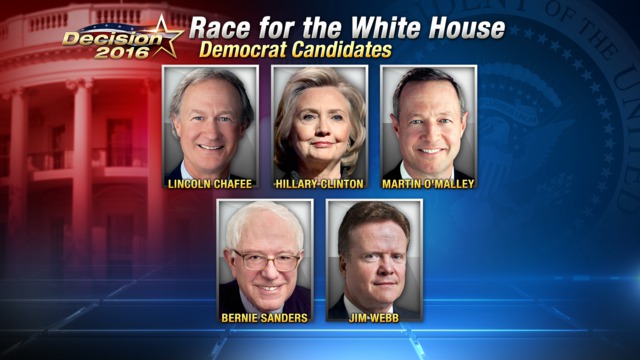
When the campaigns opened up on both sides of the aisle for the President of the United States in 2016, we all knew it was going to be an ugly situation. On the Democratic side, Hillary Clinton had taken her beating in 2008 – and her subsequent stint as Secretary of State for the man who beat her, Barack Obama – like a good little soldier and seemed a shoo-in for the Dems (quite honestly, something the GOP used to do all the time). Then, like the cherry blossoms along the Potomac, there were the perennial grudges brought up about Clinton by her opponents, which brought Bernie Sanders – your crazy uncle who happens to have a seat in the U. S. Senate – out of the woodwork. Throw in former Governors Lincoln Chaffee and Martin O’Malley and former Senator Jim Webb and you have a veritable “Who?” of the former Secretary of State’s opponents.

The GOP, though, is the crème of the crop. The “Clown Car,” the “Buffoon Bus,” or the “respected statesmen and businesswoman who may be the future leader of our nation” came to the forefront. After getting crushed twice by the Black Man Who Shall Not Be Named, the GOP decided to throw the door open and let the “Crazy Carousel” spin around and let more individuals leap into the fire. What they didn’t plan on, though, was the public getting behind one of the offbeat members that hopped on the ride.

On June 16, Trump entered the race for the Republican Party’s nominee as President in 2016 and immediately set himself apart from the field. The usual term you would use is “distinguished” himself from the field, but there is little about Donald Trump that is distinguished. As we all know by now, Trump made his infamous comments about how the truckloads of Mexicans that are violating our borders illegally are here to rape our White Women and bring drugs to little Suzie and Bobby, something that might have been a part of Mel Brooks’ Blazing Saddles but was too unbelievable to make the final cut in that classic film.

In the past, that would have been enough to push whatever candidate uttered those inept lines into the catacombs of history, if not a little white room with a special suit that had arms that tied in the back and a sedative drip in the carotid artery. Because it was DONALD TRUMP, however, it attracted attention from those who have been searching for someone who could say what they wanted to say but couldn’t say it because they might have to answer for it. Since then, the commentary has become even more ludicrous.

Trump would then go on to deride those who he believes aren’t “war heroes,” priceless information from a man who used every bit of his Daddy’s money to ensure that he didn’t get drafted during the Vietnam War. The expected outrage over that didn’t materialize because the person he was talking about, 2008 Republican Presidential nominee and the senior Senator from Arizona John McCain, adhered to former President Ronald Reagan’s 11th Commandment and didn’t kick up a fuss over the situation. Moving on, Trump dismissed pretty much everyone who has come within radius of his campaign as “idiots,” “stupid,” “imbeciles,” or, worse yet, suggest that they “crucified” him during a debate with questions because the moderator was on her menstrual cycle. If you listen to Trump, the entirety of the U. S. is the most ignorant species in existence…except for HIM, because he’s going to BRING THE THUNDER against our allies and enemies and “make America great again.”

To this point, none of these things have slowed the Trump bandwagon down. My final point here should, however, end any hope for his candidacy with the GOP and, if they are insane enough to go ahead and nominate him, earn him and them a crushing defeat in the general election. Trust me, however, I’m not holding my breath on Trump ending his candidacy anytime soon.

The Boston Globe reported on Wednesday the attack of a Hispanic homeless man by two South Boston brothers. According to police reports, Scott and Steve Leader were on their way home from a Red Sox game when they happened across the Hispanic man sleeping on the street near a bus stop. The report states the brothers “urinated on the man’s face and then started rummaging through his belongings.” Once the Hispanic man woke up, the brothers then allegedly beat him with a lead pipe and kicked him in the torso, requiring hospitalization for a broken nose and bruised ribs.

Scott Leader, after being apprehended, told the police it was “OK to assault the man because he was Hispanic and homeless.” “Donald Trump was right, all these illegals need to be deported,” he allegedly told the police. His brother Steve showed his displeasure with the arrest by pissing on the cell door and both brothers allegedly threatened the law enforcement individuals who processed them. Currently the twosome are in a Boston jail being held without bail.

What was Trump’s reaction to these fine examples of Boston manhood? “I will say that people who are following me are very passionate,” he remarked. “They love this country and they want this country to be great again. They are passionate.”

All I can say, after everything said previously, is…are we seriously considering Donald Trump to lead this country?

How the Democrats Can Become Relevant Again

A couple of weeks ago, I wrote about how the Republican Party could become relevant again with a few tweaks to their mentality. At that time, I made the statement that the same could be said for the Democratic Party. “But why,” you might ask, “the Democrats have had the White House for the past eight years, they’re controlling everything.” In reality, the Democrats are in control of nothing and need to retool their inner workings if they are to be relevant in the coming years.

As I did with the GOP, I actually sat down and looked at those candidates that are vying for the 2016 Democratic nomination for President. It’s a pretty sorry lot if you look at the choices:  the frontrunner in this year’s race was SUPPOSED to win in 2008, but she (yes, that’s right, a female “Leader of the Pack”) failed to engage on a “personal level” with voters who looked past her towards a young, dashing black man and chose him…oh, by the way, she also has more baggage in her campaign bus than the Allure of the Seas has when it sets sail; the second place choice for the Democrats is a self-admitted “democratic socialist” (which sounds about as possible to me as a person who is “socially liberal, fiscally conservative”) who is saying all the right things regarding changing things in the United States but provides hardly any insight as to what those changes would be if he were elected President; the third place contestant comes off his past two jobs in Maryland and Baltimore, where there has recently been more than enough turmoil in the streets between the citizenry and those in law enforcement potentially caused by his policies, and a few more never-weres who aren’t even registering on the radar. Hell, even the sitting Vice President of the United States, someone who should have the inside track to the nomination after a two-term President leaves office, is reluctant to join this field.

Democrats don’t exactly have the best track record when it comes to recent times in the office of the Presidency. While many like to bash Jimmy Carter as “the worst President of all-time,” he actually did something that no other President has done:  kept us out of a war. That one plus (OK, let’s give him two…an attempt to bring peace to the Middle East with an agreement between Israel’s Menachem Begin and Egypt’s Anwar Sadat), however, was heavily pounded by an economy that tanked in the late 1970s, skyrocketing gas prices, the taking of the U. S. Embassy in Tehran by Iranian students hell-bent on a religious takeover of the country and a general “malaise” (Carter’s words, which he bore as an albatross for his entire presidency) that fell over the United States.

Carter was such a disappointment as the President of the United States that the GOP took over for three consecutive terms in the office, something that hadn’t happened (one party controlling the White House) since Franklin Delano Roosevelt was President during World War II (add in Harry Truman and the Democrats controlled the White House for 20 years during that time). It would take a transformative figure to break the Republican logjam and, when he did break through, it set the spike in the center of the two parties and, to a further extent, the nation as a whole.

Bill Clinton was young, he was telegenic, he did things with his campaign that no other politician had done before (going on a late-night talk show and playing “Heartbreak Hotel” on the saxophone while wearing shades? Groundbreaking, some would say…an embarrassment, others would claim). These attributes – along with his experience as Governor of Arkansas – ushered Clinton into the White House beside Hillary Clinton (who is the Democratic frontrunner in 2016, the Democratic answer to Jeb Bush on the Republican side), who was to have a sizeable impact on the policies of the Clinton Administration.

Clinton would go on to win two terms because, at least in the first term, he got things done. The economy, aided by the surge in computer technology in Silicon Valley, boomed throughout the 1990s as it seemed everyone had all the things desired by the people. There were some on the Republican side – a rising breed called “neocons” – who didn’t see Clinton’s success as a good thing and set about destroying it in its tracks before another Democratic run could get started.

The last four years of the Clinton Presidency was dogged by accusations against not only the President but also the First Lady (give the GOP credit there, they knew that Hillary had her eyes on the White House as the leader of the Free World even back then). An illicit relationship between Clinton and one of his interns led to only the second impeachment of a President in U. S. history, one that was easily squelched but has since damaged the relationship between the two parties. The spike set back in 1996 was firmly driven in and, add in the Gore/Bush election of 2000 and the animosity raised by that, one would wonder how we get anything done anymore (and many would say we don’t).

There are several ways that the Democrats can woo back independents and maybe even some Reagan Republicans to ensure that the party stays viable. All they have to do is change some of their tenets and a more centrist party will be the result.

First off, Democrats, government and spending isn’t the answer to everything that goes on in Washington, D. C. An article in the Washington Post points out the difficulties in one of the pet projects for the Democrats, subsidized housing. The Department of Housing and Urban Development points out that 2.6% of those in housing subsidized by the U. S. taxpayer have exceeded the income limits to be eligible for such housing but haven’t moved out. In one case, a New York family of four makes nearly $500,000 but pays slightly more than $1500 for the three bedroom apartment subsidized by the government. Worse yet, a single person with assets of $1.6 million was still in a $300 one bedroom apartment in Oxford, NE, paid for with help from the government.

Now, 2.6% isn’t much when compared to the 1.1 million families that are in this situation, but the inaction by the government is problematic. Instead of having a plan in place to move people from these situations – like other social programs, meant to be temporary not permanent – the government says they won’t do anything because a policy isn’t in place.

It is time that the Democrats actually look at things on an individual basis – education, drug policy, law enforcement, and the military (at the minimum) – and determine why the money being spent isn’t doing more for the cause. In the case of education, it is obvious that spending more on the situation isn’t helping, so why aren’t we looking at successful nations (such as Japan) and implementing some of their programs. Every student isn’t a “priceless jewel” in the making; sometimes a student just isn’t cut out for accelerated learning programs and a college education. Sometimes that same student will achieve far more by going into other fields than picking up a piece of paper that says they are great at philosophy.

Tightening up the spending in many areas – rather than pitching cash on things that require no changes – is a great first step, Democrats.

Republican Presidential candidate Donald Trump gets a lot of grief over this, but the Democrats are more than likely the ones to be bitching about every little breach of “political correctness” that occurs. While sometimes necessary, there are times when Democrats will whine about a term used in a joke, which should be a bastion of verbal discussion that is far removed from political correctness. Comedian/political commentator Bill Maher spoke about this last year when, after comparing the situation then to the 1990s, said the following:

“In 2014, political correctness is making a comeback, and now with the Internet, it’s easier than ever.  In the 90s, you had to at least get off your ass to be in a fake group with hurt feelings. You needed signs, you needed petitions. You had to feed Al Sharpton. Back then, getting worked up over nothing was a lot of work.”

“But now, it seems like all the Internet exists to do is point at the latest person who said the wrong thing, so the rest of us can feel morally superior.  And that’s not what the Internet is for.  That’s what college is for. Now social media is all about ‘gotcha.’  A homophobic businessman, or a sexist cartoonist, or a college president who fat-shamed his dog by naming it Waddles…You can’t purge everybody who doesn’t evolve exactly on the timetable you did.

Things haven’t changed much over the last year. What Maher and many are saying is that the Democrats should grow a pair and quit worrying about every perceived slight that seemingly happens.

Finally, the Democrats cannot be complacent in the belief that the ‘melting pot’ that is the United States will continually be counted on to support their causes. In the Hispanic community, it is estimated that 55% are Catholic; as such, some of the Democratic policies in place may not be in line with some Latinos’ mindset. Hard work is rewarded in the Hispanic, Asian and Indian cultures rather than accepting a great deal of assistance from the government and these blocs are growing vastly in the U. S., perhaps viewing the Republican side as a more viable one.

If the Democrats do these things, then they will be set for the next 50 years, at the minimum, with a viable hand in the political landscape. If they continue to neglect things, especially spending (yes, it is time to cut some of the social programs that are available, along with Social Security and the military), then it will be difficult for the U. S. electorate to hand them the checkbook for the country. Without that change alone, Democrats may win elections from simple numbers but won’t be in position to enact any budgetary guidelines because they can’t handle how to spend the money.

Let the (Political) Games Begin!

Republican-Presidential-Candidates-2016

I’ve always had a bit of a penchant for the political process. When I was around six or seven years old, my mother would have to keep me away from the newspaper until her and my father actually got a chance to read it first. I was an ace in history in school and, in particular, politics through the birth and development of the United States. When in college, I studied history and political science (actually had ambitions of becoming a Senator, oddly enough) and, as I have grown older, continue to watch how politics develops or destroys our nation. Thus, when the first debate of the Presidential campaign comes up, I usually watch it with bated breath.

Last night’s Republican Presidential Debate and Down Home Hootenanny (only one part of that may be true) in Cleveland, OH, marked the start of the Political Games this year, but this was something different than anyone has seen before. With 17 people putting their names in the hat for the GOP, they had to come up with some way to keep the field somewhat manageable. Thus, Fox News – the moderators for the first debate – decided to only let the Top Ten players (through an averaging of the top five polls in the country) in the game make the Main Event, while the seven “other” candidates (those in eleventh through seventeenth places) were shuttled off to a “kiddie table” for a discussion held in front of an empty arena and, presumably, darkened television screens.

I tried to watch both, I really did. The first one was interesting as these players – Louisiana Governor Bobby Jindal, former Texas Governor Rick Perry, former New York Governor George Pataki, former Virginia Governor Jim Gilmore, former HP Chief Executive Officer Carly Fiorina, current South Carolina Senator Lindsey Graham and former Pennsylvania Senator Rick Santorum – realized they were all in danger of being eliminated from the Republican Hunger Games and came out swinging. Against what, they weren’t exactly sure, but they were swinging away in the hopes of trying to dig themselves out of this round of the debate and into the “Big Show” for the next GOP meeting. There were two things that I noticed here that were interesting.

Fiorina came off much more knowledgeable about issues than I first gave her credit for. She was able to answer questions solidly and with a measure of decorum that you’d expect out of someone running for the Presidency. If it wasn’t for the factor that her fundraising is so far behind the others that she’ll end up like Michele Bachmann did in 2012 – out after the Iowa primaries – she’d be a credible person to put on the ticket (and there’s still room for her to end up there as the Vice Presidential nominee).

Secondly, I really do despise Graham. It didn’t sound as if Graham wanted to be at this debate at all as he offered monotone responses every time that he opened his mouth. If that weren’t bad enough, every time he answered a question – be it about the current flap over Planned Parenthood, how to get the economy going or a wealth of other issues – he either would swing it towards starting another war in the Middle East (Iran or ISIS, he really doesn’t care) or completely ignore what the moderators were asking in saying, “I don’t want to talk about that, I want to talk about Iran (ISIS),” forever hereon to be known as a “Sarah Palin.”

One of my pet peeves in politics is when anyone (and from any party) doesn’t answer the question that they were asked. I’ve often thought that, in a debate, if a responder strays off the question, they should either A) have their microphone cut off until they return to the subject at hand, B) have someone shove a cattle prod between their shoulder blades until getting back on track (and, if necessary, go to more sensitive areas for repeat offenders), or C) both. I don’t come here to listen to you regurgitate your metaphors or pre-programmed canned responses, I’d like to know what you actually think (if you can). But maybe that’s too much to ask for.

Anyway, the “Happy Hour debate” was better than the Main Event last night. With ten candidates on stage, no one was able to really get any traction other than to demonstrate that they were an upright, walking biped capable of human thought and action. The tete a tete between Kentucky Senator Rand Paul and New Jersey Governor Chris Christie over how far the federal government should go in procuring information in the fight against terrorism got some juices going, but it turned out that was about the only infighting that went on. Paul, in fact, was ignored heavily throughout the two-plus hour debate, something he should have gotten used to from his father Ron’s two tries at the GOP nomination in 2008 and 2012.

Florida Senator Marco Rubio came across as someone that may not quite be ready for prime time but will be a force to be reckoned with in the future. At 44, he was the youngest person on the GOP stage and came across as someone that recognizes the challenges that the country faces in the 21st century and MIGHT have some ideas on how to combat them. Former Florida Governor Jeb Bush didn’t come off one way or another in the debate, something that will probably serve him well until the field starts shrinking and he actually has to narrow his debate style down to a few opponents.

Which leaves us with the buffoon that is Donald Trump. Coming into the debate, Trump was the #1 seed in the event and all he could do was try and knock himself from that pedestal. He was the only one who wouldn’t commit to supporting the GOP nominee in 2016 (unless it was him), berated Fox moderator Megyn Kelly (not one of my favorites but still a respected commentator) through the wee hours of Friday morning and was still complaining on Friday afternoon that he had been unfairly targeted by Fox News and the debate management, coming up just short of saying the Republican National Committee was out to put a screw job on him.

How anyone can even take Trump seriously is beyond me. His first answer that “he doesn’t have time to be PC” should have demonstrated that he doesn’t have the capability to lead this country. While everyone might like to tell Vladimir Putin to go take a flying fuck, to invade the Middle East at the drop of a hat, chest bump the Chinese back to the Ming dynasty and force Mexico on its knees (as Trump had suggested would be good to see former Playboy model Brande Roderick do, as pointed out by Kelly), there’s a little something called international relations and respect that has to be doled out whether you like it or not. International politics isn’t like the good ole boy network of the business world, you sometimes have to handle things a little more delicately than usual.

Furthermore, this entire “don’t have time to be PC” thing has gotten completely out of hand. It is being used WAY too much for people to get away with saying shit that would normally get their faces caved in for saying in general public. You can get your point across without belittling someone else, a nation of people, a race or a segment of society…IF you have a modicum of intelligence, which Trump seems to lack.

There’s still fifteen months until the election for the next President of the United States. As of yet, I haven’t made any decisions on which person is worthy of taking the seat. I am going to have to wait on the GOP side until the pretenders are dropped (that should be by January 2016, I think) and, for the Democrats, it seems they have crowned their choice in Hillary Clinton, not exactly a desirable choice either (can we have an administration that doesn’t have a Bush or a Clinton in it? The last time this happened – other than the last few years of the Obama Administration – was under Jimmy Carter). The next few months – and the debates on both sides of the political equation – will be important for me, and perhaps many others, to decide who their choice will be.