Rock & Roll Hall of Fame Is Moving Closer to Parody than Relevance

RRHallofFame

Let’s start this with a disclaimer.

From my youth, I’ve loved music. I can remember saving up my money when my age was yet in single digits to buy records to play at home. As I got into high school, me and my best friend DJ (his real name was Dennis, but DJ was the ONLY name he went by) would go on field trips to nearby Champaign and religiously make a pilgrimage to the University of Illinois’ campus record store, Mabel’s (yes, back then it was a record store and had a small performance area). We’d emerge after hours of scanning over the racks with armfuls of albums, with my stack normally leaning towards things like the Bus Boys, Elvis Costello and the Motels, among literally hundreds of others.

After high school, I delved into the world of music even more. While in college I started working as a radio DJ, something that would be a career over the next 20-plus years of my life. From that small college station until I was a Music Director at an AOR (Album Oriented Rock) station in a Top 75 market (and even afterwards when I went into news/talk), music – and rock music in particular – was a staple in my life. As I have gotten older, music still resonates with me and, with age, I’ve expanded my listening interests into many diverse styles of music including two that I previously despised, rap and country.

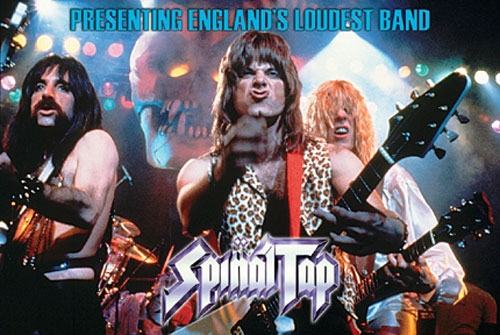
Thus, it pains me when I say the following:  After looking at the list of the nominees for induction into the Class of 2017 for the Rock & Roll Hall of Fame, which was released a couple of weeks ago, I’ve now come to the realization that enshrinement in this group is moving closer to a parody along the lines of This is Spinal Tap than being the venerable Valhalla of rock music that it should be.
spinaltap

Yes, there’s been these rumblings before. None were louder, perhaps, than the commentary from one of last year inductees, Steve Miller, regarding what the Rock & Roll Hall of Fame has become. In various areas, Miller railed over pretty much every aspect of the Hall (“I think it’s time for the people running this to turn it over to new people…you don’t need to insult every artist that comes along,” was one of his calmer comments), signifying his displeasure with the outfit. “You tell me what the hell is the Rock & Roll Hall of Fame, and what does it do besides talk about itself and sell postcards?” he asked.

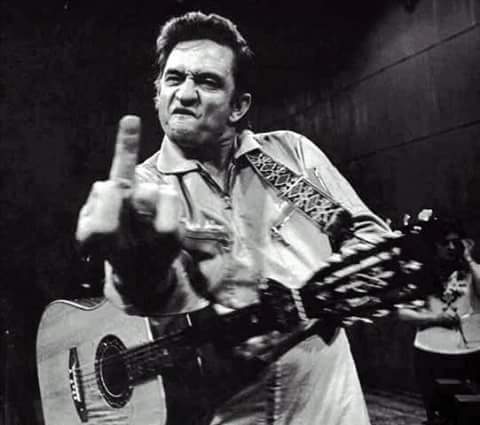
Miller was the embodiment of what many had said of late regarding the Hall. Thought of originally as the pinnacle of rock music royalty, of late the Hall has been inducting what many would consider “non-rock” artists and bands, stating that their contributions “to rock music history and music overall” warranted their induction into rock music’s biggest honor. I’ve always contended that, in 9.9 of 10 of those cases where the artist wasn’t “rock” (a very wide ranging scope, to be honest), then their contribution to the actual evolution of rock was pertinent (this is why I don’t have a problem with Johnny Cash being in the Rock & Roll Hall of Fame).
johnnycash

In looking at the crop of nominees for the 2017 Rock & Roll Hall of Fame, there are some very qualified candidates on the list. One of the “first time” nominees for the hall is Pearl Jam and they should be a virtual lock for entry because of their contributions to the “Seattle sound” that was pioneered by Nirvana and their group. Another first-time nominee – and this one surprised me quite a bit – was Electric Light Orchestra, who should also find their way into the Hall for their innovative usage of electronics, keyboards and production (all in the masterful hands of Jeff Lynne) and their contributions to the music.

Whereas in year’s past I didn’t get bugged by some of the “non-rock” nominees – hell, I agree that rap acts like the Beastie Boys, Run DMC and N.W.A. and other “non-rock” acts like Donna Summer, Darlene Love and Bob Marley SHOULD be in the Hall – this year’s list of nominees left me wondering why they were being nominated when they shouldn’t have even been considered. Besides Pearl Jam and ELO, here’s the list of other nominations (asterisk means it is a first-time nomination):

Kraftwerk
Yes
The Cars
The Zombies
Joe Tex
J. Geils Band
The MC5
Bad Brains*
Depeche Mode*
Jane’s Addiction*
Joan Baez*
Journey*
Steppenwolf*
Janet Jackson
Chaka Khan
Chic
Tupac Shakur*

Now, you could give me viable reasons for any of the artists down to Steppenwolf being nominated for the Rock & Roll Hall of Fame. Personally, why Journey and Steppenwolf have never been considered previously is gross misconduct by Hall voters. Over the remainder of the list, I personally would question the inclusion of Joe Tex (yes, a hard-working individual who overcame a great deal of adversity to become a rival of Hall of Famer James Brown), the J. Geils Band (solid group, not “Hall of Fame” outstanding) and Bad Brains and maybe Jane’s Addiction (reasoning ditto to J. Geils’ nomination). Where it goes off the rails for me – repeat, for the first time ever – is in some of the “non-rock” nominations.

Chic has been nominated several times and, on first view, they would be a viable contender. The real drivers of that group, however, were Nile Rodgers, the late Bernard Edwards and the late drummer Tony Thompson. Inducting a “group” requires that all the members were great and that’s where Chic falls short. I can see nominating and even inducting Rodgers and Thompson (I remember his powerful work with Robert Palmer and The Power Station – outstanding music), but to put every person in Chic (usually featuring a rotating cast of female vocalists that joined Rodgers and Edwards) isn’t Hall worthy.

Jackson and Khan, while fine vocalists who were charting gold during their careers, didn’t exactly do anything that would have separated them away and make them Hall worthy, either. Being the sister of the members of the Jackson 5 isn’t an immediate pass (and, really, what did she do that was notable?). Khan, if you include her time with Rufus, has a bit more credibility as to Hall-worthiness, but there’s not enough of it on the resume to push her over the top.

My biggest criticism would be with Shakur, however. Yes, Tupac was one of the first voices for “gangsta rap,” but we’ve already inducted the originator of that field in N.W.A. Additionally, if you induct Shakur, why aren’t you inducting Biggie Smalls (just as powerful a performer and rapper) or Sean “Puff Daddy/P-Diddy (or whatever the hell he calls himself these days)” Combs for their work? Shakur is one of those performers that, in many people’s eyes, an early (and violent) death made them a musical martyr. As such, he must be revered in their opinion…reverence because of near-deification is not what I would call Hall worthy.

When it comes to “non-rock” entities, you’ve got to have blown the doors off things to be considered for entry inside the gates. A Madonna, a Johnny Cash, a Grandmaster Flash and the Furious Five…THESE are the types of performers who, by their music and by their styles, personified the “rock attitude” despite the fact they weren’t performing traditional “rock” music. Every one of the persons or bands nominated this year don’t fit that category for enshrinement.

Of course, I couldn’t end this without my own “WHY AREN’T THESE GUYS NOMINATED” choices, and this is just a sample of those that should have already been in the Hall. Pat Benatar, Warren Zevon, Jimmy Buffett, Dolly Parton (one hell of a songwriter who has had an impact on music overall, what the Hall is supposed to venerate), Kate Bush, Roxy Music, Iron Maiden, Dead Kennedys, Black Flag, X, Duran Duran and Kool and the Gang (all never nominated) and the New York Dolls, the Wailers and Afrika Bambaataa all should be in the Rock & Roll Hall of Fame RIGHT NOW as they have arguably done more for “rock” music than those under consideration for 2017.

But I digress, at least for now. We’ve got the list of nominees and, for this year, we’ll have to deal with them. But if the Rock & Roll Hall of Fame doesn’t want to continue down that road of becoming a joke of itself, a parody of what it is supposed to represent, it would behoove them to start considering the actual ROCK artists (and those “non-rock” performers who truly had an impact) that they are bypassing.
A Treatise Remembering the Thin White Duke

Many years ago, I was but a wee one who was still trying to forge my identity, my signature, my own style, if you will. At that age perhaps it was a bit young to even think about things like that, but everything you go through at that age would help hammer you into what you will become. I always had an interest in the space program – this was a time after NASA had landed astronaut Neil Armstrong on the moon, but also just after the failure of Apollo 13 put the kibosh on moon missions for a period. I also was beginning to build an interest in music, although in the beginning only one format was made available.

My mom and father were both avowed country music fans – to the point of using that line from The Blues Brothers where Joliet Jake and Elwood ask the woman what type of music was played in the honky tonk bar they’ve arrived at and she says, “Both types:  country and western” – so there wasn’t much beyond the staples of the time in the house:  Conway Twitty, Tammy Wynette, Loretta Lynn…you know, the basics. If there was some “renegade” country music played, it was George Jones or perhaps Johnny Cash, Waylon Jennings or something along that level. I always knew that there was something else out there, especially when I poked around through my mom’s album collection and saw bands that looked nothing like the country artists she listened to, folks like The Supremes, The Temptations, The Four Tops, Jefferson Airplane…I knew someday I had to hear those groups.

Fortunately, that day came much sooner than either my mom or father ever thought would be possible. My father had another son by another woman, my half-brother Monty, who sometimes came around when he was “in the area.” On one of those trips, my half-brother and I ended up riding around in his Monte Carlo, for no apparent reason, when he finally said to me, “Hey, you like space…here’s something you should check out.” He pulled out a cassette and popped it into the player. After a few moments, the intro to David Bowie’s “Space Oddity” and its fade-in synthesizers gently entered my mind for the first time.

From the first listen to that song, I was hooked not only on the artist but on the music. The guitars, the lyrical storytelling, everything was there that was in country music, it just seemed better in this format. Monty would move on a few days later – leaving the cassette with me – and I would wear it out. I only saw him a few more times over my young life and, to this day, do not actually know whether he is alive or not.

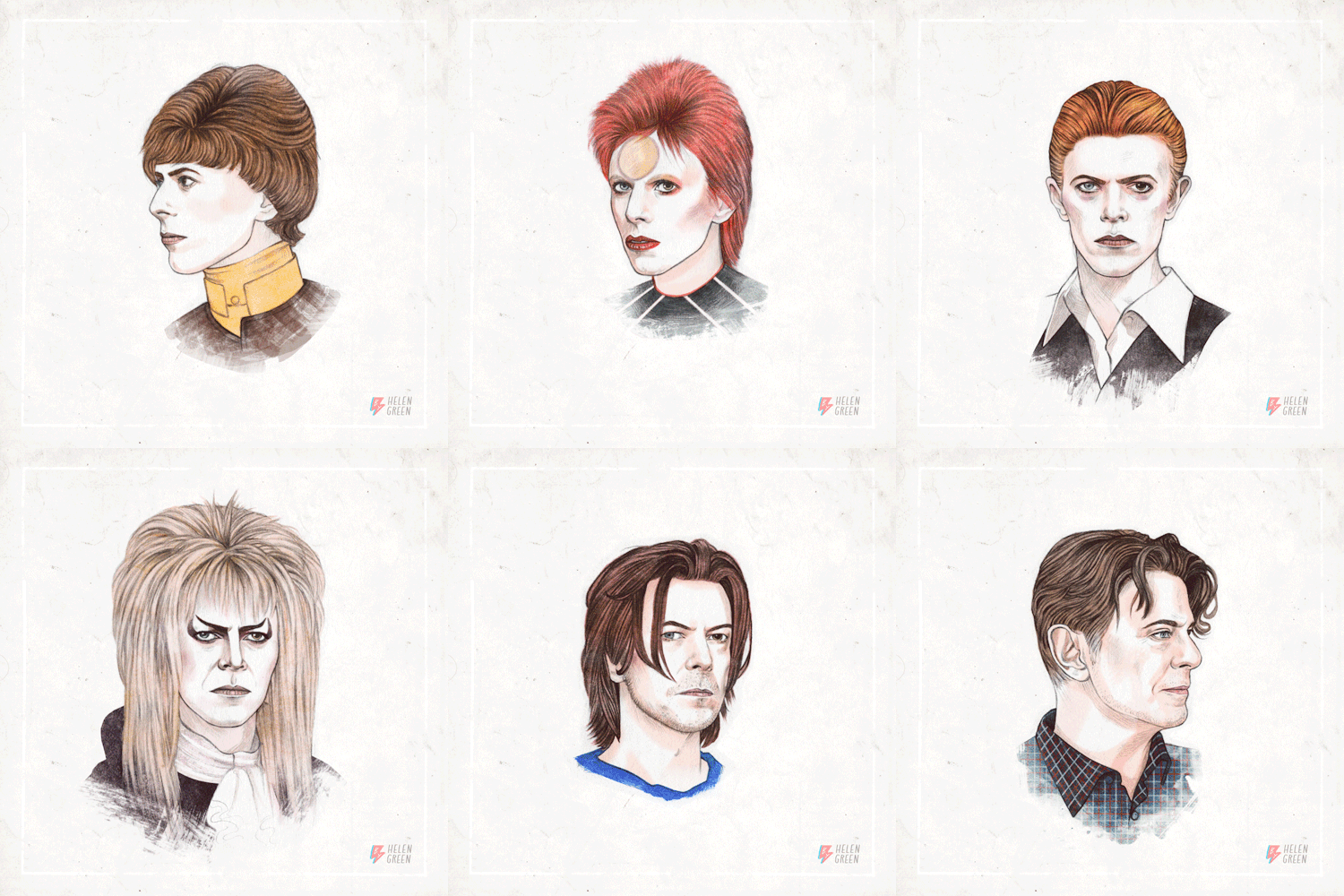
When I heard about the death of David Bowie this morning from cancer at the age of 69, I remembered that time long ago in my life and how much that Bowie had been interlaced with my existence. The days of “Space Oddity”, of course, begat the Ziggy Stardust Era of Bowie’s work, where he took on the persona of an outer space alien that came to Earth. The music that emerged from that era – “Starman,” “Jean Genie” and “John, I’m Only Dancing” being particularly memorable – seemed to be something that others in what was called “rock music” weren’t doing.

Then came the stage of Bowie’s career that I particularly enjoyed. Blending the sounds of rock, soul, German and synthesizer music, the Thin White Duke epitomized the cool of the 70s. Supposedly an offshoot of his character from the film The Man Who Fell to Earth, the Duke was a distantly cool but always in tune person. Unfortunately, Bowie probably was able to draw the ability to conceive such a character – as I learned later in life – because of massive amounts of drug use (while drug use can help artistic performance and development, it can also be the destroyer of those same worlds).

Fortunately for Bowie, he was able to emerge on the other side for what was arguably his greatest phase of his career. Following a few Brian Eno/German influenced albums (especially Low and Lodger), the 80s would be where Bowie would truly bloom. Perhaps because of the video element added by MTV – or perhaps because of his own development as an artist – Bowie would crank out his finest work in this decade. Scary Monsters (and Super Freaks), Let’s Dance, Tonight and his work with Queen on “Under Pressure,” his Live Aid performance and his duet with Mick Jagger on “Dancin’ In The Street” all gave Bowie the credit as an artist that he truly deserved. He was inducted into the Rock and Roll Hall of Fame in 1996 and, over the two decades since then, has simply delighted us fans with everything he ever did (and this is completely glossing over all the work he did in films and on stage as an actor).

And I’ve been fortunate enough to have been there for most all of it.

Bowie was formative in my early years and during my career in radio. That era of the 1980s was his heyday and was the apex of my career in Album Oriented Rock (AOR) radio and, in reflecting back on those times, it always seemed as if Bowie was just ever so slightly ahead of the curve, as he had been since his days of “Space Oddity” and Ziggy Stardust. Even after I left the radio business, his later work still had that artistic edge, looking forward to the next big thing, that was always the benchmark of Bowie’s life and career, whether it was in music, acting, art or a myriad of other areas he would dip his fingers into.

Perhaps it is a sign of age, or the passing of time, when we begin to lose our heroes, be they athletic, musical, acting or even familial, that it begins to hurt the worst. Even from my time in radio, I’ve been unfortunate to see men younger than me pass away:  Jani Lane of Warrant and Scott Weiland of Stone Temple Pilots are two who come to mind off the bat, but their deaths were from their own problems and issues. Even some of the greats that I thought I’d have in my old age, like Stevie Ray Vaughan, were unable to join me in potentially making it to my rocking chair. Lemmy just passed and some of the others, like Bruce Springsteen and others, are on the other side of 60; hell, Bono only has a few years on me!

David Bowie led one of the most remarkable lives that mankind can even imagine. He was at the forefront of his generation, but he was also mindful of his place in the world. He was an artist, but he also appreciated the beauty in the work of others. The world is a much darker place without the visage of the Thin White Duke looking down upon it.

So Who SHOULD Be In The Rock & Roll Hall of Fame?

Last week, the nominations came out for the 2016 Rock & Roll Hall of Fame and, at the very end of my thoughts, I posited the question, “Who should have been nominated?” Mind you, the list of nominees was outstanding overall: longtime overlooked acts such as Chicago, Deep Purple and Yes getting nominated again (and three bands that I believe are long overdue the honor), newcomers like Janet Jackson, The Cars and Cheap Trick (all no votes) and outside shots such as The J.B.’s (another vote in from me), Chic (no) and N.W.A. (yes). However, there were several other artists that should have been on this year’s ballot if not already inducted into the Rock & Roll Hall of Fame.

The Rock & Roll Hall of Fame is personal to me because of my long love affair with music. Despite the factor that I could never play an instrument with any high level of competence, I admire those that can create art out of music, words, melodies and thoughts. While it could be said that writing is something like that, the songwriter and/or musician is an artist that encompasses different aspects, pulling them into one cohesive idea. Thus, I’ve always been a huge fan of music overall and rock music in particular.

My first introduction to rock music dates back to someone who, unfortunately, I don’t know if they’re still alive. The year was 1971 and, riding around in a car with my half-brother Monty (his real name could have been Montague, don’t really remember) on a hot summer day, saw him pop a cassette into the tape deck. Suddenly the mystifying tones of David Bowie’s “Space Oddity” came pounding out of the speakers and, as I listened to the words and music, I was transported (you have to remember, these were the heady days of NASA’s Apollo space program) to being “Major Tom” and traveling through space myself.

From there, it was a quick indoctrination into the world of music. My mother had the classics – Johnny Cash, Merle Haggard, Waylon and Willie and others – from the country music side, but she also had such gems as The Temptations, The Supremes and other R&B acts from the 60s in the record cabinet. My investigations in the rock music genre touched on Santana, The Who, Crosby, Stills, Nash and Young and James Taylor, then began to branch out into the harder edged rock of ZZ Top, KISS and Led Zeppelin, among others (on a personal note, was always more of a Rolling Stones guy than the Beatles).

As the mid-70s passed, punk rock became the next touchstone. The Sex Pistols, New York Dolls, The Ramones – these were the gates to pass through on the way to adulthood. As I reached high school, not only was it the disco era but it was almost time for the double shotgun-blast of the New Wave from England and MTV, opening the world even further (and we cannot go on without also recognizing the New Wave of British Heavy Metal). As I had to be a part of the music scene, I did the only logical thing a person with little to no musical talent could do – I became a DJ.

Through the 1980s and well into the 1990s, I plugged along as a DJ at pretty much every radio format that you could think of doing. Album-Oriented Rock (AOR), Top 40, easy listening, R&B, adult contemporary, news/talk – about the only thing I didn’t do was country (much like “country” music today, there’s a thin line between what was country music then and pop music). Along the way, there were some great times had in the conduct of my job and…well, let’s just save those stories for another time.

Hopefully you see that who gets in the Rock & Roll Hall of Fame is important, at least to me. It isn’t “live or die” important, mind you, but it is something that I want to show my son one day and say, “Yeah, I saw them, they were great.” Maybe we will sit down and listen to a CD or, pray tell, if we still have vinyl by then, an album, and talk about music and its history. He’s got a great musical ear, however, so he may be entertaining me with his music rather than our just listening to it.

OK, getting sappy here…

My criteria for putting someone in the Rock & Roll Hall of Fame would be somewhat along the lines of what poker uses for its Hall of Fame. These are the criteria that I would use in putting someone in the Rock Hall:

1. Length of career with sustained critical or commercial excellence
2. Influence on a genre of music or on several artists
3. Respect from fellow musicians

Pretty simple, wouldn’t you say? Alas, there are some glaring errors in the Rock & Roll Hall of Fame. How about some of these artists, bands and contributors?

Warren Zevon – The singer-songwriter born in Chicago has been overlooked for far too long when it comes to the Rock Hall. Responsible for writing such songs as “Poor, Poor Pitiful Me” (covered by far too many artists to list but most notably by Rock & Roll Hall of Fame inductee Linda Ronstadt), Zevon was a part of the California scene in the mid-70s, working with such people as Jackson Browne, Neil Young, members of the Eagles and counting Bruce Springsteen amongst his admirers.

When it came to his own efforts, Zevon was beyond compare. Along with his iconic “Werewolves of London,” Zevon penned and performed such classics as “Lawyers, Guns and Money,” “Roland the Headless Thompson Gunner,” “Accidently Like a Martyr,” and “Keep Me in Your Heart,” which was nominated for a Grammy after Zevon’s death in 2003. With a career that spanned more than 30 years, commercial and critical success and the respect of your fellow musicians, there’s no one more deserving than Zevon for induction into the Hall.

Jimmy Buffett – Another product of the singer-songwriter era of the early 70s, Buffett is notable for forging his own path in the music industry. When I say his own path, I mean he created a whole GENRE of music that didn’t exist before – let’s call it “tropical rock,” music with a Caribbean/calypso/reggae/country feel that didn’t fit neatly into any of the “categories” of music in the 1970s (and still doesn’t today, to be honest). Buffett himself has said about that period, “I wasn’t country enough to be played on those stations and I wasn’t rock enough to be played on AOR.”

The way to beat that? Write a song like “Margaritaville” that transcended any charts, genres or radio stations. Today that song has led Buffett into the world of literature, casino and hotel ownership and a “40-year summer job” that the man still enjoys to this day as he approaches 70. He’s influenced a host of country musicians (the Zac Brown Band is a prime example) and, as owner of a recording studio and a record company (Mailboat Records) is ensuring that the “tropical rock” he created will have outlets for the future.

The Runaways – While Joan Jett went in with The Blackhearts last year, she really should have gone in with The Runaways because, without them, there is no Joan Jett.

The Runaways were “created” by producer Kim Fowley who, having drummer Sandy West and guitarist Jett in the fold, was looking to create a “jailbait” band of teenaged girls who could rock out just as well as any group of guys. First found by the group was Micki Steele, who didn’t last long but went on to join The Bangles, before gold was struck with guitar virtuoso Lita Ford, vocalist Cherie Currie and bassist Jackie Fox to fill out the roster. With the group lineup set, The Runaways broke ground as one of the first female hard rock/metal acts to ever have any success in the recording industry.

From the seminal track “Cherry Bomb” to other tunes such as “Queens of Noise” and “I Love Playin’ with Fire” (covered by Jett during her Blackheart days), the band earned a great deal of attention and respect in the industry. The members of the group went on to arguably better success as solo artists or in other creative endeavors, but they were the ones who helped to get such groups as The Bangles, The Go-Gos, Vixen and rock “chicks” like Pat Benatar, Chrissie Hynde and Deborah Harry (among many others) in the door. It is arguable that, without The Runaways, some if not all of these women wouldn’t have gotten into the industry.

Judas Priest – This is one of those omissions by the Rock & Roll Hall of Fame that is inexcusable. A band that has sold 45 million albums, generated rock anthems such as “Breaking the Law,” “You’ve Got Another Thing Comin’,” “Heading Out To The Highway,” “Living After Midnight”…I could go on, but you get the point. So what has kept them out?

Over the years, the band has been targeted in various arenas outside of music. They were accused of using subliminal messages in their album British Steel that allegedly caused two men to try to kill themselves. They’ve been targeted by conservative Christian groups for their musical content and singer Rob Halford has taken some sabbaticals from the band over the decades. But when you have a list of bands that were influenced by you such as Metallica, Megadeth and Pantera (among others), you’ve done your job well.

There are a slew of other artists that could be held up for consideration – The Carpenters, Kate Bush, Slayer, Bon Jovi, Thin Lizzy, Motorhead – and maybe they are just waiting for their time. There are also those “pop” artists that I am overlooking, but this is the Rock & Roll Hall of Fame, after all. If you’re waiting for a time that “works,” however, take it from someone who watches how these Halls of Fame work – if you don’t get in within your first couple of years of eligibility, your chances of getting in get worse as time goes by. All the artists listed here deserve to have their place in the pantheon of the Rock & Roll Hall of Fame…now will anyone listen and induct them?