Top Five or Six Songs You DON’T Want To Hear While Driving

If you’re anything like me, you do like to hit the road for a good drive. I don’t mean the little trip to the grocery store or Macy’s (although those are fun too), I mean the good old fashioned “road trip” where you throw caution to the wind and see how far the gas takes you…or, OK, a good long trip to visit family, friends, go to a concert or a sporting event, etc. The thing that makes any road trip easier to traverse is when you have good music to go along with the journey.

Good music makes the trip easier to bear, especially when you have friends and/or children in the car. There does come a problem, however: the songs that, once they begin to play on the radio, immediately cause your right foot to get about a ton heavier and causes the needle on the speedometer to reach levels that are highly unsafe. These are the songs that, when they come on either the radio, a CD or off of our iPod, we certainly hope that A) we are alone in the vehicle and B) hope that there aren’t any sheriffs, deputies or other law enforcement officials in the near vicinity as they would surely stop us for our upcoming display of speed.

The Outlaws – “Ghost Riders in the Sky”

The Outlaws were never one of the big “stars” of the music industry. They barely were able to catch on in the heyday of Southern rock in the mid-70s with a couple of hits, “There Goes Another Love Song” and “Green Grass and High Tides.” It was their 1980 remake of a tune from the 1940s, however, that would put them in this list:

One of the big things that a great “don’t drive while listening” song has is guitars that seem to ascend to Heaven or drive straight to Hell, there is no in between. In this particular song, it seems that the guitars take the listener both ways. The original lyrics paint the picture of either salvation or damnation and, as the tempo increases towards the end of the song, there is an immediacy brought about to make the listener try to decide which side to ride with. It also causes the scenery to rip by if you’re driving in a car and get into the music.

KISS – “Detroit Rock City”

Many people have a love/hate relationship with the band KISS. One of the longest lived bands of the rock era (founded in 1973 and continually recording and touring since that time), they have cranked out their brand of music for almost four decades. While long reviled for their “amateurish” music and “cartoonish” stage shows and makeup, KISS actually proved over the long run that they were consummate musicians who knew how to work the stage, beguile the audience and make a mint while doing it! As far as their contribution to the “unsafe at any speed” list, here you go:

The song itself is about a maniacal drive (which alone should get it in the pantheon) but it also was called by VH1 the #6 Greatest Metal Song in history. The song (and KISS themselves) inspired a movie of the same name and the tune has been used to promote both the Detroit Tigers and Red Wings. On the other hand, if you’ve got a copy of the original single, you always had something to play for a girlfriend or significant other – the “B-side” (normally not the more popular song) was a little ditty called “Beth.”

Ted Nugent – Wango Tango

Whether you like his take on politics or not, the one thing that Ted Nugent can never be denied is his borderline insane work in rock music. Nugent has a list of songs that could contend for this list – “Piledriver” from his days with the Damn Yankees, “Wang Dang Sweet Poontang” and “Motor City Madhouse” just to name a few – but this one captures the increase in speed as the potency of the song itself goes up:

Although the entire song is blasting from the start, it is that center segment when you’re taken down to just the base line and the drums that the true intensity begins. As Nugent gets deeper into the lyrics (the “pretend your waist is a Maserati” line is priceless) and builds to the climax, you can only hope that your foot isn’t on a gas pedal. If it is, you better hope it is a stretch of open road!

Metallica – “Fuel”

They will probably go down as one of – if not the – greatest band in hard rock/metal history. Along the way, Metallica has given some gems to the “Lead Foot Legion” – “Master of Puppets” comes to mind immediately. This one, however, was done with the automobile in mind:

One of the things with Metallica, however, is that their songs could be viewed from several different aspects. The chorus of the song – “Give me fuel, give me fire, give me that which I desire” – could be applied to any addiction that a person has. That they hide some depth in writing a great driving song is intriguing to me.

Tie:  Megadeth – “Symphony For Destruction” and P.O.D. – “Boom”

Former Metallica guitarist Dave Mustaine was tossed out of the group (supposedly over his own addictions) and, as the ultimate “Fuck You,” went on to form his own syndicate that matched his former band nearly note for note. This tune in particular is never a good one to hear if you are behind the steering wheel:

The band P.O.D. never has gotten the recognition that they should have received in their career. Helping to drive the rock/rap genre in the early 2000s, this particular song was the theme to my radio show for several years:

Even today, it still gets the pulse racing as well as the RPMs when I am behind the wheel.

There are a host of songs that didn’t make my final cut (that’s why you may see a Part II, Part III, etc.), but there is one band that may punch a hole in this roster at some point. While some may think that Southern rock is dead, the band Blackberry Smoke stokes the fires of that Southern moonshine still even today, cranking out some powerful songs. Blackberry Smoke, keep it up and perhaps one day “Leave A Scar” will make this list:

Another line for the ages:  “I may not change the world but I’m gonna leave a scar…”

Music is one of mankind’s greatest creations. Whether it is used as a salve, as a confession, as a testament, as a declaration or as a way to inspire or psyche up oneself, there is something out there for everyone. When it comes to songs you don’t want to hear when you’re behind the wheel, what are your choices?

Why I Chose Satellite Radio over Terrestrial Radio

SiriusXMLogo

There have been a couple of things that I have failed to pick up on when they came out. One, believe it or not, was cellphones. When they were becoming more popular in the 90s and even the 2000s, I told people I would never have one. “If it was really that important,” I would say, “they can call me at home. And if I’m not there, they can leave a message.” That lasted until I got my first cellphone and, as they say, the rest is history. Now I cannot imagine not having one.

The second thing was satellite radio, in particular SiriusXM. For 16 years I worked in the radio industry as a DJ and a music director and I felt some loyalty to the industry, that it would be incredibly wrong to buy satellite radio and violate a personal bond with broadcasting and the radio industry as a whole. Hell, the radio station was free and, as long as I could put up with the DJ that came on every 20 minutes or so, I continued to listen. For the last few years, however, I have been an aficionado of satellite radio and I sincerely doubt that I will ever return to “terrestrial” radio.

As a former radio DJ, I knew the ins and outs of the business. I also knew how the music actually got on the air that we played for our listeners. As a music director, I would chart the requests we received each week, monitor the new music added to the station, try to predict what we would add to the station’s playlist and offer suggestions as to the new music we would add. Sometimes, especially in Album Oriented Rock (AOR), those songs were more predicated on the artist rather than any great musical achievement (in this late 80s/early 90s, this meant a lot of crappy music from Aerosmith and many others instead of truly groundbreaking work from bands like Nirvana and Faith No More). But there was a dirty little secret that does still exist, even in the programming of stations today.

Back in the 1950s Alan Freed, the legendary Cleveland DJ who coined the term “rock & roll,” was the man whom artists and record companies needed to sway to guarantee their single or album’s success. Through his radio programs in both Cleveland and later in New York (where he added television), Freed passed along to the youth of the 1950s (probably our mothers and fathers) what was supposed to be the best music in the United States. Freed himself was responsible for “breaking out” such artists as Bill Haley & the Comets, Chuck Berry, Little Richard and Fats Domino (Freed was partial to black artists, who would often write and perform songs only to see white artists cover them so they were “acceptable” to the white audiences, according to the record labels). The ability that Freed had to “make or break” careers came with a hefty price, however.

In 1958, Freed was accused of accepting money from the record companies to play and promote certain songs, known as “payola” (a mix of the words “payoff” and “Victrola”) and, to a lesser extent, accepted credits as an author or producer on some of the songs he was playing on the air, which was a conflict of interest if true (this was also the case for a man named Dick Clark, but that is a story for another time). He was immediately fired from his spot at WABC in New York and lost his television gigs also in 1959, although there was no law on the books that made what he did criminal.

In 1960, that was changed by the Federal Communications Commission (FCC) and, in a true miscarriage of justice, Freed was convicted on two counts of commercial bribery in 1962 (once again, despite there being no laws on the books at the time the alleged crimes were committed). Given a small fine and a suspended sentence, Freed would be blackballed by the major players in the music community; he would bounce around at smaller stations across the U. S. for the rest of his life, passing away in 1965.

While many would like to think that Freed was the only case of “payola” that has ever existed in the world of music, that isn’t the case. Although many DJs knew about the rules (the FCC put a punishment of a $10,000 fine and/or a year in prison for accepting payments from the record companies), there was a way around the new laws.

Instead of paying off the on-air talent themselves, record companies began to woo those with the power to get the music on the air with special “freebies” that, for all practical purposes, only looked like “promotional” tools. How many times have (or did) you dialed up a local radio station because they were giving away free tickets to a concert or an album or CD? How about special “concert trips” where you were whisked to a far-away show? These were the new “payola” (as some of these “freebies” ended up in station employees’ hands), just this time around those in charge decided to look the other way.

In the 1980s and 1990s (and even today), this was still the way the game was played. The record companies would call up one day a week (usually on a Monday, as Tuesday was the day adds were done to the station’s playlist after the labels released the latest albums) and try to woo you to play the latest music from the label’s artists. Using the “promotional” tools at their disposal, the A&R people would do everything short of sleeping with the DJs and music directors (although I heard of that too) to get their records on the air.

Although I left radio in the late 1990s, I still felt a tremendous bond with the industry, so much so that when Sirius satellite radio – and then XM – came about, I was about as “anti” as you could get.

The satellite radio industry began in 1990, when the FCC assigned frequencies for satellite radio (using digital sound) to use, even though there were no satellites in the air at the time and no one broadcasting in that format. In 2001, XM became the first satellite radio service and, in early 2002, Sirius joined in the battle. After spending billions refining their products and fighting against each other, the twosome decided to merge in 2007 and SiriusXM Radio came to life. As of this summer, SiriusXM can boast of roughly 28 million subscribers.

In the end, it was my lovely wife’s frustrations with terrestrial radio that brought about the changeover to satellite. After a particularly lengthy drive – in which she had spent much of it looking for a suitable radio station to listen to – we began to discuss getting satellite radio. Because we didn’t always know the stations when we were traveling, we thought that having a set schedule of stations to pick from would be more suitable to our lifestyles. As such, in 2010 we installed a SiriusXM receiver in our vehicle and the difference was immeasurable.

Normally when dealing with radio, you can find one station in each of the formats in a given “metro” area or city:  a Top 40 station, a Classic Rock station, a news/talk station, etc. With SiriusXM, you can pick pretty much any musical genre or era and have a place to go. Want to listen to Frank Sinatra? There’s several channels, including hits from the 1940s and 50s and a “Siriusly Sinatra” dedicated station. Feel like some rock music? There are almost two dozen stations there, covering everything from the 1950s to today. Country music has six channels, Christian music three…as you can see, it covers everything.

Then there is the pleasant respite from commercials that SiriusXM gives the listener. For the most part, every station on the SiriusXM dial is commercial-free radio (save for simulcasts of radio and/or television broadcasts). This means that you won’t be jumping around the radio dial, trying to find some music when your favorite radio station goes off on a five-minute commercial binge (like television, radio goes to commercial breaks at the same times – 10, 25, 40 and 50 minutes past the hour, in most cases). About the only reason you’ll leave a station is because you want to hear something different.

You need more? How about the vast libraries that the SiriusXM stations have put together. Due to the advent of digital music, the SiriusXM libraries play virtually anything that has been digitized for listening consumption. Because they also haven’t been corrupted by radio “consultants” nor the radio conglomerates (in one city my wife and I lived in, two radio groups controlled 15 stations that were in town), they will play things that you won’t hear on terrestrial radio; instead of hearing “Stairway to Heaven” for the third time in a week, you might hear instead a deep cut from Rainbow (grossly neglected in terrestrial radio, along with many other artists).

Finally, there are the host of specialty stations that SiriusXM delivers that would never appear on terrestrial radio. Channels that focus on the music of Bruce Springsteen, Pearl Jam, Elvis Presley, Willie Nelson, Pitbull, the Grateful Dead…these are all artists that have their own dedicated stations on SiriusXM (especially my favorite, Radio Margaritaville and Jimmy Buffett). There are also “limited engagement” stations that have featured Billy Joel, Tom Petty and Elton John in the past year. If you would like to listen to nothing but Howard Stern 24/7, there’s a place for that, as there is for the sports fanatic.

For the hour I spent in my vehicle today, here’s where I bounced around:  I started with Buffett, then moved over to the Hits station that played the latest from Fall Out Boy; after getting my son out of the car, I moved over to Octane, where Tesla was doing “Little Suzi” before dropping down the dial to First Wave (the 80s British synth pop era) and hearing the Human League. When I got home, I’d worked my way through the alternative stations, which had told me that one of my favorites in Florence and the Machine were about to play, before getting “back to the beach” on Radio Margaritaville. Tell me you could find that wide a range in terrestrial radio.

After once thinking that there was nothing better than terrestrial radio for as long as I did, I can now confidently say that there is no way I would ever think about not having SiriusXM in my vehicle or on my computer. The reasons listed previously should be enough, but there is also the ability to make up your own playlists (called MySiriusXM) that puts the cherry on top of the sundae. There are some questions about its compensation methods to the artists (something that I might get into sometime), but there’s more enjoyment than you’ll ever get out of terrestrial radio through the SiriusXM satellites circling our planet.

It’s Time for the VMAs, But Who Really Cares?

On Sunday evening, something that used to be a “calendar” event in the music industry will take to the Microsoft Theater (formerly the Nokia Theater) stage in Los Angeles, CA. For the 32nd consecutive year, the MTV Video Music Awards will take place, honoring the best video work in the recording industry and the performers who have given us their best (?). In reality, however, the MTV “VMAs” and their “Moonman” award have become a gauche award because nobody really cares about them anymore.

When MTV hit the airwaves in 1981 (in fact, on August 1 the station celebrated its 34th anniversary), it was a brazen broadside against the staid, stoic music industry and the radio industry and stations that would “make or break” careers in a heartbeat. The first video aired on MTV, The Buggles’ “Video Killed the Radio Star,” seemed like a four-minute manifesto of what was the intent of the new channel. Record companies and their artists for years had put together promotional videos that, for the most part, were only seen by a handful of people at the record companies and in the radio industry. When MTV came along, that suddenly changed.

Bringing together these hundreds of videos (literally…pretty much anything on MTV in the early days was seen quite often due to the lack of material), MTV slowly built an audience and, at the same time, became the place where new artists made their breakthroughs. Such artists as Madonna, Cyndi Lauper, Men at Work, Bow Wow Wow, Duran Duran and the Human League were getting their attention not through traditional radio play but from the constant airing of their music videos on MTV. The biggest move by MTV in its early years may have been the exposure it gave to black artists. Eddy Grant, Musical Youth and a young man embarking on a solo career by the name of Michael Jackson (among others) benefitted greatly from the exposure that MTV provided.

It also had a way of destroying careers. The 1981 Grammy Awards were dominated by a Texas newcomer named Christopher Cross, who earned the top four awards (Record of the Year for his eponymous LP, Album of the Year, Song of the Year for “Sailing” and Best New Artist) and seemed poised for a long career in the music industry. Due to his pedestrian features and roly-poly physique, however, Cross wasn’t the typical “MTV artist” and he quickly disappeared from the scene following his sweep.

A couple of years into their existence, however, the honchos at MTV were faced with with the dilemma of continuing to grow the channel and coming up blank. In 1984, the powers that be at MTV came up with what they thought would be the cure (no, not the band). Producing their first ever MTV Video Music Awards, the channel looked to give the same gravitas to music videos that the Grammys bestow on music or the Oscars give to cinema. Over the years, the show has provided MTV with some of its most outlandish moments while also being its most watched event.

Who doesn’t remember Madonna’s rendition of “Like a Virgin” at the very first VMAs? Or Madonna’s girl-girl smooch with the randy Britney Spears in 2003? How about Kanye West barging in on Taylor Swift’s “Moonman” acceptance speech in 2009 (one of the few times I actually felt sorry for Swift)? The clothes, the music and sometimes even the videos made the MTV Video Music Awards a spectacle for the youth of the era. Over the past few years, though, the futility of the VMAs has been mentioned and whether it is the iconic “happening” that it was in its earlier incarnation.

Part of the reason for that is in the maturation of MTV itself. About 15 years ago, MTV decided that it wanted to be more of a lifestyle channel for the young and hip rather than concentrate on music alone. To achieve this goal, MTV began to put on its airwaves things that weren’t the “traditional” fare for the channel. A host of reality and game shows were the start, followed by fashion and “home” shows (anyone remember “Cribs”?).

The reality trend that took over in the 21st century allowed MTV to pretty much switch over to just the reality shows, including the vapid Jersey Shore and other scripted programming (none worth mentioning). Lost in the mix? Music videos, the thing that borne the channel (part of that was in the fact that the record companies, looking to tap another potential revenue stream, wanted to start charging MTV for showing the previously “promotional” videos). Hence, here you have a channel which was formerly the “groundbreaking” arena for exposing new artists through their music videos – in fact, naming their station AFTER MUSIC TELEVISION – not even showing them anymore.

Videos themselves also seem to have disappeared for the most part. Back in 1982, Duran Duran released Rio, their second album. Using the new MTV format, the group was sent by their record company, EMI, to Sri Lanka and Antigua to film an unheard of 11 videos for the record. Those videos not only served to be a major part of the programming for MTV in its early years, it also established Duran Duran as megastars in the music industry and provided the group with a career that still exists today.

Today, videos are seldom done and, if they are, it isn’t for promotional purposes. More often than not, they are done by popular artists that have no need to garner additional airplay for their efforts (think of why Swift, who has somehow crafted a career in music, continues to put out videos that no one has ever seen) or as a “vanity project.” There isn’t a purpose anymore for the music video because there isn’t an outlet for it to air on (sorry, YouTube doesn’t count).

Which brings us back to this year’s VMAs. Of the nominees that are on the list, I’ve seen exactly two of the videos – Mark Ronson’s collaboration with Bruno Mars on “Uptown Funk” (outstanding song, great video and it probably won’t win shit on Sunday) and Florence and the Machine’s “Ship to Wreck” (a band I can’t get enough of that also won’t sniff a “Moonman”). The rest could be cartoons for all I know because there isn’t an outlet to show them anymore. The untalented Swift is nominated for nine awards while Ed Sheeran has six, with a smattering between Nicki Minaj, Kendrick Lamar and Beyonce and the “Video Vanguard Award” (think Lifetime Achievement Award) being handed to West.  Without an outlet, however, why hand out awards for something that will basically become a popularity contest?

Imagine, if you will, Hollywood continuing to crank out movies and television shows but every theater on Earth not showing them and no television networks to put the shows on? (This one could become reality with the advent of Netflix, Amazon Instant Video and Hulu starting to film their own projects.) Would there still be a slew of awards shows for basically something that doesn’t exist anymore?

As a former DJ and music aficionado, I used to sit with bated breath each year for the VMAs (and the Grammys, for that matter), not only to know who won what but for the outstanding musical performances that it brought to its stage (never enough rock, always too much pop). Nowadays the videos are all things that I haven’t seen and the “musicians” (and that term is a stretch in many cases) and their music are so over-produced they cannot perform their music live. Thus, you have to wonder if anyone even cares about the MTV VMAs anymore.

Sure, there will be some prepubescent teenagers who will watch as Miley Cyrus, this year’s host, tries to show how “adult” she is through some pseudo-sexual act she’ll perform onstage; Swift will still constantly look like a deer in headlights as she facetiously mouths “Me? Me?” after winning her umpteenth award and there will probably be some spat – usually between warring rap parties – that blows up backstage into a story. It’s time for MTV’s Video Music Awards for 2015, but does anybody really care anymore?

Wondering What Happened To…For August 25

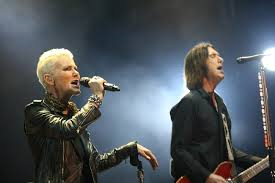
Roxette1990

On occasion, I have thoughts that pass through my head that, while fully formed, aren’t exactly long enough to air out on their own. With this in mind, this recurring segment will catch all of those things in a neat little basket and deposit them with you, the reader. Hopefully you’ll enjoy these as much as the other writings you’ll find here.

With that, let’s get started:

Wondering what happened to the band Roxette while pondering…

Did Jon Stewart Leave The Daily Show For This? – If you missed it over the weekend, former The Daily Show host Jon Stewart was seen on television again. You had to buy the program to see him, however, as he was the host for World Wrestling Entertainment’s SummerSlam pay-per-view on Sunday. But, after seeing him on this program, I have to hope he has better plans for his post-Daily Show activities in the future than this.

During the “title versus title” match between wrestlers Seth Rollins and John Cena (and we won’t even get into who held what title, the story, etc., because it doesn’t matter), Stewart entered the ring with a chair as the “combatants” were both momentarily stunned, debating who to crown with the chair and allow the other person to win. After a couple minutes, Stewart – despite having nailed Rollins in the balls in a previous WWE broadcasts (remember, this is professional wrestling, where a kick in the groin is a strategic move) – chose to use the chair on Cena and allow Rollins to win the match.

After 16 years in the anchor’s chair at The Daily Show, Stewart more than deserved his glorious sendoff from the show. But if this is what Jon Stewart is planning to do for the remainder of his career (doubtful, but go with me here), then he better hit the gym because 50 year old bodies don’t hold up well under the wrestling grind…just ask The Undertaker.

Furthermore…

Did ESPN Report on a Professional Wrestling Pay Per-View? – While sitting around after the late local news on Sunday night, I turned over to ESPN to see what happened in the world of sports for the day. After a bit, the anchors discussed the events of the WWE pay-per-view as if they were a REAL sporting event, complete with having a reporter on the scene (a former WWE employee, it must be noted) to give a post-fight analysis.

I know that sometimes it’s difficult to come up with news and it has to be especially difficult to come up with sports news during the “dog days” of summer. But if you’re reporting on the results of a scripted event, then you really don’t know your fan base that well.

Is Anyone Surprised About Josh Duggar? – The Ashley Madison hack – where up to 32 million names and batches of personal information were stolen by a hacking group and subsequently dispatched over the internet – had some surprises to it. First, who knew that government employees were so kinky? Secondly, is anyone surprised that Josh Duggar’s name was on the list?

Duggar, the son in the bizarre (now canceled) television reality program 19 Kids and Counting that featured the Duggar family (Josh’s parents and siblings) with their breed-like-rabbits philosophy and holier-than-thou attitude, held a nice job “upholding” those family values with the Family Resource Council. That was a nice job until it came out he was diddling his sisters in their sleep at the age of 15 and his parents decided that all the little Duggar needed was some time down on the farm and didn’t report the situation to authorities. He resigned that job with the FRC, but the best was yet to come.

Amid the clamor of the Ashley Madison data dump (for you who do not know, Ashley Madison was a website where people could go to arrange for extra-marital hookups, or affairs as they are commonly known) the name of Josh Duggar came up. So not only was he a child sexual predator, as an adult he wanted to have relations with someone other than his wife and, considering what type of website it was, we’ve got to assume a pretty frisky sex session. If you look up the word “hypocrite” in Webster’s Dictionary, there is now a picture of Josh Duggar.

When your name becomes associated with something less than appealing (just look up “duggaring” and you’ll see what I mean), perhaps it’s time for you to shut up on the subject you’re railing against. Just ask Rick Santorum about that fact.

Want A Term for “Anchor Baby?” – Over the past few days, GOP Presidential hopeful Jeb Bush has been making his comments on illegal immigration and using the term “anchor babies,” much to the delight of the media. When they challenge him on using such a term (let’s be honest, not in the best taste), he angrily spins around and challenges the reporter, “You have a better term I should use?”

Yes, Governor, there is…it’s called a child. Whether you agree with the way it is portrayed by the GOP or not (the evidence suggests that the number of births of this nature in 2008 was 340,000, or approximately .1% of the U. S. population, and steady each year to 2015 instead of the millions the Republican Party would suggest every year), what an illegal person in the United States has done is given birth to a child that didn’t ask for this situation to be thrust upon them. For all the care that the Republicans have with a child before it is born, you would think that they would have some concerns about it afterwards.

Now, to answer the question…what happened to Roxette?

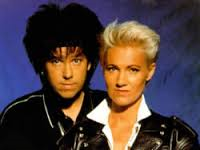
In the late 1980s, one of pop music’s catchier bands was the Swedish group Roxette. The twosome who made up the group, Marie Fredriksson and Per Gessle, were hailed as the second coming of ABBA while they delivered such memorable pop bubblegum as “The Look,” “Joyride,” “Dangerous” and “It Must Have Been Love.” In the United States, the band was popular but was difficult to put into the nice little cubbyholes that radio likes for its artists.

After the release of 1991’s Joyride, things went downhill for the band. Caught by the tidal waves that were the grunge phenomenon and rap music, Fredriksson and Gessle took a break in the mid-1990s that turned out to be longer than they wanted. After recording two records in 1999 and 2001, Fredriksson was diagnosed with a brain tumor in 2002 that saw Roxette shut down operations again. They would remain inactive until 2009, when Fredriksson had recovered enough to take the stage once again beside Gessle.

Roxette celebrated the 25th Anniversary of “The Look” (perhaps the song they are best known for), with a remix of the song with Swedish producers Addeboy vs Cliff in 2014 and a new album expected from the group by the end of this year. Gessle, now 56, and Fredriksson, now 52, continue to perform live in Europe, but currently there are no plans for the duo to return to the United States to attempt to recapture the magic.

Roxette2015

N.W.A.: The More Things Change…

In the mid- to late-1980s, I was working in the radio industry as the music director at an Album Oriented Rock (AOR) station in North Carolina. While the music we played was the opposite of what was occurring on the Top 40 or Urban stations (I would have said polar opposite, but we weren’t country music), we were still aware of the rumbles of change that thundered across the musical spectrum. I actually got behind two bands in my time there – one was Faith No More with their song “Epic” and the other was the band that term – thundered – was the best way to explain:  the phenomenon that was the rap group N.W.A.

N.W.A. – the seminal rap group that featured Eric “Eazy-E” Wright, Andre “Dr. Dre” Young, O’Shea “Ice Cube” Jackson, Lorenzo ‘”MC Ren” Patterson and Antoine “DJ Yella” Carraby – exploded on the scene in 1988 with their debut album Straight Outta Compton. The album contained explicit descriptions from the group about life in the inner city (in this case, the Los Angeles subdivision known as Compton) and, in particular, the trials and tribulations that faced black men (and, as a sidelight, the black community) at that time. With the movie of the same name opening up today, it is easy to see that the more things change, the more they stay the same.

The year was 1988 when N.W.A. came out and it gave voice to millions that had never had even a face to that time. Previous rap music, although occasionally containing a strong message (in fact, “The Message” from Grandmaster Flash and the Furious Five was one of the first rap songs about how difficult life was in the inner city), was more about the party in most cases (“Rapper’s Delight” from the Sugarhill Gang or “Fight For Your Right” from the Beastie Boys) or a cover tune (“Walk This Way” from Run DMC). It also owed more to old school R&B and disco than any other musical format, with base tracks from songs like Chic’s “Good Times” or perhaps Parliament/Funkadelic providing the bottom layer that rappers would lay their tracks over.

With N.W.A., all bets were off. Their guttural bass notes came at the listener like a thunderbolt and guitars and other sound effects were utilized to bring the city to life on the tracks. But what was the major difference was the lyrics. Not content to simply talk about the activities at a party or the sexual conquests that the MC had the previous evening, N.W.A. broadcasted straight from the street and what the residents of the inner city faced throughout their daily lives:  harassment from law enforcement, drug usage and addiction, rampant crime and other less-than enjoyable aspects of living in the inner city.

The advent of N.W.A. brought about the “gangsta” rap style that covered the remainder of the 1980s and stretched into the early 2000s. Although the group that was N.W.A. didn’t make it deep (the band broke up in 1991 and reunited for a short time in 1998), Young and Jackson would go on to long careers in music (Young is now a billionaire after founding Beats by Dre) and/or acting (Jackson is well-sought as a performer in both film and television). Wright would unfortunately pass from AIDS in 1995 and Patterson and Carraby carried on in music, without the same impact as their days with N.W.A.

With the movie coming out today, there is a focus placed once again on N.W.A. and the music that they delivered. As someone who had been around the block even then, I knew that the message that N.W.A. was delivering was dead on, shining a spotlight on a situation that isn’t talked about at formal dinner parties. What is starkly evident from listening back to such artists as N.W.A. today is that there isn’t much different between the situation then and now.

When Eazy-E, Dre and Ice laid down the raps about being harassed by law enforcement for simply being in a certain area and a certain color, those situation still are a part of the headlines today. Crack cocaine usage ravaged the inner city during the times of N.W.A.; today, it is heroin, alcohol and crack that take their toll. Education isn’t any better today than then, it may in fact be worse. Housing continues to be an issue and many believe the only path to “getting out” of the inner city is through athletics or music. And this is only scratching the surface of the situation.

The solutions to these issues aren’t easy and, in many cases, cost money that seemingly isn’t there anymore (according to politicians). When an inner-city kid has the same access to educational materials as someone at the best suburban school, we’ll have made progress. Housing could be improved, but the lack of land still would require the high-rise apartment complexes that are prominent in Chicago and New York. Drug usage and the actions of law enforcement are perhaps the most difficult in that no amount of money would change the situation; the only thing that will change those things are attitudes regarding drug criminalization and training of future police officers.

If you’re heading to the movieplex this weekend to see Straight Outta Compton this weekend, marvel at how these young men brought a cultural situation into the glaring light of the world. Then lament how we haven’t been able to change anything since N.W.A. first rapped about these situations. The more things change, the more they stay the same…

Mr. Robot a Unique Trip; Florence and the Machine’s Latest Rocks

The most fun thing about entertainment – be it movies, television, music, books, video games or whatever – is that individual tastes are accentuated. Because of this enhancement, there is virtually anything out there that people can digest and, perhaps, things that particular people avoid like the plague. Two things recently have raised my metaphorical radar in that they are excellently done and intriguing, at least to me.

Lately, television has been a bit of a wasteland for me. The last show that I REALLY got into was Leverage (as you already know) and it has been a trial to find something else to garner my attention. There’s only so many athletic events, historical shows (think Henry Rollins’ 10 Things You Don’t Know About…) and movies (VERY few) that you can watch before you would like to see something weekly that you feel invested in. On my DVR right now is the USA Network’s Dig (just waiting until the right moment – as in the announcement of a second season – to burn those off), but it will have to wait until the conclusion of USA’s Mr. Robot.

Mr. Robot is the story of a computer security drone named Elliot who shuffles through his humdrum life by day working for an omnipotent company called E Corporation (or “Evil Corp” to Elliot and his fellow employees – on a side note, the logo for Evil Corp is quite reminiscent of the Enron logo) and, by night, becomes a hacker vigilante who tries to right the wrongs in society. In the very first episode, Elliot finds out a local restauranteur is a pedophile and, rather than bribing the man with the information for a financial profit, turns him into the authorities.

It’s not enough for Elliot, however. He has a massive addiction to morphine, grinding up pills to snort them directly into his system, and counters it by taking anti-addiction medication to maintain a sense of stability. Elliot also is extremely antisocial, even around his childhood friend (and maybe a feeling of more from him) Angela, a manager at the security company that both work for.

Through their company’s work in providing computer security for Evil Corp, Angela and Elliot detect a hack during a DDoS (Distributed Denial of Service) attack that requires Elliot to fly with the head of the company to access Evil Corp’s massive computer database and eradicate a file before said attack ravages the Evil Corp systems. Elliot finds the particular bug file and, strangely, the file is directly addressed to whomever finds it. The file requests Elliot to leave it in the system, which Elliot does (with a few changes that put him in control of said file) and, from there, Elliot is off on a ride that he (and the audience) have no control over.

Elliot learns that the hack came from a group called “fsociety” (a clean version of “Fuck Society”) and its leader, a mysterious and legendary hacker by the name of Mr. Robot. Mr. Robot has a vision of leveling the playing field for all of mankind against the corporations and governments that “shackle” them through eradicating all records of debt that people have accumulated in their lives. Elliot, by the end of the first program, isn’t sure which side he wants to be playing for.

Not to give away too much about the program (it is currently up to its seventh week on the USA Network), but it is as trippy as it is intriguing. Add in a Chinese hacker team known as the “Dark Army,” a Russian couple, with the husband being a high-ranking member of Evil Corp (and both with some sinister plot as well as slightly twisted minds) and a member of “the 1% of the 1%,” as Elliot learns, gangbanging drug dealers (remember, Elliot’s an addict) and various other twists and you might find your head spinning.

Part of the reason I like the program is those twists that you don’t see coming. It has a darkness to it that is realistic and, along with that point, the characters speak as a normal person would (you’re going to hear “shit,” “dickhead,” and other assorted vulgarities, including bleeps for where “fuck” has been uttered). But it is done naturally and in the flow of show so, to me at least, it is unnoticeable. There are some plot holes and reality checks during the proceedings, but the science behind the hacking and how complex computer and internet are – or how lacking they may be – is solid.

They couldn’t have cast anyone better than Rami Malek to play Elliot. He delivers on the character with some excellent acting in the role and his appearance – some of it HAS to be his own – give you the impression of someone who is dealing with an opiate addiction. I also really enjoy Christian Slater as Mr. Robot; he is able to play psychotic, caring, nurturing, demanding and rebellious, sometimes all within the same scene.

If you’ve got On Demand with your cable system, you might want to catch up with Mr. Robot as it is well worth the time spent (the first six episodes should be there). Once you’ve caught up, Mr. Robot airs on the USA Network on Wednesdays at 10PM Eastern Time.

On the musical front, I often despair. 2015 has been dominated by the post-teenage Disney chicks such as Ariana Grande, Demi Lovato and others that I just can’t get into fully. I can enjoy Jason Derulo and Bruno Mars, but other male vocalists just don’t capture my attention.  Nicki Minaj and Iggy Azalea aren’t exactly my taste and don’t even get me started on Taylor Swift. Never has someone done so much with so little talent, except maybe for a Kardashian. And she’s supposed to be what many consider a “fashion plate”; in my eyes, the clothes looked better on the hangar than on Swift (I’ve seen 2×4’s with more curves).

As such, I normally go to alternative music, although my penchants favor the hard rock/metal scene (and most of that, honestly, even bores me nowadays). Recently Florence Welch and her band, Florence and the Machine, released their third album called How Big, How Blue, How Beautiful. Many of you might not have heard of the band since their debut back in 2009, when the song “Dog Days Are Over” was a big hit on radio. But Florence and her gang aren’t easy to put into one of the nice little cubbyholes that music likes to use, hence the band’s difficulties over the past six years.

Their debut album Lungs was a treasure trove of different musical stylings that demonstrated the power of Florence and the Machine’s music and, in particular, Welch’s voice. Along with “Dog Days Are Over,” the song “Kiss with a Fist” and “Hurricane Drunk” were the outstanding tracks that showed the promise of the band. They were rewarded with being nominated in 2011 for Best New Artist at the Grammys, an award that went to Esperanza Spaulding (who?) over the group, the rapper Drake, the folk band Mumford and Sons and even Justin Bieber.

The follow-up to Lungs, 2011’s Ceremonials, was an even bigger hit for Florence and the Machine, allowing for the group to really take their time before stepping into the studios for their next effort (that and the closure of their record company, Universal Republic Records, helped to give that time). Going back to the studio last year following the breakup of Welch’s then-relationship, How Big, How Blue, How Beautiful was recorded and released in June 2015, with the band touring the major music festivals, including last weekend’s Lollapalooza show in Chicago.

The musical stylings of How Big, How Blue, How Beautiful, run the gamut. On the first single, “Ship to Wreck,” Florence and the Machine echo Morrissey, albeit with a few more guitars and a lot more power. “What Kind of Man” is a rocker that sounds as if the Tower of Power horn section was imported for backup, while “Caught” and “Delilah” capture the attention of the listener. Along the way, Welch’s powerful and emotional vocals rule the roost, evoking memories of a more-rock oriented Kate Bush or, for a more contemporary comparison, Adele. In fact, a sing-off between Welch and Adele would probably lead to a stalemate as both blow speakers out with their vocal talent.

All three of the albums are well worth owning, but How Big, How Blue, How Beautiful is the way to go for a complete look at the power and potential of Florence and the Machine. Be sure to get the extended version as it contains “Make up Your Mind” (another outstanding song) and the demo version of the title track, showing the development of the song from incarnation to finished product. You can’t miss out on what should prove to be the album that takes Florence and the Machine further into the consciousness of music audiences.