What to Expect from Tomorrow’s GOP Debate

Republican-Presidential-Candidates-2016

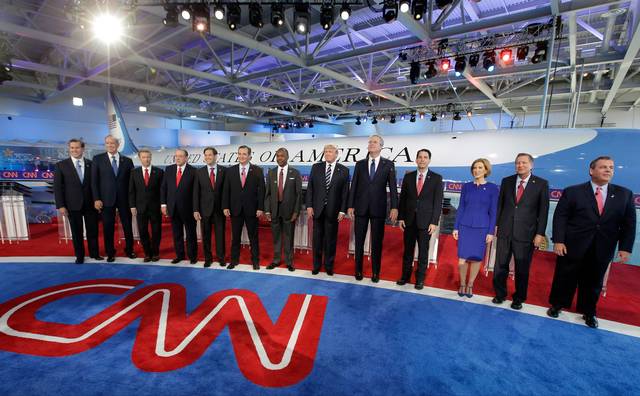
They are beginning to happen so frequently – not only on the Republican side but also on the Democratic – that it is becoming a bit mind-numbing when they come up. For the fourth time in the past three months, however, the Republican Party will be gathering at the Milwaukee Theatre in Wisconsin for another two tiered debate. The debate, hosted by Fox Business Channel and moderated by FBC’s Neil Cavuto, Maria Bartiromo and Wall Street Journal editor in chief Gerard Baker, may appear to be the same on the surface, but there are underpinnings that have changed some of the dynamics.

The change will be apparent from the pregame show, otherwise known as the “kiddie table” debate. Gone from that stage will be former New York Governor George Pataki and current South Carolina Senator Lindsey Graham, who have both been polling in the microscopic digits and were deemed as no longer viable in the race by Fox Business. Despite both candidates complaining that the Republican National Committee is looking to knock out candidates rather than have their constituency decide (Graham stated on MSNBC that the RNC “couldn’t run a one-car funeral”), neither man will be in attendance when former Pennsylvania Senator Rick Santorum and current Louisiana Governor Bobby Jindal take the stage for the opening act on Tuesday.

It isn’t just going to be Santorum and Jindal on the stage for the pregame show, however (despite the high comedy of how they would attempt to “out-righteous” each other for the evangelical vote). Coming down the ramp like wrestlers in the WWE to battle against The Religious Way (oh, wait…they’ll be looking to join the team!) will be two veterans of the “Main Event,” former Arkansas Governor Mike Huckabee and current New Jersey Governor Chris Christie (at a combined weight of 600 pounds!). These two gentlemen have been cast away from the main debate for the same reasons that Pataki and Graham aren’t around anymore; their poll numbers have plunged to a depth that they no longer are considered serious contenders for the GOP nomination.

This will leave eight players – political outsiders Dr. Ben Carson and businessman billionaire Donald Trump (tossing the lead back and forth between each other), Florida Senator Marco Rubio (garnering more support from the “establishment” wing of the GOP as they desert another candidate), Texas Senator Ted Cruz (clinging to the Tea Party vote while he waits for Trump to leave the campaign), former Florida Governor Jeb Bush (losing that establishment vote while eliminating exclamation marks from his campaign slogan in favor of “fixing” something, just what isn’t known), Ohio Governor John Kasich, former businesswoman Carly Fiorina and Kentucky Senator Rand Paul – to take the stage for the “Main Event” on Tuesday night. Debate organizers probably could have cut Paul, Kasich and Fiorina (who has plummeted after making her run out of the “minor leagues” to the Adult Table due to her inability to find a subject to run on) for the same low poll numbers that they have been using in dismissing others, but they (and the RNC) probably didn’t want to appear that they were trying to manipulate the game too much. As such, they will be trying to wedge themselves into discussion amongst the Top Five candidates, who are viable in that they control roughly 75% (76.6% to be exact, according to Real Clear Politics) of potential GOP voters.

Not only have the dynamics of the participants changed for this fourth debate, there will probably be noticeable changes to the general tenor of the questioning from the Fox Business Channel moderators and staff.

The first debate, basically a “get your feet wet” affair, was on the home turf of Fox News Channel, but some of the candidates still found something to bitch about even though their questioning was rather low-key. The second debate, conducted by CNN, amped up the pressure on the candidates over a three hour span (the longest debate so far of the 2015-16 primary season) and has generally been recognized as the best debate to this point. The candidates complained – especially Trump and Carson – that the debate was too long (in reality, it actually forced them to have substance rather than fluff to their statements in requiring explanation). Then there was the debacle of last month’s CNBC debate, an unruly affair that featured inane questions from the panel and outright refusal to answer questions from the candidates.

That CNBC debate, however, will hover like a smoke cloud over the Fox Business proceedings. The ineptitude of the CNBC moderators will probably remove any character questions from the Fox Business panel’s repertoire, meaning that there will be no answers to Carson’s consistently false claims in his books and in his speeches. Carson, who has come under fire for inaccuracies and perhaps fabrication of some of his past actions and achievements (most people do this but, then again, most people aren’t running for President; for the ultimate job interview, you pretty much have to be scot-free of scandal nowadays or at least have “plausible deniability”), has continually ducked those questions. Cavuto, Bartiromo and Company aren’t going to be able to query Carson on these inaccuracies lest they be besmirched with the Scarlet “G” of “gossip.”

This also means that the panel will not be able to point out differences between the candidates regarding their policies. They will probably stay far away from any sparring sessions between Trump and…well, anyone on the stage…regarding his draconian plans on immigration. There is the slimmest of possibilities that there will be some discussion between the candidates as they delve into their differences, but Fox Business doesn’t want to give the candidates the ability to say they were “set up” to fight with each other (as Cruz alleged in the CNBC debate).

Although there won’t be the circus atmosphere on the stage in Milwaukee, this is a chance to see some actual discussion on the issues (that is, if the candidates will answer the questions as they are presented to them). I WOULD like to see Trump’s feet held to the fire regarding how he plans to round up 11 million people without it looking like he’s sending an entire race to the gulag. I’d like to see Trump explain where the money is coming from for this and his other fantasyland projects such as the Great Wall of Mexico. I’d like to hear from Carson how his tax plan isn’t going to put an even larger crater in the national debt; hell, this is something I’d like to hear from all the candidates in how, if they cut taxes to the bare bones, how it is supposed to translate to more revenues actually coming into the government (the “trickle down” economics from the Reagan Administration have been proven time and again to be false).

In this explanation, I want more than “increased buying power of customers,” “repatriation of money from overseas companies” and “small business growth” as platitudes. Explain in simple terms how cutting taxes without an appropriate or deeper cuts in the spending is supposed to either stanch the growth or lower the national debt. Then also explain to me what some people are to do when those cuts are so deep that they can no longer keep their heads above water and stay in the game (re:  actually stay alive).

Rubio, Cruz, Bush, Paul, Fiorina, Kasich…there are a host of inquiries about policies that they have stated to the public that could be the basis of a myriad of questions from the hosts at Fox Business. My only hope in the debate is that we don’t get a castrated Fox Business panel that either can’t or won’t ask the tough questions in fear of “offending” the candidates. This is a Presidential debate, for fuck’s sake, and not a coquette’s debutante ball. The questioning is supposed to be harsh, unnerving and probing…you are going to be leading the strongest nation in the world and, as such, you’d BETTER be able to handle the heat of the job rather than running to a pulpit to seek permission from a “higher authority.”

Unfortunately, this is what I believe we are going to see on Tuesday night. Cavuto will have a choker on him from the Fox Business brass (or perhaps even Fox News chairman Roger Ailes himself will have his hand on the jerker chain) and will have all the strength of a neutered Chihuahua. Bartiromo will bat her eyes as she “seriously” looks into the numbers, while Baker will rubber stamp things as long as he can lock up the candidates for an op-ed in the WSJ in the near future. The debate will not be providing anything substantive that people can examine in depth, allowing the candidates themselves to crow about how “they have control of the message” (what that message is really is anyone’s guess), at least until the next debate.

Those looking to be a leader of ALL people, not just one segment of the people, have to be able to answer the hard questions and with something more than platitudes or dismissals. If a group isn’t challenged to show their abilities in leadership, then they don’t earn that chance to be a leader. If those that question them – and those that listen to the answers to those questions – allow them to bypass this process and immediately put them into leadership because of other non-leadership qualities, then you get what you asked – or didn’t ask – for.

NFL Week 9 Predictions: Teams Already Blowing Up To Rebuild For Next Season

NFLLogo

Although technically there are no teams eliminated from playoff contention yet, there are a couple National Football League franchises that have begun to blow everything up in looking towards next season. This may sound weird only nine weeks into the season but, by using the last half of the 2015 season as a way to look over their current personnel, many teams will have a head start on knowing what they need to look for come the 2016 NFL Draft or free agency. Sure, these teams may miss not being around for the playoffs, but they’ll be able to rebuild quicker and be more competitive in the future through blowing apart any semblance of a team that will contend this season (at least that’s the theory).

The latest team to go about waving the white flag for 2015 is the San Francisco 49ers. Mired at 2-6 and in the basement of the NFC West, the ‘Niners traded away arguably one of their best assets, TE Vernon Davis, to the Denver Broncos this week for basically a bag of Ramen noodles. After trading Davis, Head Coach Jim Tomsula, despite feverishly backing him all season, benched starting QB Colin Kaepernick in favor of QB Blaine Gabbert, who last started a game in 2013 with the powerful perennial contenders the Jacksonville Jaguars. After the defections from their defense during the offseason, the players on the offense who left (Frank Gore, wherefore art thou?) and these moves by the front office, the surrender banner is up in the City by the Bay.

That banner is also flying on the shores of Lake Huron. The Detroit Lions (1-7, last in the NFC North) fired several offensive coaches prior to their trip to London to play the Kansas City Chiefs and, upon their return, cleared the front office last week by getting rid of General Manager Martin Mayhew and President Tom Lewand. Following the bloodletting, Owner Martha Firestone Ford ironically said the team wasn’t “giving up” the season, a statement that ranks up there in truthfulness right alongside “I have complete confidence in my Head Coach.” The only thing they’ve got left to cut is players and more coaches, with Head Coach Jim Caldwell’s seat perhaps the hottest of them all.

The reason we bring these situations up? If you’re betting on the games (you know, if you live in an area where that kind of thing is legal), you always like to know when teams are just trying to get through the year, pick up that paycheck each week and look to either getting ready for next season or getting away from the team they are on. There’s are several other teams that might fall into this list in the next couple of weeks (Chicago Bears, Dallas Cowboys, Tennessee Titans, San Diego Chargers…we’re looking at you, guys), but always try to keep a pulse on what the mental state of a team is like when looking over the lines.

(Home team in CAPS, pick in bold)

Green Bay Packers vs. CAROLINA PANTHERS (+2.5); OVER 46.5

It was amazing to watch that game last week between the Packers and the Broncos and watch as the Broncos defense completely stifled Green Bay QB Aaron Rodgers. Here was a two-time NFL Most Valuable Player being completely stuffed by the Broncos, throwing for only 77 yards FOR THE ENTIRE GAME. While the Panthers don’t have (we think) the same defense as the Broncos, they are going to be scouring that Bronco/Packer game film to find some tricks to use against the Pack again.

I really don’t see how the Packers, on the road for the second week in a row and coming off a devastating loss, are favored heading into this game. Sure, the Panthers allowed a sputtering Indianapolis Colts squad back into their contest on Monday night before eking out a win to go 7-0, but the ‘Cats ruled the game for the most part on both sides of the ball. With QB Cam Newton getting more comfortable with his receiving corps, TE Greg Olsen doing a Southern impersonation of Rob Gronkowski and RB Jonathan Stewart continually and consistently pounding the ball on the ground, this should be a game that the Panthers win outright.

Oakland Raiders vs. PITTSBURGH STEELERS (-4.5); UNDER 48.5

The Raiders have been gaining respectability over the past few weeks and, if you can believe it, are currently battling with the New York Jets and the Steelers for the two playoff spots in the AFC (if the playoffs started today). This would be a good time for them to pull out a victory, on the road at Heinz Field against the men from Steel City, and improve their chances for making the playoff for the first time since 2002.

Something is going to have to give in this game. Will Raiders QB Derek Carr and rookie WR Amari Cooper be able to run roughshod over a Steeler D that resembles more of an “Aluminum Foil” Curtain than Steel, or will a rested QB Ben Roethlisberger (back from his injury and working off the rust last week) and WR Antonio Brown bring the firepower back to the Steeler passing game while RB DeAngelo Williams picks up the slack after the season-ending injury to Le’veon Bell? My pick goes to the Steelers, who battled the AFC Central leading Cincinnati Bengals all the way to the end in a 16-10 loss and showed they might not be a team you want to sleep on for the remainder of the season.

Tennessee Titans vs. NEW ORLEANS SAINTS (-7.5); OVER 48

What the hell happened to Saints QB Drew Brees last week? His historic performance (505 yards, 7 TDs) against the New York Giants (in the third highest scoring output in regular-season NFL history, 52-49) might signify that the Bayou Boys may have started to wake up from their early season slumbers. That has probably come at a good time as Carolina (undefeated) and the Atlanta Falcons (6-2, two games ahead but lost the first meeting with the Saints) were threatening to run off with the NFC South.

The Titans aren’t exactly going to throw any fear into the face of Brees or the Saints. Although their defense is holding teams to 22.7 points per game (expect the Saints to have that in the first half on Sunday), Titans QB Marcus Mariota has cooled off after his quick start and the offense is only mustering up slightly more than 18 points a game. Firing former Head Coach Ken Whisenhunt during the week also isn’t going to make for a well-rehearsed game plan, so expect the Saints to administer another drubbing.

Last Week:  3-3
Overall:  25-14-2

Another grotesque weekend in breaking even. Despite being Nostradamus on the Seattle/Dallas game (nailing Dallas plus points and the under), I crapped the bed the rest of the way. Only the low scoring 49ers/Rams game eked me out a .500 weekend as everything else went wrong. The record looks good for the overall year, the past couple of weeks needed some work; we’re going to get that started this week.

How to Fix the Presidential Debates

2016GOPCandidates

Since the conclusion of the last GOP Presidential debate that was held on the cable network CNBC – a truly dismal effort that left nobody satisfied with the outcome – there has been bellowing from pretty much everyone. Yes, the CNBC debate was a clusterfuck from the start – with three moderators and two guest questioners, it was never clear who was in charge – but once they became coalesced around an issue, the Republican debate participants struck back with veiled threats against the “mainstream media” (important point here:  if you’re going to govern a country as vast as the United States, you’re going to need that “mainstream media” at some point to get things done). It left the entire night as a giant stain on the 2016 Presidential campaign process.

The candidates complained about a multitude of things, including the length of the debate, the number of questions received, the quality of the questions and so forth. The moderators, in their defense, were faced with participants who, when presented with a viable question – such as Dr. Ben Carson’s involvement with the snake oil provider Mannatech, Senator Marco Rubio’s attendance in the Senate, how billionaire Donald Trump plans on paying for his myriad of xenophobic programs or why Senator Ted Cruz was against the recent compromise that passed a federal budget out of Congress and to President Barack Obama for the next two years – either didn’t answer the question, answered another question that they wanted to answer, waited for a partisan GOP audience to air their opinion through booing or attacked the moderators and the media. When you have this type of Mexican standoff (which Trump is now looking to wall off at Ciudad Juarez), there’s not much that is going to occur in said debate.

Now the candidates have decided to set up their own rules for how debates will be conducted. There is supposedly a letter that a majority of the 14 remaining candidates in the GOP race have gotten behind (bypassing the logical arranger for such events, their own Republican National Committee) that is being sent out, but it isn’t to be taken seriously. The letter supposedly would allow the candidates to vet the moderators, review the questions of the debate before it is conducted and such bullshit as whether there will be a gong, bell or buzzer to indicate their time is up when answering a question.

It was announced on Thursday night that next week’s debate on November 10 (which wasn’t expected to fall under this supposed “letter” being drafted) and being aired on Fox Business Channel will already have a smaller “main event” field. Through their criteria, Fox Business has chopped the “main event” debate stage down to eight, separating New Jersey Governor Chris Christie and former Arkansas Governor Mike Huckabee off to the “kiddie table” debate beforehand. That “kiddie table” debate has also been chopped, with former New York Governor George Pataki and current South Carolina Senator Lindsey Graham being eliminated from the debates altogether. Those that are being dropped down or out completely are not polling at the prescribed levels by Fox Business and, as such, have met the axe as to the debates and probably will soon as a viable candidate in the GOP race.

As a result of some of these changes, get ready for more whining out of the GOP candidates. If the GOP candidates – and also their Democratic brethren – want a chance to take on a serious debate, replete with issues to discuss, then it would be necessary to follow these rules.

2016DemocraticDebates

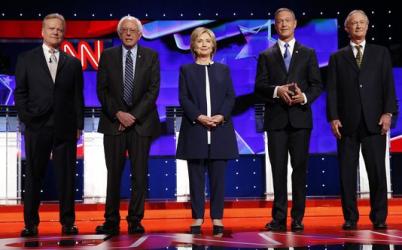
Both Parties Must Have a Debate On Foreign Ground – The GOP is the only party who has stepped outside of their traditional “home turf” of Fox News (or Fox Business), where they could be semi-comfortable in that they would receive a decent hearing (even these GOP candidates, however, complained about the Fox News debate). The CNN GOP debate was considered to be quite good as the longest debate yet, providing for more discussion of the issues but not enjoyed by Trump or Carson, who lack the background to describe how their policies would work other than “they’ll be great.” By this point, you already know about the CNBC snafu. The Democratic Party hasn’t left its cozy home with CNN and their next “debate” – a candidates’ forum in South Carolina on Friday night that will feature former Secretary of State Hillary Clinton, current Vermont Senator Bernie Sanders and former Maryland Governor Martin O’Malley (Lincoln Chafee, Jim Webb and Lawrence Lessig have ended their campaigns since the first Democratic debate a couple of weeks ago) – will be hosted and aired by MSNBC and commentator Rachel Maddow.

Each party has their partisans; I would be more interested in how they speak to a hostile audience and, just maybe, both sides could have a chance at swinging those in the middle ground to some of their viewpoints (this would also help as far as governance, but that’s another story for another time).

The Arbiter Determines All – While one or two moderators is OK, one should be the rule. There should be only three questioners involved in the game and the participants in the debate have NO RIGHT to choose who they want to fire questions (why would I want to hear you and a “friendly” questioner lob softballs all night?). Finally, there will be one voice who makes all determinations on the floor of the debate hall – The Arbiter (usually a moderator would do this, but they are too encumbered by their own networks to draw in ratings and worried about any potential future dealings with the candidates to have the balls to do anything).

The Arbiter will be an unknown person, presumably with knowledge about debate procedure, the subjects that would be presented during the debate, the histories of the participants involved in the debate and should have as little involvement with one political side or the other or be in media as a current broadcaster (if it has to be, then The Arbiter should be from the opposing party or media outlet – couldn’t you imagine someone from the Wall Street Journal serving as The Arbiter for an MSNBC debate and someone from the New York Times handling the Fox debates?). The Arbiter will be in charge of officiating the event and providing the punishments (we’ll get to that in just a second) that will be meted out for violations of the debate protocol. At the end of the debate, The Arbiter slinks back into the dark, never known by those who were in attendance.

The Arbiter will have several weapons at his/her disposal:

Question Refusal – The Arbiter will have the right, after a question is posed, to determine if the question is worthy of being answered. Such questions as whether some other candidate has the “moral authority” to do something or something that prods two candidates to spat at each other over insignificant bullshit would be the main thing that The Arbiter is looking for. If a questioner poses such a question, the first infraction is a warning with a second infraction resulting in a 10-minute penalty (removal from the debate). A third violation will result in the questioner’s removal from the remainder of the debate.

Microphone Control – The Arbiter would have control over the candidates’ microphones for the purpose of keeping them on track with questions. If a candidate is posed a question and said candidate either starts off on a tangent or doesn’t address the question directly, The Arbiter has the power to cut the candidate’s microphone. The Arbiter will pause for five seconds before reactivating the candidate’s microphone and, if at any time during the candidate’s response he goes off topic again, The Arbiter will end the question by shutting off the microphone for the remainder of the question.

The Arbiter will also be in control of how long the candidate speaks; once the candidate has reached the maximum allotted time (60 seconds in the previous debates), The Arbiter will cut off the candidate’s microphone permanently unless asked a follow-up question.

If the candidate cannot keep on track with his replies to the questions being posed, The Arbiter will have the right to remove the candidate from the debate or, if the candidate refuses to move, will have his microphone cut off for the remainder of the debate and his/her constant interruptions will begin to annoy everyone.

Question Count – The Arbiter will be responsible for keeping a running count (can be aided on this by electronic timing of each candidate’s responses) or time bank on how many questions each candidate has received and/or how much time each candidate has been speaking. If The Arbiter notes a predominance of questions to a few candidates, then he will inform the moderator and the moderator must change tactics and ask other candidates questions until The Arbiter feels it is balanced out.

Have a Manageable Debate Field – This has been the major problem with the GOP debates is the number of people on the stage. When you have 10 candidates looking to make their mark in a two hour debate, the most a person is going to be able to speak is probably around seven or eight minutes (once you deduct commercials, opening and closing statements and audience applause/outrage/outbursts). In the GOP field, there is probably no more than six viable candidates (I’ll let you choose your six); the Democrats have already limited their field from six to three, so they are on course for the primaries.

The whittling of the field is useful because, if you’re drawing 1% of the vote six months to a year after you announced your candidacy, the likelihood of you earning the party’s nomination next summer is highly unlikely. It’s simply a numbers game in that you aren’t going to get the attention as someone at the back of the pack that the frontrunners are going to get from being the, well, leaders. It IS a Catch-22, but that’s the way many things are in life. Unless the front six are mysteriously overcome with a debilitating illness that renders them incapable of running for office (and Christie isn’t above trying to inflict said illness on the frontrunners), you’re going back to your previous job or hosting duties on Fox News.

Implementing these rules – and simply letting the respective committees, the RNC and the Democratic National Committee – handle the nuts and bolts of debate preparations is the logical way to go. You’re running for the most important office in the United States; being concerned that the debate hall has a temperature more than 67 degrees shouldn’t be on your mind. Policy thoughts, debate tactics and proving yourself to U. S. citizens should be your goal. As President Obama also stated earlier this week, if you aren’t able to handle the queries of journalists from the news networks, you’re going to have trouble handling Putin.

Will these rules be adopted? No way in hell…but it would make for a more streamlined debate with plenty of policy discussion. And who wouldn’t want to see The Arbiter enforce his rules on both bags of bozo biscuits running for President?

The Coming Downfall of Broadcast Television

Roku4

There have been some things that have been consistent in the average person’s life when it comes to entertainment. The theater has been around since the Greeks and Romans put plays on in their massive outdoor amphitheaters and musical concerts have almost the same longevity. The change has come in the way that those things – acting and musical performances, along with sporting events – have been delivered to the populace.

In the really “old days,” the only way to partake of these artistic or athletic endeavors was in a live setting. With the creation of radio, it became possible for people to join in on a concert or sporting event from several hundred, even thousands, of miles away. When television came along in the 1920s, the picture was added to the radio broadcast and became the preferred way for people to witness events from thousands, even millions (remember the moon landing in 1969?), of miles away. As technology improves, however, many of these avenues are becoming extinct or may become extinct over the next decade or so.

First to go was radio. The normal terrestrial radio – replete with commercials – lasted for over 100 years before the advent of satellite radio came along. At first, many said “I’m not going to pay for radio,” but, as time, technological improvements and personal choices came to the fore, people decided to pay for satellite radio. Today, SiriusXM and its array of channels challenge terrestrial radio across the board in the ability to deliver breaking news, sporting events and musical events and artists’ recent musical output. It doesn’t bode well for the future as more terrestrial radio stations become “automated” – basically eschewing live DJs for stale canned programming to reduce costs – and the satellite stations boom, basically destroying an industry 100 years or more in the making.

A similar situation is happening in the world of television. Just a little younger than the radio industry, television has been a staple of U. S. households since it was popularly mass-produced in the 1950s. Over the past 60-plus years, television has not only brought to those around the world important historical moments – the moon landing, the fall of the Berlin Wall, the standoff at Tiananmen Square, the bombing of Baghdad in the first Gulf War – but has also brought hours of entertainment through movies, musical concerts, comedies and dramas.

Those traditions are quickly changing and nothing shows it more than the recent announcements from two powers in the television world, one a major network and one a cable powerhouse. It was announced on Monday that CBS Television Studios would be bringing a new entry into the Star Trek universe come January 2017. While not commenting on what tack the new series will take, it does have the power of Alex Kurtzman, who produced the 2009 theatrical version of Star Trek and 2013’s Star Trek Into Darkness, behind it.

The crossover of Kurtzman from the Big Screen to the Little Screen isn’t the important change, however. CBS has already stated that the premiere episode of the new Star Trek series would be broadcast on its regular network airwaves. Following that, the premiere and each new episode would be seen on CBS’ brand new on demand outlet, CBS All Access, and would not be broadcast on the traditional airwaves ever again.

After this announcement regarding the CBS/Star Trek partnership, it was announced on Tuesday that longtime cable television giant HBO and former The Daily Show front man Jon Stewart had joined forces for him to issue commentary during the upcoming 2016 Presidential campaigns. So what will be the name of Stewart’s new show that will premiere next year? It won’t be a show and it won’t be on HBO, fans; it will be “short form digital content,” or online efforts, with Stewart offering commentary that will appear over HBO’s on demand and streaming outlets HBO NOW, HBO GO and other arenas.

What do both of these legendary entries do? Sidestep the traditional broadcasting arenas in favor of online or “streaming” outlets, signifying that there is a coming downfall of broadcast television.

NetflixLogo

Since the beginning of the 21st century, this transition has been pretty easy to see coming. Netflix wormed its way in with its creation in 1999, initially offering only DVDs to customers as an alternative to the “big box” movie rental outlets such as Hollywood Video or Blockbuster Video. Not only did Netflix crush those outlets with its business plan, they soon grasped onto the idea that they could do television just as well as the traditional broadcast networks. Such now-acclaimed dramas and comedies as House of Cards and the resurrected Arrested Development got their start in 2013 on Netflix and the acclaimed Orange is the New Black premiered in 2014. Since these and other shows premiered, Netflix has earned over 50 Emmy nominations and won 11 times.

After Netflix showed the way, there were many who followed. Hulu and Amazon Prime Video now have their own streaming video networks in addition to their usual movie rentals and they have made their impacts not only on broadcasting but on awards shows with their own original programming. Even the traditional networks, such as what CBS has done above, have entered into the digital arena.

ChromeCast

If you’re going to have the non-traditional broadcast sources, you have to have a way to get it to the people. With Roku, ChromeCast, AppleTV and software on the Xbox and PS4 video game systems, there are ways to use an internet connection to pretty much see anything that might appear on network television that same day or within a couple of days of a program’s original broadcast (if it is on the network’s digital outlet, then the next day). The combination of these internet streaming options plus the drive to sever the ties with cable could very well doom the traditional network outlets and cable television.

Cable television, as traditionally offered by Comcast, Time Warner and several other outlets, offers different packages for homes in their areas. Households can pay anywhere between $20 (for the barest bones package that basically only gives the local broadcast networks) and $300 (for every bell and whistle available, not to mention internet access and/or phone) for cable television programming. If people were able to make the choice to buy the channels that they like and want – say a Netflix here, an ESPN there, etc. – and pay drastically less than what they pay for cable, people will do that in a heartbeat.

Cable broadcasting will more than likely end when those device providers – Roku, ChromeCast and the others – start providing “bundles” of channels at a low price for their viewers (this might also be the saving grace of broadcast television in that they could negotiate rights, much like they already do with the cable companies, with the streaming providers). These “bundles” could offer local television station programming, a sports channel or two, a movie channel and a news channel for next to nothing. You could have a sports package, a movie package or a news package to go alongside the local channels that can be picked up with a digital antenna. Then there is always the fallbacks of Netflix, Hulu and Amazon that could bring the programming.

There is one problem that could be present for those looking for the utter devastation of cable. Live televised sports still provide the most viewers in television – look at the numbers for football’s Super Bowl or for soccer’s (the rest of the world’s football) World Cup. The individual leagues have been looking to this, however, and have come up with streaming options that could easily make their way to a streaming home.

Major League Baseball’s MLB.tv is something that is offered year round (usually using the feeds from the local team’s affiliate) and the National Football League recently broadcast one of their games between the Buffalo Bills and the Jacksonville Jaguars not only from London, the United Kingdom but also exclusively streamed over the internet. If the individual leagues can figure out a way to remove the broadcast networks from the equation and monetize their offerings, they will be the first to “cut the cord.”

And this doesn’t even add into the mix the expanding world of mobile programming, or watching traditional television on your cellphone…

The moves by CBS and HBO (and others, to be honest – the situation is rapidly changing) to bypass the traditional network broadcasting routine for straight-to-digital broadcasts signifies a seismic change, a strange new world for the future of television broadcasting. Will the other companies in the industry catch up? Will the cable companies be able to make adjustments in their offerings? Will the streaming channels and the devices that provide them take the idea of “cutting the cable” all the way to the logical fruition of cable’s destruction? The coming years will provide the answers.

Wondering Whatever Happened To…For November 3

Wondering whatever happened to California Congressman Gary Condit while pondering…

What If There Wasn’t Any Grits? – Pointing out the ignorance of some when it comes to the issue of the Confederate Battle Flag, a Tupelo, MS man is in jail facing a potential life sentence for using an explosive device against the retail outlet Walmart.

According to reports from local papers, Tupelo Police Chief Bart Aguirre said that 61-year old Marshall Leonard threatened the megastore a few days ago when he wrote on the local paper’s Facebook page, “Journal corporate, you are on final warning. You are part of the problem. As a result of this, y’all (sic) are going down, along with Walmart, WTVA (a local television station), Reed’s department store and all the rest of the anti-American crooks. I’m not kidding. No messing around anymore!”

While some might have thought this to be the ravings of a lunatic, this was a lunatic who decided to take action. On Sunday morning at about 1:30AM, Leonard allegedly drove his car to the local Walmart in question, lit a package on fire and threw it in the entryway of the store. An employee standing nearby was told by Leonard, “You better run,” and, as the employee did, a small explosion went off that didn’t cause much damage to the store.

So what was Leonard’s problem with Walmart? The factor that the superstore had quit selling the Confederate Battle Flag. Leonard is an outspoken opponent of current legislation, Initiative 55, which would remove the Battle Flag from the current Mississippi state flag permanently. Leonard doesn’t believe the flag to have any racial or slavery overtones (despite the statement in the documents of secession by the state of Mississippi in 1861 stating, “Our position is thoroughly identified with the institution of slavery – the greatest material interest of the world.”) and has been tossed out of a city council hearing on the subject (while draped in a Battle Flag).

The police didn’t have to investigate too deep to find Leonard either. Leonard’s vehicle, with a flagpole sticking through the roof that displays the Battle Flag while he drives, ran a red light at 2AM after allegedly tossing the explosive device into the Walmart. Police stopped Leonard and, as their radios crackled with news of the bombing, Chief Aguirre said, “We quickly figured out we needed to hang on to this suspect.”

Why Should I Be Educated If I’m In Heaven? – In another entry into the idiocy of the South, parents of nine Texas children are suing the state over their home-schooling techniques. Texas laws are quite permissive regarding what home-schooled students have to learn and one family, the McIntyre family of El Paso, TX, decided they didn’t need to have a curriculum, any oversight from local officials and didn’t have to take any of the tests that children in public and private schools had to take. Why? Why waste time on education when the Second Coming is upon us.

The situation came to light after the 17-year old daughter of the family ran away from home and, upon being placed in the foster system and in a real school, couldn’t keep up with her peers (seniors). She was placed in a ninth-grade class and was even struggling to keep up at that pace. Further investigation by authorities through other family members found that not only was there any “home schooling” going on, but the parents were flaunting the results.

According to Tracy McIntyre, the twin brother of Michael, the other children were “never reading, working on math problems, using computers or doing much of anything educational.” The reason that Tracy gave for this was Michael telling him that the children’s learning was unnecessary because “they were going to be raptured.”

The El Paso school district began to investigate further, at which time the McIntyre’s sued them for “oppressing their right to not educate their children.” In a deeply Republican state, the family called the all-Republican Texas Supreme Court “anti-Christian” and claimed that the oversight by the El Paso school system is “a startling assertion of sweeping governmental power.” While these claims may sound as ludicrous as they look, there is a chance that they might have some effect; the current head of the Texas Board of Education is a Christian homeschooler and Governor Greg Abbott is staunchly behind the homeschooling system, which in many conservative homeschooling cases lacks any knowledge of sciences, technology or mathematics and instead delves into Bible-based explanations of subjects.

But The Slurpee Machine Is Always Spotless! – We already know that there is a great deal of waste in the U. S. government and, in particular, in military spending. But a $43 million gas station?

In a recent report from John Sopko, the Special Inspector General for Afghanistan Reconstruction, the building of a compressed natural gas station cost an alleged $43 million, including $30 million in overhead costs (operational expenses) in a country where few vehicles exist and those that do don’t run on natural gas. Not only was this station highly expensive (a similar station in Pakistan was built for $500,000), but there was no examinations of whether building the station was feasible or not ever performed or ever deemed necessary.

“One of the most troubling aspects of this project is that the Department of Defense claims that it is unable to provide an explanation for the high cost of the project or to answer any other questions concerning its planning, implementation or outcome,” Sopko stated to the Washington Post. The reason? The department that was in charge of building the station, the Task Force for Stability and Business Operations (with an $800 million budget), was closed six months ago and the Pentagon has no comment on its activities.

Simple investigation by Sopko questioned the legitimacy of building the station. With a non-viable market for natural gas vehicles, Afghanis would have to convert their vehicles to the fuel. The cost of such a conversion is around $700. The problem there is that the average Afghani wages for a year are $690.

Sopko says he will continue to investigate the situation but, without cooperation from the Pentagon, it is unlikely he will find any reasons for the wasteful spending.

The Inmates Running the Asylum, Part 420 – The candidates for President on the Republican Party ticket have been loudly complaining about how the three debates they have taken part in (especially the last one on cable station CNBC) have been conducted, despite the first debate being conducted on their home ground of Fox News and a second debate on CNN considered fairly decent. Now, instead of allowing for a central group to set the standards for debates – say, perhaps, their own Republican National Committee – the candidates want to set the rules that future debates will be held under until the party’s convention next summer.

GOP candidates have floated such ideas as keeping the room at 67 degrees, splitting the 14 remaining candidates into two randomly picked groups of seven and asking them the same questions and setting strict time limits on the proceedings. It is expected that some of the candidates have already coalesced behind some framework of demands for the forthcoming debates (probably those after their November 10 scheduled debate), but one candidate thinks he can get more through his negotiations (take a wild guess).

Representatives for billionaire Donald Trump, who has seen his numbers of late slide as Dr. Ben Carson has slowly gained traction, are currently refusing to sign any letter of demands alongside the other candidates, believing that through his own force of will he can get more. According to the New York Times, however, Trump is actually hurting the cause because the candidates only have power if they are united. If they are fragmented or are asking for far too much from debate organizers, then the possibility of the networks, the RNC or even the candidates canceling a debate comes into play.

First they couldn’t find a Speaker for the House of Representatives, now they can’t determine a debate format – it truly is the inmates running the asylum.

Now to answer the question…what happened to California Congressman Gary Condit?

Through the 1990s, Gary Condit was a rising star in the Democratic Party. A congressman from California, Condit looked the part of the perfect representative from the Golden State, with a pearly smile and ambitions of even bigger things in his future. The discovery that he was having an affair in 2001 with an intern by the name of Chandra Levy effectively derailed his burgeoning political career.

The discovery of the affair only came about after Levy disappeared in May 2001 and Condit, who vehemently accused then-President Bill Clinton of illicit activities with intern Monica Lewinsky in the 1990s, for some time was considered a suspect in her disappearance (in 2010, an illegal immigrant from El Salvador was convicted in Levy’s disappearance and murder). It was enough to derail his career; in 2002, Condit was defeated for reelection in the 18th District in California and, instead of going back home, moved to Arizona.

In Arizona, Condit opened up an ice cream store franchise that failed and in which he is currently embroiled in litigation over. His son, Chad, is attempting to follow in his father’s footsteps (hopefully not literally) in running for Congress in California’s 10th District. Condit, at 67, has called it a career in politics, now serving as the president of the Phoenix Institute of Desert Agriculture, a non-profit group created in 2011 with offices strangely located in San Diego, CA, that doesn’t list any responsible owners or operators.

NFL Week 8 Picks: Will Anyone Go Undefeated?

NFLLogo

We’ve now hit the metaphorical halfway mark of the National Football League season and somewhat surprisingly there are still five teams that have undefeated records to this point. The New England Patriots became the first team to crack the 7-0 mark with their decimation of the Miami Dolphins on Thursday night and the Cincinnati Bengals, Denver Broncos, Green Bay Packers and Carolina Panthers will look to join them at that mark (as Denver and Green Bay play each other on Sunday night, however, one will be eliminated). So who has the best chance at finishing off the regular season undefeated as the Patriots did in 2007?

As mentioned above, one of those teams will be eliminated on Sunday night (and that will be one of our picks, so we’ll get to that later). A year removed from winning their division with a losing record (7-8-1), the Panthers are a long shot to finish the season clean as, even this late into the season, QB Cam Newton is still getting acquainted with much of his wide receiver corps. At one point this season – perhaps when Green Bay visits on November 8 or when the Panthers visit Dallas on Thanksgiving Day in their fourth game in 18 days – the Panthers will get tripped up.

Some may see Cincinnati as a good candidate, but that isn’t true. At this point, the only team close in the AFC North is Pittsburgh and they are 2½ games behind the Bengals in the standings. If Cincinnati were able to sew up the division crown by the beginning of December – a good possibility as their next three games are on the road against Pittsburgh this Sunday and two home games against Cleveland and Houston – they would probably want to give some players a rest and likely lose a game before the playoffs would begin. November 22 is also a key date as they have to travel to play a tough Arizona team in Phoenix.

That leaves us with (ugh) the Patriots. Tom Brady has entered “Fuck You” mode again and is punishing teams and, by extension, the NFL for how they treated him and the Pats at the end of last season. Nothing would make Brady happier than running the table again (remember, they came up just short of perfection in 2007 when they lost the Super Bowl to the New York Giants) and this time completing the deal, just to see the look on Commissioner Roger Goodell’s face as he hands him the Lombardi Trophy again. Key dates for the Pats would be in back-to-back games at Denver on November 29 and at home against Philadelphia the following weekend.

I wouldn’t exactly rush out and put a bet on the Patriots running the table again (you know, if you’re in an area where you can legally do that), but you never know. This weekend’s games, however, have some pretty good value in them.

(Home team in CAPS, pick in bold)

San Francisco 49ers (+8) vs. ST. LOUIS RAMS; UNDER 39

As inept as the 49ers have looked over…well, the entire season, they aren’t this bad a team that they can’t play a close game against the lowly Rams. They have won two of the last three meetings against the Rams and both teams are mired at the bottom in total offense in the NFL. Usually a close game dominated by the running games will be under 40 points (the teams have averaged 36 points per game combined over the last three) so we’ll take the points and go with the UNDER here.

Seattle Seahawks vs. DALLAS COWBOYS (+5); UNDER 41

Cowboys WR Dez Bryant is looking like he will give this game a go, which would benefit backup QB Matt Cassel tremendously (no word on when Tony Romo will be back under center for the ‘Boys). The Seahawks aren’t the same team on the road as they are at home in the Northwest, where the ‘Pokes beat them last year 30-23. Both team’s defenses are in the Top Ten in the NFL, which is going to keep the score down and keep the Cowboys in the game until the end. There is a possibility that the Cowboys could win this outright.

Green Bay Packers (-3) vs. DENVER BRONCOS; OVER 45.5

One of these teams will leave Sunday night’s game with the first blemish on their record this season. I would normally take Denver with QB Peyton Manning all day in this game, but the Broncos aren’t exactly the Broncos of the last two seasons. They have scraped by in some ugly games, Manning’s not exactly the howitzer now that he has been in the past and there is a serious lack of a rushing game (a Denver team ranked 31st in rushing? Say it ain’t so…). With mild conditions expected in the Rocky Mountains on Sunday night (temps in the mid-60s, light winds), I believe that Packers QB Aaron Rodgers will take the Pack home from Denver early Monday morning as an undefeated team with a shot at also running the table and going 16-0.

Week 6 Results:  3-3
Overall:  22-11-2

It was one of those “meh” efforts during Week 6 (I took my “bye” week for Week 7) with the Dolphins crushing Tennessee in their first game under new head coach Dan Campbell (two losses), the Bears covering the spread against Detroit in a game with no defense (1-1) and dead on picked the Steelers to cover against the Cardinals in Pittsburgh (two wins). .500 weekends don’t do a damn thing for you, however; looking to get back on the right side of the ledger this week.