Who is The Greatest Hard Rock/Metal Band of All Time, Sweet Sixteen Part 2

HardRockMetal

Rather than delve into the delusion that currently is supposed to oversee this country (and trust me, there’s plenty to call the Tangerine Ignoramus out on, especially his painfully visible attempts to recreate the film Wag the Dog by rattling the battle sabers against…well, whoever he thinks will distract attention from how corrupt and owing to the Russians him and his Confederacy of Dunces are), I’ve decided to start something that will be much more fun. Since college basketball just recently completed the NCAA Basketball Championship, I thought it would be fun to do the same but in a different arena – the genre of hard rock/metal music.

What are the criteria for consideration? First, the band/singer would have to have some sort of longevity to their career – yo’u don’t see many bands or singers that are considered “legendary” if they were only around for a couple of albums (Amy Winehouse is a rare exception, but that’s a discussion for another time). Second, the band/singer would have to have an impact on the genre – did they do something particularly noteworthy or notorious that put them into the annals of the genre’s history, a song or “behavior” that was historic. Third, just how popular were they when they were in existence – a band or singer that was wildly popular with the fans might get some leeway over a critical darling OR vice versa (depending on tastes). Fourth, what accolades did they receive – awards, gold records, and recognition by the industry (Rock & Roll Hall of Fame, hello?) are all under consideration here. Finally, was the band/singer influential on future generations of music – have they helped shape the genre since they have left the sphere?

We’ve gotten down to crunch time – the Sweet Sixteen. With these competitors, you could probably make a solid argument for any of them to be the eventual winner of the tournament. But the thing is, we’re not looking for sixteen winners – we’re trying to determine who is the best. As such, we’re forging onward by working one side of the bracket – the 1980s and the 1990s – down to the four competitors who will vie for two of the Final Four seats. Who do you think should be there?

Let’s get things started with the 1980s bracket:

Gunners

Bon Jovi (1) vs. Guns ‘N Roses (4)

At first glance, these two bands are about as different as you can get, the gritty gang from L. A.’s Sunset Strip versus the Jersey Boys. But if you actually look closer, there are more similarities between them than you think. Both had enigmatic front men in Jon Bon Jovi and W. Axl Rose and both had virtuoso guitarists in Richie Sambora and Slash. Popularity wise, it is arguable that the Gunners were just as big as BJ, if not more popular, and they definitely had more of an impact on the music and served as inspirations for future headbangers. The big kicker here may be longevity, as GNR has disappeared from the scene for long periods of time; while they weren’t at the apex that they were through the 1980s, Bon Jovi has been consistently together (until the recent Sambora/Bon Jovi split) since their inception in the early 80s.

Metallica (2) vs. Slayer (6)

You knew this clash was coming between two of the monsters of metal. The problem is that it is a one-sided battle. Metallica defeats Slayer at virtually every criterion that we’ve set:  longevity, creativity, influence, popularity, and accolades. Slayer can lay claim to being the father of death metal, but Metallica were the ones who ensured that bands like Slayer could get heard somewhere. Metallica, despite their detractors who say they “sold out” when the Black Album shot them to superstardom, has always carried the banner for metal fans worldwide. Ask yourself this:  if there were no Metallica, would we have ever heard of Slayer?

And without further ado, here’s the 1990s bracket:

PearlJam

Nirvana (1) vs. Pearl Jam (4)

It was thisclose between Pearl Jam and Foo Fighters for the right to face Nirvana, but the 2017 Rock & Roll Hall of Fame inductees were able to stave off Dave Grohl and Co. at least this time around. Now they have to face off against Grohl’s first band, Nirvana, in what is an intriguing matchup.

It is really easy to say that Nirvana started the “Grunge Era” of hard rock/metal, but Pearl Jam was right along with them in breaking that ground. In fact, Pearl Jam’s Ten was released BEFORE Nirvana’s Nevermind hit the shelves (Ten was released on August 27, 1991; Nevermind was released September 24, 1991), making the argument for Pearl Jam to be the innovators of the grunge sound. Both of their vocalists perfectly captured the grunge attitude, with the late Kurt Cobain somewhat channeling Bob Dylan’s indecipherable vocal stylings and Eddie Vedder bringing an intensity to his aural assault. If there were one area that sets the two apart, it would be critical acclaim; from their start, Nirvana was always endorsed more by the critics than Pearl Jam ever was.

It’s a tough battle – but if it were easy, everyone would do it!

Rage Against the Machine (2) vs. Green Day (3)

In my opinion, this is a no-brainer, but I am sure there are plenty out there who might argue. Rage Against the Machine was damn close to being the “punk” band here, with their politically influenced lyrics, hammerhead guitars and “in your face” attitude. That has always been one of the criticisms of Green Day is that they were “punk-lite” and not a hardcore punk band (an insult to the members of Green Day, though).

Outside of that fact, the battle is a pretty close one here. Critical acclaim has to go to Rage, but in the other categories they are about dead even. You can give Green Day the edge as to longevity and maybe popularity (I am pretty sure that more people have heard of Green Day than Rage) and that might sway some of the votes. We’ll have to hear from the voters as to who gets the victor’s flag here.

RATM

Get your votes in quick because in a couple days we will take it to the Elite Eight! The middle of this week, we will see who has survived the carnage and will vie for the chance to reach the Final Four. By the end of the week, we will crown the champion and answer the question:  who is the greatest hard rock/metal band of all time?

Who is The Greatest Hard Rock/Metal Band of All Time, Sweet Sixteen Part 1

HardRockMetal

Rather than delve into the delusion that currently is supposed to oversee this country (and trust me, there’s plenty to call the Tangerine Ignoramus out on simply from this last weekend alone, such as his press secretary Sean “Spicy” Spicer trying to rewrite history that Hitler never used chemical weapons and that Jews went to “Holocaust centers”), I’ve decided to start something that will be much more fun. Since college basketball just recently completed the NCAA Basketball Championship, I thought it would be fun to do the same but in a different arena – the genre of hard rock/metal music.

What are the criteria for consideration? First, the band/singer would have to have some sort of longevity to their career – you don’t see many bands or singers that are considered “legendary” if they were only around for a couple of albums (Amy Winehouse is a rare exception, but that’s a discussion for another time). Second, the band/singer would have to have an impact on the genre – did they do something particularly noteworthy or notorious that put them into the annals of the genre’s history, a song or “behavior” that was historic. Third, just how popular were they when they were in existence – a band or singer that was wildly popular with the fans might get some leeway over a critical darling OR vice versa (depending on tastes). Fourth, what accolades did they receive – awards, gold records, and recognition by the industry (Rock & Roll Hall of Fame, hello?) are all under consideration here. Finally, was the band/singer influential on future generations of music – have they helped shape the genre since they have left the sphere?

RRHallofFame

We’ve gotten down to crunch time – the Sweet Sixteen. With these competitors, you could probably make a solid argument for any of them to be the eventual winner of the tournament. But the thing is, we’re not looking for sixteen winners…we’re trying to determine who is the best. As such, we’re forging onward by working one side of the bracket – the 1960s/70s and the 2000s/10s – down to the four competitors who will vie for two of the Final Four seats. Who do you think should be there?

Let’s start with the 1960s/70s bracket:

Led Zeppelin (1) vs. Judas Priest (4)

It’s almost as if these two were destined to meet at this point. In looking at the two competitors, both have left legacies that are unmatched. Both have iconic singers (Robert Plant for Zep, Rob Halford for Priest), both have iconic guitarists (Jimmy Page versus two for the Priest, K. K. Downing and Glenn Tipton). The backbeat is where there’s a notable difference as Zeppelin had John Paul Jones on the bass, a better player than Ian Hill. Drumming is also where the two bands separate as Led Zep had the powerful John Bonham on the skins while Judas Priest had a revolving door of drummers (they were the inspiration for the drummer du jour in This is Spinal Tap). But Priest has longevity on their side, still being a viable act on the road today. Zeppelin ended with the death of Bonham, although the other members went on to quite successful solo careers.

What might make the biggest difference is that Led Zeppelin are the better musicians overall than their counterparts in Judas Priest, but that is also highly debatable and there are legions of Priest fans who would love to debate it! It’s going to be a tough choice. Who do you see moving on?

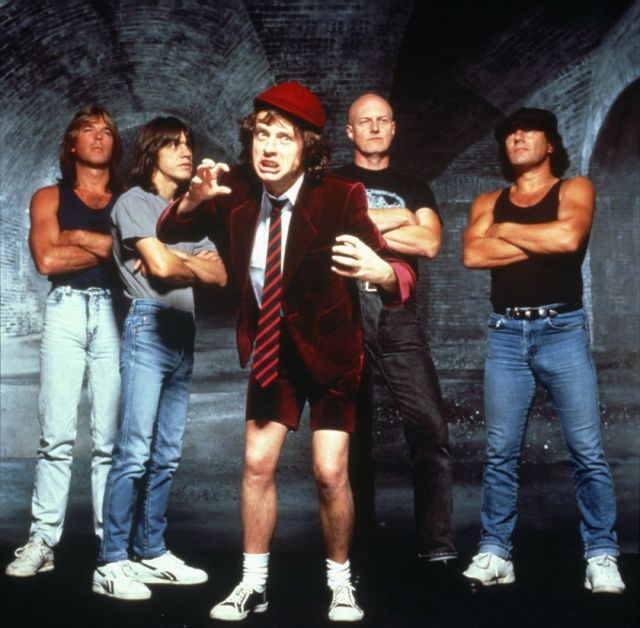
ACDC

AC/DC (2) vs. The Who (6)

The Who has been surprising the opposition to this point (perhaps underseeded?). After going through Jimi Hendrix and Deep Purple, they have the audacious task of taking on the behemoths from “Down Under” in AC/DC. Both have inspired their fair share of musicians and singers in their times, they’ve received accolades for their lengthy careers and both are recognized as Hall of Famers. You can bring up the musicianship here, but what is tougher…taking three chords and making a 40-plus year career out of it (AC/DC) or creating the “rock opera” (Who)? Â

Now let’s follow it up with the 2000s/10s:

Disturbed (1) vs. Godsmack (5)

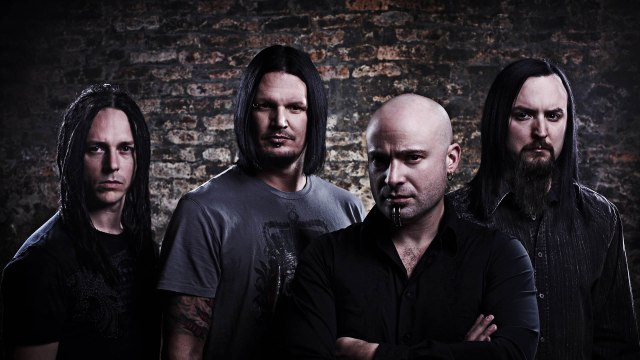
As much as I love Halestorm, they are still on their way up to rock immortality. Godsmack has already been at the pinnacle of the game and serves to inspire today’s hard rock fans and musicians to perform. The problem is that one of those two bands had to run into Disturbed, who are at the peak of their powers now and arguably the most dominant force in hard rock/metal music today. Against anyone else, Godsmack might have been able to move on…I don’t see them pulling the upset over David Draiman and Co.

Disturbed

System of a Down (2) vs. Slipknot (6)

I’ve got to be honest here. Because of the paucity of their recording and touring output, System of a Down should lose this contest. Although I am not a huge fan of their work, Slipknot has been the most visible of the two groups, consistently churning out quality music and serving as the inspiration to teenagers who want to be rock gods in the next decade. If I had my druthers, I’d see System of a Down to the next round. But the real choice here should be Slipknot.

You can ponder these selections for a couple of days, but we’ll have to move on soon. The Sweet Sixteen matchups in the 1980s and 1990s are just around the corner and, after they have played out, we’ll bring it down to the Final Four, probably next week. By the end of the month, we’ll see who is the greatest hard rock/metal band of all time.

Who is The Greatest Hard Rock/Metal Band of All Time, Second Round Part 2

HardRockMetal

Rather than delve into the delusion that currently is supposed to oversee this country (and trust me, there’s plenty to call the Tangerine Ignoramus out on simply from this last weekend alone, such as his foray into international diplomacy at the end of a Tomahawk missile), I’ve decided to start something that will be much more fun. Since college basketball just recently completed the NCAA Basketball Championship, I thought it would be fun to do the same but in a different arena – the genre of hard rock/metal music.

What are the criteria for consideration? First, the band/singer would have to have some sort of longevity to their career – you don’t see many bands or singers that are considered “legendary” if they were only around for a couple of albums (Amy Winehouse is a rare exception, but that’s a discussion for another time). Second, the band/singer would have to have an impact on the genre – did they do something particularly noteworthy or notorious that put them into the annals of the genre’s history, a song or “behavior” that was historic. Third, just how popular were they when they were in existence – a band or singer that was wildly popular with the fans might get some leeway over a critical darling OR vice versa (depending on tastes). Fourth, what accolades did they receive – awards, gold records, and recognition by the industry (Rock & Roll Hall of Fame, hello?) are all under consideration here. Finally, was the band/singer influential on future generations of music – have they helped shape the genre since they have left the sphere?

The first round of the four “regions” – the 1960s/70s, the 1980s, the 1990s and the 2000s/2010s – is complete and there were some big surprises. It’s now time to move into the second round of two of the regions who will match up in the Final Four of Hard Rock/Metal – the 1980s and the 1990s – and work them down to one half of the Sweet Sixteen. As always, cast your vote and/or opinion on who should win each battle by commenting here or on one of the many social media outlets where you might read this.

Without further ado, here’s the 1980s second round:

BON JOVI

Bon Jovi (1) vs. Mötley Crüe (8)

Part of me would like to see this be a real battle, but that’s not the case. Longevity is on the side of Bon Jovi in this case, as is virtually every other category that might be tallied. Sales, award recognition, fan support – all those things flow in the direction of the boys from New Jersey over the gang off the Sunset Strip. Although they might be “lightweights,” Bon Jovi for many WAS the 1980s and, as such, they will be moving on.

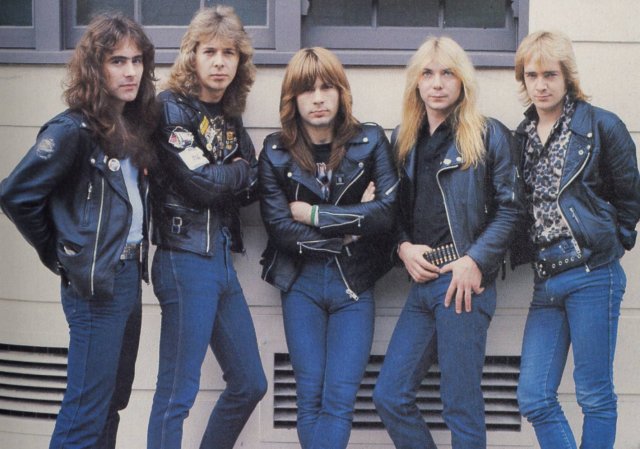
Guns ‘N Roses (4) vs. Iron Maiden (5)

This is going to be too close to call. The Gunners breathed new life into hard rock/metal in the late 1980s with their “take no prisoners” approach and bawdy behavior, but Iron Maiden’s throng of loyal supporters and longevity in the business can’t be overlooked. Even though GNR came back last year for a few concert appearances (and Axl Rose did some great work with AC/DC after the questionable circumstances regarding Brian Johnson’s departure), Iron Maiden almost always has seemed to “been there” since the early 1980s. The voters will have to make the call here.

Metallica (2) vs. Anthrax (10)

Anthrax, with their highly influential style of speed metal mixed with social commentary, emerged with an upset victory against Queensrÿche, but that may be where the train ends with running up against Metallica. If there were a group that could play just as fast as Anthrax, just as loud and have similar things to say, it would be Metallica. What puts it over the top? The 2009 induction of Metallica into the Rock & Roll Hall of Fame, which says it best on their website when they comment, “Heavy metal went mainstream thanks to Metallica.”

Slayer

Def Leppard (3) vs. Slayer (6)

Opposites go to war in this matchup, with the poppier hard rock from Def Leppard running headlong into the death metal stylings of Slayer. Don’t be so quick to hand this battle to Def Leppard; Slayer, while a polarizing entity because of the style that they play, has been tremendously influential over ALL forms of music. They have influenced everyone from Pantera to Hatebreed and even reached to Italy to inspire Lacuna Coil. When you’ve got that type of power, it has an impact…but will the voters accept it?

And now, let’s look at the 1990s:

Nirvana (1) vs. Nine Inch Nails (9)

Although I’ve long had a fondness for Nirvana and the late Kurt Cobain, there is plenty of room for argument that Nine Inch Nails and front man Trent Reznor were more influential on hard rock/metal. Reznor’s influence runs the gamut from pop to industrial, dance to rock, and he’s also been a highly successful scorer of films (along with his partner Atticus Ross, they won the Academy Award for Best Original Score for The Social Network). While that may not be hardcore, it still shows tremendous talent, making this matchup not the slam dunk that many might have thought.

"Gone Girl" Special Screening

Pearl Jam (4) vs. Foo Fighters (5)

Another tough battle in the 4/5 seedings. You would think that Pearl Jam, coming off their induction into the Rock & Roll Hall of Fame and nearly 30-year career (not to mention leading the “Grunge Revolution”), would be able to handle the Foo men easily. But Dave Grohl and Co. aren’t that easy to knock off. They’ve been getting raves over one of their recent efforts, Sonic Highways, which saw the band travel to eight different cities to “get a feel for” the cities as they recorded it (the production was followed by HBO for a miniseries of the same name). Grohl also carries some gravitas from his days with Nirvana. Is it possible that Grohl’s two bands could face off against each other in the Sweet Sixteen?

Rage Against the Machine (2) vs. Korn (7)

Although Korn ably defeated Tool to reach the second round, I don’t see a way that they get past RATM. In all areas, Rage Against the Machine are the dominant forces – popularity, commercial and critical success, influence and many others. About the only thing that Korn may have is longevity, but that would change if Rage guitarist Tom Morello and singer Zack de la Rocha buried the hatchet and hit the studio again (if not, there’s always Morello leading the other men from the band in their new outlet, Prophets of Rage). A bit of a mismatch here, unfortunately.

GreenDay

Green Day (3) vs. White Zombie/Rob Zombie (11)

A bit of a surprise as White Zombie and front man Rob Zombie were able to upend Alice in Chains to reach the second round of the tournament. They’ve got a great chance to take out the three-seed in Green Day as their style of “nightmare metal” has been mimicked by many bands in the early 2000s, even though Rob Zombie still performs. Green Day, however, has their own legion of devotees and can even say that they’ve gone to Broadway (the musical American Idiot brought punk music to the Great White Way). It is another battle that will be decided by the voters.

That closes the second round for these two regions. Be sure to get your votes in on who deserves to move on to the Sweet Sixteen! Starting this week, we’ll cut the Sweet Sixteen down to only one band, who will walk off with the title of the greatest hard rock/metal band in history!

Who is The Greatest Hard Rock/Metal Band of All Time, Second Round Part 1

HardRockMetal

Rather than delve into the delusion that currently is supposed to oversee this country (and trust me, there’s plenty to call the Tangerine Ignoramus out on simply from this last weekend alone, such as his slashing of the Department of Interior budget by $1.5 billion while donating his first quarter’s pay for sitting on his ass – roughly $70,000 – in the White House to the National Park Service), I’ve decided to start something that will be much more fun. Since college basketball just recently completed the NCAA Basketball Championship, I thought it would be fun to do the same but in a different arena – the genre of hard rock/metal music.

What are the criteria for consideration? First, the band/singer would have to have some sort of longevity to their career – you don’t see many bands or singers that are considered “legendary” if they were only around for a couple of albums (Amy Winehouse is a rare exception, but that’s a discussion for another time). Second, the band/singer would have to have an impact on the genre – did they do something particularly noteworthy or notorious that put them into the annals of the genre’s history, a song or “behavior” that was historic. Third, just how popular were they when they were in existence – a band or singer that was wildly popular with the fans might get some leeway over a critical darling OR vice versa (depending on tastes). Fourth, what accolades did they receive – awards, gold records, and recognition by the industry (Rock & Roll Hall of Fame, hello?) are all under consideration here. Finally, was the band/singer influential on future generations of music – have they helped shape the genre since they have left the sphere?

The first round of the four “regions” – the 1960s/70s, the 1980s, the 1990s and the 2000s/2010s – is complete and there were some big surprises. It’s now time to move into the second round of two of the regions who will match up in the Final Four of Hard Rock/Metal – the 1960s/70s and the 2000s/2010s – and work them down to one half of the Sweet Sixteen. As always, cast your vote and/or opinion on who should win each battle by commenting here or on one of the many social media outlets where you might read this.

Without further ado, here’s the 1960s/70s second round:

Led Zeppelin (1) vs. Rush (8)

The Zep was not even challenged by their first-round matchup against Steppenwolf, but now they might have a fight on their hands. Surviving their first-round battle against Queen, Rush is primed to take down the legends from the U. K. One of the things that might sway some voters is simply the longevity issue; Rush is still around to this day, more than 40 years after their creation. Led Zeppelin, however, still has the panache as one of the most influential bands in music history (how many kids learned “Stairway to Heaven” as their first tune?). Plenty to think about when it comes to this matchup.

Motorhead

Judas Priest (4) vs. Motörhead (12)

Fresh off their upset of Black Sabbath in the first round, Motörhead is loaded for bear with another tough battle against another legend. This is going to be difficult because both bands have longevity, influence and popularity on their sides. It is arguable that the Priest have had more of an impact on the genre than Motörhead, but it is an argument that Lemmy lovers would love to fight over. Mark this one down as “too tough to call” and let’s see where the voters take it!

AC/DC (2) vs. Van Halen (7)

Another matchup that will raise the ire of fans of both bands. AC/DC has an iconic sound that, while simplistic in its three-chord approach, is still as good today as it was when they started back in the early 1970s. Not to be overlooked, Van Halen worked through the latter part of the 70s, made an adjustment to the MTV 80s, stayed popular into the grunge 90s and still is viable today (although some might say that Eddie Van Halen and Co. have fallen from their lofty perch of late). Perhaps the deciding factor? AC/DC’s three vocalists have been the late Bon Scott, Brian Johnson, and Guns ‘N Roses’ Axl Rose. Van Halen? David Lee Roth, Sammy Hagar, and Gary Cherone. Who wins that comparison?

TheWho

KISS (14) vs. The Who (6)

Three upsets in the first round for the 1960s/70s! KISS took down Deep Purple in the first round, but the second-round match against The Who is going to be a bit tougher. The two bands are quite similar, with duos at the lead (Paul Stanley and Gene Simmons for KISS, Roger Daltrey and Pete Townshend for The Who) who basically became the faces of their groups. They had iconic members (Ace Frehley and John Entwistle) who were virtuosos on their respective instruments and members that had issues outside of the band with drugs and/or alcohol (Peter Criss and Keith Moon) that either killed them or nearly did while in their prime. Influence might be the key here – who had the greater influence on the history of hard rock/metal?

And now, here’s the second round for the 2000s/2010s

Disturbed (1) vs. Black Label Society (8)

Chalk for the top of the second round as Disturbed pushed aside the assault of Killswitch Engage to get to the second round and BLS got past Mudvayne in a contest decided by longevity. Black Label Society might not go any farther, however, because Disturbed is looking like it might be a juggernaut in this region. Nothing against Zakk Wylde and the members of Black Label Society, but Disturbed could very well be the band that is representative of the early part of the 21st century.

Halestorm

Halestorm (4) vs. Godsmack (5)

Emerging from the matchup of the female-led bands in defeating Evanescence, Halestorm now gets a shot at Godsmack – or is Godsmack getting their shot at Halestorm? The big point that may sway voters in this competition is that Halestorm is still getting their engines revved, with Lzzy Hale simply getting better with each new CD. Godsmack left their label in late 2016 and it doesn’t appear that any new music is coming out of the band in the immediate future. Things like this – how visible you are and how popular – sometimes will be the tipping point in these competitions.

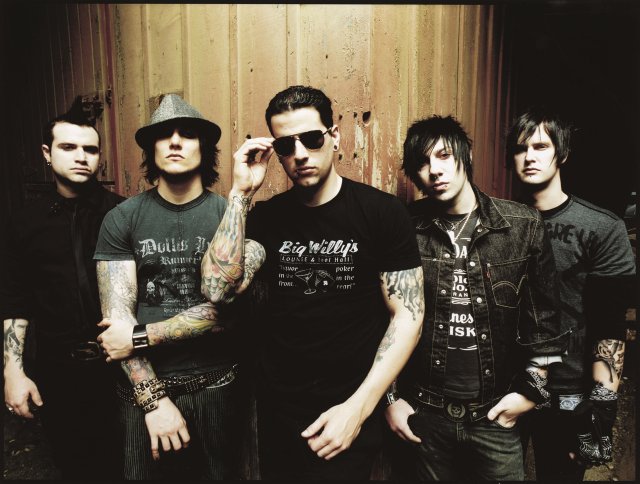
System of a Down (2) vs. Avenged Sevenfold (7)

Avenged Sevenfold took down the old guard Deftones in round one and it faces another legend in round two. System of a Down has long been regarded as one of the preeminent bands of the past decade and a half, at the minimum, selling 40 million records. That type of popularity is tough to overlook in a match where the two competitors are so evenly matched up.

FiveFingerDeathPunch

Five Finger Death Punch (3) vs. Slipknot (6)

And chalk holds true for the entirety of the first round in the 2000s/2010s. This matchup, however, is different in that both bands are similar in their musical stylings and have equal impact and influence on up and coming bands. Slipknot has had some periods of inactivity that are tough to overlook, but their record at the Grammys – ten nominations and one victory – push them past FFDP. It is tough to overlook a band that is still performing strong, however, and FFDP is doing that.

That closes the second round for these two regions. Be sure to get your votes in on who deserves to move on to the Sweet Sixteen! And don’t forget that we’ve got the other side of the bracket – the 1980s and the 1990s – coming soon. We’ll determine the champion, hopefully next week, as to who is the greatest hard rock/metal band in history!

Who is The Greatest Hard Rock/Metal Band of All Time, Part 4 – The 2000s/2010s

HardRockMetal

Rather than delve into the delusion that currently is supposed to oversee this country (and trust me, there’s plenty to call the Tangerine Ignoramus out on simply from this last weekend alone and his commentary on his failed TrumpCare), I’ve decided to start something that will definitely be much more fun. Since college basketball is deciding the 64 teams (OK, 68 teams because of those simply idiotic play in games the NCAA conducts) that will compete for their championship, thought it would be fun to do the same but in a different arena – the genre of hard rock/metal music.

As it is one of my personal fortes, hard rock/metal music is essentially celebrating its 50th Anniversary since the release of Steppenwolf’s “Born to Be Wild,” which contained the lines “Get your motor running/heavy metal thunder.” With this in mind, I’ve put together a compilation of the top 64 hard rock/metal bands from four different eras – the 1960s/70s, the 1980s, the 1990s, and the 2000s/10s – and split them up in accordance with those eras into “regions.” We’ll break down the matchups in each bracket and, with hope, readers will make their own comments and vote on the matchups. There’s even a prize at the end – two CDs from the eventual champion of our tournament for one lucky voter!

What are the criteria for consideration? First, the band/singer would have to have some sort of longevity to their career – you don’t see many bands or singers that are considered “legendary” if they were only around for a couple of albums (Amy Winehouse is a rare exception, but that’s a discussion for another time). Second, the band/singer would have to have an impact on the genre – did they do something particularly noteworthy or notorious that put them into the annals of the genre’s history, a song or “behavior” that was historic. Third, just how popular were they when they were in existence – a band or singer that was wildly popular with the fans might get some leeway over a critical darling OR vice versa (depending on tastes). Fourth, what accolades did they receive – awards, gold records, and recognition by the industry (Rock & Roll Hall of Fame, hello?) are all under consideration here. Finally, was the band/singer influential on future generations of music – have they helped shape the genre since they have left the sphere?

We talked about the 1960s/70s in Part 1, the 1980s in Part 2, and the 1990s in Part 3, so now we’re ready to head into an era – the 2000s/2010s – that is very difficult to judge. Whenever you’re dealing with bands or artists that have been around less than a decade (and, in many cases, have yet to really hit their stride), you’re really guessing as to who is going to have the staying power to be around 10 or even fifteen years from now. When they reach the point that they’ve been around long enough for consideration for the Rock & Roll Hall of Fame, then they have built a catalog and repertoire of achievements that can be graded. Unfortunately, some of these acts have already succumbed to the pressures of the music industry, but others look like they’ll have the legs to make it another decade or so! As always, be sure to voice your opinion here and let us know who should be winning this region!

Disturbed

Disturbed (1) vs. Killswitch Engage (16)

Too bad for Killswitch Engage that they have to be the ones to run up against David Draiman and the guys from Disturbed. The Chicago outfit has been around it seems forever (and, in a way, they have – they originally started out as Brawl before becoming Disturbed) and, with each album they release, seem to take their creativity and music to another level. “Down with the Sickness” was how everyone was exposed to Disturbed, but they’ve gone on to create a half dozen more albums that have stretched their legs including their recent cover of Simon & Garfunkel’s “The Sounds of Silence.” While Killswitch Engage has its moments, it doesn’t have the totality of the work that Disturbed has.

Blake Label Society (8) vs. Mudvayne (9)

A knock-down, drag out fight between two heavyweights who throw haymakers. BLS, led by former Ozzy Osborne guitarist Zakk Wylde, has powered out nine studio albums over the past decade and a half and continue to tour nonstop to a legion of fans that can’t get enough of the group. Mudvayne, although they disbanded in 2010, has proven to have legs in inspiring a whole new generation of hard rock bands including Hellyeah. Mudvayne was creative in their music virtuosity, album artwork and stage performances, all of which drew in hard rock’s denizens. They also continuously tease a comeback, which would delight many of their fans around the world.

Halestorm (4) vs. Evanescence (13)

They may look the same from first glance – two powerful acts driven by a female vocalist – but it is there that the difference between the two groups is displayed. Halestorm front woman Lzzy Hale not only has one of the most powerful voices in all of music, let alone rock, but also plays a mean double-neck guitar, jumping between six- and twelve-string performances reminiscent of Lita Ford (whom the band has toured with). Amy Lee of Evanescence has nearly equal vocal power to Hale, but she and the band have suffered from a constantly shifting cast of characters and a lack of output (it is also rumored that Lee would like to go solo). While Evanescence exploded out of the gate in the early 2000s, it is Halestorm that has proven to be the power player.

halestorm

Godsmack (5) vs. Chevelle (12)

If the voters were to go for an upset here, that wouldn’t be a surprise. Chevelle has been a prolific performer since their inception, pumping out nine albums worth of quality material. Godsmack hasn’t exactly been lazy in that aspect either, putting out a sextet of material despite taking a five-year hiatus. Godsmack is arguably harder than Chevelle, however, which may be enough to tip the scales in their favor.

System of a Down (2) vs. Trivium (15)

Another unfortunate case of “somebody had to go against the #2 seed,” but it wouldn’t be a surprise to see Trivium pull the upset here since System of a Down has been rather quiet of late. System does have an outstanding resume, though:  40 million albums sold in their career and nominated for four Grammy Awards (winning once) before they hit the pause button on the band. Toss in the very recognizable vocals of Serj Tankian and it will be tough for Trivium to pull off the upset, but possible.

AvengedSevenfold

Avenged Sevenfold (7) vs. Deftones (10)

There is a great possibility that Avenged Sevenfold might be underrated in this region. One of the most respected bands in the genre, A7X has also been influential to the newcomers who would like to take them down (respectfully, that is!). Deftones have the same type of influence, dating back to the 1980s (may even have this band in the wrong region) and still going strong today. Deftones have guested on tracks from many of the bands that they influenced such as Sevendust and Whitechapel. The votes could go either way in this matchup.

Five Finger Death Punch (3) vs. Shinedown (14)

A matchup of contrasting styles here. Shinedown will get down and dirty with the best of them, but some of their most popular tracks have been melodic hard rock such as “45” and “How Did You Love.” Five Finger Death Punch, if you didn’t get it from the band’s name, is a much more aggressive group that has blazed their own trail in such tunes as “My Nemesis” and “Battle Born.” Like the previous matchup, this is a contest that could sway on just a few votes from the crowd.

FiveFingerDeathPunch

Slipknot (6) vs. Breaking Benjamin (11)

Another “contrasting style” duo takes the stage here. Slipknot has long been atop the field in the hard rock genre and their stage style seems to take something from KISS and G.W.A.R., among many others. They also have been nominated 10 times for a Grammy Award (that’s some great recognition from your peers) and won once in 2006. Breaking Benjamin is the quieter side of this hard rock matchup, but they’ve also been able to make their own mark. Over the span of five albums, Breaking Benjamin has issued two platinum and two gold albums and a slew of hit singles. Once again, the “style” of hard rock and the fandom could make the choice.

That will wrap up the final region of our tournament. Next up will be the second round for two of the regions, the 1970s/80s and the 1990s, which will clear up the tournament race significantly. Get your vote in on those regions and see how far your picks will go – and get yourself eligible for the prize to be awarded at the end!

Who is The Greatest Hard Rock/Metal Band of All Time, Part 3 – The 1990s

HardRockMetal

Rather than delve into the delusion that currently is supposed to oversee this country (and trust me, there’s plenty to call the Tangerine Ignoramus out on simply from this last weekend alone), I’ve decided to start something that will definitely be much more fun. Since college basketball is deciding the 64 teams (OK, 68 teams because of those simply idiotic play in games the NCAA conducts) that will compete for their championship, thought it would be fun to do the same but in a different arena – the genre of hard rock/metal music.

As it is one of my personal fortes, hard rock/metal music is essentially celebrating its 50th Anniversary since the release of Steppenwolf’s “Born to Be Wild,” which contained the lines “Get your motor running/heavy metal thunder.” With this in mind, I’ve put together a compilation of the top 64 hard rock/metal bands from four different eras – the 1960s/70s, the 1980s, the 1990s, and the 2000s/10s – and split them up in accordance with those eras into “regions.” We’ll break down the matchups in each bracket and, with hope, readers will make their own comments and vote on the matchups and perhaps they’ll be some sort of prize at the end – the management here (re:  me) is still trying to come up with that prize.

What are the criteria for consideration? First, the band/singer would have to have some sort of longevity to their career – you don’t see many bands or singers that are considered “legendary” if they were only around for a couple of albums (Amy Winehouse is a rare exception, but that’s a discussion for another time). Second, the band/singer would have to have an impact on the genre – did they do something particularly noteworthy or notorious that put them into the annals of the genre’s history, a song or “behavior” that was historic. Third, just how popular were they when they were in existence – a band or singer that was wildly popular with the fans might get some leeway over a critical darling OR vice versa (depending on tastes). Fourth, what accolades did they receive – awards, gold records, and recognition by the industry (Rock & Roll Hall of Fame, hello?) are all under consideration here. Finally, was the band/singer influential on future generations of music – have they helped shape the genre since they have left the sphere?

RRHallofFame

We talked about the 1960s/70s in Part 1 and the 1980s in Part 2, so now we’re ready to head into a decade – the 1990s – that saw something that we have never seen before in rock music and probably won’t again. At the start of the decade, “hair metal” was still ruling the roost when it came to hard rock/metal, but it was quickly snuffed out by the sounds emanating from the Northwest. “Grunge,” for all intents, killed the “hair metal” band while embracing the mood of the culture of the day. That cannibalization by grunge in devouring the “hair metal” bands is something that we had never seen before in the industry – normally if something new comes along, it will eventually get folded in like an omelet into the existing structure(s). Grunge chowed down on “hair metal” rather than soak itself into the genre.

There were many candidates for this “regions” bracket and many of those selections reflect how grunge became the powerhouse of the 1990s. I am sure there will be some complaints as to the selections and, if so, please include those when you discuss the matchups in your reply!

Nirvana

Nirvana (1) vs. Primus (16)

Unfortunately for Les Claypool and the men from Primus, this looks like utter destruction from the start. Going against one of the bands considered the “fathers” of the grunge movement, a singer and musician considered the “voice of a generation” by their fans AND a critically, commercially, and historically lauded success (first-ballot entry into the Rock & Roll Hall of Fame)? Hey, somebody had to be the #16 seed in this bracket…

Marilyn Manson (8) vs. Nine Inch Nails (9)

From whatever angle you look at the matchup, these two bands seem to be equals across the board. Challenging thoughts and beliefs in the masses? Check. Earn scorn from the “squares” for your appearance or actions? Yep. Influence a generation with your styles, songs, and subterfuge? You got it. Both Marilyn Manson and Nine Inch Nails were the real groundbreakers during the decade. About the only way to set the two apart is that Marilyn Manson was a band; Nine Inch Nails was basically Trent Reznor playing all the instruments and producing the material. That may give him the edge.

Pearl Jam (4) vs. Ministry (13)

Yes, it may sound sacrilegious, but Pearl Jam only rated the #4 seed in the 1990s. Some might complain they should be in one of the top three slots but, as you’ll see, who do you toss out? As far as this matchup goes, Eddie Vedder and Co. get the nod for overall influence, commercial and critical success and various honors earned. Then again, the vote of those following this tournament may have something different to say about the subject.

Foo Fighters (5) vs. Nickelback (12)

For all the flak they receive, Nickelback is one of the most popular groups of the 1990s – amazing since no one admits to actually listening to them. They certainly churned out the music during the decade, no matter how banal it could be. Foo Fighters brings our first double nominee in the tournament – Dave Grohl, the drummer for Nirvana, went on to form Foo Fighters after the death of Kurt Cobain – and presents a band that was built for pop success but never forgot its rock roots. We’ll see if Nickelback’s loyal legions turn out to try to stop the Fighters from taking this one down.

RATM

Rage Against the Machine (2) vs. Linkin Park (15)

Just like the 1-16 matchup in this region, the 2-15 also looks to be a beat down. Rage Against the Machine was one of the most political bands in the history of rock music, let alone hard rock/metal, and used their powerful musicianship (in the hands of guitarist Tom Morello and vocalist Zack de la Rocha) to drive that message home. Linkin Park, while putting together some very good work of their own, couldn’t hold a candle to Rage, however. What might give some pause? Linkin Park is still around today – the same can’t be said for Rage Against the Machine (although there are murmurs that this could change).

Korn (7) vs. Tool (10)

There is one key thing that may give one of these groups the edge over the other. While both are very accomplished in the hard rock/metal arena, Korn continues to put out solid albums to an adoring fan base. Because of what the band has called “legal issues,” Tool hasn’t released any new music in a decade and doesn’t seem to be in a hurry to release anything now (those legal issues were resolved in 2015). Even without the nearly decade-long hiatus, it was going to be tough for Tool to unseat Korn – but we’ll see who the voters like.

Green Day (3) vs. Creed (14)

Green Day was the pseudo-punk band that everyone would love throughout the 1990s, but Creed – also trying to make their mark outside of the “grunge wave” with their pretentious songs and charismatic singer Scott Stapp – tried to match Green Day for supremacy, especially in the latter part of the decade. Stapp’s personal demons would catch up with Creed, however, breaking the band up as the new millennium started. Green Day has gone on to tremendous success commercially and critically and has been inducted into the Rock & Roll Hall of Fame as one of the influential bands of the genre. Let’s just gloss over the fact that the “punks” have a Broadway show now…

WhiteZombie

Alice in Chains (6) vs. White Zombie/Rob Zombie (11)

I am sensing an upset here. While Alice in Chains was an integral part of the grunge movement, their time in the sun was a rather brief one that spanned only four years (90-94). White Zombie was about as “non-grunge” as it got, instead going into an Alice Cooper-like “nightmare metal” that Rob Zombie still performs to this day (the actual band dissolved in 1998). Perhaps because Zombie has been able to push into other fields – he is a noted film director and comic book buff – the notoriety of the band has prevailed while Alice in Chains has slowly disappeared.

(Writer’s note: I know Soundgarden was left out of the region. However, after you get by Pearl Jam, Nirvana, Alice in Chains, and some of the other grunge acts, Soundgarden was actually pretty far down the list, don’t you think?)

That’s it for the third “region” of our tournament. We’ll look at the 2000s/10s (and be thinking of who could be the #1 seed for that “region” – would love to hear those opinions) later this week and get into the second round, hopefully by next Monday. Don’t forget to vote by replying here and I will compile the responses – and maybe award a prize once a champion is crowned to a reader!

Who is The Greatest Hard Rock/Metal Band of All Time, Part 2 – The 1980s

HardRockMetal

Rather than delve into the delusion that currently is supposed to oversee this country (and trust me, there’s plenty to call the Tangerine Ignoramus out on simply from this last weekend alone), I’ve decided to start something that will definitely be much more fun. Since college basketball is deciding the 64 teams (OK, 68 teams because of those simply idiotic play in games the NCAA conducts) that will compete for their championship, thought it would be fun to do the same but in a different arena – the genre of hard rock/metal music.

As it is one of my personal fortes, hard rock/metal music is essentially celebrating its 50th Anniversary since the release of Steppenwolf’s “Born to Be Wild,” which contained the lines “Get your motor running/heavy metal thunder.” With this in mind, I’ve put together a compilation of the top 64 hard rock/metal bands from four different eras – the 1960s/70s, the 1980s, the 1990s, and the 2000s/10s – and split them up in accordance with those eras into “regions.” We’ll break down the matchups in each bracket and, with hope, readers will make their own comments and vote on the matchups and perhaps they’ll be some sort of prize at the end – the management here (re:  me) is still trying to come up with that prize.

What are the criteria for consideration? First, the band/singer would have to have some sort of longevity to their career – you don’t see many bands or singers that are considered “legendary” if they were only around for a couple of albums (Amy Winehouse is a rare exception, but that’s a discussion for another time). Second, the band/singer would have to have an impact on the genre – did they do something particularly noteworthy or notorious that put them into the annals of the genre’s history, a song or “behavior” that was historic. Third, just how popular were they when they were in existence – a band or singer that was wildly popular with the fans might get some leeway over a critical darling OR vice versa (depending on tastes). Fourth, what accolades did they receive – awards, gold records, and recognition by the industry (Rock & Roll Hall of Fame, hello?) are all under consideration here. Finally, was the band/singer influential on future generations of music – have they helped shape the genre since they have left the sphere?

We talked about the 1960s/70s in Part 1, so now we’re ready to head into what was arguably the most diverse era of hard rock/metal over the past 50 years – the 1980s. From “hair metal” (basically pop-infused hard rock music that could be ballad intensive – something previously unheard of in the genre) to “death metal” and beyond, there were many candidates for this “regions” bracket. I am sure there will be some complaints as to the selections and, if so, please include those when you discuss the matchups in your reply!

BON JOVI

Bon Jovi (1) vs. Pantera (16)

As ugly as it is to admit, Bon Jovi was one of the most popular acts of the 1980s. Using enough Aquanet to put his own personal hole in the ozone layer over New Jersey, John Bongiovi – who would become the namesake of the group as Jon Bon Jovi – guitarist Richie Sambora and the rest of the group became the band that was OK with your parents to “rock out” to. They also brought the “power ballad” into its heyday, those songs that brought the girls out to the “rock shows” so the guys would come along.

Pantera, on the other hand, was everything that Bon Jovi wasn’t. Hard core, in your face – sometimes with a fist or a boot – fast and furious, guitarist “Dimebag” Darrell and Phil Anselmo mounted an offensive of thunderous rock that still resonates across the genre. While they were influential to many, they weren’t commercially successful – at least not on the level that Bon Jovi was. It will be an intriguing battle to see who emerges from this clash – but we know who would emerge if it were an actual fight!

Mötley Crüe (8) vs. Skid Row (9)

This is a typical battle of two bands that are closely matched. Strangely enough, though, most people are fans of one and not of the other, with those on the side of Skid Row and front man Sebastian Bach calling their opponents a rip-off of KISS and those taking up the fight for the Crüe and singer Vince Neil and Co. calling Skid Row a Guns ‘N Roses clone. What is true about both bands is they cranked out some memorable music over a short period; Skid Row’s heyday was roughly three years (1989-92), while the Crüe would be relevant for a longer period of time (1981-92). That may be the factor that weighs the winner of this matchup.

Guns ‘N Roses (4) vs. Ratt (13)

It is arguable that Guns ‘N Roses may be the top non-“hair metal” band in the 1980s region, setting them apart from Ratt, who firmly embraced their place in that subgenre. The Gunners captured the rebellious nature of rock and roll that was born in the 1960s and had been lost over the previous 20 years as rock became “corporate.” They also would serve as an inspiration to many bands, with such influence eventually leading to their induction into the Rock & Roll Hall of Fame in 2012. Ratt? Unfortunately, it looks like they ran into the “immovable object” here…but the votes will be what matters.

IronMaiden

Iron Maiden (5) vs. Faith No More (12)

This may look like a mauling, but you’ve got to look deep at the subject. Faith No More were one of the few practitioners of what became known as “rap metal,” or rapping the lyrics instead of singing them, setting them apart in the business and spawning bands that still employ Faith No More’s style today. Iron Maiden was one of the most ferocious bands in the genre who had a great longevity in the business. They also had their impact on future bands, but they weren’t the groundbreakers that Faith No More was in their short time. It will be another tough matchup for the voters to decide.

Metallica (2) vs. Whitesnake (15)

Even considering the ample success that Whitesnake and David Coverdale enjoyed during the 1980s, there’s simply no way that I can see voters taking them over a band that is still going strong today (and if you haven’t heard Metallica’s latest Hardwired…to Self-Destruct, you’re missing out on their best record since the Black Album). Metallica has inspired many a kid to become the next great James Hetfield or Lars Ulrich, consistently powering out epic albums and taking down accolades left and right for their work. They also – whether you agree with them or not – have fought against piracy in the industry, something that all should applaud them for. Whitesnake might have had a chance against anyone else on this list…but not Metallica.

Metallica

Queensrÿche (7) vs. Anthrax (10)

This is another difficult clash between two talented bands. Queensrÿche arguably introduced the “rock opera” concept into hard rock music in the 80s (OK, don’t remind me of Quadrophenia or other monumental albums) and served as a conduit for politically charged rhetoric (“Empire” delves into the effects of drug trafficking in the inner cities). But of course, their main claim to fame? “Silent Lucidity,” a Pink Floyd-esque power ballad that made the Billboard Magazine Top Ten in 1990.

Anthrax had their own political stances, talking about the plight of Native Americans (“Indians”) and dabbling with rap and classical music in creating their sound. They are one of the few bands to have had success with two different vocalists, Joey Belladonna and John Bush, and they have influenced thrash metal wannabes for over two decades. Do you take style over substance? Or do you award a long, healthy career that has spawned new generations? Tough vote here…

Def Leppard (3) vs. Cinderella (14)

Another matchup between two bands that, at first look, are mirror images. It is only in looking deeper do you see their differences.

The Leppard were a part of the New Wave of British Heavy Metal (NWOBHM) that came out in the late 70s/early 80s, but they weren’t content with staying in that category. They firmly embraced the “hair metal” groove of the decade and became one of the biggest acts of that time. They also demonstrated a great deal of craftsmanship to their records, taking lengthy amounts of time (in some cases, they had to, such as drummer’s Rick Allen’s unfortunate amputation of his arm after an auto accident that forced him to learn how to play drums on a specially created kit) to put out some of the best rock music of the era.

Cinderella was part of that “hair metal” act and even sucked into it a bit by going the power ballad route (“Nobody’s Fool”), but in essence they were a blues band looking for a groove. Singer/guitarist Tom Keifer is a tremendously underrated musician and the rest of the band provided the base for which Keifer could demonstrate his virtuosity. That their era of commercial success was short (1986-1990) was more a fact of the explosion of grunge and rap than any disqualifying factor from the group.

Slayer

Slayer (6) vs. Megadeth (11)

Man, the 1980s were a tough decade! It’s too bad that one of these bands has to depart in the first round as both, against the right competition, could go deep in this tournament. Slayer was the purveyor of “death metal” with their seminal album Seasons in the Abyss reaching their creative and critical high point. Megadeth, with singer/guitarist Dave Mustaine, have continued performing and releasing highly praised music for almost three decades now, including winning a Grammy Award this year for best metal performance for the title track from their album Dystopia. A knockdown, drag out fight is what to expect here.

That’s it for the second “region” of our tournament. We’ll look at the 1990s and the 2000s/10s (and be thinking of who could be the #1 seeds for those “regions” – would love to hear those opinions) later this week and get into the second round, hopefully by next Monday. Don’t forget to vote by replying here and I will compile the responses – and maybe award a prize once a champion is crowned to a reader!

Who is The Greatest Hard Rock/Metal Band of All Time, Part 1- The 1960s/70s

HardRockMetal

Rather than delve into the delusion that currently is supposed to oversee this country (and trust me, there’s plenty to call the Tangerine Ignoramus out on simply from this last weekend alone), I’ve decided to start something that will definitely be much more fun. Since college basketball is deciding the 64 teams (OK, 68 teams because of those simply idiotic play in games the NCAA conducts) that will compete for their championship, thought it would be fun to do the same but in a different arena – the genre of hard rock/metal music.

As it is one of my personal fortes, hard rock/metal music is essentially celebrating its 50th Anniversary since the release of Steppenwolf’s “Born to Be Wild,” which contained the lines “Get your motor running/heavy metal thunder.” With this in mind, I’ve put together a compilation of the top 64 hard rock/metal bands from four different eras – the 1960s/70s, the 1980s, the 1990s, and the 2000s/10s – and split them up in accordance with those eras into “regions.” We’ll break down the matchups in each bracket and, with hope, readers will make their own comments and vote on the matchups and perhaps they’ll be some sort of prize at the end – the management here (re:  me) is still trying to come up with that prize.

What are the criteria for consideration? First, the band/singer would have to have some sort of longevity to their career – you don’t see many bands or singers that are considered “legendary” if they were only around for a couple of albums (Amy Winehouse is a rare exception, but that’s a discussion for another time). Second, the band/singer would have to have an impact on the genre – did they do something particularly noteworthy or notorious that put them into the annals of the genre’s history, a song or “behavior” that was historic. Third, just how popular were they when they were in existence – a band or singer that was wildly popular with the fans might get some leeway over a critical darling OR vice versa (depending on tastes). Fourth, what accolades did they receive – awards, gold records, and recognition by the industry (Rock & Roll Hall of Fame, hello?) are all under consideration here. Finally, was the band/singer influential on future generations of music – have they helped shape the genre since they have left the sphere?

RRHallofFame

Without further ado, here’s the breakdown of the 1960s/70s bracket, with the seeding by each band/artist name.

Led Zeppelin (1) vs. Steppenwolf (16)

Led Zeppelin as the #1 seed was about as much of a lock as you could expect. They never had a #1 song and they might lack the longevity of some of the other competitors (Zeppelin’s heyday was 1968-80, only a scant 12 years). But they make up for those deficiencies in every other area under consideration – their “tour behavior” became the stuff of legends and they had the musical chops to back it up (“Stairway to Heaven” is widely accepted as one of the greatest songs of all time), their popularity was outstanding and they were inducted into the R&R HOF on the first ballot in 1995 (minimum of 25 years after first album release). Although Steppenwolf coined the term “heavy metal,” Led Zeppelin lived it, thus they should move to the next round.

Rush (8) vs. Queen (9)

These are the fun matchups where the smallest thing can push one of the competitors past their opponent. Throwing these two against each other is roughly akin to picking a favorite child as both are outstanding and legendary groups that click all the boxes. Rush pulls ahead slightly on the longevity front – they’re still active today, while Queen disbanded after Freddie Mercury’s death in 1991 after a two-decade career, but Queen has the epic “Bohemian Rhapsody” that is arguably better known than any Rush track. Queen is arguably more influential than Rush, especially given Mercury’s soaring vocals over Geddy Lee’s vocal individuality. Both have their accolades to lie back on, but Rush waited quite some time before being inducted into the R&R HOF. Deciding a winner here could come down to a few votes.

JudasPriest

Judas Priest (4) vs. Scorpions (13)

Some may debate ranking Scorpions that low in the region, but it goes to demonstrate how tough it is to even get on the rankings. The Priest has been a monolithic machine that has rumbled since the early 70s (and are still at it today, albeit with an adjusted roster), while Scorpions have been up-and-down since the latter part of that decade. As far as the definition of “heavy metal,” Judas Priest for many would be the template to go with – the “leather and chains” look was patented by Judas Priest front man Rob Halford. What may tip the scales is that Judas Priest is in the R&R HOF; at this moment, Scorpions have not even been considered. It’s unfortunate that one of these giants of the genre doesn’t get to move on in the competition, but which will it be?

Black Sabbath (5) vs. Motörhead (12)

The 5/12 matchup is always one ripe for an upset and this battle is no exception. Black Sabbath were extremely influential on burgeoning metal bands, but Motörhead has their own legion of followers. The front men for both bands are iconic, with Ozzy Osbourne as the first singer for Sabbath followed by the legendary Ronnie James Dio and Motörhead featuring the late, lamented Lemmy Kilmister. Sabbath never got the critical recognition that Motörhead did – yes, if you’re asking, hard, fast, and loud can be critically appraised! – but Sabbath has been recognized with more accolades than Lemmy and Co. Perhaps Sabbath might win for their “Stonehenge” moment, but it will be a tough fight between this twosome – and, once again, a travesty to see one out of the competition.

thinlizzy

AC/DC (2) vs. Thin Lizzy (15)

Critically acclaimed Thin Lizzy had a handful of hits (“Cowboy Song,” “Jailbreak,” “The Boys Are Back in Town”) before decadence and the untimely passing of leader Phil Lynott ended their run in 1983, but they are running into a buzz saw coming from “Down Under.” AC/DC is still going strong 45 years since their creation, although some might think the road has come to an end without Brian Johnson’s vocals (and, prior to him, Bon Scott) heading the riffs of lead guitarist Angus Young. Influences? Accolades? Longevity? All the clicks go in the corner of the Australians over the Irish in this one, but we’ll see if an upset is brewing.

Van Halen (7) vs. Aerosmith (10)

Another difficult matchup between two U. S. bands that have been part of the backbone of the genre. Both have influenced the “up and coming,” especially Aerosmith singer Steven Tyler’s sound (it is arguable he might have had an influence on a young David Lee Roth from Van Halen), while band namesake Eddie Van Halen is recognized as one of the great guitarists of all time (no shame to Joe Perry for coming up second-best in that comparison). Both bands have awards and accolades, critical respect, and longevity as seminal parts of their being – who can come out on top when the competitors are almost dead equal?

KISS

Deep Purple (3) vs. KISS (14)

For some reason, I smell an upset brewing here. KISS has been around it seems since the dawn of time, but Deep Purple was one of the formative bands of the hard rock genre in the late 60s and 70s (and even a bit into the 80s). Deep Purple’s constantly shifting lineup, however, might be a detriment to them…KISS has kept two of its four members, singer/guitarist Paul Stanley and bassist Gene Simmons, intact since its creation and, for the most part, has had all four original members (lead guitarist Ace Frehley and drummer Peter Criss) for a sizeable segment of the band’s history. KISS has had more of an influence on perhaps the stage performance side of the equation that Deep Purple didn’t have, but Deep Purple had the critical love. Which will be enough to provide the edge in this race?

The Who (6) vs. Jimi Hendrix (11)

There might be some chirping from the crowd on these two picks but, for their time, they were considered as “hard rock” as you can get. The tipping point in this battle may be the longevity question – The Who lasted well into the 1990s (for better or worse), while Hendrix’s stay was short-lived (he only released three albums while alive with the Jimi Hendrix Experience; his work with the Band of Gypsies was released posthumously), which should push them ahead (Hendrix arguably was Winehouse of the 1960s). But when you’re running up against the man the Rock & Roll Hall of Fame calls “arguably the greatest instrumentalist in the history of rock music,” you’re going to be in for a fight.

That’s it for the first “region” of our tournament. Later this week, we’ll look at the 1980s and over the weekend perhaps we’ll delve into the 1990s and the 2000s/10s (and be thinking of who could be the #1 seeds for those “regions” – would love to hear those opinions). Don’t forget to vote by replying here and I will compile the responses – and maybe award a prize once a champion is crowned to a reader!


Does EVERYTHING Have to be Political Nowadays?

superbowl51

Yesterday was one of the more fun days of the entire calendar year, unless you had a dog in the hunt or lots of cash riding on the myriad of outcomes. Super Bowl LI (51 if your Roman numeral translator is on the fritz) featured the scrappy, underdog Atlanta Falcons versus the dastardly and favored New England Cheaters Patriots in the battle for the National Football League championship for 2016. The game itself – once again, depending on who you rooted for – was arguably one of the best in history. But what was the recurring theme that ran through pretty much everything that happened yesterday indicates a particularly troubling aspect that is occurring in our society.

I started watching about 4PM (Eastern Time), usually the time when the new Super Bowl ads start showing, but what showed up on the screen? The Resident, sitting down with Fox News “editorial commentator” (because he damn sure isn’t a journalist) Bill O’Reilly, discussing politics. Now I am pretty sure that President Barack Obama was the first president to sit down with whichever network was broadcasting the Super Bowl game – Obama, if nothing else, is a huge sports fan – and the networks, especially Fox, used that time to get political with the man in the White House. The bigger question is why did this relatively young “tradition” need to continue?

It isn’t about the politics. There are enough times that The Resident can get on television, can get on the internet or even online. There’s scant little time in today’s world when you can get a respite from the onslaught of politics. That would be proven as Super Bowl Sunday wore on.

Reports from several outlets stated that the entirety of the pre-game and halftime shows – featuring the cast members of the musical Hamilton and the outstanding entertainment prowess of six-time Grammy winner Lady Gaga, respectively – were being broadcast by Fox on a five second delay shouldn’t have surprised anyone, but it seemed that everyone was SHOCKED by this travesty. Fox, it seemed, was “violating” free speech rights of the performers by potentially editing their performances (albeit about the best they would be able to do is hit a “mute” button). This seemed to upset many, but it really shouldn’t have.

ladygaga

Since the 2004 Super Bowl and “Nipplegate,” every live event has been put on a delay, in theory to allow for the producers/directors to switch cameras or to mute the audio should someone utter one of George Carlin’s “Seven Dirty Words.” I’ve actually watched sporting events on television where one of the players involved in the game action utters an expletive and it is muted by whichever network is broadcasting the game rather than aired (that doesn’t mean there aren’t instances it slips through). It goes back a bit further than that to 2003 when U2 singer Bono, while accepting an award at the Golden Globes for their work on the soundtrack for the film Gangs of New York, said that receiving the award was “really, really fucking brilliant.” The blood running from the ears of those whose sensitivities were violated brought about this change, it wasn’t something that came from the election of The Resident and his vociferous supporters.

What it did demonstrate is that virtually everything that goes on nowadays is being viewed through the political prism whether it is applicable or not. It isn’t a new phenomenon, either, as I can recall back to the Bill Clinton administration when an innocent online discussion about gender inequality or even minimum wage increases would normally have one idiot that would bring up the Monica Lewinsky situation or some other political hot topic and go off the rails. That is the first point where, if there were some travesty that occurred or situation that defied whatever “norms” people assigned to something that the phrase “Blame (insert President here),” happened. Since then, it’s only gotten worse.

obamapardon

Talk about how changing light bulbs from incandescent to LED can save energy and money? Fucking Obama (it was actually President Bush II who signed the order in 2007 to make it law)! FEDEX has to buy more tires because the roads are bad (not the potential 100,000 miles that they put on each set in a short time span)? Government pricks! “Censoring” Lady Gaga from singing on the Super Bowl? Motherfuckers at Fox! How DARE they! An actor makes a statement in support of the current President? Racist bastard (actor Matthew McConaughey was castigated by liberals for suggesting that everyone “give The Resident a chance” despite the fact that he never endorsed him. The Neo-Nazi website Breitbart, however, all but promoted McConaughey for sainthood for “defying the Hollywood elite” despite not knowing just who the hell he is)!

While politics is something that people can believe passionately about, it isn’t and shouldn’t be interwoven into every goddamned thing that we do in our existence. There is the ability to turn on the television and simply watch a television show or a movie without it being some sort of allegorical statement about our world today. There are the chances to listen to music or read where the subject matter isn’t about one political side or the other. There is plenty of sad realities of life that occur that politics doesn’t even touch, let alone have any effect on. There are also plenty of joys that never see a political side.

The same can be applicable to people. While you may find that you like someone – maybe even love them – very much but they have a different political philosophy than you, that in no sense is a reason to get rid of them. There are plenty of areas outside of that one miniscule part of life that makes those people enjoyable for 99.5% of the time. It makes literally no sense to excommunicate someone from your circle simply because of that reason alone (the same is also true of religion and being a believer/non-believer, but that’s a discussion for another time).

Does that mean that you must listen to everyone? No, not in the least. For example, if someone believes that there were 3-5 million illegals who voted in the 2016 Presidential campaign even though EVERY SHRED OF EVIDENCE says otherwise – then it is best to not discuss political topics with that person. That STILL doesn’t mean they can’t be important to you and your life, you just choose not to share that tiny segment of the world.

Then there are those that show themselves to be so inflexible in dogma that discussion cannot move forward one iota. Those are the people that you cannot do anything about (you’re not going to change their mind). It is best to disassociate from those, even though at one time they might have been a valuable person.

merylstreep

It is important to say that, if someone broaches the political issue with their commentary, then it is free game. Actor Meryl Streep was roundly castigated by the conservatives for her comments during this year’s Golden Globe awards. Likewise, singer Toby Keith was lambasted by liberals for playing The Resident’s inauguration. THOSE are situations where politics could enter the discussion, when someone is actually exercising their free speech rights, not when it is what someone MIGHT do once they hit the stage or get a microphone in front of them. It is very much a Schrödinger’s Cat paradox in that you don’t know what you’re going to get until you “look in the box” – the actual moment that a particular artistic situation presents itself.

With the above said, everyone could chill out a bit instead of injecting politics into every waking moment of our lives. We need those moments to decompress, to take time to examine instances that arise in the political spectrum and come up with thoughts that help us develop as people and perhaps as informed members of a community. To apply the political litmus test to everything in your existence sounds like a way to perpetually live in either fear or anger.

Halestorm’s “ReAniMate 3.0,” Letters from the Fire’s “Worth the Pain” Two Worthy Hard Rock Efforts

billyjoel

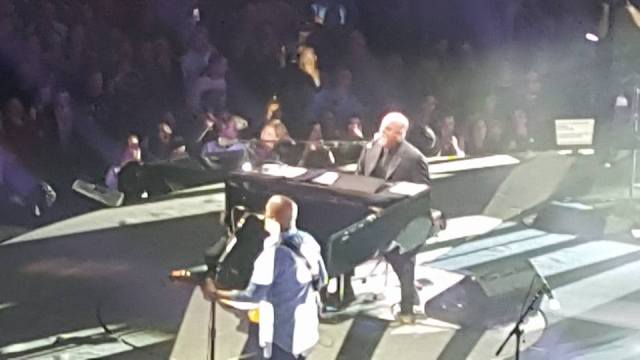
I’ve long been a music aficionado, especially the hard rock/metal genre. Sure, I’ll enjoy a Billy Joel concert (as I did most recently in Orlando) or even the newer pop music out there (my lovely wife and I went to the 2016 Jingle Ball, featuring Pitbull, Fifth Harmony, Martin Garrix, Chainsmokers and many other artists residing in the Top 40 today), but I always come back to my home. Perhaps it is the power of the guitars or the political nature of many of the lyrics (yes, they are saying something with their words and commentary – take the time to read the liner notes if you miss them the first time around), but hard rock/metal speaks to me more than many other genres in the industry.

Honestly, today’s hard rock/metal scene isn’t your granddaddy’s brand. The blues rock that such groups as Led Zeppelin, Cream, the Who and the Rolling Stones (yes, I am going to toss them in the hard rock genre – for their time, they were the “punks” of their era) bear little resemblance to the power drivers such as Metallica, Disturbed or even more pop-driven hard rock/metal bands like Breaking Benjamin or Shinedown. But they’re still hard rock/metal and still damned entertaining in their own right.

There’s a great deal of hard rock/metal out there right now, but these are two efforts that have caught my ear of late. If you’re looking for some great music, you might want to look these up.

Halestorm, ReAniMate 3.0

halestormreanimate3

Halestorm is one of the preeminent bands in the hard rock/metal genre today. Powered by the blistering vocals of Lzzy Hale (who happens to throw in badass guitar work also), the nimble and crushing lead guitars of Joe Hottinger and the guttural tempo setters in bassist Josh Smith and drummer AreJay Hale (Lzzy’s brother), Halestorm is one of the most popular acts in the business. That perch has allowed them to take on some pet projects, including the continuation of this series of cover EPs.

ReAniMate 3.0: The CoVeRs eP is the third in a series of “cover Eps” that Halestorm has issued over their career. The first, naturally called ReAniMate: The CoVeRs eP and released in 2011, brought a diverse selection of songs such as Lady Gaga’s “Bad Romance” (one of the best covers of all-time in this writer’s opinion), the Beatles’ “I Want You (She’s So Heavy)” and Skid Row’s “Slave to the Grind” under one artist. In each case, Halestorm took the songs and added their own touches to them, basically creating their own versions of songs people thought they knew (the exact challenge facing anyone who takes on a previously released tune).

That highly successful EP (how successful? A recent eBay auction for a signed copy of the CD went for $175) begged for a follow up and, after releasing a CD of their own material, Halestorm obliged their fans. ReAniMate 2.0: The CoVeRs eP was released in 2103 and followed in the same format as the first. This time around, Hale & Company took on Judas Priest (“Dissident Aggressor”), Daft Punk (“Get Lucky”), Pat Benatar (a natural in “Hell is for Children”) and Fleetwood Mac (“Gold Dust Woman”). It also seemed to leave the audience wanting more and, earlier this month, Halestorm would deliver again.

halestorm

ReAniMate 3.0: The CoVeRs eP rockets out of the gate with arguably the best song on the disc. The remake of Whitesnake’s “Still of the Night” gets the unmistakable treatment from Hale and her mates, hedging close enough to the original that it is familiar but applying their own touch. Hale’s voice gives Whitesnake lead man David Coverdale a run for his money and the rest of the band is more than able to power out the song.

The second-best song on 3.0 is Halestorm’s take on the Joan Jett and the Blackhearts classic “I Hate Myself for Loving You.” On the first two discs, Hale and her group did not touch any Jett tunes, either solo or from her days in the Runaways. It seems as if it would be a perfect match and, in this case, it was, as Halestorm takes the Jett standard to new heights.

There was one clunker on the disc, however. I never was a fan of Sophie B. Hawkins and perhaps that is why I didn’t really care for the Halestorm remake of “Damn, I Wish I Was Your Lover.” While Hale can pull off the poppy tunes like this (and she’s already put some country artists to shame who dared try to match her on stage), it didn’t work for the remainder of the band, in my thought. This is the only down point of the record, however, as the rest of ReAniMate 3.0: The CoVeRs more than makes up for it. These cover Eps are nice, but it really whets the appetite for original Halestorm material that is supposed to come later this year.

Letters from the Fire, Worth the Pain

letters-from-the-fire-worth-the-pain

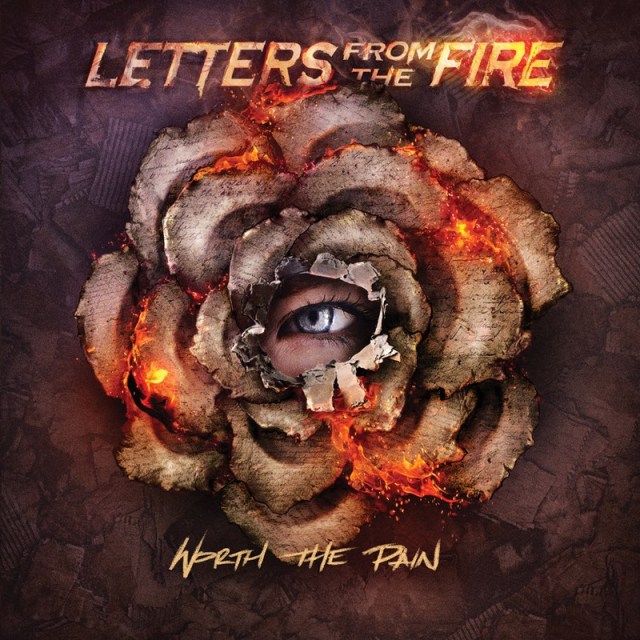
Trying to reach the rarefied air that Halestorm exists in, the band Letters from the Fire have had a jaded history. Originally formed in 2007 as Park Lane, guitarist Mike Keller and high school friend Grayson Hurd found bassist Clayton Wages and singer Eliot Weber and mucked around the San Francisco area, eventually changing their name to Letters from the Fire in 2012. Following their debut release Rebirth, there was apparently another overhaul of the band, with Cameron Stuckey coming on as rhythm guitarist and, perhaps most importantly, shifting from Weber’s male voice to the female voice of Alexa Kabazie (with Hurd and Weber departing).

The changes have made a great deal of difference for Letters from the Fire. Their latest full-length album, Worth the Pain, is a magnum opus of their career. From start to finish, Keller, Kabazie and Company have put their entire heart and soul into the record. For that effort, they have created a 13-track crusher of an album.

lettersfromthefire

Where to start with the best songs of Worth the Pain? It comes out of the gate with “Perfect Life,” featuring Keller’s excellent lead guitar efforts and Kabazie’s emotional and powerful vocals. “Mother Misery” continues the high level of excellence out of the band and “Give in to Me” is simply outstanding. The title track is a powerful tune…it is angry, aggressive, and appropriate. “My Angel” has excellent tempo and mood changes throughout the song and “Holy Ghost” starts quietly but turns into a raging storm by the end.

If there were one qualm to have with this record from Letters from the Fire, it would be that the lyrical content could reach out a bit more. Most of the songs are of the “fuck you, you broke my heart” sentiment; there are indicators, though, that the band could stretch beyond this with some deeper lyrics. As this is the first effort from this lineup, it really raises some expectations for the follow up.

Letters from the Fire’s Worth the Pain is reminiscent of Amy Lee and Evanescence, but to lop them in with that band would be doing them a disservice. They’ve got the chops to stand on their own and they’ve got the experience. Now it is just a matter of driving to the end and the success that they seem destined for…and Letters from the Fire seem to have the spirit to do just that.