Who is The Greatest Hard Rock/Metal Band of All Time, Part 1- The 1960s/70s

HardRockMetal

Rather than delve into the delusion that currently is supposed to oversee this country (and trust me, there’s plenty to call the Tangerine Ignoramus out on simply from this last weekend alone), I’ve decided to start something that will definitely be much more fun. Since college basketball is deciding the 64 teams (OK, 68 teams because of those simply idiotic play in games the NCAA conducts) that will compete for their championship, thought it would be fun to do the same but in a different arena – the genre of hard rock/metal music.

As it is one of my personal fortes, hard rock/metal music is essentially celebrating its 50th Anniversary since the release of Steppenwolf’s “Born to Be Wild,” which contained the lines “Get your motor running/heavy metal thunder.” With this in mind, I’ve put together a compilation of the top 64 hard rock/metal bands from four different eras – the 1960s/70s, the 1980s, the 1990s, and the 2000s/10s – and split them up in accordance with those eras into “regions.” We’ll break down the matchups in each bracket and, with hope, readers will make their own comments and vote on the matchups and perhaps they’ll be some sort of prize at the end – the management here (re:  me) is still trying to come up with that prize.

What are the criteria for consideration? First, the band/singer would have to have some sort of longevity to their career – you don’t see many bands or singers that are considered “legendary” if they were only around for a couple of albums (Amy Winehouse is a rare exception, but that’s a discussion for another time). Second, the band/singer would have to have an impact on the genre – did they do something particularly noteworthy or notorious that put them into the annals of the genre’s history, a song or “behavior” that was historic. Third, just how popular were they when they were in existence – a band or singer that was wildly popular with the fans might get some leeway over a critical darling OR vice versa (depending on tastes). Fourth, what accolades did they receive – awards, gold records, and recognition by the industry (Rock & Roll Hall of Fame, hello?) are all under consideration here. Finally, was the band/singer influential on future generations of music – have they helped shape the genre since they have left the sphere?

RRHallofFame

Without further ado, here’s the breakdown of the 1960s/70s bracket, with the seeding by each band/artist name.

Led Zeppelin (1) vs. Steppenwolf (16)

Led Zeppelin as the #1 seed was about as much of a lock as you could expect. They never had a #1 song and they might lack the longevity of some of the other competitors (Zeppelin’s heyday was 1968-80, only a scant 12 years). But they make up for those deficiencies in every other area under consideration – their “tour behavior” became the stuff of legends and they had the musical chops to back it up (“Stairway to Heaven” is widely accepted as one of the greatest songs of all time), their popularity was outstanding and they were inducted into the R&R HOF on the first ballot in 1995 (minimum of 25 years after first album release). Although Steppenwolf coined the term “heavy metal,” Led Zeppelin lived it, thus they should move to the next round.

Rush (8) vs. Queen (9)

These are the fun matchups where the smallest thing can push one of the competitors past their opponent. Throwing these two against each other is roughly akin to picking a favorite child as both are outstanding and legendary groups that click all the boxes. Rush pulls ahead slightly on the longevity front – they’re still active today, while Queen disbanded after Freddie Mercury’s death in 1991 after a two-decade career, but Queen has the epic “Bohemian Rhapsody” that is arguably better known than any Rush track. Queen is arguably more influential than Rush, especially given Mercury’s soaring vocals over Geddy Lee’s vocal individuality. Both have their accolades to lie back on, but Rush waited quite some time before being inducted into the R&R HOF. Deciding a winner here could come down to a few votes.

JudasPriest

Judas Priest (4) vs. Scorpions (13)

Some may debate ranking Scorpions that low in the region, but it goes to demonstrate how tough it is to even get on the rankings. The Priest has been a monolithic machine that has rumbled since the early 70s (and are still at it today, albeit with an adjusted roster), while Scorpions have been up-and-down since the latter part of that decade. As far as the definition of “heavy metal,” Judas Priest for many would be the template to go with – the “leather and chains” look was patented by Judas Priest front man Rob Halford. What may tip the scales is that Judas Priest is in the R&R HOF; at this moment, Scorpions have not even been considered. It’s unfortunate that one of these giants of the genre doesn’t get to move on in the competition, but which will it be?

Black Sabbath (5) vs. Motörhead (12)

The 5/12 matchup is always one ripe for an upset and this battle is no exception. Black Sabbath were extremely influential on burgeoning metal bands, but Motörhead has their own legion of followers. The front men for both bands are iconic, with Ozzy Osbourne as the first singer for Sabbath followed by the legendary Ronnie James Dio and Motörhead featuring the late, lamented Lemmy Kilmister. Sabbath never got the critical recognition that Motörhead did – yes, if you’re asking, hard, fast, and loud can be critically appraised! – but Sabbath has been recognized with more accolades than Lemmy and Co. Perhaps Sabbath might win for their “Stonehenge” moment, but it will be a tough fight between this twosome – and, once again, a travesty to see one out of the competition.
thinlizzy

AC/DC (2) vs. Thin Lizzy (15)

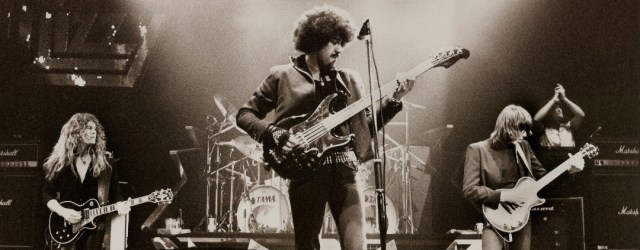
Critically acclaimed Thin Lizzy had a handful of hits (“Cowboy Song,” “Jailbreak,” “The Boys Are Back in Town”) before decadence and the untimely passing of leader Phil Lynott ended their run in 1983, but they are running into a buzz saw coming from “Down Under.” AC/DC is still going strong 45 years since their creation, although some might think the road has come to an end without Brian Johnson’s vocals (and, prior to him, Bon Scott) heading the riffs of lead guitarist Angus Young. Influences? Accolades? Longevity? All the clicks go in the corner of the Australians over the Irish in this one, but we’ll see if an upset is brewing.

Van Halen (7) vs. Aerosmith (10)

Another difficult matchup between two U. S. bands that have been part of the backbone of the genre. Both have influenced the “up and coming,” especially Aerosmith singer Steven Tyler’s sound (it is arguable he might have had an influence on a young David Lee Roth from Van Halen), while band namesake Eddie Van Halen is recognized as one of the great guitarists of all time (no shame to Joe Perry for coming up second-best in that comparison). Both bands have awards and accolades, critical respect, and longevity as seminal parts of their being – who can come out on top when the competitors are almost dead equal?

KISS

Deep Purple (3) vs. KISS (14)

For some reason, I smell an upset brewing here. KISS has been around it seems since the dawn of time, but Deep Purple was one of the formative bands of the hard rock genre in the late 60s and 70s (and even a bit into the 80s). Deep Purple’s constantly shifting lineup, however, might be a detriment to them…KISS has kept two of its four members, singer/guitarist Paul Stanley and bassist Gene Simmons, intact since its creation and, for the most part, has had all four original members (lead guitarist Ace Frehley and drummer Peter Criss) for a sizeable segment of the band’s history. KISS has had more of an influence on perhaps the stage performance side of the equation that Deep Purple didn’t have, but Deep Purple had the critical love. Which will be enough to provide the edge in this race?

The Who (6) vs. Jimi Hendrix (11)

There might be some chirping from the crowd on these two picks but, for their time, they were considered as “hard rock” as you can get. The tipping point in this battle may be the longevity question – The Who lasted well into the 1990s (for better or worse), while Hendrix’s stay was short-lived (he only released three albums while alive with the Jimi Hendrix Experience; his work with the Band of Gypsies was released posthumously), which should push them ahead (Hendrix arguably was Winehouse of the 1960s). But when you’re running up against the man the Rock & Roll Hall of Fame calls “arguably the greatest instrumentalist in the history of rock music,” you’re going to be in for a fight.

That’s it for the first “region” of our tournament. Later this week, we’ll look at the 1980s and over the weekend perhaps we’ll delve into the 1990s and the 2000s/10s (and be thinking of who could be the #1 seeds for those “regions” – would love to hear those opinions). Don’t forget to vote by replying here and I will compile the responses – and maybe award a prize once a champion is crowned to a reader!
 

Halestorm’s “ReAniMate 3.0,” Letters from the Fire’s “Worth the Pain” Two Worthy Hard Rock Efforts

billyjoel

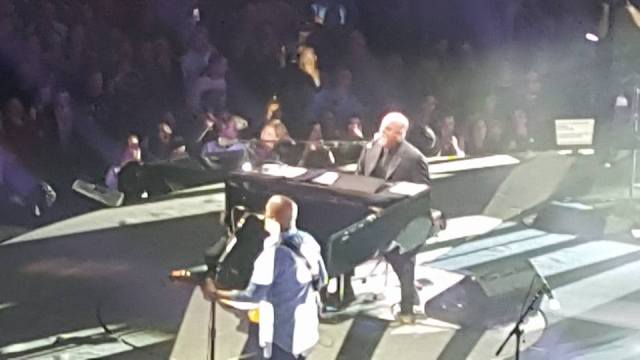
I’ve long been a music aficionado, especially the hard rock/metal genre. Sure, I’ll enjoy a Billy Joel concert (as I did most recently in Orlando) or even the newer pop music out there (my lovely wife and I went to the 2016 Jingle Ball, featuring Pitbull, Fifth Harmony, Martin Garrix, Chainsmokers and many other artists residing in the Top 40 today), but I always come back to my home. Perhaps it is the power of the guitars or the political nature of many of the lyrics (yes, they are saying something with their words and commentary – take the time to read the liner notes if you miss them the first time around), but hard rock/metal speaks to me more than many other genres in the industry.

Honestly, today’s hard rock/metal scene isn’t your granddaddy’s brand. The blues rock that such groups as Led Zeppelin, Cream, the Who and the Rolling Stones (yes, I am going to toss them in the hard rock genre – for their time, they were the “punks” of their era) bear little resemblance to the power drivers such as Metallica, Disturbed or even more pop-driven hard rock/metal bands like Breaking Benjamin or Shinedown. But they’re still hard rock/metal and still damned entertaining in their own right.

There’s a great deal of hard rock/metal out there right now, but these are two efforts that have caught my ear of late. If you’re looking for some great music, you might want to look these up.

Halestorm, ReAniMate 3.0

halestormreanimate3

Halestorm is one of the preeminent bands in the hard rock/metal genre today. Powered by the blistering vocals of Lzzy Hale (who happens to throw in badass guitar work also), the nimble and crushing lead guitars of Joe Hottinger and the guttural tempo setters in bassist Josh Smith and drummer AreJay Hale (Lzzy’s brother), Halestorm is one of the most popular acts in the business. That perch has allowed them to take on some pet projects, including the continuation of this series of cover EPs.

ReAniMate 3.0: The CoVeRs eP is the third in a series of “cover Eps” that Halestorm has issued over their career. The first, naturally called ReAniMate: The CoVeRs eP and released in 2011, brought a diverse selection of songs such as Lady Gaga’s “Bad Romance” (one of the best covers of all-time in this writer’s opinion), the Beatles’ “I Want You (She’s So Heavy)” and Skid Row’s “Slave to the Grind” under one artist. In each case, Halestorm took the songs and added their own touches to them, basically creating their own versions of songs people thought they knew (the exact challenge facing anyone who takes on a previously released tune).

That highly successful EP (how successful? A recent eBay auction for a signed copy of the CD went for $175) begged for a follow up and, after releasing a CD of their own material, Halestorm obliged their fans. ReAniMate 2.0: The CoVeRs eP was released in 2103 and followed in the same format as the first. This time around, Hale & Company took on Judas Priest (“Dissident Aggressor”), Daft Punk (“Get Lucky”), Pat Benatar (a natural in “Hell is for Children”) and Fleetwood Mac (“Gold Dust Woman”). It also seemed to leave the audience wanting more and, earlier this month, Halestorm would deliver again.

halestorm

ReAniMate 3.0: The CoVeRs eP rockets out of the gate with arguably the best song on the disc. The remake of Whitesnake’s “Still of the Night” gets the unmistakable treatment from Hale and her mates, hedging close enough to the original that it is familiar but applying their own touch. Hale’s voice gives Whitesnake lead man David Coverdale a run for his money and the rest of the band is more than able to power out the song.

The second-best song on 3.0 is Halestorm’s take on the Joan Jett and the Blackhearts classic “I Hate Myself for Loving You.” On the first two discs, Hale and her group did not touch any Jett tunes, either solo or from her days in the Runaways. It seems as if it would be a perfect match and, in this case, it was, as Halestorm takes the Jett standard to new heights.

There was one clunker on the disc, however. I never was a fan of Sophie B. Hawkins and perhaps that is why I didn’t really care for the Halestorm remake of “Damn, I Wish I Was Your Lover.” While Hale can pull off the poppy tunes like this (and she’s already put some country artists to shame who dared try to match her on stage), it didn’t work for the remainder of the band, in my thought. This is the only down point of the record, however, as the rest of ReAniMate 3.0: The CoVeRs more than makes up for it. These cover Eps are nice, but it really whets the appetite for original Halestorm material that is supposed to come later this year.

Letters from the Fire, Worth the Pain

letters-from-the-fire-worth-the-pain

Trying to reach the rarefied air that Halestorm exists in, the band Letters from the Fire have had a jaded history. Originally formed in 2007 as Park Lane, guitarist Mike Keller and high school friend Grayson Hurd found bassist Clayton Wages and singer Eliot Weber and mucked around the San Francisco area, eventually changing their name to Letters from the Fire in 2012. Following their debut release Rebirth, there was apparently another overhaul of the band, with Cameron Stuckey coming on as rhythm guitarist and, perhaps most importantly, shifting from Weber’s male voice to the female voice of Alexa Kabazie (with Hurd and Weber departing).

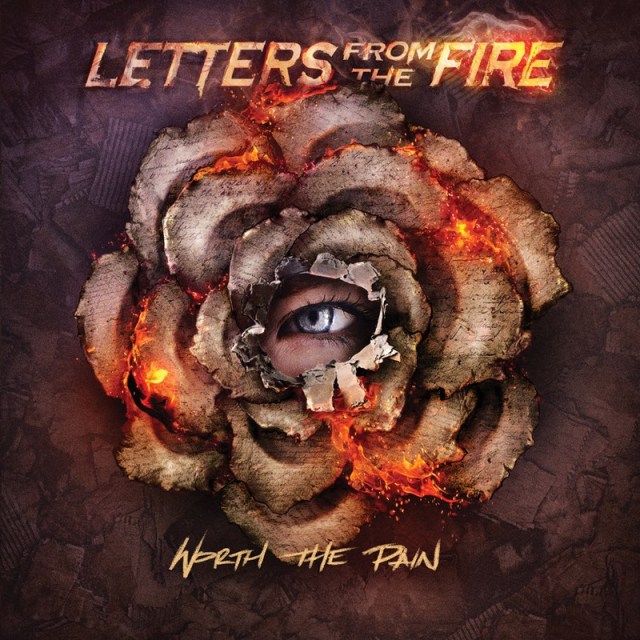
The changes have made a great deal of difference for Letters from the Fire. Their latest full-length album, Worth the Pain, is a magnum opus of their career. From start to finish, Keller, Kabazie and Company have put their entire heart and soul into the record. For that effort, they have created a 13-track crusher of an album.

lettersfromthefire

Where to start with the best songs of Worth the Pain? It comes out of the gate with “Perfect Life,” featuring Keller’s excellent lead guitar efforts and Kabazie’s emotional and powerful vocals. “Mother Misery” continues the high level of excellence out of the band and “Give in to Me” is simply outstanding. The title track is a powerful tune…it is angry, aggressive, and appropriate. “My Angel” has excellent tempo and mood changes throughout the song and “Holy Ghost” starts quietly but turns into a raging storm by the end.

If there were one qualm to have with this record from Letters from the Fire, it would be that the lyrical content could reach out a bit more. Most of the songs are of the “fuck you, you broke my heart” sentiment; there are indicators, though, that the band could stretch beyond this with some deeper lyrics. As this is the first effort from this lineup, it really raises some expectations for the follow up.

Letters from the Fire’s Worth the Pain is reminiscent of Amy Lee and Evanescence, but to lop them in with that band would be doing them a disservice. They’ve got the chops to stand on their own and they’ve got the experience. Now it is just a matter of driving to the end and the success that they seem destined for…and Letters from the Fire seem to have the spirit to do just that.

Let’s Put It This Way…Fuck 2016

For anyone who has been around a good length of time, there are years that are remembered more fondly than others. For myself, there’s 2006, when I met my lovely wife; 2008, when we were married, and 20xx when we had our son. Then there are those years that are better left unsaid (mine was 1988 and let’s not get into why except to say that I came out of it a better person). With all of this said, there’s only one way to put the latest ‘trip around the sun’ and that is…fuck 2016.

There were two main areas that were ravaged over the past 365 days (and we’ve yet to actually reach New Year’s Eve, for fuck’s sake). One was the entertainment industry and, in particular, the music industry. When the year kicked off with the death of David Bowie (January 10) from liver cancer, it caught everyone by surprise simply because the very private Bowie had not informed the world he was in failing health.

A little more than a week later, another stunning death occurred. The Eagles’ Glenn Frey would pass away on January 18 following intestinal surgery and, by the end of the month, a band’s history was decimated by the death of two former members. Oddly enough on the same day – January 28 – Signe Toly Anderson, the original vocalist for Jefferson Airplane, and the former lead guitarist for the band, Paul Kantner, both passed away at the age of 74.

Arguably the most surprising death of the calendar year was the passing of Prince in April. “The Purple One” was found unresponsive in the elevator of his Paisley Park home on April 21, ending a charade that had been going on apparently for years. Bedeviled by pain from his strenuous and acrobatic performances over the last 30-plus years, Prince was found to have been using the painkiller fentanyl and overdosed on the powerful drug.

Prince3

The sheer number of deaths of legendary figures of the music world continued to mount throughout the entire year. Maurice White of Earth, Wind and Fire (February 4); Merle Haggard (April 6); Leonard Cohen (November 7); Sharon Jones, a fiery soul singer often called the “female James Brown” (November 18); two members of one band in Keith Emerson (March 11) and Greg Lake (December 7)…the legends that left had many music aficionados stunned into silence. To administer the coup de grace for the year, former Wham! front man and solo sensation George Michael passed on Christmas Day.

Add these in with the deaths of such acting icons as Alan Rickman (January 14), Abe Vigoda (January 26), Garry Shandling (March 24), Patty Duke (March 29), Gene Wilder (August 28), Florence Henderson (November 24) and Alan Thicke (December 13), sports legends like Muhammad Ali (June 3), Gordie Howe (June 10), Arnold Palmer (September 25) and former Tennessee women’s basketball coach Pat Summitt (June 28) and political figures such as Nancy Reagan (March 6), Elie Wiesel (July 2), Fidel Castro (November 25) and John Glenn (December 8), and even the hardest of souls would have to say that this has been a pretty devastating year (and we’ve barely scratched the surface of those who passed in 2016 – the awards shows this spring are going to be pretty somber affairs when it comes to the “In Memoriam” segment).

It is often asked why people get emotional over the death of entertainment figures, sports heroes or even politicians. It is because it is usually a link to our youth that has been snatched away from us by the talons of the Grim Reaper. Along with that past link, there is also the wealth of work that we will never hear or see those people perform again. In some cases, yes, the person has lived a full life…it still doesn’t make it easier on those who consider themselves fans of the person or their achievements in life to recognize the passing of the body but not the soul.

The other area that was particularly screwed up in 2016 was the world of politics (sorry if you were looking for something else). At the start of the year, it seemed that there were legitimate candidates on both sides of the aisle that would provide for a good choice for the citizens of the States of America. Then a narcissistic, xenophobic racist fascist stepped to the fore.

The man who would eventually become the GOP nominee was not challenged by his own party, partly because they thought he was a joke (and he is) but also because they thought that he had no chance to win. They also didn’t want to offend the “base” that flocked to him like lemmings off a cliff because that “base” was something they had taken a long time to create through their actions of the past 16 years. By pushing them away too hard, they would threaten their own chances when the GOP nominee fell out of favor.

The only problem with that was he never did. Instead of falling from favor, more members of the Ignorati came along for the ride. And because they could not coalesce behind an alternative member – one wasn’t conservative enough, another was too conservative, another’s family had been there before, another was too young, etc. – they allowed a travesty to take over their party. In fact, many of those stayed on the sidelines EVEN WHEN THEY NOMINATED HIM and thought that the Democratic nominee for President, Hillary Clinton, would be the one to take him down.

Through the mechanizations of many parts, Election Day instead resembled “The Purge” as the Ignorati worked such an unlikelihood that no one considered it possible. To win, the GOP nominee had to sweep at least four states – some combination of Wisconsin, Michigan, Pennsylvania, Ohio, Virginia, North Carolina, and Florida – to be able to win the presidency. The GOP nominee took six of the seven, with Virginia the only holdout. The margin of victory in those states amounted to around 100,000 votes and the GOP nominee would actually lose the popular vote to Clinton.

TrumpSmug

Now we enter a world that, with Twitler in charge, is a much darker place. He continues to threaten different agencies, looking for the names of those scientists who have done research on climate change or women who have worked to advance women’s rights in foreign countries. He continues to harp on developing a registry for Muslims, threatening to enrage a religion that is the second largest in the world with 1.6 BILLION devotees. He also threatens to take us back to the era where a simple error – lost contact with command and control, a “broken arrow” of a stolen or misplaced nuke or a simple regime change in a country – could bring us to the brink of thermonuclear disaster.

The only way to stop such a despot is to fight on every corner, for every fiber and inch of earth that is possible. It will be more difficult in 2017 as the GOP has complete command of the government, but they now also have no fucking excuses when (and it will be when) things go FUBAR. There may be those who say wait for a couple of years to change the narrative, but the time is now to stop any forward momentum that the GOP nominee may think he has (which he is highly mistaken – there is no “mandate” as many members of the Ignorati have been claiming).

These were just the two jewels of the crappy crown that topped the Year 2016. With hope, we can put this year behind us and find better things going on in the New Year. Let’s blow the horns, rev up the noisemakers and tip the bottle of champagne…fuck 2016! It’s done! And let’s hope that 2017 brings us better circumstances than the previous 365 days has.

GASP! The Rock & Roll Hall of Fame Gets It (Somewhat) Right!


rockhalloffame

Normally this time of year has everyone in some state of aggravation. Mostly it comes from the holiday preparations (every year I’ve said I plan to start things earlier and instead it seems to be later), but it also comes from the yearly announcement of the Rock & Roll Hall of Fame inductees (OK, maybe not everyone). For a change, however, the Class of 2017 isn’t that bad, meaning that the voters, writers, and fans (yes, the fans get a vote)…GASP!…got it (somewhat) right this year.

After years of inducting some clearly questionable candidates (in 2016, the induction of N.W.A. drew the ire of rock fans; in 2015, it was Bill Withers; in 2014, Cat Stevens…you can go back each year and pick at least one), the bands and individuals that were voted in were either a solid lock for entry or a great argument to get in. For example, Pearl Jam was as close to a lock as you could get from the list of nominees as one of the originators of the “grunge” sound of the late 80s/early 90s rock scene. They were on the ballot for the first time and, yes, were worthy of that induction.

The 80s rock generation (and part of the 70s) was represented first by Journey. I wouldn’t have called this one – I believe it is the Rock & Roll Hall of FAME, not the Hall of PRETTY GOOD – but I also am not bent out of shape about their induction. If they are to be inducted, they must be inducted with singer Steve Perry; any other incarnation of the group would be an insult to the legend of the band.

journeyescape

Joining Journey is straddling that 70s/80s line is another inductee for the 2017 class, Electric Light Orchestra (ELO). Why they hadn’t been inducted previously is anyone’s guess, so it is far overdue for the Rock Hall to recognize the greatness of the band. It is also arguable that Jeff Lynne, the mastermind behind the ELO sound (and producer of some other great artists like Tom Petty, George Harrison, Roy Orbison, and Brian Wilson), deserves an induction as a solo artist or contributor.

The band Yes…yes, they weren’t in the Hall yet…is a correction of one of the grossest errors of the Hall of Fame. Stretching from their early work in the late 60s to their powerful work in the 80s, Yes deserves the induction arguably more than even ELO did. The question is what lineup do you go with? If you go with the early 80s lineup, you’re leaving out Rick Wakeman, arguably one of the finest keyboardists of the rock era. If you go with the original lineup, then you leave out Trevor Horn and keyboardist Geoff Downes (AND Wakeman), who were key to helping in the creation of the 80s sound of the group that led to their resurrection. I don’t envy the job of the Rock Hall staff in determining which people will be honored with induction as a member of Yes.

The singer/songwriters weren’t ignored this year either. Joan Baez, who was a part of the Vietnam protest era of the 1960s and continued to have an outstanding career in the early to mid-70s, wasn’t probably some people’s choice for that genre, but you cannot ignore her impact on rock music having a social impact. Baez inspired such women as Judy Collins, Bonnie Raitt and Joni Mitchell to their activism and entrance into the rock arena.

Even one of the longest “problem” spots for the Rock & Roll Hall of Fame got covered this year. Nile Rodgers, the legendary producer and leader of the funk/disco group Chic, will enter the Hall for “Musical Excellence.” This should, in the future, remove the attempts to put Chic into the Hall as a performer because, in all honesty, it was Rodgers and the late drummer Tony Thompson who were basically Chic (they had a rotating roster of female vocalists, never a defined female lead). Thompson, in his own right, should be looked at for this award in the future.

tupac

The ONLY question mark about this year’s inductees would be the inclusion of rapper Tupac Shakur on the roster. Shakur was a tremendously influential part of the “West Coast” sound of gangsta rap, even taking it to the point where the “East Coast/West Coast” rap wars began. Because of this standoff, Shakur was brutally shot to death on the streets of Las Vegas 20 years ago and probably brought about the death of ChristopherThe Notorious B.I.G.” (“Biggie Smalls”) Wallace six months later, possibly adding to the legend.

Tupac is a question mark because he didn’t have a wealth of material before his premature death. He’s released more albums since his passing than when he was alive and, to be honest, nobody is claiming that the posthumous work is the reason he’s being inducted. It also leaves the question open that, if you’re inducting Tupac, you’ve got to put Biggie in also (and Biggie’s repertoire is even less than Shakur’s). If you’re going strictly as an influence, I might be swayed on Tupac; if it is on his body of work, then I’m not as solidly behind his induction.

Even with these inductions, there’s still a wealth of artists out there that are more than deserving of entry. Out of the 2017 nominees, I’m slowly coming around to The Cars being inducted. As a purveyor of the synth sound of the 1980s (and their early work in the late 70s), I’ve always been a bit on the fence with the band. Now, I believe there is a place in the Hall for the group, just as there should be for another synthesizer-based band and 2017 nominee, Kraftwerk.

thinlizzy

I’ve also discussed ad nauseam about who deserves to get into the Hall. I’ve seen others believe in my choices of Pat Benatar, The Runaways and Judas Priest, and some have even given credence to Thin Lizzy, an outstanding choice if there is one. I’ve also been a longtime proponent of inducting Warren Zevon and Jimmy Buffett, but will now add Motörhead onto that list alongside a host of others.

Whatever the list of inductees is for this year, the concert that honors those inductees promises to be a bit calmer than the 2016 induction ceremonies. Bringing back the original Cheap Trick – with their estranged original drummer Bun E. Carlos – was tricky, but they pulled it off. 2016 inductee Steve Miller was perhaps the most vocal about his displeasure about the ceremonies AND the induction, points that he made long and loud both pre- and post-induction. If they can figure out the Yes conundrum, then they should be able to get through the awards ceremony without problems.

As to when that show will be, we’ll just have to wait and see. But for one magical year, it appears things are right with the world and the Rock & Roll Hall of Fame made the appropriate selections.

The Top Ten Underrated Hard Rock Songs, Part Two

guitarist

A couple of weeks ago, we discussed the first five songs that made up this list (and they are in no particular order other than awesome!). In that discussion, such bands as Faith No More, Body Count, Motörhead, Extreme, Faster Pussycat and Dangerous Toys, among others, and how certain songs performed by these bands just missed rocketing them to metal immortality. But there was something else that derailed these bands just as they were beginning to find their groove.

Hard rock and metal were staples of the late 80s/early 90s, but the times they were a changin’. Just as some of these bands began to work on their sophomore efforts (Dangerous Toys were particularly victim of this), the rumble out of the Northwest was heard. The “Seattle sound” – driven by its early popular practitioners such as Pearl Jam and Nirvana but also by such groups as early as Mudhoney and the Melvins and by such powerhouses as Soundgarden and Stone Temple Pilots – took over the ears of the disaffected youth and reflected their angst with life. The band Temple of the Dog was an amalgam of these groups, with members from Mother Love Bone, Green River, Bad Radio and Skin Yard joining with members of Soundgarden and Pearl Jam for one of the monster efforts of what came to be called the “grunge” era.

If grunge couldn’t do the job by itself, then the second punch of gangsta rap finished off the 80s-hard rock/metal scene. Technically coming out at the same time as the 80s-hard rock/metal took off, gangsta rap became more accepted on both radio and in the culture as the 90s rolled around. Dr. Dre, Snoop Dogg, Ice Cube, Ice-T (he was also known for his metal work, making him one person who was going to win either way), Tupac Shakur, The Notorious B.I.G., Wu-Tang Clan, Nas…they all had a hand in the demise of hard rock as the 90s moved along. With the double blow of the emergence of both the gangsta rap and grunge genres – not only in popularity but also on radio and in the record stores – the “good times” were over for the 80s-hard rock/metal scene.

Alas, it probably couldn’t have been sustained much longer. By the early 90s, many of these bands were succumbing to the curse of the “rock and roll lifestyle” in the form of drug and alcohol addiction and becoming exactly what they had hated – the establishment (this was something that grunge carried on). Thus, even if these next five bands had found success with these underrated gems, they may not have been able to keep the fire burning for much longer.

Contraband, “All the Way to Memphis”

This was a group that should have been so much bigger than it was. Contraband was conceived as an outlet for members of several other groups to record while their “day jobs” (re: the band’s they were members of) were on hiatus. Members of Ratt, L. A. Guns, Vixen (one of the few all-female hard rock/metal bands), the Michael Schenker Group and Shark Island all contributed at least one member to the proceedings, which some might have thought would have been uncontrollable but came together quite well.

This particular song was a great choice. Originally done by Ian Hunter and Mott the Hoople (Hunter would prove to be a popular writer for hard rock bands; his “Once Bitten, Twice Shy” was a huge hit for Great White), it lent itself well to the canoodling guitar work from Schenker and Tracii Guns and the howling vocals of Richard Black. The rest of the record was, if you’re a fan of the hard rock/metal genre, an outstanding effort (especially “Loud Guitars, Fast Cars and Wild, Wild Livin’”).

Unfortunately, Contraband was eventually devoured by what we discussed above. It also didn’t help when their eponymous debut record was poorly received by the public. Eventually, the players all went back to their original teams and a second record was never recorded.

Saxon, “Dallas 1PM”

This is one of the older selections on our list as Saxon was at the forefront of the “New Wave of British Heavy Metal” (NWOBHM) scene of the late 70s/through the 1980s. The British act never did find the same acclaim as bands such as Def Leppard and Iron Maiden did, but they did not disappoint in driving out album after album for their rabid fans. Wheels of Steel and Solid Ball of Rock are two of their more notable efforts and, to this day, they still are on tour and in the studio.

This song comes from their 1980 effort Strong Arm of the Law and, if you don’t recognize the significance of the title, you probably didn’t pay much attention in history class. On November 22, 1963, President John F. Kennedy was assassinated by Lee Harvey Oswald as the President visited Dallas. At 1PM, doctors at the hospital declared Kennedy dead, hence the unlikely subject for a hard rock song.

There were a couple of problems that Saxon had with “Dallas 1PM.” First, citizens from the States of America hate having to think, especially about history. And second, citizens from the States of America hate having British people try to teach them history. The combination doomed what would have otherwise been an excellent chance to learn (and it is stunning how much you can learn if you listen to the lyrics of a hard rock/metal song…try it sometime).

Warrant, “Uncle Tom’s Cabin”

One of the original deviants of the “hair metal” genre, Warrant was all about the party. From their songs such as “Cherry Pie” and their hedonistic touring “pleasures,” Warrant was known more for their fun-and-games persona than their music. They were all excellent musicians, however, who wanted to be known for their music rather than their outside activities. Thus, when they issued “Uncle Tom’s Cabin” from the Cherry Pie album, people weren’t quite sure what to think.

The song was supposed to be the first song released off the album (the record company overruled and selected the title track) and it is arguable whether they would have found success with it. The opening acoustic guitar shows some nimble finger work and the story – of two men (an uncle and his nephew) witnessing the local sheriff and a deputy dumping two bodies they murdered into the local swamp – was more adult than anything else ever attempted by Warrant.

By trying to make their sound a bit more adult and include some seriousness to their compositions, Warrant signed their…well, death warrant. Their next album, the much more serious Dog Eat Dog, did not reach the level of success of earlier Warrant efforts and the band broke up. In a demonstration of the changing scene, the late Jani Lane (the vocalist for Warrant) said he knew “the proverbial writing was on the wall” when the band’s framed photo in the foyer of the Columbia Records (their record label) offices was replaced by the Seattle band Alice in Chains.

Cinderella, “Shelter Me”

Here’s another entry into that “consider us serious musicians” category that didn’t end up working well for the group. Cinderella was pretty much a blueprint for the “hair metal” bands of the 80s. Big hair? Check. Big guitars? Check. Raspy vocalist screaming loudly? Check. The band broke through with such rock anthems as “Save Me” and ballads like “Nobody’s Fool” but, by their third album, they were wanting to stretch their musical legs.

On the album Heartbreak Station, lead singer/guitarist Tom Keifer began to add in different touches that you normally don’t see in a hard rock effort. Dobros, saxophones and horns, female backing vocals and a boogie piano were put into this song, making it a bit of a departure from the earlier work by the band. Then there were the lyrics, pointing out the things that people will utilize to get relief from a maddening world. Overall it was more of a blues song than a traditional hard rock song and people didn’t know what the hell to do with it.

Perhaps that change in styles was the thing that sent the band into a downward spiral. The album didn’t reach the level of their earlier efforts (Night Songs and Long Cold Winter) and their swan song, Still Climbing, never got off the ground. Kiefer still performs today with a version of Cinderella, but they haven’t released a studio album since Still Climbing in 1994.

Junkyard, “Hollywood”

Junkyard was about five years too late to be the big success they should have been. Formed in 1987, they didn’t get their debut effort out on the scene until 1989. That eponymous debut record had many comparing them to Guns N’ Roses, but Junkyard was unique (in my mind, at least) in their full-on embrace of the biker culture. With this addition, there were also some sounds in mind that would give one pause to think they were a Southern rock band.

This tune captured the essence of both the Sunset Strip and Tinseltown in its attitude and its decadence. A raucous assault of guitars and moxie, Junkyard would never again reach this level. Their second album, Sixes, Sevens and Nines, failed miserably and their third record wasn’t released by their label, Geffen Records. They would disband in 1992 but are now back together, rocking crowds if not the charts.

So, there you have it (although I’d love to hear some other thoughts on the subject). Although the bands on this list might have had some success, just what could they have been if the fates had shifted differently? One will never know.

The Top Ten Underrated Hard Rock Songs, Part One

guitarist

As a method of getting away from the madness that is the 2016 General Election, I’ve been pondering other issues. Of course, I’ve been keeping up with Timeless (which, if you haven’t checked it out yet, you’re missing some good television) and I’ve been trying to finish reading a book that a friend of mine wrote long ago (and, with him in failing health, I’d like to tell him that I read it and enjoyed it, despite some early problems with his usage of an occurrence in our line of work). Then there’s always something going on in sports that can be talked about, whether it is Carolina Panthers’ quarterback Cam Newton whining to the commissioner of the NFL, Roger Goodell, that he’s being hit too often (there are times he has a point, but not every time), the “Chase for the Sprint Cup” (ZZZZZZZZZZZ!) or baseball’s World Series (and congrats to the Chicago Cubs for winning this year and ensuring that Hell is freezing over; even as a New York Yankees fan, it’s great to see a team win it that hasn’t done it in 108 years).

But one thing we can always discuss (and something that I do like thinking about) is music. In the 20+ years I spent in the radio industry, I was always looking to pick the “next big song” to get on the air. I remember one time when I was the Music Director for a station where we debated whether to put the band Faith No More and the song “Epic” on the air. “It’s rap, it isn’t rock,” our Program Director stated. “No, it is a hybrid,” I replied. “You’ll start seeing more of this in the future – the melding of genres to reach as big an audience as possible (something I was proven correct on – for good or for ill).” After the debate, the PD finally added it as the song became one of the biggest tunes of 1989 and has since gone on to be called one of the greatest metal songs of all-time (#30 on VH1’s list) and one of the biggest one-hit wonders of all time (#67, once again by VH1), a bit of an insult to a band that had a great influence on many others.

Along this line, I found myself recently reflecting on what were some of the most underrated hard rock songs in history. To be honest, some of these bands were quite popular, even without these listed songs having a great of success, but it could have been so much better for them if these songs had touched on their audience better than they did. Look through the list and enjoy the songs, then be sure to let me know whether I’ve got it right, I’m completely fucking nuts and/or the songs that you think deserve to be on the list!

Motörhead, Ice-T and Whitford Crane (Ugly Kid Joe), “Born to Raise Hell”

Separately these performers had some success. Motörhead, led by the late Lemmy Kilmister, was always at the forefront of the heavy metal scene from the late 70s to this decade. Ice-T, through his rapping, was quite well known, but T had a desire to do hard rock (to the point of forming Body Count, which barely missed this list with “There Goes the Neighborhood”). Crane was, at this point in time, the one well known by the listening public as, with his band Ugly Kid Joe, Crane had several hits by this point in 1994 (“Everything About You,” “Neighbor” and a remake of balladeer Harry Chapin’s “Cats in the Cradle”).

This was a chance for everyone involved to get together and have a bit of fun doing a song for the soundtrack to the movie Airheads (a highly underrated movie, lots of fun and entertaining). Taking an old Motörhead song that Lemmy had written for another band, they blasted the tune that became the theme song for the film. Unfortunately for everyone, it didn’t go as far as they thought it might; the film has become a cult classic but didn’t do well at the time of its release and the soundtrack album even less so. As such, it finds its place on this list.

Extreme, “Decadence Dance”

This was a band that should have gotten more attention in their time than they did. With vocals from Gary Cherone (who would go on to join Van Halen after the departure of Sammy Hagar) and guitar work from Nuno Bettencourt (a classically-trained virtuoso if ever there was one), Extreme did have a big hit with the power ballad “More Than Words” (history lesson here, young ones – hard rock and metal bands and artists could play as hard as they wanted if they included one ballad on their albums…that was what drew in the ladies). Their perceived magnum opus, Three Sides to Every Story, didn’t hold a candle to their 1990 effort Pornograffitti, from which this song came.

Along with “Get the Funk Out” (also found on this album and a gem in its own right), Extreme could meld hard rock, funky horns and the classical guitar work of Bettencourt into a sound that was quite intriguing to fans of the genre. Unfortunately, it didn’t ensure a long career for the band. Once Cherone left for Van Halen in 1996, the band broke up. They’ve since reformed (as most bands do) and are releasing a new album that is set to drop in 2017. Perhaps they wouldn’t have lost Cherone if this and other tracks had been more than moderately successful.

Faster Pussycat, “You’re So Vain”

The first of our two remakes on this list, Faster Pussycat was a part of the L. A. club scene of the 80s that produced such acts as Mötley Crüe, L. A. Guns and Guns N’ Roses, among others. Named after the Russ Meyer film Faster, Pussycat! Kill! Kill!, the band earned some kudos for their power ballad (sensing the trend here?) “The Ballad of Jayne,” but this remake of the Carly Simon classic should have propelled them to higher points. Perhaps it was because of where it was released; the 1990 double album Rubaiyat:  Elektra’s 40th Anniversary saw artists as diverse as The Cure, Tracy Chapman, Metallica, the Georgia Satellites and others joining Faster Pussycat in doing songs made famous by past Elektra artists. The sheer number of outstanding performances led to difficulty in only picking one great remake.

What I liked about this song was that they took what was a kind ballad (despite its lyrical bite, courtesy of Simon) and put the edge to it that Simon had in writing the song. The guitar work of Brent Muscat and Greg Steele alongside the sneering vocals of Taime Downe worked perfectly with the material they had to use. We could have gone perhaps with “Bathroom Wall” (one of their earlier works), but this one was one of their last chances at success before…well, we’ll get to that in Part Two.

Damn Yankees, “Piledriver”

It is tough for some to accept that Damn Yankees were underrated in anything. With Jack Blades (formerly of Night Ranger), Tommy Shaw (of Styx) and the Motor City Madman, Ted Nugent, handing the musicianship, they had some Top 40 success with this supergroup. But while Blades had his “Night Ranger”-esque songs (“Coming of Age” and “High Enough”) and Shaw had his Styxian tunes (“Come Again”), it was Uncle Ted who was left without a display of his talents.

You’ve got to dive deep on their eponymous debut album to find “Piledriver,” a Nugent-esque tour de force that reaches out and grabs you from the beginning. The jingling doodling from Nuge suddenly explodes in a blitzkrieg of guitar that never again lets up on the listener. “Piledriver” is also the only song that Nugent sings for Damn Yankees, who normally utilized Ted just as a guitar god, harkening back to his pre-“Cat Scratch Fever” days when artists such as Meat Loaf were the vocalist on his solo albums.

Dangerous Toys, “Scared”

This Austin, TX band could have been so much bigger than they were in the 80s. Most often compared to Guns N’ Roses, Dangerous Toys had a lot of the same stylings as the Axl Rose led outfit, but also incorporated plenty of blues licks and Southern rock attitude into their music. You just have to listen to “Teas’n, Pleas’n” to get this sound in your head.

Scared” was the tune that was supposed to have carried them over the top into superstardom, but it only served as a place marker while the audience waited for their next effort. Their second album, Hellacious Acres, didn’t do quite as well as expected and the tour that would have supported their effort, called “Operation Rock & Roll” (it was just after the start of the First Gulf War) with such acts as Motörhead, Judas Priest and Alice Cooper, was shut down only 10 weeks into the schedule. Dangerous Toys never again reached the levels of success that they did after their eponymous first release which, from front to back, is a classic.

There’s plenty for you to listen to here, so we’ll take a break. But Part Two will bring you more of those underrated gems of hard rock and the reason why the genre seemingly disappeared overnight.

Rock & Roll Hall of Fame Is Moving Closer to Parody than Relevance

RRHallofFame

Let’s start this with a disclaimer.

From my youth, I’ve loved music. I can remember saving up my money when my age was yet in single digits to buy records to play at home. As I got into high school, me and my best friend DJ (his real name was Dennis, but DJ was the ONLY name he went by) would go on field trips to nearby Champaign and religiously make a pilgrimage to the University of Illinois’ campus record store, Mabel’s (yes, back then it was a record store and had a small performance area). We’d emerge after hours of scanning over the racks with armfuls of albums, with my stack normally leaning towards things like the Bus Boys, Elvis Costello and the Motels, among literally hundreds of others.

After high school, I delved into the world of music even more. While in college I started working as a radio DJ, something that would be a career over the next 20-plus years of my life. From that small college station until I was a Music Director at an AOR (Album Oriented Rock) station in a Top 75 market (and even afterwards when I went into news/talk), music – and rock music in particular – was a staple in my life. As I have gotten older, music still resonates with me and, with age, I’ve expanded my listening interests into many diverse styles of music including two that I previously despised, rap and country.

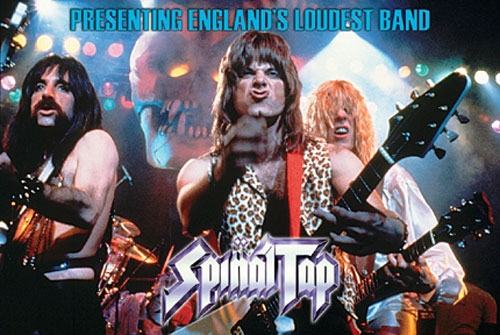
Thus, it pains me when I say the following:  After looking at the list of the nominees for induction into the Class of 2017 for the Rock & Roll Hall of Fame, which was released a couple of weeks ago, I’ve now come to the realization that enshrinement in this group is moving closer to a parody along the lines of This is Spinal Tap than being the venerable Valhalla of rock music that it should be.

spinaltap

Yes, there’s been these rumblings before. None were louder, perhaps, than the commentary from one of last year inductees, Steve Miller, regarding what the Rock & Roll Hall of Fame has become. In various areas, Miller railed over pretty much every aspect of the Hall (“I think it’s time for the people running this to turn it over to new people…you don’t need to insult every artist that comes along,” was one of his calmer comments), signifying his displeasure with the outfit. “You tell me what the hell is the Rock & Roll Hall of Fame, and what does it do besides talk about itself and sell postcards?” he asked.

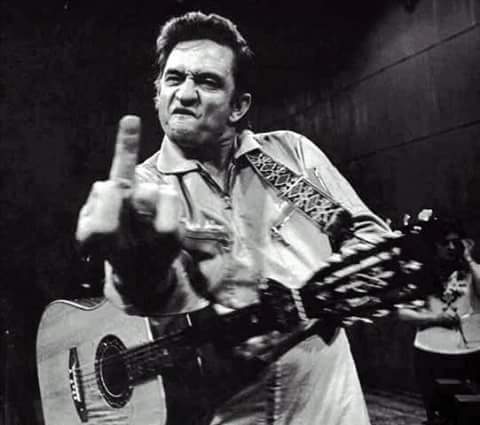
Miller was the embodiment of what many had said of late regarding the Hall. Thought of originally as the pinnacle of rock music royalty, of late the Hall has been inducting what many would consider “non-rock” artists and bands, stating that their contributions “to rock music history and music overall” warranted their induction into rock music’s biggest honor. I’ve always contended that, in 9.9 of 10 of those cases where the artist wasn’t “rock” (a very wide ranging scope, to be honest), then their contribution to the actual evolution of rock was pertinent (this is why I don’t have a problem with Johnny Cash being in the Rock & Roll Hall of Fame).

johnnycash

In looking at the crop of nominees for the 2017 Rock & Roll Hall of Fame, there are some very qualified candidates on the list. One of the “first time” nominees for the hall is Pearl Jam and they should be a virtual lock for entry because of their contributions to the “Seattle sound” that was pioneered by Nirvana and their group. Another first-time nominee – and this one surprised me quite a bit – was Electric Light Orchestra, who should also find their way into the Hall for their innovative usage of electronics, keyboards and production (all in the masterful hands of Jeff Lynne) and their contributions to the music.

Whereas in year’s past I didn’t get bugged by some of the “non-rock” nominees – hell, I agree that rap acts like the Beastie Boys, Run DMC and N.W.A. and other “non-rock” acts like Donna Summer, Darlene Love and Bob Marley SHOULD be in the Hall – this year’s list of nominees left me wondering why they were being nominated when they shouldn’t have even been considered. Besides Pearl Jam and ELO, here’s the list of other nominations (asterisk means it is a first-time nomination):

Kraftwerk
Yes
The Cars
The Zombies
Joe Tex
J. Geils Band
The MC5
Bad Brains*
Depeche Mode*
Jane’s Addiction*
Joan Baez*
Journey*
Steppenwolf*
Janet Jackson
Chaka Khan
Chic
Tupac Shakur*

Now, you could give me viable reasons for any of the artists down to Steppenwolf being nominated for the Rock & Roll Hall of Fame. Personally, why Journey and Steppenwolf have never been considered previously is gross misconduct by Hall voters. Over the remainder of the list, I personally would question the inclusion of Joe Tex (yes, a hard-working individual who overcame a great deal of adversity to become a rival of Hall of Famer James Brown), the J. Geils Band (solid group, not “Hall of Fame” outstanding) and Bad Brains and maybe Jane’s Addiction (reasoning ditto to J. Geils’ nomination). Where it goes off the rails for me – repeat, for the first time ever – is in some of the “non-rock” nominations.

Chic has been nominated several times and, on first view, they would be a viable contender. The real drivers of that group, however, were Nile Rodgers, the late Bernard Edwards and the late drummer Tony Thompson. Inducting a “group” requires that all the members were great and that’s where Chic falls short. I can see nominating and even inducting Rodgers and Thompson (I remember his powerful work with Robert Palmer and The Power Station – outstanding music), but to put every person in Chic (usually featuring a rotating cast of female vocalists that joined Rodgers and Edwards) isn’t Hall worthy.

Jackson and Khan, while fine vocalists who were charting gold during their careers, didn’t exactly do anything that would have separated them away and make them Hall worthy, either. Being the sister of the members of the Jackson 5 isn’t an immediate pass (and, really, what did she do that was notable?). Khan, if you include her time with Rufus, has a bit more credibility as to Hall-worthiness, but there’s not enough of it on the resume to push her over the top.

My biggest criticism would be with Shakur, however. Yes, Tupac was one of the first voices for “gangsta rap,” but we’ve already inducted the originator of that field in N.W.A. Additionally, if you induct Shakur, why aren’t you inducting Biggie Smalls (just as powerful a performer and rapper) or Sean “Puff Daddy/P-Diddy (or whatever the hell he calls himself these days)” Combs for their work? Shakur is one of those performers that, in many people’s eyes, an early (and violent) death made them a musical martyr. As such, he must be revered in their opinion…reverence because of near-deification is not what I would call Hall worthy.

When it comes to “non-rock” entities, you’ve got to have blown the doors off things to be considered for entry inside the gates. A Madonna, a Johnny Cash, a Grandmaster Flash and the Furious Five…THESE are the types of performers who, by their music and by their styles, personified the “rock attitude” despite the fact they weren’t performing traditional “rock” music. Every one of the persons or bands nominated this year don’t fit that category for enshrinement.

Of course, I couldn’t end this without my own “WHY AREN’T THESE GUYS NOMINATED” choices, and this is just a sample of those that should have already been in the Hall. Pat Benatar, Warren Zevon, Jimmy Buffett, Dolly Parton (one hell of a songwriter who has had an impact on music overall, what the Hall is supposed to venerate), Kate Bush, Roxy Music, Iron Maiden, Dead Kennedys, Black Flag, X, Duran Duran and Kool and the Gang (all never nominated) and the New York Dolls, the Wailers and Afrika Bambaataa all should be in the Rock & Roll Hall of Fame RIGHT NOW as they have arguably done more for “rock” music than those under consideration for 2017.

But I digress, at least for now. We’ve got the list of nominees and, for this year, we’ll have to deal with them. But if the Rock & Roll Hall of Fame doesn’t want to continue down that road of becoming a joke of itself, a parody of what it is supposed to represent, it would behoove them to start considering the actual ROCK artists (and those “non-rock” performers who truly had an impact) that they are bypassing.

Protests Only Work When It Hurts…

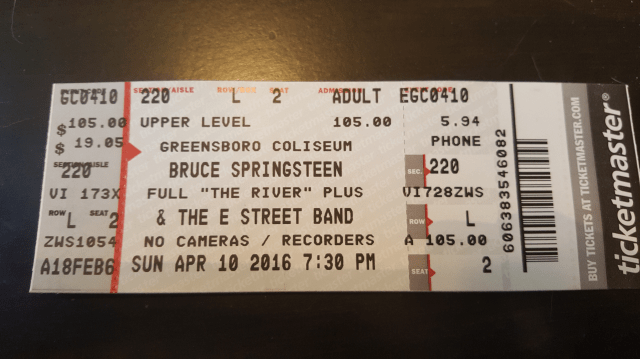
It’s funny the things that will come up when you’re in the process of moving. During me and my wife’s latest move from the foothills of North Carolina to the Gulf Coast of Florida, I happened across probably one of the more disappointing moments from this year (at least until possibly the election in November)…

Springsteen.png

Now, the seats weren’t fantastic – in fact, they were at the other end of the arena from where the stage was situated. But they were square on with the stage and would have offered a great opportunity to see much of the crowd enjoying the show from Bruce, one of the legendary performers in rock history (I could tell stories about seeing him in 1980 for a six-plus hour show, but we’ll save that for another time). My wife and I were eagerly anticipating the show as it had been many years since either of us had been able to see “The Boss” in action.

Then the North Carolina General Assembly and asswipe Governor Pat McCrory got their panties in a bunch.

In February, the Charlotte City Council passed an ordinance extending protections to the lesbian/bisexual/gay/transgender (LGBT) community. A part of this ordinance – and the issue that sparked the most controversy – was the provision for allowing people to use the restroom of their gender identity, rather than that of whichever sex they were born. In essence, the ordinance allowed those who were in the process of shifting from one sex to another to use the restroom of that other sex (male transgendered individuals could use female restrooms and vice versa).

The response by McCrory and the GOP-dominated North Carolina legislature (which has been gerrymandered to make it virtually impossible for a balanced legislature to occur – witness the THREE TIMES that the federal government has called the state’s legislative districts unconstitutional) was immediate. Convening a special session of the General Assembly (one outside the normal working times of the legislative body), McCrory and his henchmen pushed through HB2, a bill that was so overreaching in its aim it was destined for the “unconstitutional” bin almost from the start.

Not only did that bill immediately set that “all people” had to use the restroom of the birth sex, but it also removed the right for minorities and the LGBT community to sue through the state court system for discrimination. It included a provision that prevented individual cities from enacting their own laws that differentiated from state statutes. With many Democratic representatives protesting by leaving the voting floor, the statute passed through the General Assembly with only about 12 HOURS of overall discussion.

This was the end of March and, within days, the impact was felt. Several local productions in theaters around the Tar Heel State reported that the rights holders to significant stage productions (plays) were pulling their approval for performance over the bill. The streaming provider Hulu pulled the production of a program they had set for airing out of North Carolina over the bill and PayPal suspended expansion of its operations center in the state. This was but the tip of the iceberg, however.

allstarcanceled

Many entertainment artists have also pulled out of shows that they were scheduled to perform, including “The Boss,” Pearl Jam, Boston, Bryan Adams, Ani DiFranco, Ringo Starr, Nick Jonas and Demi Lovato and Cirque du Soleil. The real thunder came down, however, over the past couple of months, first with the National Basketball Association’s removal of the 2017 NBA All-Star Game from Charlotte. Then, just yesterday, the National Collegiate Athletics Association (NCAA) removed SEVEN championship games or playoff sites from the state, citing the law as the reason. All totaled, the loss of business regarding all of these repercussions could total to as much as half a billion dollars by the year anniversary of HB2’s passage, with the NBA All-Star Game accounting for about $100 million of that total, and could even impact future business in the state.

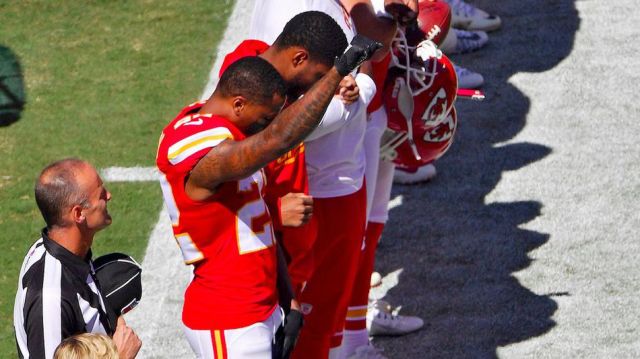
The reason this came back to me was not only a result of the move. Finding that ticket stub for an unused concert was simply the catalyst for a reply to model Kate Upton’s Twitter hissy fit over athletes not standing for the National Anthem. Of course, over the weekend was the opening weekend of the National Football League season (and the 15th anniversary of 9/11, just coincidentally) and, following in the footsteps of San Francisco 49ers quarterback Colin Kaepernick’s continuing protest against inequality in the United States, some players either did not stand for, knelt in protest or displayed the “Black Power” salute as the National Anthem played. This bunched Upton’s panties, who stated, “This is unacceptable. You should be proud to be an American. Especially on 9/11 when we should support each other.”

The continued attention being drawn to what has now become a movement (hey, if a subject catches the nation’s attention for more than two years – yes, it’s been that long since the death of Michael Brown in Ferguson, widely considered the spur – it is a movement) is only done when a protest has an impact. Kaepernick has been vocal in the past regarding the issues of black people in the United States and their treatment at the hands of law enforcement, but no one was paying any attention to what he was saying. It wasn’t until his act of defiance of not standing for the National Anthem – and attention was drawn to the fact that he was doing it – that there became a national conversation (admittedly sometimes not about what Kaepernick wanted to talk about, as with Upton’s attempt at using her First Amendment rights by silencing Kaepernick’s, but still there was discussion).

nflprotest

For a protest to have an impact, there are a couple of things that it should have. It has to have some financial teeth, some fiscal bite, that pushes some to reconsider their positions (it also has to have a side that understands those fiscal implications – apparently North Carolina Republicans are morons if they issue this response). Along with that, it should have some emotional impact on people. There were plenty that were upset over Springsteen’s decision to not perform in North Carolina, just as there are more than likely many upset that Demi Lovato didn’t come to North Carolina or that LeBron James won’t be making an appearance during the NBA All-Star Game in the state. A protest only works when it hurts, either physically or emotionally. That is what makes a protest enact the change that comes about (eventually) with issues.

I’m putting those unused Bruce Springsteen tickets back in the desk as a reminder to myself for a couple of reasons. One, something has to be lost (in some cases) for a protest to have its desired effect, and Two, there is the ability to protest at all levels, from the richest of us all to the poorest. It will be some time before the protests of the actions in North Carolina and the national discussion of inequality are adequately addressed, but hopefully it is sooner than later.

So There’s No Good Music Anymore? You’re Not Looking Hard Enough

I’ve heard the argument since I worked in the radio business (a career that spanned three decades and various formats, I have to add). In discussion with fans of particular genres of music – whether it was rock, country, metal, etc. – the refrain was often “They don’t make music like they used to.” I often thought about that statement and came up with some reasons why people make that statement and/or believe what they’re saying.

For many, there is no better era for music than when they grew up. For Baby Boomers, the 1960s and its wide variety of genres (seriously, on the radio back then you could hear almost ANYTHING and often on one station) and the 1970s is what they look at as the epitome of the history of music. For Generation X (born in the early 1960s), the sounds from the 1980s and some of the 1990s is what captures their ears. For the Millennials, the late 90s/early Aughts is where music was cooking. What Generation Z – those that are currently in grade school – will be listening to is a huge guess. And if you want to reach back further than 50-60 years ago, there are those that consider the “Big Band” Era the shit and so on.

Failing that, people will often look towards their wild and crazy “single years” as THE time when music was great. Whether you were dancing in a disco, moshing in the pit or line dancing at a honkytonk, people will often equate music with when they were having their most enjoyable times. Ask any person and they will probably be able to put a soundtrack together that would tell the story of their lives better than any book or documentary could ever hope to achieve and a predominance of the music is probably from their young adult days.

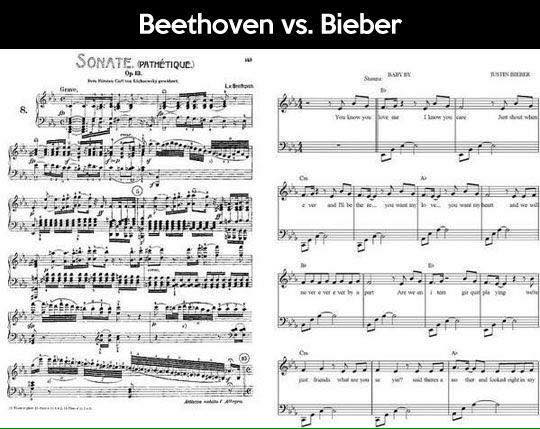
Finally, there IS some credence that has to be given that music isn’t as good anymore, but it is more about the talent of the performers rather than what music they are presenting. For some of the greatest music in the history of mankind, one person sat down and put together EVERYTHING. They served as the writer, producer, performer and, if you really want to go back in time, seller of the music (you think Beethoven did his music for free?). Nowadays, the list of co-writers on a song can be as many as 10 different people and producers can reach nearly the same number. Then there’s the fact that performers don’t exactly “perform” live anymore…

BeethovenvsBieber

With this said, there’s plenty of music that is out there nowadays, people just aren’t looking hard enough for such gems. Normally people will not pay as much attention to music as they get older because the “acts of life” (working, taking care of the bills, children, etc.) become more significant rather than the “frivolity” of listening to music. Unless you actually are working in the music business, then it becomes more background noise than something that you actually are tremendously invested…but that can change.

I personally try to keep up on the new music out there and, as I’ve previously stated, there’s some good stuff out in the stores and on the airwaves (or the internet). I’ve spoken plenty of times about how good Florence + The Machine are and Bruno Mars is an outstanding performer, one that I’d definitely pay to see. If you don’t think there’s any good music out there, here’s some choices that run the gamut from pleasant and quiet to hard, heavy and raucous that you’re missing.

Halestorm

Halestorm

There’s just something about a loud, thundering guitar and crushing bass notes that gets the blood pumping. I’ve personally always enjoyed hard rock/heavy metal (what some people consider “metal” is far from it, to be honest) and still do to this day. Halestorm, led by Lzzy Hale, is a band that you’re missing on big time if you haven’t checked them out.

Hale seems to firmly embrace the “rock and roll attitude,” but she’s also got the vocal and musical chops to stand on her own in front of the band. “I Like It Heavy” simply comes out and slugs you in the mouth, catching your attention from the start. At the very end, Hale’s almost church-choir sounding coda (of the studio version of the song) simply surprises you with its impact. Finally, anyone that can cover Pat Benatar’s “Hell is for Children” and pretty much equal Benatar’s voice is worth the price of admission.

(And, for a bonus, here’s Lzzy Hale wiping the stage with Eric Church at the CMT Music Awards.)

Leah Flanagan

LeahFlanagan

Flanagan is an Australian artist that received a great deal of support (re:  playing her music) on SiriusXM Radio Margaritaville (quite honestly, SiriusXM is a great spot to find new music that isn’t getting played on terrestrial radio) for her album Nirvana Nights and the tune “September Song.” Flanagan’s music is quite an eclectic mix of genres, all pulled together by her voice and lyrics. To my knowledge, she’s never has toured in the United States, a pity to be honest; she would bring a different style to the U. S. music scene.

Kacey Musgraves

KaseyMusgraves

She may not be an artist that is hidden from the world, but Musgraves is one of the best country artists – hell, let’s go for it, overall artists – out there today (and that comes from someone who isn’t necessarily a country fan). A two-time Grammy winner, it just seems that nobody wants to give Musgraves the proper attention that someone of her talent deserves. Her album Same Trailer Different Park ran the gamut of musical stylings (my personal favorite, “Blowin’ Smoke,” had a definitive blues styling to it), which might keep her from being pigeonholed into the country genre.

Beyond that, Musgraves isn’t afraid to touch some sensitive issues with her music, something that country music isn’t known for. Questioning religion, acceptance and tolerance of gays and lesbians and drug usage are all subjects she’s touched on, rare in today’s music industry that prefers its artists to be sanitized (like the waste of space known as Taylor Swift) so little Suzie doesn’t get any wild ideas.

Blackberry Smoke

BlackberrySmoke

If you prefer your rock n’ roll with a bit of a Southern flair, then this is the band for you. They do harken back to those 70s powerhouses like Lynyrd Skynyrd, Molly Hatchet and Blackfoot and they will get you tapping your foot. My personal favorite is the song, “Leave a Scar,” but also noteworthy are “Wish in One Hand” and “Six Ways to Sunday.”

Trombone Shorty

TromboneShorty

For those of you who like your music instrumental, Trombone Shorty is someone to check out. From the melting pot that is New Orleans, Trombone Shorty combines musical styles like a delicious gumbo and the only thing that might stop your listening pleasure is getting too full of the funkiness. His biggest commercial success to this mark in his career is the song “Hurricane Season,” but there is plenty of other work that make him worth a listen. Like Musgraves, he’s young – only 30 (Musgraves is 27) – so we should be hearing from him for some time.

Rodrigo y Gabriela

RodrigoyGabriela

Acoustic guitar never sounded as good as when this Mexican duo pick them up. While Rodrigo Sanchez and Gabriela Quintero did stay pretty close to their Mexican roots with their breakthrough hit “The Soundmaker,” they will stretch out and incorporate other musical styles into their music. Of late, they have also been expanding to a full band outside of just their own guitars, so the future could be bright for this duo.

Gary Clark, Jr.

GaryClarkJr

Finally, if you have the desire to hear someone simply shred a guitar, Austin, TX’s Gary Clark, Jr., is the man. Long a mainstay of one of the most competitive music scenes in the world (Austin is PACKED with people that are or could easily have been the best in their respective fields of music), Clark broke through with his album Blak and Blu and the song “Ain’t Messin’ ‘Round” that demonstrated the screaming power and skill of his guitar work. He also is an accomplished blues player, as recognized by his Grammy win in 2014 for Best Traditional R&B Performance.

Will these performers be recognized 25 years from now? Will they be forever ensconced in the hallowed halls of the Rock & Roll Hall of Fame in Cleveland? Hell, nobody knows and that’s part of the fun. It is a thrill to simply enjoy the music and the ride and see where it takes us. So the next time you think that there’s “no good music” anymore, either take a listen to these artists or get out there and look for some on your own…the journey is definitely worth it!

When U R Gone, What 2 Do with Ur Legacy

Prince2

It’s taken me a few days to come to grips with the death of the legend that is known as Prince and, to be honest, there aren’t words that can express the depths of the impact of his death. Barely older than myself at 57, Prince Rogers Nelson stepped into his elevator on Thursday last week at his sprawling Paisley Park recording studios/home in Minneapolis and, with no one else around, passed away inside the car. In one moment, another icon of the music industry had been stolen from the world.

2016 has been a particularly difficult year for iconic musical legends. The one most applicable to Prince was David Bowie (who also had a seismic impact on myself) and the two, if not cut from the same cloth, at least were in the same skein of fabric. Both were innovators in the music they created; they followed the path of their own choosing and, upon their death, it was automatically known that there would be no one else like either of them. Add in other legends like B. B. King, Merle Haggard, Paul Kantner, Glenn Frey, Lemmy Kilmister and Maurice White (just to name a few) and, if there’s a Heaven, then the joint is rocking pretty hard lately.

Perhaps the Grim Reaper can leave musicians alone for a while…

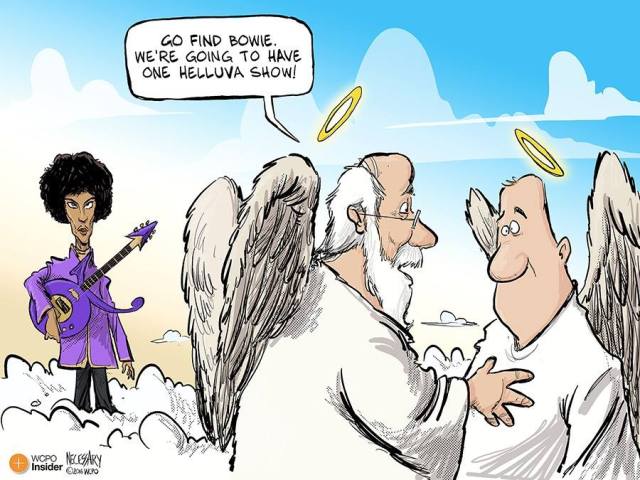
PrinceBowie

There are several other legendary performers that Prince has a great deal in common with, however. One of the big issues that has come out is that Prince was notoriously known to keep a humongous stash of his own recorded materials on the grounds of the Paisley Park studios. A past studio musician who worked with Prince in the 1990s stated that, at that time, there were at least 50 albums of unreleased material that were in basically a bank vault inside the home. Now that Prince has passed away, will there be similar comparisons to Jimi Hendrix, Tupac Shakur and Michael Jackson as to their posthumous activities?

Hendrix only released three albums of original material prior to his death in 1970 but, following his passing, it seems there were tracks just laying around that he had worked on. Between 1971 and just last year, 59 total albums have been released bearing Hendrix’s name (12 studio, 25 live and 22 compilations) and this isn’t even counting Extended Play (EPs), singles or “official bootlegs” of Hendrix performances. The same is true in the case of Shakur; he released four albums prior to his death in 1996 and seven albums after his demise. Hell, Shakur even came back as a hologram at Coachella in 2012 to “perform” for the crowd.

Jackson didn’t escape this type of action either. While he was a bit more prolific with his career prior to his death in 2009 (ten solo albums plus his work with his brothers as the Jackson 5 or the Jacksons), he – or, better yet, the Jackson estate – has released two albums of work posthumously, Michael and Xscape. There was also a documentary movie released, This Is It, that detailed out the preparations for the World Tour that Jackson was set to embark upon before his death.

Prince3

Estimates on Prince’s entire estate at the time of his passing have been put at $250 million (probably much better off than any of the men whom we’ve discussed previously when they left this mortal coil) and it is conservatively thought that, over the next five years through just what is in the marketplace currently, another $100 million could be earned by the Prince estate. The question becomes what do you do with that wealth of material that Prince put in the vault.

If there were 50 albums of material in the mid-90s, with someone like Prince there are probably a couple of hundred albums of FINISHED product there now, waiting for eager fans to hear. There’s probably another couple of hundred of albums consisting of bits and pieces that could be cobbled together into some form of functional music. The question becomes do you just keep it locked away? Or do you go ahead, realize the potential goldmine that you have and release it?

There are plenty of cases where a writer or musician will leave a piece unfinished because it just doesn’t feel right for a particular mood that they are working on at that moment. In other cases, they lose the momentum that drove them to write the piece in the first place or they simply forget that they were working on it in its entirety and move onto other things they feel are more challenging. These things really happen – you ought to see the number of things I start writing that either never reach fruition or fizzle out…if I revisit them today, they move forward hesitatingly again until that fateful moment that they get forgotten about.

Since I am in no manner as productive as Prince, as musically talented or as in demand as to my product (I’d like to think I can turn a phrase or two sometimes, however), the dilemma becomes whether he left explicit instructions for his family members following his passing. It is possible that he detailed out what to do with this vault of recordings down to the T and his family will follow them faithfully. It is possible that he dictated that those recordings never reach the ears of the civilized world, which would be a true tragedy. Then again, the family may go against any of Prince’s postmortem wishes (or a court might) and just release things as they need the money and it will seem as if Prince never left us.

The worst thing that could happen is that Prince’s family sells the rights to Prince’s legacy to either a record company or another artist. This is what happened in the 80s when Jackson bought the rights to The Beatles catalog (and destroyed the friendship he had with Sir Paul McCartney, who encouraged him to get into music rights ownership, over the issue). Simply the material that is in public today should be enough for Prince’s family to be able to not only live well but be able to erect some sort of appropriate way to memorialize their loved one who left far too soon. To sell off his legacy in such a manner would be heresy to his memory.

I personally hope that we do get some more QUALITY Prince material – in my opinion, there’s a reason that Prince put those recordings in a vault…he didn’t feel that they were of the standard that he wanted his audience to hear. But if his family were to deem those recordings should stay unheard by the public – or if Prince himself explicitly dictated that they weren’t to be released (the worst thing to hear would be that they would be destroyed – it would seem like another fire at the Library of Alexandria for music lovers), then those wishes would have to be respected. There is one thing that is clear – we’d love to not be thinking about this issue and instead wondering when Prince would either perform next or what would be the general groove of his next album.

PrinceDearlyBeloved