Who is The Greatest Hard Rock/Metal Band of All Time, Part 2 – The 1980s

HardRockMetal

Rather than delve into the delusion that currently is supposed to oversee this country (and trust me, there’s plenty to call the Tangerine Ignoramus out on simply from this last weekend alone), I’ve decided to start something that will definitely be much more fun. Since college basketball is deciding the 64 teams (OK, 68 teams because of those simply idiotic play in games the NCAA conducts) that will compete for their championship, thought it would be fun to do the same but in a different arena – the genre of hard rock/metal music.

As it is one of my personal fortes, hard rock/metal music is essentially celebrating its 50th Anniversary since the release of Steppenwolf’s “Born to Be Wild,” which contained the lines “Get your motor running/heavy metal thunder.” With this in mind, I’ve put together a compilation of the top 64 hard rock/metal bands from four different eras – the 1960s/70s, the 1980s, the 1990s, and the 2000s/10s – and split them up in accordance with those eras into “regions.” We’ll break down the matchups in each bracket and, with hope, readers will make their own comments and vote on the matchups and perhaps they’ll be some sort of prize at the end – the management here (re:  me) is still trying to come up with that prize.

What are the criteria for consideration? First, the band/singer would have to have some sort of longevity to their career – you don’t see many bands or singers that are considered “legendary” if they were only around for a couple of albums (Amy Winehouse is a rare exception, but that’s a discussion for another time). Second, the band/singer would have to have an impact on the genre – did they do something particularly noteworthy or notorious that put them into the annals of the genre’s history, a song or “behavior” that was historic. Third, just how popular were they when they were in existence – a band or singer that was wildly popular with the fans might get some leeway over a critical darling OR vice versa (depending on tastes). Fourth, what accolades did they receive – awards, gold records, and recognition by the industry (Rock & Roll Hall of Fame, hello?) are all under consideration here. Finally, was the band/singer influential on future generations of music – have they helped shape the genre since they have left the sphere?

We talked about the 1960s/70s in Part 1, so now we’re ready to head into what was arguably the most diverse era of hard rock/metal over the past 50 years – the 1980s. From “hair metal” (basically pop-infused hard rock music that could be ballad intensive – something previously unheard of in the genre) to “death metal” and beyond, there were many candidates for this “regions” bracket. I am sure there will be some complaints as to the selections and, if so, please include those when you discuss the matchups in your reply!

BON JOVI

Bon Jovi (1) vs. Pantera (16)

As ugly as it is to admit, Bon Jovi was one of the most popular acts of the 1980s. Using enough Aquanet to put his own personal hole in the ozone layer over New Jersey, John Bongiovi – who would become the namesake of the group as Jon Bon Jovi – guitarist Richie Sambora and the rest of the group became the band that was OK with your parents to “rock out” to. They also brought the “power ballad” into its heyday, those songs that brought the girls out to the “rock shows” so the guys would come along.

Pantera, on the other hand, was everything that Bon Jovi wasn’t. Hard core, in your face – sometimes with a fist or a boot – fast and furious, guitarist “Dimebag” Darrell and Phil Anselmo mounted an offensive of thunderous rock that still resonates across the genre. While they were influential to many, they weren’t commercially successful – at least not on the level that Bon Jovi was. It will be an intriguing battle to see who emerges from this clash – but we know who would emerge if it were an actual fight!

Mötley Crüe (8) vs. Skid Row (9)

This is a typical battle of two bands that are closely matched. Strangely enough, though, most people are fans of one and not of the other, with those on the side of Skid Row and front man Sebastian Bach calling their opponents a rip-off of KISS and those taking up the fight for the Crüe and singer Vince Neil and Co. calling Skid Row a Guns ‘N Roses clone. What is true about both bands is they cranked out some memorable music over a short period; Skid Row’s heyday was roughly three years (1989-92), while the Crüe would be relevant for a longer period of time (1981-92). That may be the factor that weighs the winner of this matchup.

Guns ‘N Roses (4) vs. Ratt (13)

It is arguable that Guns ‘N Roses may be the top non-“hair metal” band in the 1980s region, setting them apart from Ratt, who firmly embraced their place in that subgenre. The Gunners captured the rebellious nature of rock and roll that was born in the 1960s and had been lost over the previous 20 years as rock became “corporate.” They also would serve as an inspiration to many bands, with such influence eventually leading to their induction into the Rock & Roll Hall of Fame in 2012. Ratt? Unfortunately, it looks like they ran into the “immovable object” here…but the votes will be what matters.
IronMaiden

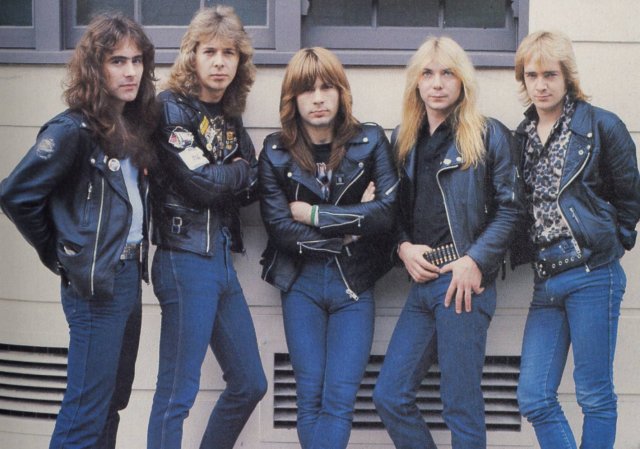
Iron Maiden (5) vs. Faith No More (12)

This may look like a mauling, but you’ve got to look deep at the subject. Faith No More were one of the few practitioners of what became known as “rap metal,” or rapping the lyrics instead of singing them, setting them apart in the business and spawning bands that still employ Faith No More’s style today. Iron Maiden was one of the most ferocious bands in the genre who had a great longevity in the business. They also had their impact on future bands, but they weren’t the groundbreakers that Faith No More was in their short time. It will be another tough matchup for the voters to decide.

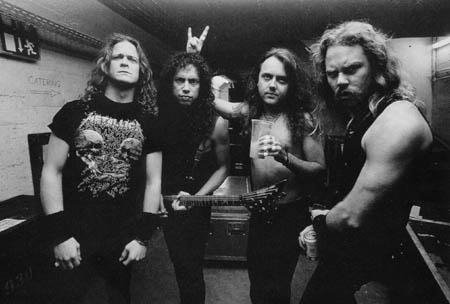
Metallica (2) vs. Whitesnake (15)

Even considering the ample success that Whitesnake and David Coverdale enjoyed during the 1980s, there’s simply no way that I can see voters taking them over a band that is still going strong today (and if you haven’t heard Metallica’s latest Hardwired…to Self-Destruct, you’re missing out on their best record since the Black Album). Metallica has inspired many a kid to become the next great James Hetfield or Lars Ulrich, consistently powering out epic albums and taking down accolades left and right for their work. They also – whether you agree with them or not – have fought against piracy in the industry, something that all should applaud them for. Whitesnake might have had a chance against anyone else on this list…but not Metallica.
Metallica

Queensrÿche (7) vs. Anthrax (10)

This is another difficult clash between two talented bands. Queensrÿche arguably introduced the “rock opera” concept into hard rock music in the 80s (OK, don’t remind me of Quadrophenia or other monumental albums) and served as a conduit for politically charged rhetoric (“Empire” delves into the effects of drug trafficking in the inner cities). But of course, their main claim to fame? “Silent Lucidity,” a Pink Floyd-esque power ballad that made the Billboard Magazine Top Ten in 1990.

Anthrax had their own political stances, talking about the plight of Native Americans (“Indians”) and dabbling with rap and classical music in creating their sound. They are one of the few bands to have had success with two different vocalists, Joey Belladonna and John Bush, and they have influenced thrash metal wannabes for over two decades. Do you take style over substance? Or do you award a long, healthy career that has spawned new generations? Tough vote here…

Def Leppard (3) vs. Cinderella (14)

Another matchup between two bands that, at first look, are mirror images. It is only in looking deeper do you see their differences.

The Leppard were a part of the New Wave of British Heavy Metal (NWOBHM) that came out in the late 70s/early 80s, but they weren’t content with staying in that category. They firmly embraced the “hair metal” groove of the decade and became one of the biggest acts of that time. They also demonstrated a great deal of craftsmanship to their records, taking lengthy amounts of time (in some cases, they had to, such as drummer’s Rick Allen’s unfortunate amputation of his arm after an auto accident that forced him to learn how to play drums on a specially created kit) to put out some of the best rock music of the era.

Cinderella was part of that “hair metal” act and even sucked into it a bit by going the power ballad route (“Nobody’s Fool”), but in essence they were a blues band looking for a groove. Singer/guitarist Tom Keifer is a tremendously underrated musician and the rest of the band provided the base for which Keifer could demonstrate his virtuosity. That their era of commercial success was short (1986-1990) was more a fact of the explosion of grunge and rap than any disqualifying factor from the group.

Slayer

Slayer (6) vs. Megadeth (11)

Man, the 1980s were a tough decade! It’s too bad that one of these bands has to depart in the first round as both, against the right competition, could go deep in this tournament. Slayer was the purveyor of “death metal” with their seminal album Seasons in the Abyss reaching their creative and critical high point. Megadeth, with singer/guitarist Dave Mustaine, have continued performing and releasing highly praised music for almost three decades now, including winning a Grammy Award this year for best metal performance for the title track from their album Dystopia. A knockdown, drag out fight is what to expect here.

That’s it for the second “region” of our tournament. We’ll look at the 1990s and the 2000s/10s (and be thinking of who could be the #1 seeds for those “regions” – would love to hear those opinions) later this week and get into the second round, hopefully by next Monday. Don’t forget to vote by replying here and I will compile the responses – and maybe award a prize once a champion is crowned to a reader!

Who is The Greatest Hard Rock/Metal Band of All Time, Part 1- The 1960s/70s

HardRockMetal

Rather than delve into the delusion that currently is supposed to oversee this country (and trust me, there’s plenty to call the Tangerine Ignoramus out on simply from this last weekend alone), I’ve decided to start something that will definitely be much more fun. Since college basketball is deciding the 64 teams (OK, 68 teams because of those simply idiotic play in games the NCAA conducts) that will compete for their championship, thought it would be fun to do the same but in a different arena – the genre of hard rock/metal music.

As it is one of my personal fortes, hard rock/metal music is essentially celebrating its 50th Anniversary since the release of Steppenwolf’s “Born to Be Wild,” which contained the lines “Get your motor running/heavy metal thunder.” With this in mind, I’ve put together a compilation of the top 64 hard rock/metal bands from four different eras – the 1960s/70s, the 1980s, the 1990s, and the 2000s/10s – and split them up in accordance with those eras into “regions.” We’ll break down the matchups in each bracket and, with hope, readers will make their own comments and vote on the matchups and perhaps they’ll be some sort of prize at the end – the management here (re:  me) is still trying to come up with that prize.

What are the criteria for consideration? First, the band/singer would have to have some sort of longevity to their career – you don’t see many bands or singers that are considered “legendary” if they were only around for a couple of albums (Amy Winehouse is a rare exception, but that’s a discussion for another time). Second, the band/singer would have to have an impact on the genre – did they do something particularly noteworthy or notorious that put them into the annals of the genre’s history, a song or “behavior” that was historic. Third, just how popular were they when they were in existence – a band or singer that was wildly popular with the fans might get some leeway over a critical darling OR vice versa (depending on tastes). Fourth, what accolades did they receive – awards, gold records, and recognition by the industry (Rock & Roll Hall of Fame, hello?) are all under consideration here. Finally, was the band/singer influential on future generations of music – have they helped shape the genre since they have left the sphere?

RRHallofFame

Without further ado, here’s the breakdown of the 1960s/70s bracket, with the seeding by each band/artist name.

Led Zeppelin (1) vs. Steppenwolf (16)

Led Zeppelin as the #1 seed was about as much of a lock as you could expect. They never had a #1 song and they might lack the longevity of some of the other competitors (Zeppelin’s heyday was 1968-80, only a scant 12 years). But they make up for those deficiencies in every other area under consideration – their “tour behavior” became the stuff of legends and they had the musical chops to back it up (“Stairway to Heaven” is widely accepted as one of the greatest songs of all time), their popularity was outstanding and they were inducted into the R&R HOF on the first ballot in 1995 (minimum of 25 years after first album release). Although Steppenwolf coined the term “heavy metal,” Led Zeppelin lived it, thus they should move to the next round.

Rush (8) vs. Queen (9)

These are the fun matchups where the smallest thing can push one of the competitors past their opponent. Throwing these two against each other is roughly akin to picking a favorite child as both are outstanding and legendary groups that click all the boxes. Rush pulls ahead slightly on the longevity front – they’re still active today, while Queen disbanded after Freddie Mercury’s death in 1991 after a two-decade career, but Queen has the epic “Bohemian Rhapsody” that is arguably better known than any Rush track. Queen is arguably more influential than Rush, especially given Mercury’s soaring vocals over Geddy Lee’s vocal individuality. Both have their accolades to lie back on, but Rush waited quite some time before being inducted into the R&R HOF. Deciding a winner here could come down to a few votes.

JudasPriest

Judas Priest (4) vs. Scorpions (13)

Some may debate ranking Scorpions that low in the region, but it goes to demonstrate how tough it is to even get on the rankings. The Priest has been a monolithic machine that has rumbled since the early 70s (and are still at it today, albeit with an adjusted roster), while Scorpions have been up-and-down since the latter part of that decade. As far as the definition of “heavy metal,” Judas Priest for many would be the template to go with – the “leather and chains” look was patented by Judas Priest front man Rob Halford. What may tip the scales is that Judas Priest is in the R&R HOF; at this moment, Scorpions have not even been considered. It’s unfortunate that one of these giants of the genre doesn’t get to move on in the competition, but which will it be?

Black Sabbath (5) vs. Motörhead (12)

The 5/12 matchup is always one ripe for an upset and this battle is no exception. Black Sabbath were extremely influential on burgeoning metal bands, but Motörhead has their own legion of followers. The front men for both bands are iconic, with Ozzy Osbourne as the first singer for Sabbath followed by the legendary Ronnie James Dio and Motörhead featuring the late, lamented Lemmy Kilmister. Sabbath never got the critical recognition that Motörhead did – yes, if you’re asking, hard, fast, and loud can be critically appraised! – but Sabbath has been recognized with more accolades than Lemmy and Co. Perhaps Sabbath might win for their “Stonehenge” moment, but it will be a tough fight between this twosome – and, once again, a travesty to see one out of the competition.

thinlizzy

AC/DC (2) vs. Thin Lizzy (15)

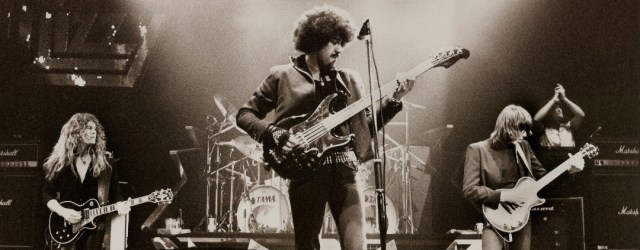
Critically acclaimed Thin Lizzy had a handful of hits (“Cowboy Song,” “Jailbreak,” “The Boys Are Back in Town”) before decadence and the untimely passing of leader Phil Lynott ended their run in 1983, but they are running into a buzz saw coming from “Down Under.” AC/DC is still going strong 45 years since their creation, although some might think the road has come to an end without Brian Johnson’s vocals (and, prior to him, Bon Scott) heading the riffs of lead guitarist Angus Young. Influences? Accolades? Longevity? All the clicks go in the corner of the Australians over the Irish in this one, but we’ll see if an upset is brewing.

Van Halen (7) vs. Aerosmith (10)

Another difficult matchup between two U. S. bands that have been part of the backbone of the genre. Both have influenced the “up and coming,” especially Aerosmith singer Steven Tyler’s sound (it is arguable he might have had an influence on a young David Lee Roth from Van Halen), while band namesake Eddie Van Halen is recognized as one of the great guitarists of all time (no shame to Joe Perry for coming up second-best in that comparison). Both bands have awards and accolades, critical respect, and longevity as seminal parts of their being – who can come out on top when the competitors are almost dead equal?

KISS

Deep Purple (3) vs. KISS (14)

For some reason, I smell an upset brewing here. KISS has been around it seems since the dawn of time, but Deep Purple was one of the formative bands of the hard rock genre in the late 60s and 70s (and even a bit into the 80s). Deep Purple’s constantly shifting lineup, however, might be a detriment to them…KISS has kept two of its four members, singer/guitarist Paul Stanley and bassist Gene Simmons, intact since its creation and, for the most part, has had all four original members (lead guitarist Ace Frehley and drummer Peter Criss) for a sizeable segment of the band’s history. KISS has had more of an influence on perhaps the stage performance side of the equation that Deep Purple didn’t have, but Deep Purple had the critical love. Which will be enough to provide the edge in this race?

The Who (6) vs. Jimi Hendrix (11)

There might be some chirping from the crowd on these two picks but, for their time, they were considered as “hard rock” as you can get. The tipping point in this battle may be the longevity question – The Who lasted well into the 1990s (for better or worse), while Hendrix’s stay was short-lived (he only released three albums while alive with the Jimi Hendrix Experience; his work with the Band of Gypsies was released posthumously), which should push them ahead (Hendrix arguably was Winehouse of the 1960s). But when you’re running up against the man the Rock & Roll Hall of Fame calls “arguably the greatest instrumentalist in the history of rock music,” you’re going to be in for a fight.

That’s it for the first “region” of our tournament. Later this week, we’ll look at the 1980s and over the weekend perhaps we’ll delve into the 1990s and the 2000s/10s (and be thinking of who could be the #1 seeds for those “regions” – would love to hear those opinions). Don’t forget to vote by replying here and I will compile the responses – and maybe award a prize once a champion is crowned to a reader!
 

GASP! The Rock & Roll Hall of Fame Gets It (Somewhat) Right!


rockhalloffame

Normally this time of year has everyone in some state of aggravation. Mostly it comes from the holiday preparations (every year I’ve said I plan to start things earlier and instead it seems to be later), but it also comes from the yearly announcement of the Rock & Roll Hall of Fame inductees (OK, maybe not everyone). For a change, however, the Class of 2017 isn’t that bad, meaning that the voters, writers, and fans (yes, the fans get a vote)…GASP!…got it (somewhat) right this year.

After years of inducting some clearly questionable candidates (in 2016, the induction of N.W.A. drew the ire of rock fans; in 2015, it was Bill Withers; in 2014, Cat Stevens…you can go back each year and pick at least one), the bands and individuals that were voted in were either a solid lock for entry or a great argument to get in. For example, Pearl Jam was as close to a lock as you could get from the list of nominees as one of the originators of the “grunge” sound of the late 80s/early 90s rock scene. They were on the ballot for the first time and, yes, were worthy of that induction.

The 80s rock generation (and part of the 70s) was represented first by Journey. I wouldn’t have called this one – I believe it is the Rock & Roll Hall of FAME, not the Hall of PRETTY GOOD – but I also am not bent out of shape about their induction. If they are to be inducted, they must be inducted with singer Steve Perry; any other incarnation of the group would be an insult to the legend of the band.

journeyescape

Joining Journey is straddling that 70s/80s line is another inductee for the 2017 class, Electric Light Orchestra (ELO). Why they hadn’t been inducted previously is anyone’s guess, so it is far overdue for the Rock Hall to recognize the greatness of the band. It is also arguable that Jeff Lynne, the mastermind behind the ELO sound (and producer of some other great artists like Tom Petty, George Harrison, Roy Orbison, and Brian Wilson), deserves an induction as a solo artist or contributor.

The band Yes…yes, they weren’t in the Hall yet…is a correction of one of the grossest errors of the Hall of Fame. Stretching from their early work in the late 60s to their powerful work in the 80s, Yes deserves the induction arguably more than even ELO did. The question is what lineup do you go with? If you go with the early 80s lineup, you’re leaving out Rick Wakeman, arguably one of the finest keyboardists of the rock era. If you go with the original lineup, then you leave out Trevor Horn and keyboardist Geoff Downes (AND Wakeman), who were key to helping in the creation of the 80s sound of the group that led to their resurrection. I don’t envy the job of the Rock Hall staff in determining which people will be honored with induction as a member of Yes.

The singer/songwriters weren’t ignored this year either. Joan Baez, who was a part of the Vietnam protest era of the 1960s and continued to have an outstanding career in the early to mid-70s, wasn’t probably some people’s choice for that genre, but you cannot ignore her impact on rock music having a social impact. Baez inspired such women as Judy Collins, Bonnie Raitt and Joni Mitchell to their activism and entrance into the rock arena.

Even one of the longest “problem” spots for the Rock & Roll Hall of Fame got covered this year. Nile Rodgers, the legendary producer and leader of the funk/disco group Chic, will enter the Hall for “Musical Excellence.” This should, in the future, remove the attempts to put Chic into the Hall as a performer because, in all honesty, it was Rodgers and the late drummer Tony Thompson who were basically Chic (they had a rotating roster of female vocalists, never a defined female lead). Thompson, in his own right, should be looked at for this award in the future.

tupac

The ONLY question mark about this year’s inductees would be the inclusion of rapper Tupac Shakur on the roster. Shakur was a tremendously influential part of the “West Coast” sound of gangsta rap, even taking it to the point where the “East Coast/West Coast” rap wars began. Because of this standoff, Shakur was brutally shot to death on the streets of Las Vegas 20 years ago and probably brought about the death of ChristopherThe Notorious B.I.G.” (“Biggie Smalls”) Wallace six months later, possibly adding to the legend.

Tupac is a question mark because he didn’t have a wealth of material before his premature death. He’s released more albums since his passing than when he was alive and, to be honest, nobody is claiming that the posthumous work is the reason he’s being inducted. It also leaves the question open that, if you’re inducting Tupac, you’ve got to put Biggie in also (and Biggie’s repertoire is even less than Shakur’s). If you’re going strictly as an influence, I might be swayed on Tupac; if it is on his body of work, then I’m not as solidly behind his induction.

Even with these inductions, there’s still a wealth of artists out there that are more than deserving of entry. Out of the 2017 nominees, I’m slowly coming around to The Cars being inducted. As a purveyor of the synth sound of the 1980s (and their early work in the late 70s), I’ve always been a bit on the fence with the band. Now, I believe there is a place in the Hall for the group, just as there should be for another synthesizer-based band and 2017 nominee, Kraftwerk.

thinlizzy

I’ve also discussed ad nauseam about who deserves to get into the Hall. I’ve seen others believe in my choices of Pat Benatar, The Runaways and Judas Priest, and some have even given credence to Thin Lizzy, an outstanding choice if there is one. I’ve also been a longtime proponent of inducting Warren Zevon and Jimmy Buffett, but will now add Motörhead onto that list alongside a host of others.

Whatever the list of inductees is for this year, the concert that honors those inductees promises to be a bit calmer than the 2016 induction ceremonies. Bringing back the original Cheap Trick – with their estranged original drummer Bun E. Carlos – was tricky, but they pulled it off. 2016 inductee Steve Miller was perhaps the most vocal about his displeasure about the ceremonies AND the induction, points that he made long and loud both pre- and post-induction. If they can figure out the Yes conundrum, then they should be able to get through the awards ceremony without problems.

As to when that show will be, we’ll just have to wait and see. But for one magical year, it appears things are right with the world and the Rock & Roll Hall of Fame made the appropriate selections.

Rock & Roll Hall of Fame Is Moving Closer to Parody than Relevance

RRHallofFame

Let’s start this with a disclaimer.

From my youth, I’ve loved music. I can remember saving up my money when my age was yet in single digits to buy records to play at home. As I got into high school, me and my best friend DJ (his real name was Dennis, but DJ was the ONLY name he went by) would go on field trips to nearby Champaign and religiously make a pilgrimage to the University of Illinois’ campus record store, Mabel’s (yes, back then it was a record store and had a small performance area). We’d emerge after hours of scanning over the racks with armfuls of albums, with my stack normally leaning towards things like the Bus Boys, Elvis Costello and the Motels, among literally hundreds of others.

After high school, I delved into the world of music even more. While in college I started working as a radio DJ, something that would be a career over the next 20-plus years of my life. From that small college station until I was a Music Director at an AOR (Album Oriented Rock) station in a Top 75 market (and even afterwards when I went into news/talk), music – and rock music in particular – was a staple in my life. As I have gotten older, music still resonates with me and, with age, I’ve expanded my listening interests into many diverse styles of music including two that I previously despised, rap and country.

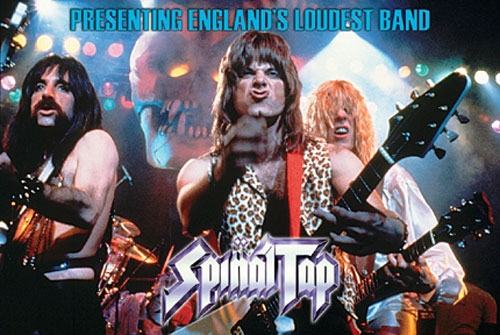
Thus, it pains me when I say the following:  After looking at the list of the nominees for induction into the Class of 2017 for the Rock & Roll Hall of Fame, which was released a couple of weeks ago, I’ve now come to the realization that enshrinement in this group is moving closer to a parody along the lines of This is Spinal Tap than being the venerable Valhalla of rock music that it should be.

spinaltap

Yes, there’s been these rumblings before. None were louder, perhaps, than the commentary from one of last year inductees, Steve Miller, regarding what the Rock & Roll Hall of Fame has become. In various areas, Miller railed over pretty much every aspect of the Hall (“I think it’s time for the people running this to turn it over to new people…you don’t need to insult every artist that comes along,” was one of his calmer comments), signifying his displeasure with the outfit. “You tell me what the hell is the Rock & Roll Hall of Fame, and what does it do besides talk about itself and sell postcards?” he asked.

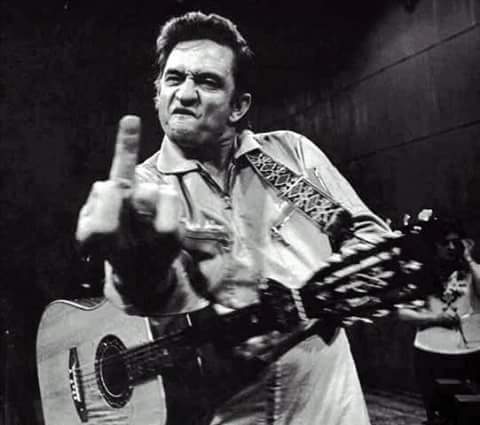
Miller was the embodiment of what many had said of late regarding the Hall. Thought of originally as the pinnacle of rock music royalty, of late the Hall has been inducting what many would consider “non-rock” artists and bands, stating that their contributions “to rock music history and music overall” warranted their induction into rock music’s biggest honor. I’ve always contended that, in 9.9 of 10 of those cases where the artist wasn’t “rock” (a very wide ranging scope, to be honest), then their contribution to the actual evolution of rock was pertinent (this is why I don’t have a problem with Johnny Cash being in the Rock & Roll Hall of Fame).

johnnycash

In looking at the crop of nominees for the 2017 Rock & Roll Hall of Fame, there are some very qualified candidates on the list. One of the “first time” nominees for the hall is Pearl Jam and they should be a virtual lock for entry because of their contributions to the “Seattle sound” that was pioneered by Nirvana and their group. Another first-time nominee – and this one surprised me quite a bit – was Electric Light Orchestra, who should also find their way into the Hall for their innovative usage of electronics, keyboards and production (all in the masterful hands of Jeff Lynne) and their contributions to the music.

Whereas in year’s past I didn’t get bugged by some of the “non-rock” nominees – hell, I agree that rap acts like the Beastie Boys, Run DMC and N.W.A. and other “non-rock” acts like Donna Summer, Darlene Love and Bob Marley SHOULD be in the Hall – this year’s list of nominees left me wondering why they were being nominated when they shouldn’t have even been considered. Besides Pearl Jam and ELO, here’s the list of other nominations (asterisk means it is a first-time nomination):

Kraftwerk
Yes
The Cars
The Zombies
Joe Tex
J. Geils Band
The MC5
Bad Brains*
Depeche Mode*
Jane’s Addiction*
Joan Baez*
Journey*
Steppenwolf*
Janet Jackson
Chaka Khan
Chic
Tupac Shakur*

Now, you could give me viable reasons for any of the artists down to Steppenwolf being nominated for the Rock & Roll Hall of Fame. Personally, why Journey and Steppenwolf have never been considered previously is gross misconduct by Hall voters. Over the remainder of the list, I personally would question the inclusion of Joe Tex (yes, a hard-working individual who overcame a great deal of adversity to become a rival of Hall of Famer James Brown), the J. Geils Band (solid group, not “Hall of Fame” outstanding) and Bad Brains and maybe Jane’s Addiction (reasoning ditto to J. Geils’ nomination). Where it goes off the rails for me – repeat, for the first time ever – is in some of the “non-rock” nominations.

Chic has been nominated several times and, on first view, they would be a viable contender. The real drivers of that group, however, were Nile Rodgers, the late Bernard Edwards and the late drummer Tony Thompson. Inducting a “group” requires that all the members were great and that’s where Chic falls short. I can see nominating and even inducting Rodgers and Thompson (I remember his powerful work with Robert Palmer and The Power Station – outstanding music), but to put every person in Chic (usually featuring a rotating cast of female vocalists that joined Rodgers and Edwards) isn’t Hall worthy.

Jackson and Khan, while fine vocalists who were charting gold during their careers, didn’t exactly do anything that would have separated them away and make them Hall worthy, either. Being the sister of the members of the Jackson 5 isn’t an immediate pass (and, really, what did she do that was notable?). Khan, if you include her time with Rufus, has a bit more credibility as to Hall-worthiness, but there’s not enough of it on the resume to push her over the top.

My biggest criticism would be with Shakur, however. Yes, Tupac was one of the first voices for “gangsta rap,” but we’ve already inducted the originator of that field in N.W.A. Additionally, if you induct Shakur, why aren’t you inducting Biggie Smalls (just as powerful a performer and rapper) or Sean “Puff Daddy/P-Diddy (or whatever the hell he calls himself these days)” Combs for their work? Shakur is one of those performers that, in many people’s eyes, an early (and violent) death made them a musical martyr. As such, he must be revered in their opinion…reverence because of near-deification is not what I would call Hall worthy.

When it comes to “non-rock” entities, you’ve got to have blown the doors off things to be considered for entry inside the gates. A Madonna, a Johnny Cash, a Grandmaster Flash and the Furious Five…THESE are the types of performers who, by their music and by their styles, personified the “rock attitude” despite the fact they weren’t performing traditional “rock” music. Every one of the persons or bands nominated this year don’t fit that category for enshrinement.

Of course, I couldn’t end this without my own “WHY AREN’T THESE GUYS NOMINATED” choices, and this is just a sample of those that should have already been in the Hall. Pat Benatar, Warren Zevon, Jimmy Buffett, Dolly Parton (one hell of a songwriter who has had an impact on music overall, what the Hall is supposed to venerate), Kate Bush, Roxy Music, Iron Maiden, Dead Kennedys, Black Flag, X, Duran Duran and Kool and the Gang (all never nominated) and the New York Dolls, the Wailers and Afrika Bambaataa all should be in the Rock & Roll Hall of Fame RIGHT NOW as they have arguably done more for “rock” music than those under consideration for 2017.

But I digress, at least for now. We’ve got the list of nominees and, for this year, we’ll have to deal with them. But if the Rock & Roll Hall of Fame doesn’t want to continue down that road of becoming a joke of itself, a parody of what it is supposed to represent, it would behoove them to start considering the actual ROCK artists (and those “non-rock” performers who truly had an impact) that they are bypassing.

So There’s No Good Music Anymore? You’re Not Looking Hard Enough

I’ve heard the argument since I worked in the radio business (a career that spanned three decades and various formats, I have to add). In discussion with fans of particular genres of music – whether it was rock, country, metal, etc. – the refrain was often “They don’t make music like they used to.” I often thought about that statement and came up with some reasons why people make that statement and/or believe what they’re saying.

For many, there is no better era for music than when they grew up. For Baby Boomers, the 1960s and its wide variety of genres (seriously, on the radio back then you could hear almost ANYTHING and often on one station) and the 1970s is what they look at as the epitome of the history of music. For Generation X (born in the early 1960s), the sounds from the 1980s and some of the 1990s is what captures their ears. For the Millennials, the late 90s/early Aughts is where music was cooking. What Generation Z – those that are currently in grade school – will be listening to is a huge guess. And if you want to reach back further than 50-60 years ago, there are those that consider the “Big Band” Era the shit and so on.

Failing that, people will often look towards their wild and crazy “single years” as THE time when music was great. Whether you were dancing in a disco, moshing in the pit or line dancing at a honkytonk, people will often equate music with when they were having their most enjoyable times. Ask any person and they will probably be able to put a soundtrack together that would tell the story of their lives better than any book or documentary could ever hope to achieve and a predominance of the music is probably from their young adult days.

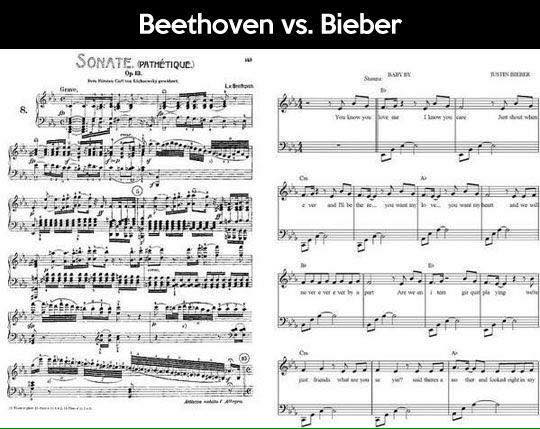
Finally, there IS some credence that has to be given that music isn’t as good anymore, but it is more about the talent of the performers rather than what music they are presenting. For some of the greatest music in the history of mankind, one person sat down and put together EVERYTHING. They served as the writer, producer, performer and, if you really want to go back in time, seller of the music (you think Beethoven did his music for free?). Nowadays, the list of co-writers on a song can be as many as 10 different people and producers can reach nearly the same number. Then there’s the fact that performers don’t exactly “perform” live anymore…

BeethovenvsBieber

With this said, there’s plenty of music that is out there nowadays, people just aren’t looking hard enough for such gems. Normally people will not pay as much attention to music as they get older because the “acts of life” (working, taking care of the bills, children, etc.) become more significant rather than the “frivolity” of listening to music. Unless you actually are working in the music business, then it becomes more background noise than something that you actually are tremendously invested…but that can change.

I personally try to keep up on the new music out there and, as I’ve previously stated, there’s some good stuff out in the stores and on the airwaves (or the internet). I’ve spoken plenty of times about how good Florence + The Machine are and Bruno Mars is an outstanding performer, one that I’d definitely pay to see. If you don’t think there’s any good music out there, here’s some choices that run the gamut from pleasant and quiet to hard, heavy and raucous that you’re missing.

Halestorm

Halestorm

There’s just something about a loud, thundering guitar and crushing bass notes that gets the blood pumping. I’ve personally always enjoyed hard rock/heavy metal (what some people consider “metal” is far from it, to be honest) and still do to this day. Halestorm, led by Lzzy Hale, is a band that you’re missing on big time if you haven’t checked them out.

Hale seems to firmly embrace the “rock and roll attitude,” but she’s also got the vocal and musical chops to stand on her own in front of the band. “I Like It Heavy” simply comes out and slugs you in the mouth, catching your attention from the start. At the very end, Hale’s almost church-choir sounding coda (of the studio version of the song) simply surprises you with its impact. Finally, anyone that can cover Pat Benatar’s “Hell is for Children” and pretty much equal Benatar’s voice is worth the price of admission.

(And, for a bonus, here’s Lzzy Hale wiping the stage with Eric Church at the CMT Music Awards.)

Leah Flanagan

LeahFlanagan

Flanagan is an Australian artist that received a great deal of support (re:  playing her music) on SiriusXM Radio Margaritaville (quite honestly, SiriusXM is a great spot to find new music that isn’t getting played on terrestrial radio) for her album Nirvana Nights and the tune “September Song.” Flanagan’s music is quite an eclectic mix of genres, all pulled together by her voice and lyrics. To my knowledge, she’s never has toured in the United States, a pity to be honest; she would bring a different style to the U. S. music scene.

Kacey Musgraves

KaseyMusgraves

She may not be an artist that is hidden from the world, but Musgraves is one of the best country artists – hell, let’s go for it, overall artists – out there today (and that comes from someone who isn’t necessarily a country fan). A two-time Grammy winner, it just seems that nobody wants to give Musgraves the proper attention that someone of her talent deserves. Her album Same Trailer Different Park ran the gamut of musical stylings (my personal favorite, “Blowin’ Smoke,” had a definitive blues styling to it), which might keep her from being pigeonholed into the country genre.

Beyond that, Musgraves isn’t afraid to touch some sensitive issues with her music, something that country music isn’t known for. Questioning religion, acceptance and tolerance of gays and lesbians and drug usage are all subjects she’s touched on, rare in today’s music industry that prefers its artists to be sanitized (like the waste of space known as Taylor Swift) so little Suzie doesn’t get any wild ideas.

Blackberry Smoke

BlackberrySmoke

If you prefer your rock n’ roll with a bit of a Southern flair, then this is the band for you. They do harken back to those 70s powerhouses like Lynyrd Skynyrd, Molly Hatchet and Blackfoot and they will get you tapping your foot. My personal favorite is the song, “Leave a Scar,” but also noteworthy are “Wish in One Hand” and “Six Ways to Sunday.”

Trombone Shorty

TromboneShorty

For those of you who like your music instrumental, Trombone Shorty is someone to check out. From the melting pot that is New Orleans, Trombone Shorty combines musical styles like a delicious gumbo and the only thing that might stop your listening pleasure is getting too full of the funkiness. His biggest commercial success to this mark in his career is the song “Hurricane Season,” but there is plenty of other work that make him worth a listen. Like Musgraves, he’s young – only 30 (Musgraves is 27) – so we should be hearing from him for some time.

Rodrigo y Gabriela

RodrigoyGabriela

Acoustic guitar never sounded as good as when this Mexican duo pick them up. While Rodrigo Sanchez and Gabriela Quintero did stay pretty close to their Mexican roots with their breakthrough hit “The Soundmaker,” they will stretch out and incorporate other musical styles into their music. Of late, they have also been expanding to a full band outside of just their own guitars, so the future could be bright for this duo.

Gary Clark, Jr.

GaryClarkJr

Finally, if you have the desire to hear someone simply shred a guitar, Austin, TX’s Gary Clark, Jr., is the man. Long a mainstay of one of the most competitive music scenes in the world (Austin is PACKED with people that are or could easily have been the best in their respective fields of music), Clark broke through with his album Blak and Blu and the song “Ain’t Messin’ ‘Round” that demonstrated the screaming power and skill of his guitar work. He also is an accomplished blues player, as recognized by his Grammy win in 2014 for Best Traditional R&B Performance.

Will these performers be recognized 25 years from now? Will they be forever ensconced in the hallowed halls of the Rock & Roll Hall of Fame in Cleveland? Hell, nobody knows and that’s part of the fun. It is a thrill to simply enjoy the music and the ride and see where it takes us. So the next time you think that there’s “no good music” anymore, either take a listen to these artists or get out there and look for some on your own…the journey is definitely worth it!

Rail Against a Theocratic Government? Start with The GOP’s Vision for the United States…

It wasn’t always this way. There was a time when the Republican Party was one that stood up for business interests, be they the street corner “mom and pop” shops or the monolithic companies such as General Motors or General Electric that employed thousands of workers. They stood for a strong defense, a military that was prepared to do battle anywhere but wasn’t wasted on piddling matters that weren’t of our nation’s interests. They also could, at one point in their history, be the spark of what were some of the great movements in the United States, changing what would be the course of our nation.

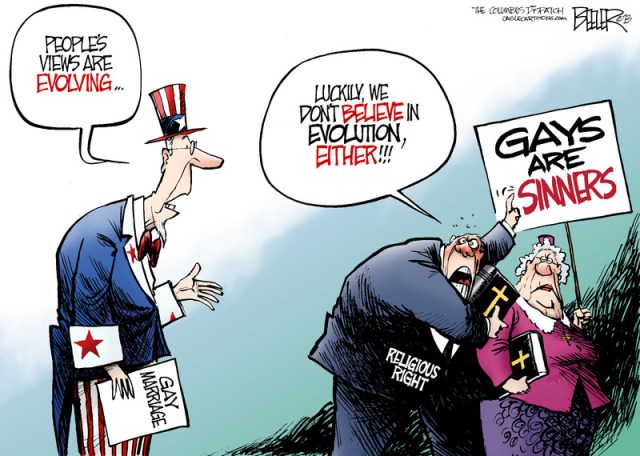
So what happened to the “Grand Old Party,” the GOP, the Republicans? Religion, and in particular the zealous “Religious Right” is what happened to them. (And this guy? Your guess is as good as mine…)

Over the past few weeks, a couple of states in this country – both with Republican leadership in their legislatures and Republican governors – have passed some of the most heinous laws this country has seen since the Jim Crow days following the close of the Civil War.

Bathroom

In North Carolina, Governor Pat McCrory (who has that same sheepish “look what I got away with” bullshit smirk that President George Bush [Bush II] had) signed into law HB 2, officially titled the “Public Facilities Privacy and Security Act.” Much like other Republican bullshit laws like the “Patriot Act” or the “Troubled Asset Relief Program,” HB 2 was a move by the GOP-led General Assembly to thwart an ordnance that was passed by the city of Charlotte – and only applicable in that city, it must be stated – that allowed for transgender persons to use the bathroom facilities of the sex that they identified with (as such, a man in the process of switching to being a female would use the ladies’ room and vice versa). Calling a special session of the General Assembly to Raleigh (at a minimum cost of $42,000 per day for a state currently running a budget deficit), the GOP felt this HAD to be addressed.

The law specifically outlawed transgendered people from using the restroom of their changed sex, saying that they had to use the facilities of the sex they were identified with on their birth certificate (which of these GOP assholes is going to be the guardian at the gate?). Not only was this an abomination, the General Assembly went further in stripping the rights from lesbian, gay, bisexual and transgendered people (LGBT) from state anti-discrimination protections (although they were never mentioned in any discrimination laws previously), including job protection and housing requirements. Finally – and as a last “fuck you” to the people of North Carolina – the General Assembly made it law that no city can raise their minimum wage over what the state deems correct (this is irritating enough on its own).

North Carolina doesn’t take the prize for being the biggest bigots on the block, however. Mississippi voted through the “Religious Freedom Restoration Act (see what I mean about bullshit titling?),” through a bicameral system dominated by Republicans. In that act, the bill allows for the out-and-out discrimination against LGBT people by businesses based on religious reasons. The bill was signed into law by another Republican, Governor Phil Bryant, and is now in effect in the state.

TheProblem

Other states with Republicans running things have gotten wise and decided it wasn’t worth screwing up business dealings with other states for the potential to have such “religious freedom” laws on the books. Arizona, Georgia, Idaho, Maine and Ohio have decided that the ability to have businesses welcomed in the state, movies and television shows filmed inside their borders or athletic events contested in their arenas is better than being a social outcast. This is something that North Carolina is learning and Mississippi will probably be learning soon.

In North Carolina, the National Basketball Association is considering the removal of the 2017 NBA All-Star Game and the All-Star Game Weekend festivities from the city, with Basketball Hall of Fame member Charles Barkley seconding those statements. The NCAA is looking at its 2017 and 2018 college sports tournaments, which could host at least 20 games at venues in the state, and whether it will hold those games at those arenas. PayPal has decided against opening a global operations center in Charlotte over the passage of the law (which was to have provided 500 jobs) as Apple, IBM and Google have also lined up in opposition to the law. The streaming television provider Hulu pulled production of its pilot for a new show, Crushed, from the state and, on Friday, Rock & Roll Hall of Fame member Bruce Springsteen canceled a concert in Greensboro, citing the oppressive new law as the reason. All of these individual items could cost the state hundreds of millions of dollars in revenues and it is probably just the tip of the iceberg.

The Republican Party enjoys talking about how they dislike the theocratic government of Iran or the hideous atrocities that groups like ISIS inflict on their people in the name of religion, but let’s start with them as a zealous religious group that would look to install a theocratic reign of terror should they be allowed everything they would like to see installed (nullification of Roe v. Wade would just be the beginning). The different “religious freedom” laws are about as ludicrous as it gets as NO ONE is infringing on the freedom of ANY religion in this country. Last I checked, you could freely walk around the streets of Anywhere, USA, with a Bible, Book of Mormon, Qur’an or Torah without anyone accosting you. You can gather anywhere – a park, a home, a school or even an actual house of worship that isn’t taxed by said government – without the danger of having the government shut it down. You can even – shock of shocks – WEAR A PENDANT DECLARING YOUR FAITH openly in public. So quit with this bullshit of “religious freedom” and call it what it is – the new way of saying “racial or personal bigotry.”

Since the civil rights movement of the 1960s, the GOP has slowly been eaten away by the “religious right,” and it has been a slow process. It started against those who were “different” – minorities, gays (this was also the time of the Stonewall Riots in 1969), “foreigners” (screw the fact that many in this country were maybe one or two generations removed from being a foreigner themselves) or “hippies” who were against the Vietnam War. As the 70s came along, that “Religious Right” became capitalized as the GOP discovered that it was a sizeable force that presented several things that a political party likes – a solid voting bloc that won’t sway and, in most cases, quite affluent to be able to support the party financially.

That “Religious Right” became the “Moral Majority” that spewed its vile verbosity across the country in the 1980s, perpetuated by President Ronald Reagan and George Bush (Bush I). With such hucksters as Jim Bakker, Jerry Falwell, Oral Roberts (who once famously said that “God would call him home if he didn’t raise $6 million” in a certain time frame – when it didn’t happen, no one called him on his bullshit), Benny Hinn and others piping their drivel across cable networks, their power continued to grow (never mind that they couldn’t keep their privates in their pants if their lives depended on it). While it might seem it calmed in the 1990s, it only changed its face into the Neo-Conservatives.

ReligiousRight

Those “conservatives” (and I will use that term because there are SOME conservatives out there who are aghast that their GOP has been overrun by religious zealots) have destroyed what was once a party that did things, that tried to run a country. These “conservatives” now want to deny everyone anything (including gay marriage and any other rights), put Christianity as the only religion of the land and, in essence, become the same theocracy they say they preach against (they have their “perfect leader” in Rafael Eduardo Cruz). This isn’t a political party, this is a religious movement that is impersonating a political organization, not the Republican Party or GOP that was around after World War II.

Fortunately, the world is changing. There are fewer and fewer of these brain-dead religious zealots pandering to a close-minded bigoted electorate who still want to look in the bathrooms and bedrooms and keep an eye on what people do, but it isn’t dwindling quickly enough. It’s time to let the GOP know that their archaic social stances will keep them from ever being considered seriously as a political entity. Within a generation, either the GOP will have grudgingly entered the 21st century or they will have died a painful death (they may very well be in those death throes now). If it brings an end to this bigotry masquerading as “religious freedom,” then I’m all for it.

If I Were the President of the Rock & Roll Hall of Fame…

RRHallofFame

Next weekend, the Rock & Roll Hall of Fame will open up the doors of its enclave for the 31st time to induct new members into its midst. Holding their ceremonies at the Barclays Center in Brooklyn, NY, this Friday (April 8), this year’s inductees are quite eclectic, with some of them well deserved and overdue – such as Chicago and Deep Purple – some riding a wave of popularity due to recent attention – the gangsta rap pioneers N.W.A. – and two choices that were a bit surprising – Cheap Trick and Steve Miller. As with many of the ceremonies past, there is a bit of drama as to the festivities.

When it comes to Deep Purple, which incarnation of the band will be inducted? Much of the attention has been given to the late 1960s/early 1970s incarnations – the Mark 1 through Mark 3 versions of the band that featured musicians such as Jon Lord on keyboards, Ian Gillian on vocals, Ritchie Blackmore on guitar, Roger Glover on bass and Ian Paice on drums. Not so much attention has been given to the later renditions of the band that featured future Whitesnake vocalist David Coverdale, so we can pretty much count on the factor that the group of men who gave us milestone classics like “Space Truckin’,” “Smoke on the Water” and “Highway Star” are the ones that the Hall will be inducting.

The second story is will the entirety of Cheap Trick reunite for the show? In 2010, drummer Bun E. Carlos had a rather acrimonious split with singer Robin Zander, guitarist Rick Nielsen and bassist Tom Petersson, one that actually ended up in a courtroom (apparently the three men tried to cut Carlos out of his rightful piece of royalties from the band’s work…the trio lost the case). Since then, the men haven’t spoken, but they will apparently put aside the animosity and play for one night only. According to Nielsen, Carlos “is going to play the inductions because they’re inducting the people who made the records…he deserves it.”

I always get a little reflective when the Rock & Roll Hall of Fame ceremonies come up, mostly because I think there are several people there that shouldn’t be inside the walls without a ticket. Over the 31 years that the voters have put people into this hallowed sanctum, they have besmirched the walls with some who haven’t earned the right to be there. If, for one day, I were the President of the Rock & Roll Hall of Fame, I would remove these five members forever, correcting the wrongs of the past:

The Beach Boys (1988)

Probably one of the most overrated acts ever in the annals of U. S. music history, all the Beach Boys were is a doo-wop group who moved off the street corner and onto the beach. Their sound had already been created (unless you forgot Dick Dale, another erroneous non-entry into the Rock & Roll Hall of Fame) and they very rarely deviated from a set pattern:  beach, surf, multiple girls (you might throw a car in there on a rare occasion). Lather, rinse, repeat. There was nothing that was groundbreaking about them at all; even their supposed masterpiece, Pet Sounds, was Brian Wilson looking to duplicate what producer Phil Spector had done with his “Wall of Sound.”

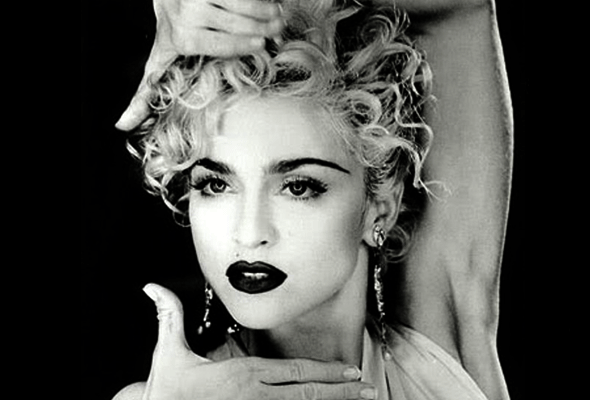
Madonna (2008)

Madonna

By far the most egregious error in the voting annals of the Rock & Roll Hall of Fame committee. That Madonna got in the Hall before such people as Alice Cooper, Dr. John, The Crickets (Buddy Holly’s backing band), Heart, Rush and Albert King (just to name a few) is a miscarriage of justice beyond measure. Furthermore, there is no way that you can tell me with a straight face that Madonna had ANY impact on the development of rock music – if the category was POP music, then yes, Madonna’s fingerprints are all over it (hello there, Lady Gaga!). But this is the Rock & Roll Hall of Fame and, last I checked, nobody is naming her as a significant influence.

Donovan (2012), Bill Withers (2015) and Steve Miller (2016)

Unfortunately, all of these men fall into the same category:  they all are pretty good at what they did. The problem is we are not electing people into the “Hall of Pretty Good.” This is the Rock & Roll Hall of Fame, people!

I know this might sound sacrilegious, but while Withers’ works were memorable (“Ain’t No Sunshine,” “Lean on Me” and “Just the Two of Us” are all outstanding songs), he just didn’t have enough of them. This also could be said for Donovan; name me another song he did outside of “Sunshine Superman” and “Mellow Yellow?” You might be able to sway my thoughts on Miller, but I believe that he’s getting more of a vote on his pedigree (studying at the feet of the legendary Les Paul and Mary Ford as a child will get you those types of votes) than on any outstanding works he wrote or performed. These three men just don’t meet the criteria for what I would call “Hall of Fame material.”

Now that five places in the Rock & Roll Hall of Fame have opened up, who should be inducted into those slots? I’m glad you asked. As the President of the Rock & Roll Hall of Fame, these five artists/bands will be the ones who will take over their rightful places. I’m completely blown away that they aren’t there already, to be honest:

The Runaways

Although Joan Jett is in the Rock & Roll Hall of Fame along with her band The Blackhearts, they needed to go back a bit further to actually encapsulate the first band that broke Jett onto the rock scene. The Runaways were the first female hard rock band to enter the scene, led by vocalist Cherie Currie and the dual guitar attack of Lita Ford and Jett (little known fact is that Mikki Steele, who was a member of The Bangles, was originally the bassist for the group). Svengali Kim Fowley pushed the group as a “teenage jailbait” band, but their music was actually pretty damn good. Most known for their hit “Cherry Bomb,” The Runaways were huge stars in Japan and did pretty well in Europe. In the United States, they were before their time, but their members would go on to bigger success as solo artists.

Pat Benatar

Are you fucking kidding me? One of the most successful female rock artists of all-time, definitely one of the Top 50 artists of the 1980s, isn’t in the Hall of Fame yet?

Pat Benatar (who, to the best of my knowledge, has NEVER EVEN BEEN NOMINATED) followed up on the heels of The Runaways, carrying the banner for women in rock with an unapologetic, no-nonsense approach to the genre. Where Benatar took it a step further was she was the one in charge of her career – she didn’t bow to the dictates of a manager and she definitely didn’t kowtow to the record companies. On her VH1Behind the Music,” the story is famously told about the record executives that Benatar famously took down because they tried to sexualize her style early in her career. Perhaps that is why she hasn’t gotten the kudos she’s due…the record industry is still holding a grudge against her. And name me another hard rock singer who has a four-octave range and is classically trained?

Warren Zevon and Jimmy Buffett

You might be saying, “What makes these two guys different than those three you threw out above?” There’s plenty that makes them different!

In the case of Buffett, he literally created a genre of music that didn’t exist before he came along – tropical rock, or “trop rock,” a fusion of so many musical stylings that it is literally impossible to list them all (if you haven’t listened to a Buffett album or been to a Buffett concert and heard at least six musical styles, you must expand your musical knowledge) – and still is at the top of his game more than 40 years after hitting the road. He has a catalog of music that has inspired a host of entertainers today, such as Kenny Chesney, the Zac Brown Band and others from the U. S. and around the world. Finally, he’s a shrewd businessman, turning his biggest song – “Margaritaville” – into a mega-empire that includes restaurants, casinos, a clothing line and a Sirius XM radio station. That “empire” is now a private company that is thought to make hundreds of millions of dollars per year – that’s a nice nest egg to sit back on!

Zevon, who unfortunately passed away in 2003, probably did more for others’ careers than he did his own. He wrote songs that were hits for Linda Ronstadt and worked closely with Jackson Browne and The Eagles before finding some acclaim on his own. Always more of a critical darling, Zevon’s album Excitable Boy (his most commercial effort) brought Zevon’s biggest hit, “Werewolves of London,” while the remainder of his works on the album (including “Roland the Headless Thompson Gunner” and “Lawyers, Guns and Money”) showed his eclectic side. The remainder of his catalog presented an extremely diverse and talented artist who entertained and challenged his audience. Overall, he is highly respected in the music industry for his artistry, his passion and his individuality, things that the Rock & Roll Hall of Fame is supposed to honor.

Judas Priest

With both Chicago and Deep Purple going in this year and with KISS entering in 2014, you might think that there wouldn’t be any more “fan outrage” over artists not being in the Hall. That would be inaccurate, however, until the omission of Judas Priest is corrected.

Judas Priest has, for almost 40 years, been at the forefront of the hard rock/heavy metal genre, carrying the baton from the Led Zeppelin/Deep Purple/Jimi Hendrix/Black Sabbath early days of the game. With singer Rob Halford (or without, as the days of Tim “Ripper” Owens didn’t slow them down any) and the dual guitar attack of Glenn Tipton and K. K. Downing, the definitive style of Judas Priest is recognizable anywhere. They also have been heavily influential in the genre, with such bands as Pantera, Metallica and the New Wave of British Heavy Metal (NWBHM) of the 80s citing them as heroes.

There’s a whole litany of artists and groups I could get into that deserve a place in the pantheon of rock, but my day as President of the Rock & Roll Hall of Fame is done. I’ll be watching the induction ceremonies on Friday night (or whenever the hell they’ll be on – thanks HBO!) and celebrating the music of the inductees for 2016. Then it will be time to consider who will be inducted for 2017 and the madness will begin again.

Wondering Whatever Happened to…For January 14

SuziQuatro1

Sitting around wondering whatever happened to Suzi Quatro while pondering…

So I Guess ANYONE Can Be a Hero Now – When someone is injured in the course of defending the country in a time of warfare, they are granted the right to wear the Purple Heart due to their injuries (if you’re my silly little brother, you refuse the reward after nearly losing an eye in the First Gulf War, but that’s another story for another time). If you perform feats of heroism above and beyond what are expected of mere mortals (or perhaps because you’re scared shitless), you earn more prestigious medals such as the Bronze or Silver Star or the ultimate expression of heroism, the Medal of Valor. Whenever you normally see these awards, you can be assured that the person wearing the award has performed a very special feat…or can you?

A federal court in California ruled earlier this week that a former Marine can wear certain service medals he did not earn, somehow determining that this was a “form of free speech.” Apparently Elven Joe Swisher, who served in the USMC after the Korean War and was discharged honorably in 1957, has taken to wearing the Silver Star and the Purple Heart. The problem? He was never awarded either military honor.

In 2001, Swisher filed paperwork for disability payments for post-traumatic stress disorder from his time in the military, in particular “secret combat missions in North Korea.” He was granted the payments and, in 2004, wore the Purple Heart when testifying at the trial of a man being tried for solicitation of murder in an attempt to make him look more reliable as a witness. When this came out – after the passage of the Stolen Valor Act – Swisher was charged under the Act and his payments stopped.

In 2012, however, the Stolen Valor Act was challenged in the Supreme Court, where the Justices ruled that it was “free speech” to just WEAR the medals, as long as you didn’t CLAIM you earned them. In 2013, the Congress changed the Stolen Valor Act to remove the illegality of wearing a medal from its verbiage. The decision by the federal court on Monday set aside Swisher’s 2007 conviction for violating the Stolen Valor Act but did not overturn his conviction.

We constantly hear about “respecting the military” from those who have never served. Add this to the list of the continued disrespect that the military receives.

It Was a Tragedy, But You’re Pushing It Here – Once again out of California – who seems to want to challenge Florida for the title of “stupidest state in the U. S.” – the widow of one of the victims of December’s mass shooting in San Bernardino has decided to file a lawsuit against the county. In her claim, Renee Wetzel, the widow of Michael Wetzel, says that the county and 25 unidentified individuals and the respondents to the shooting were “negligent and careless” in their actions and that her husband’s death was preventable. If this weren’t outrageous enough – no other family member of a victim from the shooting, which was an act of terrorism by two radicalized Muslims (one an American citizen), has filed any court actions – the price tag on the lawsuit will make you choke.

Wetzel is asking for a grand total of $58 MILLION in damages in the case:  $3 million for lost wages from her husband’s death, $25 million in general damages and $10 million in general damages for each of the couple’s three children. The county attorneys haven’t responded as of yet out of respect to those who were victims of what was a horrific crime; even one of the woman’s attorney, Andrew J. Nissen, wouldn’t indicate where the alleged negligence came from that the county supposedly committed.

Look, it is tragic what occurred in San Bernardino, but this doesn’t give you the right to make a mint off the situation. It just goes to demonstrate that there is serious need for tort reform – and a method to punish frivolous lawsuits – in the United States.

And On the Other End of the Spectrum – The family of a 12-year old girl in Pennsylvania who was shot to death by an elected constable isn’t blaming the man for the death of their family member but rather her father, who escalated the situation.

According to reports, Constable Clark Steele (in Pennsylvania, a constable is an elected position that can serve warrants, transport prisoners and perform what would be administrative law enforcement powers) went to a home in Duncannon, PA, on Monday to serve eviction papers on the residents, Donald and Sherry Meyer. When he knocked on the door of the address, Steele was met by the business end of a shotgun being aimed at him by Donald Meyer and Steele fired one shot in self-defense. That shot traversed the length of Meyer’s arm, shattering the bone, and exited at the elbow. It then hit Meyer’s daughter, Ciara, in the chest as she stood behind him, killing her on the scene.

Family members, in a refreshing change of pace, didn’t immediately castigate the officer, however. “None of us in our family have any hard feelings toward him,” one family member commented. The family knew about the history of the male Meyer and asked a reporter, “Did anyone let him (the constable) know that he was going to be walking into a rat’s hole?” Meyer, who was due in court later this month for a case on a DUI and resisting arrest (the eviction was a separate case) now is in jail for aggravated assault, reckless endangerment and other counts.

The family may very well receive some settlement from the police over the unfortunate death of their family member, but at least they realize there wasn’t any malicious intent in the constable’s actions.

Sometimes, There Are No Other Words That Can Be Said – In Virginia, Delegate Mark Cole decided that 2016 was the year that the state government had to make sure that restrooms in public schools were being used properly. On Tuesday, the representative for the 88th District in the Virginia House of Delegates filed a bill that would require students that use the restroom at school to use the “designated restroom for a specific gender” or be fined.

The law defines gender as “anatomical sex, mean[ing] the physical condition of being male or female, which is determined by a person’s anatomy.” To most, that would mean that a physical examination of the person – in this case, a child – would be necessary to determine if the person was going to the right potty house instead of trying to “sneak a peek.” For his part, Cole has said that it is simply a bill that will only be used if there is a “complaint.” He also says that it wouldn’t require a “genital check,” but a simple look at someone’s student registration or birth certificate.

You would think there were other things in Virginia to be concerned with…

Now the answer to the question…whatever happened to Suzi Quatro?

Many might remember Quatro for her quick – and I do mean quick, as in fleeting – appearances on the television series Happy Days in the late 1970s as Leather Tuscadero, the little sister to Fonzie’s girlfriend Pinky Tuscadero (herself a fleeting memory), who fronted a powerful rock and roll band that “broke the norms” in the 1950s. As it turns out, to those who thought that Quatro was “just an actress,” there was a whole lot more in the package than they expected!

Happy Days wasn’t Quatro’s debut in show business. In fact, Quatro had actually been around much longer than that, especially making a huge impact in the music business. In the 1960s at the tender age of 14, she joined with her sister Patti in a band called The Pleasure Seekers, finding some success in the Detroit music community. After turning 18, Quatro then would move to England and became successful in West Germany as a hard rock act. From 1973 to 1980, Quatro would win some form of the West German magazine Bravo’s Bravo Award (73-74 the Gold, 1975, 1978 and 1979 the Bronze and 1980 the Silver) for Best Female Singer. The U. S., however, preferred their Suzi to be a little softer, with her only success in the States a tune called “Stumblin’ In” that peaked at #4 on the Billboard Hot 100 in 1979.

Quatro has served as the inspiration for many of the women who have gone on to have success in the world of hard rock/metal in the music business. It is arguable that, without Suzi Quatro, there wouldn’t have been The Runaways and, as a result of that, no Joan Jett, who is now enshrined in the Rock & Roll Hall of Fame. Others who have given Quatro credit for inspiring them to get into music include the Talking Heads’ Tina Weymouth (who was encouraged by her then boyfriend and now husband, fellow Heads’ member Chris Frantz, to listen to Quatro albums to learn how to play the bass) and singer/songwriter KT Tunstall.

Quatro calls England home nowadays and it appears that she’s beginning to slow down a bit. She last appeared in the United States in 2013, when she was given the Distinguished Achievement Award from the Detroit Music Awards (her birthplace) and, in 2014, Quatro performed what has been called her “final” Australian tour. At 65, Quatro has a handful of shows scheduled in Europe for 2016, where she will continue to rock the fans who come to see her. But don’t expect her to just quit; on her website, Quatro states, “I will retire when I go onstage, shake my ass and there is silence.”

SuziQuatro2

2016 Rock & Roll Hall of Fame Nominations: Who Gets In?

It seems that there is a “Hall of Fame” for virtually every aspect of human existence. If you are into clowns, there is the International Clown Hall of Fame in Milwaukee, WI, that is in actuality a serious look at a funny industry. On the lighter side, there is a Recreational Vehicle and Manufactured Housing Hall of Fame in Elkhart, IN, the “Pig Hill Hall of Fame” in East Elijay, GA and the International Hamburger Hall of Fame in Daytona Beach, FL (look these up, you’ll enjoy the laugh). Whereas some of these exist with their tongue firmly planted in cheek, there are those that have the gravitas deserving of a memorial to excellence.

Where the Rock & Roll Hall of Fame in Cleveland, OH, lands is something that is debatable among Halls of Fame and music aficionados. In my opinion, it does honor, cherish and memorialize the greatest musicians and performers that have come through the genre. On the other hand you have my friend Mark, who believes that the Hall “is a totally lost cause and deserves to be burned to the ground…then the ground itself sewn with salt and dumped into Lake Erie.” As you can tell, just a little difference of opinion there.

Created in 1983 by a contingent of music biggest names (then-Atlantic Records founder and chairman Ahmet Ertegun, Rolling Stone founder Jann Wenner and several other prominent music executives), the Rock & Roll Hall of Fame didn’t get around to inducting members until 1986, when the inaugural class consisting of such luminaries as Chuck Berry, James Brown, Ray Charles, Fats Domino, The Everly Brothers, DJ Alan Freed, Buddy Holly, Jerry Lee Lewis and many others (here’s the list) were voted in as the inaugural class. Even after they started inducting members into the “Hall,” they lacked a physical location to properly acknowledge the inductees.

Although several cities with extensive ties to U. S. music history and the foundations of rock music, including Memphis, Detroit, Cincinnati and New York City were considered for the location, it was Cleveland that came up as the big winner in being named the home city of the Rock & Roll Hall of Fame in 1986 (Wenner was disappointed that New York didn’t get the Hall). Why did Cleveland, of all places, get the Hall? As it is with most things, it was money; Cleveland ponied up $65 million in public funding and more than 600,000 residents demonstrated their desire in signing a petition to bring the Hall to “America’s North Coast.”

Even with the money and the people in place, it would take another decade before the physical Rock & Roll Hall of Fame was built. In 1995, the I. M. Pei-designed building opened amid the fanfare of a huge concert that featured such rock luminaries as Bob Dylan, Aretha Franklin, Bruce Springsteen and Iggy Pop. Since then, it is estimated that more than 9 million visitors have made the trek to the Rock & Roll Hall of Fame to pay their respects to the legends of the industry.

Now in its 33rd year of existence, the Rock & Roll Hall of Fame has caused its share of controversy as well as celebration. For every rock legend like a Buddy Holly or Chuck Berry ensconced in rock music’s Mount Olympus, there are those such as Dinah Washington (1993), Earth, Wind and Fire (2000), Grandmaster Flash and the Furious Five (2007) and many others who aren’t exactly what you would think of when mentioning “rock music.” In particular, there is the Rock Hall’s recent moves toward recognizing “pop” music in its rolls (Madonna in 2008 and ABBA in 2010, to be precise) that seems to have angered rock “purists” beyond belief.

In my opinion, “rock music” is a wide encompassing umbrella. While some may not believe that the legendary bluesman Robert Johnson (an original inductee in 1986) had an influence on the genre, his exclusion from the Hall would be laughable for an organization looking to honor those who created “rock music.” Even such artists as Grandmaster Flash, one of the groundbreaking musicians in the rap genre, deserves induction into the Hall for his contributions to, yes, “rock music.” While I might have some personal preference issues with some of those in the Hall (especially Madonna), I’m more of the line that they are worthy of their inclusion in the institution due to their overall contributions to music in general and sometimes even rock music.

The list of nominees for induction in 2016 to the Rock & Roll Hall of Fame once again reach across the decades and the genres. So who will have the best chance to get in this year? I’ve broken it down into three categories:  Shouldn’t Even Be Considered, Borderline Excellence and Sure Shot Legends.

Shouldn’t Even Be Considered

Chaka Khan – A long career in the industry best identified by her work with the seminal R&B group Rufus, but not exactly what I would call an indispensable musical artist. Without the ability to actually cite someone that she has had an extreme influence on – perhaps Nora Jones, maybe Alicia Keys? – Khan loses points on the “legend” scale. Add in the lack of longevity to her career and I’d have to say Khan shouldn’t be considered.

Chic – If this were a question as to voting in two of the members of the band – guitarist/producer Nile Rodgers and drummer Tony Thompson – then I’d be more than willing to welcome them into the Rock & Roll Hall of Fame. The problems are that Chic didn’t last all that long – they were one of the powerhouses of the Disco Era – but both Rodgers and Thompson’s greatest work came outside of their Chic days. Rodgers has been an outstanding producer across the entirety of the musical spectrum and Thompson laid down some of his best work with the rock super group Power Station. To put the entire band in when it was really Rodgers and Thompson who are deserving of the honor is a bit much.

Los Lobos – There is more than enough room in the Rock & Roll Hall of Fame to look at how different cultures had an impact on the formation of the genre. For their part, Los Lobos is one of those artists or groups that would have to be considered. Unfortunately, they fall short on several aspects, including influence on later artists and general impact in the history of rock. Their only #1 song in the U. S. was a remake of “La Bamba,” for crying out loud. Los Lobos, unfortunately, shouldn’t have even made this list.

Steve Miller – The thing about ANY “Hall of Fame” is that it isn’t a “Hall of the Pretty Good.” That same “level” of excellence needs to be used here with Steve Miller. Although Fly Like an Eagle was a legendary album and certain songs he created are very memorable, I don’t hear any artist over the past 20 years or so admitting how much of an influence Miller was on their careers. I can’t put someone in the Hall that was simply good at doing their job, as Miller was, thus he falls into this category.

The Spinners – Once again, a case of pretty good but not legendary. The Spinners actually should be praising those legendary R&B groups before them (The Temptations, The Four Tops, etc.) as there aren’t many that note them as a seminal influence in their formation. Also not very long-lived as a group.

The Smiths – This is one of those that is on the border between getting out of this ranking and into the “Borderline Excellence” grouping. The group has had a huge influence on many other rock acts following it, but to say it had a huge degree of success might be stretching the term. Morrissey probably had more of an effect as a solo artist than the band did as a whole and longevity has to be called into question.

Borderline Excellence

Cheap Trick – As a longtime fan of the band – they were a constant on radio stations and at parties when I was growing up – I’d like to give Cheap Trick more love than I believe the Hall voters are going to give them. The band was a regional act – highly successful in the Midwest – but didn’t exactly have the staying power as the 80s closed. They are also hugely overrated by VH1, who put them in at #25 of the Greatest Artists of Hard Rock. In fact, Cheap Trick has the potential to go from this category down to the previous one.

The Cars – Another one of those “great, but not immortal” bands that came out of the 1980s. Unless you count singer Ric Ocasek’s ability to pick up a stunning bride (model Paulina Porizkova), The Cars weren’t outstanding in any area. They showed up, they did the job and they took home the supermodels. There are many other people who are more deserving of a seat in the Rock & Roll Hall of Fame over this band.

Janet Jackson – This was a problematic one for me. Ask three different people where she should be, according to the rankings that we have here, and each of those three different people would probably put her in each category. She didn’t exactly blaze a trail – her brothers did that for her – and her music wasn’t exactly groundbreaking or influential. For a period there in the 80s, however, it was either her or Madonna reigning as the dominant female artist on the charts. For me, she falls into this category and perhaps one day might sway me to having her in the Hall.

Nine Inch Nails – Here we have another band that is thisclose to ticking over into the “Sure Shot Legends” group. Trent Reznor’s pet project for well over two decades, the band pushed the “industrial” rock movement forward and was the catalyst for a band such as Rammstein and much of the EDM movement today. Reznor is a talented musician who has won an Oscar for his score of the film The Social Network and is the recipient of other major awards; a couple more achievements like that and Nine Inch Nails will get in if not Reznor by himself.

Sure Shot Legends

Chicago – One of those bands that you say to yourself, “You mean they aren’t already in?” Chicago pioneered the jazz fusion rock that seemed to come out of the late 60s/early 70s, something that is still heard today in some of the music (Michael Buble or Adele comes to mind). For much of the 1970s and even the early 1980s, Chicago was a dominant force on the music scene. We’ll have to cut them some slack for the Peter Cetera Years, but it is high time that Chicago was a part of the biggest club in rock music.

Deep Purple – One of the most egregious errors ever committed by the Rock & Roll Hall of Fame has been the omission of this band from its rolls. The originators of “hard rock” or “heavy metal,” the band lasted from the late 60s into the 21st century, churning out bombastic rock all the way to the end. They also inspired many hard rock and metal bands that came out of the latter half of the 20th century. The only problem with putting Deep Purple in the Hall is which “Mark” do you put in? My vote goes to Deep Purple Mark II, which featured Ian Gillan, Jon Lord, Roger Glover, Ian Paice and Ritchie Blackmore as the members of the band and originators of such classics as “Smoke on the Water” and “Highway Star.”

The J.B.’s – If you’re going to have the singer for the group – legendary R&B performer James Brown – in the Rock & Roll Hall of Fame, you’ve got to have the band that backed him up. While Brown was renowned for the incendiary performances that he would leave on stage, somebody had to keep up with him on the musical side of the equation. The J.B.’s did exactly that, with saxophonist Maceo Parker and the Collins BrothersWilliam “Bootsy” and Phelps “Catfish” – eventually moving on to another landmark group, Parliament/Funkadelic in later years.

N.W.A. – This is probably my most controversial selection for election into the Hall. The originators of “gangsta rap,” N.W.A. still has their imprints on the music scene today. When they came out in the late 80s, their fist-to-the-face depiction of life in the inner city served as a reminder of what music can do when used as a tool for social change. It may be arguable whether “gangsta rap” effected that change at all, but it wasn’t for a lack of trying from N.W.A. and others. Add in the influence that the group had on other artists and N.W.A. should have been in the Hall long ago; they’ll probably get in this year on the steam generated from the film Straight Outta Compton.

Yes – Much like Chicago, “They aren’t in already?” The two bands are quite similar in that Yes was one of the first bands to push the “progressive rock” (or “prog rock”) sound that incorporated a great deal of keyboards and operatic flourishes. Yes was a “jam band” before jam bands were cool, often putting out individual songs that seemed as long as some artists’ albums. “I’ve Seen All Good People,” “Roundabout,” “Owner of a Lonely Heart” – the band was a critical and commercial success across the ages and, as such, deserves to be in the Hall.

The Rock & Roll Hall of Fame will allow for fans to vote on their website and that “fan vote” will be tabulated alongside ballots from other musical dignitaries to determine the final five or six who will walk through the doors in Cleveland to further rock immortality come April next year. Who will earn the honors? We’ll find out at the beginning of 2016.

Who should have been nominated? That, my friends, is a subject for another time…