When All Else Fails, Attack the Messenger: Thoughts on the Third GOP Debate

After I took a week off last week, the third debate for the Republican Party snuck up on me. That week spent away from a computer left me with little debate preparation that would have given me some insight into what might be the major themes of Wednesday night’s soiree in Colorado, but that sometimes isn’t a bad thing. The ability to go in fresh sometimes will allow you to view things in a different light and present some new insights that you might not have previously considered. Unfortunately, the overall performance of the GOP in last night’s debate – and at the same time the presenter of the debate, the cable network CNBC – left me feeling nothing.

I should have known from the start of the debate that it was going to be a massive train wreck (and an apology to comedian Amy Schumer for using the title of her movie in that manner). Lead moderator Carl Quintanilla, a respected investigative reporter who has traversed the world (and an alumni of where the debate was held, the University of Colorado at Boulder, for trivia’s sake), opened the proceedings with one of those “eye roll” questions that occur far too often. Likening the debates to a “job interview,” Quintanilla asked the GOP candidates what was their biggest weakness (one of those bullshit psychological questions that come up sometimes in employment interviews). After getting several milquetoast responses from pretty much the entirety of the ten-person stage, the debate careened off the tracks.

At no point in the debate did it seem that Quintanilla had any control over what was going on in the event. Quintanilla allowed the candidates – ALL of them, not just a couple – to run roughshod over his direction of the event. I lost count of the number of times that there was little to no response to a question from the candidates and he often let the candidates interject at times when, according to the rules of the debate, they didn’t have a horse in the race (Carly Fiorina was particularly irritating in this account). His co-moderators – fellow CNBC journalists Becky Quick and John Harwood – weren’t much better with their questions and also were ridden like Grand Canyon mules over the span of the debate.

There was also no reason to have more than these three people asking questions of the candidates. I could have done without watching snake oil salesman Jim Cramer pushing his mug across the screen – even if it only was a couple of questions – and Sharon Epperson’s appearance wasn’t necessary either. In fact, if Cramer and Epperson’s raison d’etre was to give some more prep time to the triumvirate of Quintanilla, Quick and Harwood (who all seemed very unprepared for the event), they failed miserably.

With this said, there was no reason for the reaction from the GOP candidates to some legitimate questions that came up during the debate on Wednesday. It was a case of those under questioning shooting the messenger rather than answering the questions – regardless of their difficulty – presented to them.

One of the most popular methods of anyone under fire – whether they are in politics, entertainment or even the media itself – is to attack the person who is presenting the challenge to them. This is well-known in the debate world as an ad hominem attack and is recognized as a logical fallacy that allows for those under fire to sometimes escape the flames by turning the attack back on the questioner (the “messenger”). It is a tactic that has been well practiced by those in the GOP, railing against the “mainstream media” while at the same time avoiding queries about questions surrounding their past and/or their policies.

Give it to the men and Fiorina on the stage, they were quick learners during the debate last night. After the crowd expressed their displeasure with a line of questioning put towards former Governor Mike Huckabee about Donald Trump’s “moral purity” (a completely correct displeasure, by the way), the others seemed to grasp onto the “red meat” of attacking the media for the line of questioning would give them the desired response from the Republicans in attendance.

Dr. Ben Carson grasped onto that tactic next when questioned over his involvement with a nutritional supplement company called Mannatech. After stating that he had no connection with the company, Carson was challenged by Quintanilla regarding the usage of his image on their website, among other things. After Carson shot a shit-eating grin over his face following the umbrage of the audience to Quintanilla’s questions, he deftly was able to avoid the question.

The problem? The line of questioning was a viable one. The company in question, Mannatech, and Carson have had a relationship for the past decade. Carson shot many videos promoting the company and gave several paid speeches. The company has previously been sued by the state of Texas, resulting in a settlement with then-Attorney General (and current Governor) Greg Abbott for $5 million and the banishment of founder Samuel Caster from having any job with the company. The company has also settled a lawsuit with the Securities and Exchange Commission and still faces issues regarding the claims of cures their “dietary supplements” provide.

A similar situation arose in what many recognized as a “big” moment during the night’s debate. Senator Ted Cruz fed the lions of the right by rattling off the list of “insulting questions” asked by the CNBC panel. “This is not a cage match,” Cruz began (and you got the feeling this is one of those prepped answers he had been waiting to use). “Donald Trump, are you a comic book villain? Ben Carson, can you do math? John Kasich, will you insult two people over here? Marco Rubio, why don’t you resign? Jeb Bush, why have your numbers fallen? How about talking about the substantive issues?”

The problem was is that Cruz’s attack on the moderators was in response to, once again, legitimate questions from the panel. The Trump question was why his policies – including deporting 11 million people, building a nearly 2000 mile long wall along our border with Mexico and forcing them to pay for it and his handling of Russia and the Middle East – “sound like a comic book version of a presidential campaign?” Needless to say, Trump did not answer the question, instead replying to the Mexico situation by saying, “A politician cannot get them to pay…I can,” a non-answer if there is one.

Carson’s question was on how his flat tax plan – similar to that of tithing to a church (someone has to remind the GOP there is a SEPARATION between church and state) – wouldn’t leave the U. S. with a huge budget deficit. Instead of pointing out what cuts would be made or other tactics necessary, Carson instead responded by saying, “That’s not true,” and never answered the question.

Cruz himself dodged a legitimate question. When asked about why he opposed the recent deal in the U. S. Congress that would set the U. S. budget for the next two years, Cruz instead railed about how the moderators wouldn’t ask anything substantive and didn’t actually get around to answering the question presented to him.

And let’s not even get into Trump’s convoluted stance regarding guns…

When you have no defense for the positions you’ve taken, when you have no knowledge beyond the bare-boned rhetoric that has been presented, the only other course of action is to attack the messenger. The GOP seems to have done that pretty well – and not without some truly atrocious questioning by the CNBC moderators to bring it on – in avoiding being held responsible for their proposals and actions.

With this situation taken care of, there were some takeaways from last night’s debate. The one thing I consistently kept wondering about was what the candidates meant when they complained about how government doesn’t do anything. My knowledge of history looks at things like FDR’s “New Deal,” which helped to get the U. S. out of the Great Depression (along with World War II), how government investment in medical research found cures for major diseases such as polio and smallpox, investment in education (especially college educations) has allowed for the baby boomers to be the most educated generation in history and investment in sciences that led to NASA and our exploration of space (and this is just a small sampling). Instead of consistently railing about the “evils” of government, try to admit that sometimes things wouldn’t get done unless there was government intervention.

Secondly, I saw a bunch of candidates complain about Washington seven ways to Sunday as if it were a bastard stepchild. The takeaway I had with was “Why do any of these people want to do something that A) they aren’t going to invest in (in reply to my above thoughts) and B) they despise to the point that they do?” Out-and-out hatred of an institution isn’t exactly going to be something that makes those there welcome you to the table and it isn’t going to inspire confidence in how you will “change” it. Instead of “making America great again” (which is about as asinine a statement there is; our country is already great and it hasn’t gone anywhere except for those nimrods who see boogeymen around every corner), how about we “improve on the United States we have?”

As to the candidates, it was Rubio’s best debate to date and sets himself up well for a future run (perhaps 2020) for the nomination (I don’t see him getting it this year really, but it wouldn’t be a surprise). Chris Christie found his groove (too little, too late) and Kasich was pretty good about presenting a moderate Republican stance. I don’t like to say someone was a “loser” in the debate, but the “Fat Lady” is warming up in the wings for Bush. Rubio flicked aside Bush’s attack on his Senatorial attendance and voting record without breaking a sweat and Bush spent the remainder of the night awkwardly trying to regain his footing.

There’s less than two weeks to the next GOP debate (November 10), so some of the things I’d like to see done won’t come true. I’d like to see the “kiddie table” debate dropped (hey, if you haven’t dug yourself over the 2% mark by this point, you don’t have any viability in the race) and perhaps see a couple of those candidates that were on the “main stage” step aside. Perhaps a little contraction in the GOP race – say eight candidates instead of 14 – would allow some people to truly put their support behind someone with a realistic shot at winning the nomination. It won’t stop, however, the “red meat” rhetoric out of the GOP regarding their “persecution” by the “mainstream media.”

Spending a Week in the “House of Mouse” Part Three: The Debriefing

WDW

After every major operation in the United States Marine Corps, the troops go through what is called a “debriefing.” The purpose of the exercise is to pass along as much information about what occurred during the operation in question to be able to make a future operation run smoother than the one just concluded. Although you may not think so, taking on the challenge of Walt Disney World in Orlando, FL, is very much like a military maneuver in that it takes an extreme amount of planning to have the best time possible.

What we’re going to cover in this last part of my family vacation to the “House of Mouse” (hereafter referred to as “WDW”) are various miscellaneous things that you might not have picked up in the first two parts. Trust me, I could probably go on for a few more installments about WDW to help your trip, but I have to leave something for you to have an adventure yourself!

Dining

Arguably the best thing about the WDW resort – if you’re not into the rides, the Disney characters or other items around the amusement parks – is the choices for dining on the properties. Each of the amusement parks are replete with dining options and some of them are quite outstanding. But you have to be able to schedule these well in advance – our family did it three MONTHS in advance of our trip – otherwise you might be sitting in line waiting for a meal that will never come.

The dining options can be as simple as cafeteria style dining at some of the Disney hotels on the property to buffet style options that feature Disney characters (Chef Mickey’s is a very popular option in this category) to scrumptious meals featuring cuisine from several foreign lands (perhaps the best example our family found of this was Sanaa at the Animal Kingdom Lodge, excellent Indian and African fare). You have to be careful, however, as the meals with the Disney characters can be quite pricey; for the buffet you’re having, you might be better off waiting until you’re inside one of the parks where you can meet the Disney characters and choose a less pricey option.

There is also the issue of traveling to some of restaurants at other Disney hotels or even in the theme parks themselves. Sometimes you can do as instructed by the Disney staff – take a Disney Transport to one of the parks and catch another bus to the resort you have reservations at – and it will take you at least an hour to travel to and from a meal alone. This is one instance where a rental car comes in handy – especially if you have reservations at something like Olivia’s Café or the Grand Floridian Café – as you can drive directly to the resort, have your meal, and drive back to your hotel without the hassle of having to take the Disney Transport.

If you are going to a theme park restaurant (usually you would do this for dinner) you have to be careful not to languish too long over those after-dinner drinks. Disney Transport runs from the theme parks up to an hour after they close (around 8PM this time of year). If you have a late dinner reservation and repose in satisfaction following the meal, you might find yourself having to take a cab because Disney Transport has shut down for the evening.

There is another thing that you won’t see much of at WDW. Alcohol wasn’t served at the Magic Kingdom and the other two parks (Animal Kingdom and Hollywood Studios) until 2012 and even then it was on a very limited basis (such as restaurants). EPCOT is the only theme park where there are several varieties of alcohol sold around the park, including craft beers, wines from different countries and other spirits. So if you want to get your drink on, EPCOT is the place to be.

Miscellaneous

If you’re going to WDW, do not expect the trip to be an easy one, especially on your feet. You are going to be walking anywhere between five and ten miles a day (depending on how long you spend at the theme parks), so comfortable, well broken in shoes are a necessity. If you are planning on wearing a new pair of sneakers or breaking in those darling ankle boots you just got at Macy’s, you are only setting yourself up for a world of hurt and blistered feet. Don’t forget about comfortable socks, either; thin socks will be chewed up by the end of the day at WDW.

If you have young kids with you, it is quite advisable to pack a bag, like a beach bag, with some snacks and water for them to partake of during the day’s adventure. WDW personnel (they like to call them “cast members” whether they are performing in the shows or letting people through the gates) are pretty good about not hassling people over bringing in food and water into the theme park. These items will come in handy for the kids to rejuvenate themselves and even the adults might like a bottle of water to stem their thirst.

Of course, do not bring weapons into WDW and its theme parks. Even though Florida is a concealed carry state where people can normally carry a concealed weapon such as a handgun, the grounds of WDW are strictly a no-concealed carry area. There are plenty of stories online about people who challenged this law – stating that the WDW ban doesn’t have “force of law” (validity) – but have ended up being banned from the park because they didn’t want to give up their weapon. In fact, if a guest is to bring one to a WDW resort or hotel, the resort requires that the weapon be locked up at the front desk in a safe deposit box. According to WDW representatives, only on-duty law enforcement officers who have jurisdiction at WDW may carry weapons around the property.

There was something else that was a bit of a surprise that cannot be brought into the WDW properties. Selfie sticks – those devices used by many to get a “hands free” look to their cellphone photographs – are also banned by WDW. I didn’t get the opportunity to ask why this was the case (I am figuring two reasons – they can be quite obnoxious if someone is trying to walk around you and you whip this out in their path and, hey, they can be used as a weapon), but my wife and I found out first-hand what happens when you try to get one through the entrance. If you want to retrieve your property, you have to take it to Guest Relations, where it is appropriately tagged and you are given a receipt to be able to retrieve it. You can also voluntarily give it up, but I didn’t notice anyone doing that.

A Final Remembrance

There are a litany of things that I would like to do in my meager existence on this mortal coil – run with the bulls in Pamplona, Spain and experience New Year’s Eve in New York City’s Times Square are two such examples – but with my age, those things have long since passed me by. Going to one of the Walt Disney theme parks – be it Disney Land, WDW or one of the parks in Paris or Japan – may not seem like much, but it is a pretty special experience, especially when you share it through the eyes of a son and share it with your wife and mother-in-law. It was a special time and, even though there were some things that were on the schedule that had to be bypassed, it was still a great time.

If I were to rank the four theme parks in order, it would go something like this:

EPCOT
Magic Kingdom
Animal Kingdom
Hollywood Studios

While they were all outstanding attractions, I was particularly drawn to EPCOT and would have loved to have had a chance to take a more in-depth look at some of the non-ride attractions around the park. The Magic Kingdom is what you would expect – a non-stop day of rides for all ages – and the Animal Kingdom was enjoyable for the most part. The only thing that seemed out of place in the mix was Hollywood Studios (and I thought I would really like it, to be honest); it seemed there was a purpose for all the other theme parks but Hollywood Studios seemed to be forced just a bit. Still, given a day to thoroughly look over Hollywood Studios, that opinion may have been changed.

If you’re planning on going to WDW anytime soon, you are in for the trip of a lifetime. If you haven’t been for several years, it might be time to take another look. As for me and my family, it could be something we plan on doing more frequently before our son gets to be “too cool” (read:  too old) to go to a “kiddie park.” Then again, the Walt Disney World Resort in Orlando, FL is, as its creator wanted, a place where kids and adults can equally have fun.

Spending a Week in the “House of Mouse” Part Two: Taking the High Ground

EPCOT

While having been in the United States Marine Corps isn’t a prerequisite for taking on the challenge of Walt Disney World in Orlando, FL, it is an advisable course of action. Without the intricate planning and the physical training of military maneuvers, many will end up as one of the pretty landscaping efforts around the “House of Mouse.” If you remember Part One and have put its exercises into use, you’re off to a good start. If you can make it to the end of this training course, you’ll be able to take the high ground in any of the resorts’ (hereafter referred to as “WDW”) and make an enjoyable effort out of the battle.

Day Three

After a great breakfast to prime ourselves for the day, Disney’s Animal Kingdom was on the agenda for our family. Animal Kingdom is actually the newest of the four theme parks that make up the WDW entourage, opened in 1998, and is the second largest theme park in the world behind only Six Flags Great Adventure in Jackson, NJ. What sets apart this particular theme park – according to what is told to the visitors – is that the main reason for this park is to promote animal conservation.

This is where I have a bit of a problem with Disney’s Animal Kingdom. I am not one of those “animal rights” activists that foam at the mouth if someone ruins the habitat of the Galapagos Island tree frog (hell, if there is such an animal, let me know). I also, however, am not for their abuse in circuses, zoos, rodeos or water parks, either; just try to tell me about how much a polar bear likes walking around on concrete in the middle of a Southern summer. My son, however, is quite interested in animals and, as he has not yet had the opportunity to form an opinion on this subject, I have decided to allow for his youthful curiosity with the creatures that join human beings on this planet.

From the appearances of the park, there is a premium placed on the animals and their well-being, maintaining as natural a habitat as possible for them and allowing them the freedom of movement that would come in their surroundings (the “Tree of Life” that dominates the center of the park is something to see). That was somewhat reassuring and, once we went on the special “Kilimanjaro Safari” that is one of the major attractions of Disney’s Animal Kingdom, we could see that the animals seemed to think that they were in their natural habitats. You could literally almost touch the animals as you drove past – they are free range in that they can go wherever they wanted to go – but you were discouraged from doing so. Of particular fun was one giraffe who thought it would be a hoot to block the road; our driver waited – and the drivers of another half dozen or so safari trucks behind us waited – until the giraffe had been adequately amused and moved off the road.

It was when we traveled between the different animal compounds on the safari trail that you could see some issues, however. I was quick to notice that the entrances/exits from one compound to another had electronic gratings on the ground across the roads and there were the traditional fencing in the woods or brush that you would see in a normal zoo. Were these in place to discourage the animals from mingling among each other as they would naturally do in the wild? I would have liked to have asked someone on the safari (especially about the grates on the ground) but not wanting to look like a killjoy to a couple of dozen people, I decided to keep my trap shut for a change.

Other than the zoo atmosphere that permeated my mindset, Disney’s Animal Kingdom was quite lovely. Lush trees and bamboo stalks provided shade for a particularly hot day in October and there were plenty of areas to take a load off and rest. Unfortunately, we didn’t get to do much else outside of the Kilimanjaro Safari (the family took a ride on the Kali River Rapids, which sounds just like its name indicates and was quite enjoyable) as our son was getting tired, but that proved to be a good thing as it was the one day we had some afternoon rain that would have put a damper on things (this is also something to remember about Florida…at any moment, despite what the weather forecast was the night before, “pop-up” showers or thunderstorms can and often do occur throughout the day).

Overall, if you’re visiting Disney’s Animal Kingdom, there is plenty to see there that would take a good day to get through, if not more. It also is quite beautiful, if you can get by the fact that it is still a zoo.

Day Four

By this point in the trip, we were getting to be old hats at the “wake up early, get a good breakfast” routine. We also were struck with one of the maladies that pops up when you are on a vacation – illness. Perhaps because he wanted to touch everything that was around him – as children are wont to do – our son started to come down with the “sniffles.” It seemed like nothing – just a little bit of a runny nose – that turned into a full blown cold within about twelve hours of the first appearance of the “snots.” This would have an impact on the remainder of the trip and may have been the cause of one of the stranger cases of the trip.

After breakfast, the plan was to attack Disney’s Hollywood Studios and its myriad of attractions. Opened in 1989, it was originally known as Disney-MGM Studios but, after years of infighting between Disney and MGM Studios over its operational aspects (MGM objected to a full studio and film lab being on the property, Disney objected to the MGM Grand in Las Vegas opening a theme park of their own on The Strip), the name was changed to Hollywood Studios and more of an emphasis on the “early days” of the movie and entertainment industries were emphasized.

Disney’s Hollywood Studios are probably the most difficult of the four theme parks to get around simply because there is so much built in and upon itself. There are six different “performance areas,” including Hollywood Boulevard, Pixar Place and Streets of America, that morph into each other so seamlessly that you can easily get lost. This is problematic if you are trying to find your way out of the park and you are on one of the more “remote” areas of Hollywood Studios (this is something that isn’t going to get easier, either; a Star Wars themed area and something called Toy Story Land are supposed to be constructed on the grounds with an unspecified completion date).

In a change from the previous two parks we had visited, virtually all of the amusement rides at Disney’s Hollywood Studios were indoor affairs instead of outside. This became a problem for our son, surprisingly, as he hadn’t ever shown any problem with being “in the dark” or being scared of, well, anything (he had recently ridden a “spooky” funhouse ride at a county fair with another little friend; the little friend came out of the ride crying uncontrollably while our son was cool, calm and collected). Even something as simple as “The Great Movie Ride,” which captured the iconic history of movies on an indoor ride with sets, live actors and movie clips, caused him to become almost uncontrollable because of the darkness at some moments of the ride.

With this situation presenting itself, we decided to cut the trip short to Hollywood Studios. While it was something that looked interesting (especially the Tower of Terror that we were supposed to ride), it wasn’t worth permanently scarring a young lad on his first major theme park adventure. From what we did do, however, it more than has enough entertainment to cover a day’s activities.

Day Five

Coming into the final full day of action was at once a thrill (as we were heading to an area that I had wanted to see) and a bit sad (leaving the next day). After some medication, our son was a bit better (but still not interested in even taking a look at any ride that was even inside), so we headed off to EPCOT.

If you recall from Part One of our story, EPCOT was what Walt Disney originally envisioned the Florida property would become…an experimental community where innovation and technological feats were to be tested out. Following Disney’s death in 1966, that was scrapped and the Magic Kingdom was instead built in 1971. EPCOT, after it was built and opened in 1982, became more of an amusement park – Disney officials thought of it as more of a “permanent World’s Fair” – but still had some elements of technological wonder and scientific appeal. It is now the third most visited theme park in the United States and sixth most visited in the world.

Unlike Disney’s Hollywood Studio’s, EPCOT was very neatly laid out and has a wide array of attractions that would capture pretty much anyone’s attention. If you’re interested in space, there were attractions for that (Spaceship:  Earth and Mission:  Space). Technology was covered in the Innovations arenas on each side of the park (East and West) and, if you’re wondering what Disney did with the late Michael Jackson’s 3D film Captain EO, it can be found on the EPCOT property.

Unfortunately, our son’s sudden apprehension at indoor rides nearly kept us from what would be one of the better rides of the trip. After we took him home for a nap, my lovely wife and I returned to EPCOT to take on Soarin’, a ride that took you through the skies like a bird as you flew over California (with actor Patrick Warburton appearing as your head flight attendant). Staring at a concave screen as you dangled in a seat watching the terrain race by underneath you, you almost felt as if you could fly; I commented to my wife afterwards that, while flying over ocean surf, about the only thing that would make it better was if there had been a way to have a “sea spray” hit you in the face. It also almost felt as if my toes were touching the treetops as we whizzed past.

While the ride was a great one, I’ve recently learned that it will be replaced soon. Instead of the version that was shown while I was there at EPCOT, a new version called Soarin’ Around the World will take over the screens come 2016. This, as you might expect, will do just what Soarin’ did but amp it up to a world stage instead of just California. When that comes around, that will be worth seeing as even the abbreviated trip was a blast.

With that, our trip through the theme parks was complete. We haven’t finished our review of WDW yet, however. In PART THREE, I’ll offer some tips that you might overlook in planning a trip to WDW and ask a few questions, including one that might anger some people.

Spending a Week in the “House of Mouse” Part One: Surviving the Incursion

WaltDisneyWorld

Yes, I haven’t been around in about a week. The mission I undertook was one that tested every bit of training that I received in the United States Marine Corps. It pushed every fiber of my being to get through it and…oh, the hell with it. The last week was family time as we took a vacation to Walt Disney World in Orlando, FL.

Reportedly – with the reporter being my mother – I had already been to a Disney property, the California location known as Disneyland. Since I was nine months old when I allegedly did this, however, I can pretty confidently say that it wasn’t a part of my decade’s long consciousness. As such, it was safe to say that this would be my first visit to a Disney property, as it was for my son, and the first time my wife had visited the park since she became of drinking age.

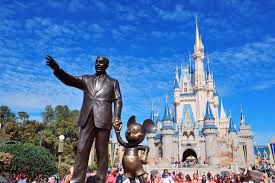
You’ve got to hand it to the namesake of the property, he was a visionary. Walt Disney – yes, the man who created Mickey Mouse and his cohorts – wasn’t simply satisfied with dominating the world of cartoons and children’s films. After visiting amusement parks with his daughters in the 30s and 40s, Disney decided that he could do better and set about showing he could.

He would build Disneyland in just over a year, opening the gates to the premises in 1955 on another innovative venue – television – but it reportedly wasn’t well received. Perhaps because of the rush of getting the park opened, several bugs were apparent at the grand premiere, including asphalt that hadn’t sealed yet (and allowed women’s high heels to sink into in the 100 degree heat), non-operating water fountains (given the option of water fountains or operating toilets, I think Disney made the right choice) and traffic delays around the park.

Still, the new attraction in California would become a landmark in the United States. Reportedly Soviet premier Nikita Khrushchev wanted to visit the park when he came to the United States in 1959; he was denied due to security concerns. As of today, it has welcomed over 650 million visitors, young and old, fulfilling Walt Disney’s dream of a place where children and adults could equally have the time of their lives.

While many may think the original in the Golden State is the main attraction for the Disney organization, it is actually the Walt Disney World Resort – also called Walt Disney World or simply Disney World – that is the “flagship” of the Disney Empire. Opened in 1971, it is reportedly the most visited vacation resort in the world, with total attendance over 52 million people per year. Originally, however, it wasn’t supposed to be a huge resort and amusement park like its predecessor.

Disney’s original thoughts for the Florida property was one of discovery and experimentation. It was to include a planned community called the “Experimental Prototype Community of Tomorrow” (remember this, there will be a test later) where new creations and innovations in city living might be tested. Alas, after Disney passed away in 1966, the organization instead moved towards creating an East Coast version of what already existed on the West Coast.

And here I had been able to avoid it for most of my life…

When you have children, you sometimes make those sacrifices. Who hasn’t let their kid occasionally beat them at something, just once, so they don’t get discouraged? Who hasn’t done something that they really didn’t want to do just to make their tot happy? Hey, let’s be honest, if going to Walt Disney World is the toughest thing I have to do to make my little son happy, then I’ll do it every day and twice on Sunday. What you don’t realize is just how difficult it is to make the trek around the grounds of the “House of Mouse” (hereafter referred to as “WDW”) and emerge on the other side unscathed.

Day One

After landing at the Orlando International Airport – one of the nicer airports I’ve been in, honestly – you think you’re on your way to WDW. There are several ways to get there, however, and it is dependent on how you’ve created your trip to how you get out of the airport itself. There are taxis and hotel shuttles for those “off property” hotels around WDW and you can go through the burdensome task of the rental car, but most who have booked their trips through WDW will be dependent on the “Disney’s Magical Express” for their transportation to WDW.

“Disney’s Magical Express” is NOT operated by WDW, however. This is an outside contractor, Mears Transportation, who also seems to have a pretty good lock on the taxi market for the entirety of the WDW complex. The reason I bring this up is that, while efficient, they aren’t exactly looking out for the customers that are traveling via their buses. Personally, my wife and I left our son’s stroller on the bus once we arrived at our hotel; while we didn’t have it for the entirety of our trip, it “magically” appeared in the hotel’s lost and found the day we were to leave WDW. If you get on one of these buses, make DAMN sure that you grab everything upon debarking, otherwise you might not see your property again.

It isn’t a short trip from the airport to WDW, either. Be prepared, depending on which hotel you are staying in on the WDW Resort compound, for up to a 45 minute trip. For example, our bus had to make stops at four different properties on the WDW grounds. As the second stop, we took approximately 30 minutes until we were situated in our hotel room, ready to begin the grand adventure.

But what do you do when it is late in the afternoon? The best bet for Day One was to head to Disney Springs, or “Downtown Disney,” where many restaurants and shops are located. If there is anything that you want to buy, you can probably find it here. There was the Ghirardelli chocolate shops located right next to the Starbucks located right next to a jewelry store located right next to the Disney Store. After a very good dinner at the Rainforest Grill at Disney Springs our family, which had now been joined by my son’s maternal grandmother (or “Noona”), decided to get some rest before the real fun began.

Day Two

First off, write this in your memory bank:  there is NO WAY you will be able to visit the four different parks that make up the WDW compound in one day (the total size of the WDW property is 43 square miles, about the same area as San Francisco). Besides the original Magic Kingdom built in 1971, there are Disney’s Animal Kingdom, Disney’s Hollywood Studios and EPCOT (remember the original plan of Walt Disney?). None of these properties are particularly close together and you must depend on Disney Transport, the in-house bus system for the sprawling park, to get around. About the closest thing that Disney Transport has to a schedule is that “a bus will be around about every 20 minutes” so you never know when you’ll be picked up unless you happen to luck into catching one when it is in the depot.

From a planning aspect, my lovely wife did an outstanding job. I don’t think General George Patton could have put together a better plan of attack for his Sherman tank divisions than what she scheduled for our family. If you don’t think this type of preparation is necessary, it is, otherwise you won’t be able to enjoy each park AND be able to squeeze moments of sustenance around the fun.

For the first day, we attacked the Magic Kingdom as my wife admitted it was her favorite from her visits as a child. And it is easy to see why this, even after more than 40 years, is still the star attraction for WDW. The outdoor rides are pretty much all located at this park, including the popular Space Mountain and other attractions, and there are five different segments of the park that we could probably have a day spent in them alone.

For those that claim that cities such as New York, London, Paris or Munich are the “Crossroads of the World,” these people have obviously never been to WDW and, in particular, the Magic Kingdom. Languages from around the world – Portuguese, Korean, Japanese, Spanish, French, German…you get the idea – fluttered in the air of the Magic Kingdom and mingled like an exquisite jambalaya. There is a bonhomie amongst the visitors to the Magic Kingdom (and across WDW) that transcends simple nationalities, making everyone a true member of the world community, at least for their stay at WDW. It was a bit refreshing in this day and age of hyper-nationalism and the xenophobia we sometimes see in the world.

As to the rides, there is something for everyone. With a young boy who is a burgeoning daredevil, the Big Thunder Mountain Railroad was the first stop and it was a blast (he thought so too). Next on the agenda was Splash Mountain, a water flume ride that was adequate (a bit slow for my tastes and our son “got his butt wet” as he laughed) and a few other rides that were all outdoors. This is important, as you’ll learn later in our program.

If you have a young child and don’t have a stroller, you’re going to have to cut your visits short for each day you are at WDW. Our son required a nap each afternoon from the excitement and the walking (up to eight miles per day, in some cases) and it wasn’t a bad idea for the parents either. We normally were out of the park by 2PM (the hottest part of the day and a good time to take that break) and back at the hotel within a short time.

With two days down and three to go, everyone was in bed by 10PM the second night. You definitely had to be rested up for the daily workout and, as was to be expected, the excitement that would come in the future.

IN PART TWO:  Why outdoor rides are important, dining around WDW and some questions need to be asked.

NFL Week 6 Picks: Trends Aren’t Necessarily Something to Follow

NFLLogo

In the National Football League, there are some trends that occur in betting that amateurs usually get caught up in (you know, if you’re in an area where you can legally place a bet on a sporting event). Everyone loves to take a team coming off a bye week, figuring that the extra rest will have recharged the batteries of the squad and have them fresh for the first game back from the bye. As of 2013, teams coming off the bye week won 53.4% both straight up and against the spread, not as much as you might think.

One trend that does have some legs for some reason is the West Coast team traveling to the East Coast for a game. According to a study in 2013, since 2005 a West Coast team that traversed the continent to play on the East Coast had a record of 44.57 against the spread, a winning percentage of .436. If the teams were traveling to the Central Time Zone, they also had a horrible win rate against the spread, 37-44 (.457). Going to the Mountain Zone, the West Coast team was a bit better off, going 22-10 (.688).

While the average person might say “AHA!” and run with this, you still have to do the math. The West Coast teams are the Oakland Raiders (putrid for much of the last decade), San Diego Chargers (42-38 over the past five years), San Francisco 49ers (three outstanding seasons between 2011-13 with an 8-8 slate in 2014 and a 6-10 record in 2010 and dismal results prior to 2010) and the Seattle Seahawks (23-41 between 2008-11, 36-12 between 2012-14). As you can see, the teams who make up the “West Coast” franchises have had long stages where they weren’t exactly the best team to be making a difficult trek across the country to play the games. Basically, whenever you see someone spouting about a “trend” that always has to be followed, you have to put your own analysis to the test before you jump off the diving board.

This week in the NFL is a tough one, with several games that could go either way. There are some good choices, however, if you’re brave enough to take the risk (home team in CAPS, pick in bold).

Arizona Cardinals vs. PITTSBURGH STEELERS (+4); UNDER 45

Here’s an example of one of those trends that has actually been scientifically proven. When a dome team goes to play an outdoor team in conditions where the temperatures are around 40 degrees, the dome team only wins the game about 20% of the time. The forecast for Heinz Field in the Steel City on Sunday is for temps to hover around 44 degrees with a gusty wind knocking the chill down to 39 degrees. Although Cardinals WR Larry Fitzgerald has some experience playing in these conditions (he played college ball for the University of Pittsburgh), the Cardinals are that dome team that will have problems with outdoor games.

I also like the Steelers in this game because they seem to have figured out that running the ball with RBs Le’veon Bell and DeAngelo Williams might be a good way to operate the offense while QB Ben Roethlisberger is out and Michael Vick (still dangerous, by the way) is under the center. If the Steelers are able to control the pace of this game, they’ll stay close to the Cardinals and keep it under 45 total points for the game.

Chicago Bears (+3.5) vs. DETROIT LIONS; UNDER 44

This is the game that will be on the NFL Sunday Ticket bar televisions in Hell. Both teams are downright ugly and it is stunning as to why. The Lions aren’t exactly bereft of talent with QB Matthew Stafford and WR Calvin Johnson, but they are the only team in the NFL so far this season without a win. The Bears have had some injury issues, but that doesn’t explain why they are averaging slightly more than 17 points per game and seemingly have begun the “fire sale” to gut the team and rebuild for the future. The Bears have shown that, on occasion, they can stop an opposing offense, thus I’ll take the former “Monsters of the Midway” and go UNDER in what will be a torturous affair.

Miami Dolphins vs. TENNESSEE TITANS (-2); UNDER 43.5

After their game two weeks ago in the United Kingdom, the Dolphins fired head coach Joe Philbin. Whenever you are firing your coach four games into the season, that isn’t going to bode well as to your chances for the remainder of the year.

Still, we see a couple of the “trend” theories playing out here. The line originally opened at Titans (-3), so that has closed up a bit (perhaps because of the “bye week” trend?) and the O/U was set at 45.5. It’s now dropped to 43.5 as some weather conditions have arisen that could cause some issues for the teams (“warm weather” team playing in bad conditions?). The Titans are going to bring a good game against the ‘Fins, with the Titans averaging 25 points per game and QB Marcus Mariota looking very solid behind center, thus they get the pick.

Last Week:  5-0-1
Overall:  19-8-2

SO CLOSE to perfection last week! The only pick missed – and technically not missed but a push – was the Seahawks losing to the Cincinnati Bengals by three, the exact spread of the game. This week’s going to be a bit tougher to fade, but we’ll see what happens.

So Who SHOULD Be In The Rock & Roll Hall of Fame?

Last week, the nominations came out for the 2016 Rock & Roll Hall of Fame and, at the very end of my thoughts, I posited the question, “Who should have been nominated?” Mind you, the list of nominees was outstanding overall: longtime overlooked acts such as Chicago, Deep Purple and Yes getting nominated again (and three bands that I believe are long overdue the honor), newcomers like Janet Jackson, The Cars and Cheap Trick (all no votes) and outside shots such as The J.B.’s (another vote in from me), Chic (no) and N.W.A. (yes). However, there were several other artists that should have been on this year’s ballot if not already inducted into the Rock & Roll Hall of Fame.

The Rock & Roll Hall of Fame is personal to me because of my long love affair with music. Despite the factor that I could never play an instrument with any high level of competence, I admire those that can create art out of music, words, melodies and thoughts. While it could be said that writing is something like that, the songwriter and/or musician is an artist that encompasses different aspects, pulling them into one cohesive idea. Thus, I’ve always been a huge fan of music overall and rock music in particular.

My first introduction to rock music dates back to someone who, unfortunately, I don’t know if they’re still alive. The year was 1971 and, riding around in a car with my half-brother Monty (his real name could have been Montague, don’t really remember) on a hot summer day, saw him pop a cassette into the tape deck. Suddenly the mystifying tones of David Bowie’s “Space Oddity” came pounding out of the speakers and, as I listened to the words and music, I was transported (you have to remember, these were the heady days of NASA’s Apollo space program) to being “Major Tom” and traveling through space myself.

From there, it was a quick indoctrination into the world of music. My mother had the classics – Johnny Cash, Merle Haggard, Waylon and Willie and others – from the country music side, but she also had such gems as The Temptations, The Supremes and other R&B acts from the 60s in the record cabinet. My investigations in the rock music genre touched on Santana, The Who, Crosby, Stills, Nash and Young and James Taylor, then began to branch out into the harder edged rock of ZZ Top, KISS and Led Zeppelin, among others (on a personal note, was always more of a Rolling Stones guy than the Beatles).

As the mid-70s passed, punk rock became the next touchstone. The Sex Pistols, New York Dolls, The Ramones – these were the gates to pass through on the way to adulthood. As I reached high school, not only was it the disco era but it was almost time for the double shotgun-blast of the New Wave from England and MTV, opening the world even further (and we cannot go on without also recognizing the New Wave of British Heavy Metal). As I had to be a part of the music scene, I did the only logical thing a person with little to no musical talent could do – I became a DJ.

Through the 1980s and well into the 1990s, I plugged along as a DJ at pretty much every radio format that you could think of doing. Album-Oriented Rock (AOR), Top 40, easy listening, R&B, adult contemporary, news/talk – about the only thing I didn’t do was country (much like “country” music today, there’s a thin line between what was country music then and pop music). Along the way, there were some great times had in the conduct of my job and…well, let’s just save those stories for another time.

Hopefully you see that who gets in the Rock & Roll Hall of Fame is important, at least to me. It isn’t “live or die” important, mind you, but it is something that I want to show my son one day and say, “Yeah, I saw them, they were great.” Maybe we will sit down and listen to a CD or, pray tell, if we still have vinyl by then, an album, and talk about music and its history. He’s got a great musical ear, however, so he may be entertaining me with his music rather than our just listening to it.

OK, getting sappy here…

My criteria for putting someone in the Rock & Roll Hall of Fame would be somewhat along the lines of what poker uses for its Hall of Fame. These are the criteria that I would use in putting someone in the Rock Hall:

1. Length of career with sustained critical or commercial excellence
2. Influence on a genre of music or on several artists
3. Respect from fellow musicians

Pretty simple, wouldn’t you say? Alas, there are some glaring errors in the Rock & Roll Hall of Fame. How about some of these artists, bands and contributors?

Warren Zevon – The singer-songwriter born in Chicago has been overlooked for far too long when it comes to the Rock Hall. Responsible for writing such songs as “Poor, Poor Pitiful Me” (covered by far too many artists to list but most notably by Rock & Roll Hall of Fame inductee Linda Ronstadt), Zevon was a part of the California scene in the mid-70s, working with such people as Jackson Browne, Neil Young, members of the Eagles and counting Bruce Springsteen amongst his admirers.

When it came to his own efforts, Zevon was beyond compare. Along with his iconic “Werewolves of London,” Zevon penned and performed such classics as “Lawyers, Guns and Money,” “Roland the Headless Thompson Gunner,” “Accidently Like a Martyr,” and “Keep Me in Your Heart,” which was nominated for a Grammy after Zevon’s death in 2003. With a career that spanned more than 30 years, commercial and critical success and the respect of your fellow musicians, there’s no one more deserving than Zevon for induction into the Hall.

Jimmy Buffett – Another product of the singer-songwriter era of the early 70s, Buffett is notable for forging his own path in the music industry. When I say his own path, I mean he created a whole GENRE of music that didn’t exist before – let’s call it “tropical rock,” music with a Caribbean/calypso/reggae/country feel that didn’t fit neatly into any of the “categories” of music in the 1970s (and still doesn’t today, to be honest). Buffett himself has said about that period, “I wasn’t country enough to be played on those stations and I wasn’t rock enough to be played on AOR.”

The way to beat that? Write a song like “Margaritaville” that transcended any charts, genres or radio stations. Today that song has led Buffett into the world of literature, casino and hotel ownership and a “40-year summer job” that the man still enjoys to this day as he approaches 70. He’s influenced a host of country musicians (the Zac Brown Band is a prime example) and, as owner of a recording studio and a record company (Mailboat Records) is ensuring that the “tropical rock” he created will have outlets for the future.

The Runaways – While Joan Jett went in with The Blackhearts last year, she really should have gone in with The Runaways because, without them, there is no Joan Jett.

The Runaways were “created” by producer Kim Fowley who, having drummer Sandy West and guitarist Jett in the fold, was looking to create a “jailbait” band of teenaged girls who could rock out just as well as any group of guys. First found by the group was Micki Steele, who didn’t last long but went on to join The Bangles, before gold was struck with guitar virtuoso Lita Ford, vocalist Cherie Currie and bassist Jackie Fox to fill out the roster. With the group lineup set, The Runaways broke ground as one of the first female hard rock/metal acts to ever have any success in the recording industry.

From the seminal track “Cherry Bomb” to other tunes such as “Queens of Noise” and “I Love Playin’ with Fire” (covered by Jett during her Blackheart days), the band earned a great deal of attention and respect in the industry. The members of the group went on to arguably better success as solo artists or in other creative endeavors, but they were the ones who helped to get such groups as The Bangles, The Go-Gos, Vixen and rock “chicks” like Pat Benatar, Chrissie Hynde and Deborah Harry (among many others) in the door. It is arguable that, without The Runaways, some if not all of these women wouldn’t have gotten into the industry.

Judas Priest – This is one of those omissions by the Rock & Roll Hall of Fame that is inexcusable. A band that has sold 45 million albums, generated rock anthems such as “Breaking the Law,” “You’ve Got Another Thing Comin’,” “Heading Out To The Highway,” “Living After Midnight”…I could go on, but you get the point. So what has kept them out?

Over the years, the band has been targeted in various arenas outside of music. They were accused of using subliminal messages in their album British Steel that allegedly caused two men to try to kill themselves. They’ve been targeted by conservative Christian groups for their musical content and singer Rob Halford has taken some sabbaticals from the band over the decades. But when you have a list of bands that were influenced by you such as Metallica, Megadeth and Pantera (among others), you’ve done your job well.

There are a slew of other artists that could be held up for consideration – The Carpenters, Kate Bush, Slayer, Bon Jovi, Thin Lizzy, Motorhead – and maybe they are just waiting for their time. There are also those “pop” artists that I am overlooking, but this is the Rock & Roll Hall of Fame, after all. If you’re waiting for a time that “works,” however, take it from someone who watches how these Halls of Fame work – if you don’t get in within your first couple of years of eligibility, your chances of getting in get worse as time goes by. All the artists listed here deserve to have their place in the pantheon of the Rock & Roll Hall of Fame…now will anyone listen and induct them?

What to Expect at the First Democratic Debate

DemocraticCandidates

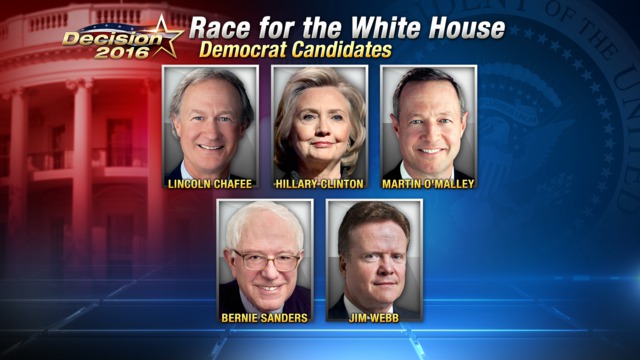
Just when you thought that the political world had calmed down, the first of a planned six debates from the Democratic Party will be held on Tuesday night in Las Vegas. The five announced candidates – former New York Senator and Secretary of State Hillary Clinton, current Vermont Senator Bernie Sanders, former Maryland Governor Martin O’Malley, former Rhode Island Senator and Governor Lincoln Chafee and former Secretary of the Navy Jim Webb – will take the stage around 9PM Eastern Time on Tuesday night at the Wynn Las Vegas, presenting their reasoning for being the party’s selection for the 2016 Presidential nomination. It may not be as visually exciting as what the Republican Party have been able to put on in their previous two clashes, with their myriad of candidates all saying the same thing but trying to sound different, but these debates are just as important as those on the GOP side.

With President Barack Obama heading off into the sunset following his two terms in office, it is up to one of these five people to try to maintain the legacy of the Democratic Party for several reasons. One, the next President will probably have at least one and potentially as many as three Supreme Court justices to name in their 4-8 year term, basically allowing for a reshaping of the Court towards a more conservative or liberal bend. Two, if the next President is one of these Democrats, they will be able to firmly ensconce the Affordable Care Act – “ObamaCare” to many – as the “law of the land” and make it even more difficult to take away through repeal as it becomes more entrenched in the U. S. psyche. And three, the Democrats would be able to maintain the current foreign policy viewpoint of diplomacy before dominance – the major difference between them and the GOP, who want a war on all days that end in a “y.”

Anyone who says that the Democrats didn’t think that this would be a simple coronation for Clinton on the way to the Democratic National Convention in Philadelphia in July 2016 would be out-and-out lying. After getting stunningly pummeled in 2008 by Obama, Clinton did her duty in first accepting the Secretary of State role in the Obama Administration and then in not trying to usurp Obama is 2012. Her reward for this party loyalty was supposed to be a free pass to the Democratic nomination in 2016 but, along the way to the coronation party, someone threw a huge monkey wrench in the plans.

Sanders, the genial, grandfatherly Senator from the Northeast who calls himself a “democratic socialist,” has been stealing a great deal of Clinton’s thunder, especially in the early primary states of Iowa and New Hampshire. Part of the appeal of Sanders has been his Quixotic-tilt against the uber-rich, banks and corporations, which has struck a chord with the young and the downtrodden. His firm stance against all military action in the Middle East has also drawn comparisons of Sanders to fellow Kentucky Senator and Presidential hopeful Rand Paul – you know, back when Rand Paul was cool before he became a Republican.

Sanders has become so popular with some Democrats that the threats against Clinton in the early primary states have forced her into campaigning much sooner than she would like to have done. The Clinton team is looking to get her through the first few primaries in Iowa and New Hampshire, ready to take a second place finish behind Sanders, and prepare for the “SEC Primaries” at the beginning of March in the South, a traditional stronghold of the Clintons that would allow her to be able to thwart a Sanders attack through numerous victories.

There are a few differences between Clinton and Sanders, but there is more diversity when you toss the other candidates in the mix. O’Malley is a “law and order” type that, as mayor of Baltimore, was able to lower crime rates and improve the city’s image (it is also alleged that the tactics employed by O’Malley – the “stop and frisk” utilized by police officers, in particular, where officers could stop anyone for investigation despite not visually committing a crime – were a major impetus for the Baltimore riots of earlier this summer). Chafee is a former Republican who first became an independent before moving to the Democratic Party, while Webb is almost a DINO (Democrat in Name Only) as he supports the “close the border first, then maybe amnesty” program popular with Republicans as well as reining in the Environmental Protection Agency and its regulatory authority.

The 800-pound gorilla in the room will be the specter of current Vice President Joe Biden. Supposedly considering a third run for President, Biden has not committed to this debate as of Monday, but CNN has stated that a podium will be on hand should Biden state he wants to take part in the festivities. With Biden polling better than Sanders (but still behind Clinton), Biden would be an immediate (and strong) challenger to Clinton, forcing her to fend off not only Sanders but also Biden.

What exactly is going to happen in the debate? First off, Sanders and Clinton – and throw Biden into the mix should he show up – will not attack each other as the GOP candidates did in their second debate. First, moderator Anderson Cooper and his panelists, CNN reporter/anchor Dana Bash, CNN anchor Don Lemon and CNN en Espanol’s Juan Carlos Lopez, are not going to ask the “challenging” questions that saw the Republicans rip into each other during their debates. “I think it’s just as interesting to kind of learn about some of these candidates who the American public doesn’t really know much about,” Cooper stated in an interview on CNN’s Reliable Sources over the weekend, “as it is to hear from some of the candidates you do.”

There has also been a remarkable bonhomie between Sanders and Clinton in that they haven’t brought the knives out against each other. Sanders, in particular, has been given multiple opportunities to rip into Clinton over a variety of problems she has faced (her private e-mail server, her work with the Clinton Foundation and the Clinton Global Initiative and how it affected her time as Secretary of State, her vote for the Iraq War in 2003, etc.), but he has refused to do any mudslinging and instead concentrated on his message. That is a bit refreshing in this current day and age of politics.

Both Clinton and Sanders are going to continue with their own presentations of what their plans as President will be, which differ in some areas. Sanders in particular has made many suggestions regarding what he would do as President – free college for all students, raising the minimum wage to $15 nationwide, universal health care (going beyond ObamaCare) – but he will also have to answer about how he’s going to pay for those things; if Sanders’ plan to increase taxes on the 1% (for your information, that would be anyone who makes more than $344,000) and reduce military spending doesn’t stand up to the scrutiny, then his other plans won’t be taken seriously.

The ones who have nothing to lose are O’Malley, Chafee and Webb. Any airtime they get during the debates would be welcome as the three men currently are barely even making an impact on the polls (Webb is averaging .9%, O’Malley .6% and Chafee .2%, according to Real Clear Politics and their national polls). They also have to make viewers/voters remember them, so taking some shots at Clinton, Sanders and/or Biden (if he shows up and he’s polling at 18.6%) might help them out. If these candidates can’t get a bump out of this debate, they may not get another shot at the next debate in November, especially if Biden announces a run for the Presidency and their numbers stay the same.

One thing that will NOT happen is any of the candidates making a serious faux pas. All of them are experienced debaters and, as such, will be able to withstand the slings and arrows that come from their opponents. Only the introduction of Biden into the mix (due to preparation by the candidates for those that are currently on the dais and not an 11th hour introduction of another player) or a change in tactics by Sanders regarding his “no mudslinging” tactics with Clinton might change the game.

It might not be as electric as the GOP debates have been to this point, but the Democratic debate should provide viewers/voters with more substantive information on the candidates. It will also mark the drive towards next November when the next President of the United States will be chosen.

NFL Week 5 Picks: Some Weeks Betting ISN’T A Good Idea

NFLLogo

We’ve past the quarter pole in the 16-game race in the National Football League and there have been a few things established to this point. Don’t bet against Tom Brady and the New England Patriots; the NFC East is wide open, with three teams at .500 and the fourth only a game behind them; there is no dominant team in the NFC yet, and there are some weeks you shouldn’t be betting the games (you know, if wagering on sporting events is legal in your area)!

There are several games on today’s schedule that have seen big swings in their opening lines or have such a wide spread it is difficult to decide which end of the game to take. For example, the Buffalo/Tennessee game started out with the visiting Bills the favorite, giving up three points to the Titans and rookie Marcus Mariota. Then injuries to Bills RBs LeSean McCoy and Karlos Williams were announced and the line swung all the way over to a “pick ‘em” game.

Another good example is the New England/Dallas game. With the Patriots giving up nine points and on the road, the thought might be to take the Cowboys. With the ‘Boys’ depleted resources after the injuries to QB Tony Romo and WR Dez Bryant and the continued lackluster performance of backup QB Brandon Weeden and the rest of the ‘Pokes, however, maybe the sharps got this one right.

Normally it is a good idea to sit out weekends like this, but there are a couple of nice opportunities out there. Coming off a nice Week 4 performance, looking to continue the run.

(Home team in CAPS, pick in bold)

Chicago Bears (+9) vs. KANSAS CITY CHIEFS; UNDER 45

Neither of these teams has shown themselves to be an offensive juggernaut, especially the Bears with the injuries they’ve had. Both are “run first” oriented offenses that look to establish their big stars, Bears RB Matt Forte and Chiefs RB Jamaal Charles, and both have solid defenses that will look to stuff those running games. As such, it’s going to be a low-scoring affair and closer than the nine points that the Chiefs are giving up. Especially with QB Jay Cutler back under center, take the Bears and the under for a nice pickup.

Seattle Seahawks (+3) vs. CINCINNATI BENGALS; OVER 43.5

Even though Seahawks RB Marshawn Lynch is out for the game, I still like the Seahawks on the road in Cincy. QB Russell Wilson has plenty of other options to work with, including TE Jimmy Graham and WR Doug Baldwin, and should be able to put up some numbers against the Bengal D. The “Legion of Boom” looks like it is returning to form after the comeback of DB Kam Chancellor, also. With both teams combined averaging over 50 points per game, the OVER is also a good pick here.

Arizona Cardinals (-3.5) vs. DETROIT LIONS; OVER 46

Even though they burned me last weekend (more on that in a bit), I am going to take the road-favorite Cardinals in this game. Averaging 37 points per game, the Cardinals are coming off a shocking loss to the St. Louis Rams and looking to take their frustrations out on someone. Their victim this week, the Lions, have yet to win a game and, even with WR Calvin Johnson and QB Matthew Stafford, are only averaging 14 points per game this year. It could get ugly quickly in the Motor City, not only in this game but also in the front offices of the Lions over the next couple of weeks; to say that Lions head coach Jim Caldwell’s seat is a little warm would be a huge understatement.

Last week:  4-1 Overall:  14-8-1

The only thing that kept me from a 5-0 weekend were those previously mentioned Cardinals. Although we got the O/U right in that Cardinal/Ram game, the stunning straight up upset out of the Rams knocked off the 7-point favorite Arizona. That was the only blemish on what was otherwise a really good weekend.

2016 Rock & Roll Hall of Fame Nominations: Who Gets In?

It seems that there is a “Hall of Fame” for virtually every aspect of human existence. If you are into clowns, there is the International Clown Hall of Fame in Milwaukee, WI, that is in actuality a serious look at a funny industry. On the lighter side, there is a Recreational Vehicle and Manufactured Housing Hall of Fame in Elkhart, IN, the “Pig Hill Hall of Fame” in East Elijay, GA and the International Hamburger Hall of Fame in Daytona Beach, FL (look these up, you’ll enjoy the laugh). Whereas some of these exist with their tongue firmly planted in cheek, there are those that have the gravitas deserving of a memorial to excellence.

Where the Rock & Roll Hall of Fame in Cleveland, OH, lands is something that is debatable among Halls of Fame and music aficionados. In my opinion, it does honor, cherish and memorialize the greatest musicians and performers that have come through the genre. On the other hand you have my friend Mark, who believes that the Hall “is a totally lost cause and deserves to be burned to the ground…then the ground itself sewn with salt and dumped into Lake Erie.” As you can tell, just a little difference of opinion there.

Created in 1983 by a contingent of music biggest names (then-Atlantic Records founder and chairman Ahmet Ertegun, Rolling Stone founder Jann Wenner and several other prominent music executives), the Rock & Roll Hall of Fame didn’t get around to inducting members until 1986, when the inaugural class consisting of such luminaries as Chuck Berry, James Brown, Ray Charles, Fats Domino, The Everly Brothers, DJ Alan Freed, Buddy Holly, Jerry Lee Lewis and many others (here’s the list) were voted in as the inaugural class. Even after they started inducting members into the “Hall,” they lacked a physical location to properly acknowledge the inductees.

Although several cities with extensive ties to U. S. music history and the foundations of rock music, including Memphis, Detroit, Cincinnati and New York City were considered for the location, it was Cleveland that came up as the big winner in being named the home city of the Rock & Roll Hall of Fame in 1986 (Wenner was disappointed that New York didn’t get the Hall). Why did Cleveland, of all places, get the Hall? As it is with most things, it was money; Cleveland ponied up $65 million in public funding and more than 600,000 residents demonstrated their desire in signing a petition to bring the Hall to “America’s North Coast.”

Even with the money and the people in place, it would take another decade before the physical Rock & Roll Hall of Fame was built. In 1995, the I. M. Pei-designed building opened amid the fanfare of a huge concert that featured such rock luminaries as Bob Dylan, Aretha Franklin, Bruce Springsteen and Iggy Pop. Since then, it is estimated that more than 9 million visitors have made the trek to the Rock & Roll Hall of Fame to pay their respects to the legends of the industry.

Now in its 33rd year of existence, the Rock & Roll Hall of Fame has caused its share of controversy as well as celebration. For every rock legend like a Buddy Holly or Chuck Berry ensconced in rock music’s Mount Olympus, there are those such as Dinah Washington (1993), Earth, Wind and Fire (2000), Grandmaster Flash and the Furious Five (2007) and many others who aren’t exactly what you would think of when mentioning “rock music.” In particular, there is the Rock Hall’s recent moves toward recognizing “pop” music in its rolls (Madonna in 2008 and ABBA in 2010, to be precise) that seems to have angered rock “purists” beyond belief.

In my opinion, “rock music” is a wide encompassing umbrella. While some may not believe that the legendary bluesman Robert Johnson (an original inductee in 1986) had an influence on the genre, his exclusion from the Hall would be laughable for an organization looking to honor those who created “rock music.” Even such artists as Grandmaster Flash, one of the groundbreaking musicians in the rap genre, deserves induction into the Hall for his contributions to, yes, “rock music.” While I might have some personal preference issues with some of those in the Hall (especially Madonna), I’m more of the line that they are worthy of their inclusion in the institution due to their overall contributions to music in general and sometimes even rock music.

The list of nominees for induction in 2016 to the Rock & Roll Hall of Fame once again reach across the decades and the genres. So who will have the best chance to get in this year? I’ve broken it down into three categories:  Shouldn’t Even Be Considered, Borderline Excellence and Sure Shot Legends.

Shouldn’t Even Be Considered

Chaka Khan – A long career in the industry best identified by her work with the seminal R&B group Rufus, but not exactly what I would call an indispensable musical artist. Without the ability to actually cite someone that she has had an extreme influence on – perhaps Nora Jones, maybe Alicia Keys? – Khan loses points on the “legend” scale. Add in the lack of longevity to her career and I’d have to say Khan shouldn’t be considered.

Chic – If this were a question as to voting in two of the members of the band – guitarist/producer Nile Rodgers and drummer Tony Thompson – then I’d be more than willing to welcome them into the Rock & Roll Hall of Fame. The problems are that Chic didn’t last all that long – they were one of the powerhouses of the Disco Era – but both Rodgers and Thompson’s greatest work came outside of their Chic days. Rodgers has been an outstanding producer across the entirety of the musical spectrum and Thompson laid down some of his best work with the rock super group Power Station. To put the entire band in when it was really Rodgers and Thompson who are deserving of the honor is a bit much.

Los Lobos – There is more than enough room in the Rock & Roll Hall of Fame to look at how different cultures had an impact on the formation of the genre. For their part, Los Lobos is one of those artists or groups that would have to be considered. Unfortunately, they fall short on several aspects, including influence on later artists and general impact in the history of rock. Their only #1 song in the U. S. was a remake of “La Bamba,” for crying out loud. Los Lobos, unfortunately, shouldn’t have even made this list.

Steve Miller – The thing about ANY “Hall of Fame” is that it isn’t a “Hall of the Pretty Good.” That same “level” of excellence needs to be used here with Steve Miller. Although Fly Like an Eagle was a legendary album and certain songs he created are very memorable, I don’t hear any artist over the past 20 years or so admitting how much of an influence Miller was on their careers. I can’t put someone in the Hall that was simply good at doing their job, as Miller was, thus he falls into this category.

The Spinners – Once again, a case of pretty good but not legendary. The Spinners actually should be praising those legendary R&B groups before them (The Temptations, The Four Tops, etc.) as there aren’t many that note them as a seminal influence in their formation. Also not very long-lived as a group.

The Smiths – This is one of those that is on the border between getting out of this ranking and into the “Borderline Excellence” grouping. The group has had a huge influence on many other rock acts following it, but to say it had a huge degree of success might be stretching the term. Morrissey probably had more of an effect as a solo artist than the band did as a whole and longevity has to be called into question.

Borderline Excellence

Cheap Trick – As a longtime fan of the band – they were a constant on radio stations and at parties when I was growing up – I’d like to give Cheap Trick more love than I believe the Hall voters are going to give them. The band was a regional act – highly successful in the Midwest – but didn’t exactly have the staying power as the 80s closed. They are also hugely overrated by VH1, who put them in at #25 of the Greatest Artists of Hard Rock. In fact, Cheap Trick has the potential to go from this category down to the previous one.

The Cars – Another one of those “great, but not immortal” bands that came out of the 1980s. Unless you count singer Ric Ocasek’s ability to pick up a stunning bride (model Paulina Porizkova), The Cars weren’t outstanding in any area. They showed up, they did the job and they took home the supermodels. There are many other people who are more deserving of a seat in the Rock & Roll Hall of Fame over this band.

Janet Jackson – This was a problematic one for me. Ask three different people where she should be, according to the rankings that we have here, and each of those three different people would probably put her in each category. She didn’t exactly blaze a trail – her brothers did that for her – and her music wasn’t exactly groundbreaking or influential. For a period there in the 80s, however, it was either her or Madonna reigning as the dominant female artist on the charts. For me, she falls into this category and perhaps one day might sway me to having her in the Hall.

Nine Inch Nails – Here we have another band that is thisclose to ticking over into the “Sure Shot Legends” group. Trent Reznor’s pet project for well over two decades, the band pushed the “industrial” rock movement forward and was the catalyst for a band such as Rammstein and much of the EDM movement today. Reznor is a talented musician who has won an Oscar for his score of the film The Social Network and is the recipient of other major awards; a couple more achievements like that and Nine Inch Nails will get in if not Reznor by himself.

Sure Shot Legends

Chicago – One of those bands that you say to yourself, “You mean they aren’t already in?” Chicago pioneered the jazz fusion rock that seemed to come out of the late 60s/early 70s, something that is still heard today in some of the music (Michael Buble or Adele comes to mind). For much of the 1970s and even the early 1980s, Chicago was a dominant force on the music scene. We’ll have to cut them some slack for the Peter Cetera Years, but it is high time that Chicago was a part of the biggest club in rock music.

Deep Purple – One of the most egregious errors ever committed by the Rock & Roll Hall of Fame has been the omission of this band from its rolls. The originators of “hard rock” or “heavy metal,” the band lasted from the late 60s into the 21st century, churning out bombastic rock all the way to the end. They also inspired many hard rock and metal bands that came out of the latter half of the 20th century. The only problem with putting Deep Purple in the Hall is which “Mark” do you put in? My vote goes to Deep Purple Mark II, which featured Ian Gillan, Jon Lord, Roger Glover, Ian Paice and Ritchie Blackmore as the members of the band and originators of such classics as “Smoke on the Water” and “Highway Star.”

The J.B.’s – If you’re going to have the singer for the group – legendary R&B performer James Brown – in the Rock & Roll Hall of Fame, you’ve got to have the band that backed him up. While Brown was renowned for the incendiary performances that he would leave on stage, somebody had to keep up with him on the musical side of the equation. The J.B.’s did exactly that, with saxophonist Maceo Parker and the Collins BrothersWilliam “Bootsy” and Phelps “Catfish” – eventually moving on to another landmark group, Parliament/Funkadelic in later years.

N.W.A. – This is probably my most controversial selection for election into the Hall. The originators of “gangsta rap,” N.W.A. still has their imprints on the music scene today. When they came out in the late 80s, their fist-to-the-face depiction of life in the inner city served as a reminder of what music can do when used as a tool for social change. It may be arguable whether “gangsta rap” effected that change at all, but it wasn’t for a lack of trying from N.W.A. and others. Add in the influence that the group had on other artists and N.W.A. should have been in the Hall long ago; they’ll probably get in this year on the steam generated from the film Straight Outta Compton.

Yes – Much like Chicago, “They aren’t in already?” The two bands are quite similar in that Yes was one of the first bands to push the “progressive rock” (or “prog rock”) sound that incorporated a great deal of keyboards and operatic flourishes. Yes was a “jam band” before jam bands were cool, often putting out individual songs that seemed as long as some artists’ albums. “I’ve Seen All Good People,” “Roundabout,” “Owner of a Lonely Heart” – the band was a critical and commercial success across the ages and, as such, deserves to be in the Hall.

The Rock & Roll Hall of Fame will allow for fans to vote on their website and that “fan vote” will be tabulated alongside ballots from other musical dignitaries to determine the final five or six who will walk through the doors in Cleveland to further rock immortality come April next year. Who will earn the honors? We’ll find out at the beginning of 2016.

Who should have been nominated? That, my friends, is a subject for another time…

What’s the Problem with Gambling? The U. S. Was Built On It!

(Author’s note:  With the uproar over daily fantasy sports – or DFS – in the news right now, there are folks discussing the issue of gambling. This is something that I wrote slightly more than a year ago that is as true now as it was then.)

One of the best ways to learn about whatever country you live in is to take a lengthy drive. Last month, as part of a move from the Midwest to the East Coast, I sat behind the wheel of the family’s Mercedes-Benz and did just that, covering about 1000 miles along the way. When the only conversation that you can have in a sports car is the cat that is riding along with you (after the first ten minutes of meowing, they tend to go to sleep and, even if they are listening, aren’t exactly someone to bounce ideas off of), you have time to notice some of the oddities of the United States.

As I went by such strange things as the Creation Museum (would have loved a stop there for just the simple comedy), roadside vegetable sales and various Appalachian curios, one of the things that I noticed as the miles began to pile up was the roadside billboards that popped up as I drove. Easing out of Illinois into Indiana, I was hit with those billboards from many of the popular gaming destinations in the Hoosier State. A quick hit into Ohio saw those billboards change over to the new destinations that have been opened in Cincinnati. In Kentucky, the billboards changed over from casino gaming to racetracks and horse farms that promoted the Bluegrass State’s main industry. Even in Tennessee (where there isn’t a casino scene), the billboards promoting North Carolina’s Harrah’s Cherokee casino disturbed the natural beauty that the Great Smoky Mountains provided.

Mind you, it wasn’t just one billboard. There were more than a hundred of them, ticking down the miles until you reached the exit of said casino/racetrack/etc. It got my mind thinking (as my cat companion slumbered quietly in the passenger seat)…what’s the problem with gambling? The United States was (and is) built on it!

All you have to do to reach this conclusion is have a basic understanding of U. S. history. The very first gamble was performed from the European continent as several explorers including Leif Erickson in the 11th century and Christopher Columbus in the 15th century, decided that there was “something” where the sun was setting and (in Columbus’ case) that the earth just didn’t drop off into the Great Unknown. Erickson’s gamble was a bit bolder in that he bankrolled himself for the trip; Columbus, on the other hand, was able to get Spanish Queen Isabella and King Ferdinand II to pay for his trip (potentially the first act of “backing” in a gambling setting).

As the “New World” began to garner attention, even the bastions of religious piety showed they weren’t above taking a chance. England was the location for this as first the “Lost Colony” of Roanoke (the ultimate gamble as the residents “disappeared” in 1590) was settled. Following that, the Puritans – who were so religious they were considered more restrictive than the Church of England and whose very name means ‘against pleasure’ – rolled the dice and settled at Plymouth Colony in 1620.

By the end of the 17th century, the Colonies were thriving and so was gambling. Lotteries were the prevalent form of gambling (and were used to fund several prominent colleges such as Yale, Harvard and Princeton), but dice, cards and horse racing were also popular (even the more unpalatable gambling escapades as cockfighting and dogfighting had their audience). As the rumblings of revolution came to a head in the mid-18th century, our country’s Founding Fathers – most notably George Washington and Benjamin Franklin – enjoyed a good card game. Playing cards was so popular that the Stamp Act (one of the catapults for the American Revolution) included a clause that taxed every deck of cards.

After the Revolution, however, some of the old “puritanical” ideas began to set in. Gambling was banned in some of the fledgling states, but legal (and illegal) lotteries still flourished. The lotteries even came under attack, however, so that by the time of the Civil War, only three states permitted them. The “War Between The States” would prove to be the next catalyst for gambling in the United States.

Locked in a battle for the soul of the country, both Union and Confederate soldiers would pass the time playing poker (a recent immigrant to the United States through the port city of New Orleans) with their brothers in arms as they waited for the next wager for their lives. After the conclusion of the Civil War, that gambling mentality continues as citizens pushed westward and poker came along for the ride. Nearly every Western town could be found to have a casino (legal or otherwise), where a game of faro or poker would be ongoing, and the Mississippi River bustled with commerce and the “riverboat gamblers” that plied their trade on the paddleboats.

Although it was attempted many times, gambling still found a way around banishment. The actions of Prohibition in the early 20th century saw gambling and alcohol usage pushed underground and into the hands of organized crime. Laws to make gambling illegal in the Eastern part of the U. S. saw those organized crime figures move westward to Nevada and California, with the first casinos opened in 1931 as the Boulder Dam was being built near Las Vegas. Today, only two states (Hawaii and Utah) don’t have some sort of casino or card room in their jurisdictions.

Presidents of the United States have actively taken up the game of poker and, for some of them, been advocates for the game. Harry Truman’s “The Buck Stops Here” is directly related to his love of a game of poker. Richard Nixon allegedly financed his first political campaign with money won from playing Seven Card Stud. Even Barack Obama is thought to have an affinity for the game, playing in a weekly Senate poker game prior to entering the White House.

This is only looking at gambling as it relates to cards, dice, table games, etc. U. S. citizens have taken a gamble throughout the country’s history, dating from the Puritans to the signers of the Declaration of Independence (a bold gamble, you might say) to the westward expansion of the country into areas once thought to be foreboding and unsuitable for human habitat. Americans start businesses, sometimes failing but, most of the time, successful (Henry Ford, the Wright Brothers, the Rockefellers and Bill Gates (to name a few) ring any bells?). Americans gamble on innovations that have improved the world through industry, scientific discovery and even traveling to space. Even war, the most unfortunate invention of human society, has been impacted by American gambles.

Gambling is as inherent to the American persona as the flag, our National Anthem and our basic premise of “life, liberty and the pursuit of happiness.” Without that inner drive to take a risk, to take a chance on an unknown outcome, much of what the country has become today would have not been achieved, let alone even attempted. The United States – and much of the world, to be honest – always has to have those “dreamers,” “schemers” and gamblers to move society forward, otherwise we stagnate and, eventually, devolve.

So, as my drive ended by pulling up to our family’s new house, once again I’ll ask…why do we, not only as U. S. citizens but as an evolving species, have a problem with gambling?